DbcultAccessing Vault...
6.2/10
Senior Film Conservator
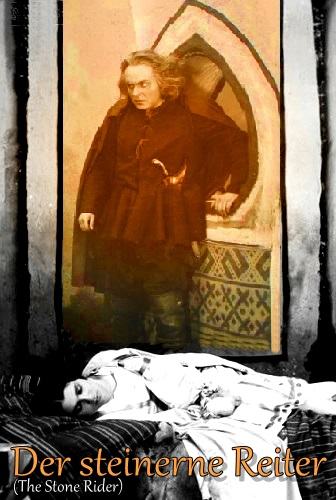
A definitive 6.2/10 rating for a film that redefined the boundaries of cult cinema. Der steinerne Reiter remains a cornerstone of transgressive art.
In the pantheon of Weimar cinema, few films capture the primal intersection of landscape and lunacy quite like Der steinerne Reiter (1923). Directed by Fritz Wendhausen and penned by the formidable Thea von Harbou, this work is a staggering monument to the visual capabilities of the silent era. It eschews the urban claustrophobia of its contemporaries for a more expansive, yet equally suffocating, mountain gothic aesthetic. The film operates on a plane of heightened reality, where the castle is not merely a setting but a sentient antagonist, a stony ribcage housing a heart of cold, aristocratic malice. Unlike the domestic tensions found in The Woman He Married, the conflict here is elemental, pitting the verticality of the tyrant against the horizontal humility of the valley dwellers.
The narrative pivot—a master who descends from his peak to disrupt weddings—serves as a potent metaphor for the intrusion of the state or the 'old world' into the private sanctity of the individual. This is not merely a tale of a jealous lord; it is an exploration of the jus primae noctis archetype through the lens of German Expressionism. The jagged silhouettes and the stark, high-contrast lighting create a chiaroscuro effect that mirrors the internal moral rot of the castle’s inhabitants. One might find echoes of this rigidity in the thematic underpinnings of The Marble Heart, yet Wendhausen’s vision is far more visceral, trading drawing-room artifice for the howling winds of the Alps.
Thea von Harbou, the architect of such masterpieces as *Metropolis* and *M*, brings her signature brand of mythic fatalism to this production. Her writing often grapples with the tension between the individual will and the crushing gears of destiny, a theme that resonates deeply within the stone walls of this mountain fortress. In *Der steinerne Reiter*, the dialogue intertitles are sparse, allowing the physical presence of the actors and the meticulously designed sets to articulate the stakes. This is a film that understands the power of the gaze; the way the master looks down upon the village is reminiscent of the predatory oversight seen in The Shadow of Her Past, though here the scale is magnified to the level of a biblical plague.
The pacing is deliberate, almost geological in its progression. It demands a level of patience that modern audiences might find taxing, yet for the connoisseur of silent film, this tempo is essential. It builds a sense of inevitable doom that no jump-scare or rapid-fire editing could ever achieve. Harbou’s characters are archetypes, yes, but they are imbued with a tragic dimensionality. The master is not a cartoon villain; he is a byproduct of his environment—as cold and unyielding as the stone he inhabits. This psychological stratification is far more complex than the straightforward moralizing often found in early cinema, such as the didacticism of Seven Deadly Sins.
The cast is a veritable 'who’s who' of the UFA era. Gustav von Wangenheim, perhaps best known as Hutter in *Nosferatu*, delivers a performance of remarkable physical control. His presence on screen is electric, providing a necessary counterpoint to the monolithic stillness of the sets. Beside him, Rudolf Klein-Rogge—the quintessential Harbou collaborator—brings a gravitas that anchors the film’s more fantastical elements. His ability to convey menace through a slight tilt of the head or a narrowing of the eyes is a masterclass in silent acting. It is a stark contrast to the more flamboyant theatricality found in The Clown, opting instead for a grounded, terrifying realism.
The female leads, including Anni Mewes and Lucie Mannheim, are equally vital. They represent the emotional core of the village, the collateral damage of the master’s whims. Their performances are marked by a haunting vulnerability that never descends into simple victimhood. There is a resilience in their eyes that suggests the eventual crumbling of the master’s hegemony. This nuanced portrayal of the 'villager' as a complex entity rather than a mere backdrop is something that many contemporary films, such as The Commuters, often fail to grasp in their own explorations of social hierarchy.
The cinematography in *Der steinerne Reiter* is nothing short of revolutionary for 1923. The camera movements, while limited by the technology of the time, are used with surgical precision to create a sense of vertigo. The shots looking down from the castle ramparts into the valley are designed to make the viewer feel the precariousness of the villagers' lives. The use of natural light, filtered through the jagged peaks, creates a shimmering, almost ethereal quality that contrasts sharply with the deep, ink-black shadows of the castle interior. This interplay of light and dark is a hallmark of the era, but here it feels uniquely tied to the geography of the story.
Comparing this to the more standard framing of Henessey of the Mounted reveals the sheer ambition of Wendhausen’s project. He wasn't just filming a story; he was constructing a world. The production design utilizes forced perspective and expressionistic distortions to make the castle seem larger and more imposing than physically possible. It is a triumph of art direction that would influence the horror genre for decades to come. The film’s aesthetic is so potent that it almost renders the plot secondary; one could watch this on mute and still understand the soul-crushing weight of the master’s reign through the visual composition alone.
To view *Der steinerne Reiter* solely as a fairy tale is to miss the simmering political anxieties of 1920s Germany. The film was released during a period of hyperinflation and social upheaval, where the old monarchical structures were clashing violently with the new democratic ideals of the Weimar Republic. The 'Stone Rider' represents the unyielding, petrified remains of the past that refused to let go of the present. In this sense, the film is a cousin to The Price of Progress, though it approaches the theme of societal evolution through allegory rather than industrial realism.
The master’s castle is a tomb of tradition, and his insistence on appearing at weddings is a desperate attempt to maintain a relevance that is rapidly eroding. The villagers’ fear is not just of a man, but of a system that has outlived its utility but still possesses the power to destroy. This subtext adds a layer of intellectual rigor to the film, elevating it above mere melodrama. It asks the audience to consider what happens when the monuments of our history become the prisons of our future. Even a film as seemingly disparate as Who Cares? touches on this apathy toward the crumbling old world, but Wendhausen’s film demands that we care—because the master is still on his horse, and he is still coming for the bride.
As we look back at *Der steinerne Reiter* from a century’s distance, its impact remains undiminished. It stands as a testament to the power of silent cinema to communicate complex psychological and social truths through pure visual storytelling. While it may not have the name recognition of *The Cabinet of Dr. Caligari*, it possesses a rugged, earthy power that is entirely its own. It lacks the whimsical charm of Good Little Brownie or the breezy romance of Love Insurance, but what it offers instead is a profound, meditative look at the nature of power and the endurance of the human spirit.
The final sequences, which I shall not spoil, are some of the most haunting in all of Weimar cinema. They provide a resolution that is both satisfying and deeply unsettling, echoing the ambiguity of life itself. The film does not offer easy answers, nor does it provide the escapist energy of Full of Pep. Instead, it leaves the viewer with a lingering sense of the sublime—that mixture of awe and terror that only the greatest works of art can evoke. *Der steinerne Reiter* is a jagged, beautiful, and terrifying peak in the landscape of film history, and it deserves to be rediscovered by a new generation of cinephiles.
In the end, Wendhausen and Harbou created more than a movie; they created a myth. It is a story about the stones that we carry and the mountains we must climb to find freedom. It is a cinematic experience that, much like the castle it depicts, remains immovable, impressive, and hauntingly eternal. Whether you are a scholar of German Expressionism or simply a lover of dark, atmospheric tales, this is an essential journey into the heart of the mountain.
IMDb —
1920
Community
Log in to comment.