DbcultAccessing Vault...
5.5/10
Senior Film Conservator
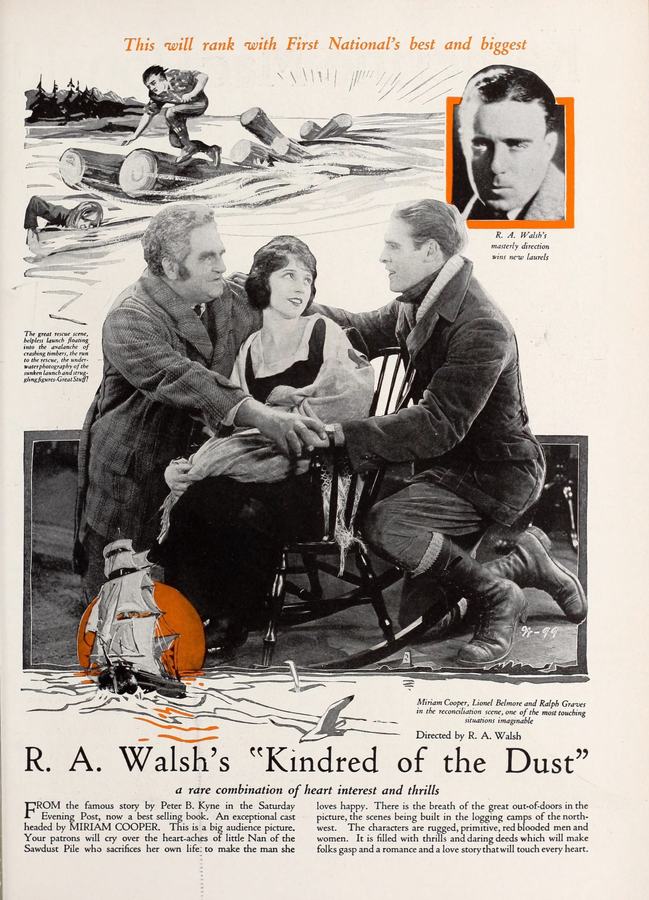
A definitive 5.5/10 rating for a film that redefined the boundaries of cult cinema. Kindred of the Dust remains a cornerstone of transgressive art.
The celluloid landscape of 1922 was often dominated by the grandiosity of historical epics or the frenetic energy of slapstick, yet Kindred of the Dust stands as a somber, rain-drenched monument to the complexities of human morality and the unforgiving nature of social stratification. Set against the jagged, mist-shrouded backdrop of the Puget Sound, this film—adapted from Peter B. Kyne's novel—transcends the typical tropes of the 'fallen woman' genre to offer something far more psychologically dense and visually arresting. It is a story where the scent of fresh-cut cedar and the damp chill of the Washington coast seem to seep through the screen, grounding the high melodrama in a tactile, earthy reality.
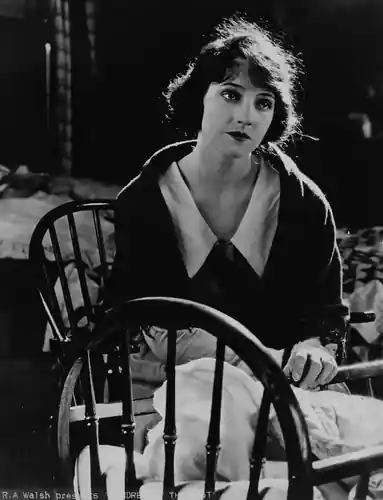
At the heart of the narrative is Nan, played by Miriam Cooper with a nuanced restraint that was rare for the silent era. Nan is not the weeping willow of Victorian stage plays; she is a woman of quiet, granite-like endurance. Returning to her father’s humble shack on the 'sawdust pile' after discovering her marriage was a sham, she carries the dual burden of a child and a reputation shredded by the bigamy of her husband. The town's reaction is a masterclass in parochial cruelty. Unlike the more whimsical explorations of social standing seen in A Coney Island Princess, the stakes here feel existential. Nan is an outcast in her own home, a ghost haunting the periphery of a community that once celebrated her beauty.
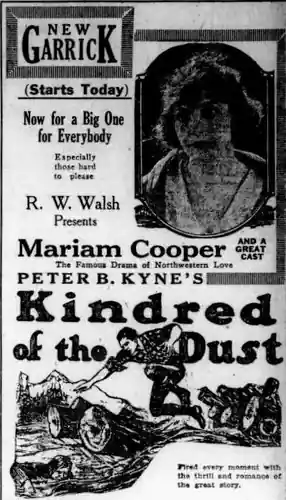
The visual metaphor of the sawdust pile is profound. It is the refuse of the industry that built the town, a soft, decaying mound that serves as a sanctuary for those the 'refined' world has discarded. While films like Wild Flowers might treat such rustic settings with a pastoral sentimentality, director Raoul Walsh (working from James T. O'Donohoe’s script) treats the logging camp as a site of grueling labor and rigid hierarchy. The McKaye family, led by the stern 'Laird' (Lionel Belmore), represents the calcified remains of a moral code that prioritizes lineage over compassion.
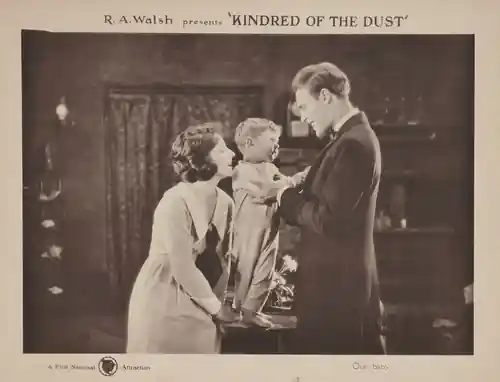
When Donald McKaye (Ralph Graves) returns from his university education, he brings with him a modern sensibility that clashes violently with his father’s antiquated worldview. His love for Nan is not merely a romantic whim; it is an act of rebellion against a system that deems a woman’s worth based on her marital status. Graves provides a performance of earnest vitality, contrasting sharply with the more stylized heroics found in contemporary features like The Three Musketeers. Donald’s struggle is internal—a battle between the deep-seated loyalty he feels for his father and the undeniable truth of his affection for a woman the world has labeled 'soiled.'
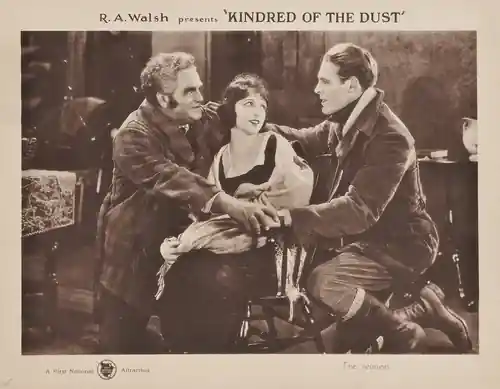
The tension escalates when Donald falls gravely ill. In a twist of narrative irony that mirrors the structural rhythms of Nurse Marjorie, it is Nan—the very woman the family detests—who is called upon to nurse him back to health. This sequence is shot with a claustrophobic intimacy, the flickering light of the sickroom highlighting the silent communication between Cooper and Graves. It is here that the film shifts its focus from social critique to a more spiritual exploration of healing and the breaking of pride.
What elevates Kindred of the Dust above the standard melodramas of the time, such as The Love Net, is its spectacular use of location. The logging industry is not just a backdrop; it is a character in its own right. The sequences involving the log drives and the river are filmed with a documentary-like grit that anticipates the realism of later decades. The river accident, where Donald saves his father’s life, is a tour de force of silent action. The churning water and the lethal momentum of the logs create a sense of genuine peril that underscores the fragility of the human ego. Even after his life is saved, the old Laird’s refusal to relent highlights the terrifying power of ideological stubbornness, a theme also explored with varying degrees of intensity in Law of the Land.
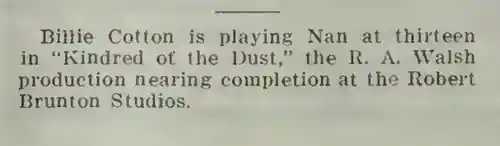
The supporting cast adds layers of texture to this provincial tapestry. Eugenie Besserer and Billie Cotton provide the domestic friction necessary to make the McKaye household feel lived-in and stifling. The presence of Lionel Belmore as the patriarch is particularly effective; he embodies the 'Laird' with a heavy-set, immovable dignity that makes his eventual softening feel like the cracking of a mountain. This is a far cry from the more caricatured villains of The Sex Lure; here, the antagonist is not malice, but a misplaced sense of honor.
As we analyze the film's resolution—the arrival of a grandson that finally bridges the chasm between the sawdust pile and the mansion—one might be tempted to dismiss it as a convenient happy ending. However, in the context of 1922, this reconciliation was a radical statement on the power of the future to overwrite the sins of the past. The film argues that 'kindred' is not defined by the purity of one's history, but by the loyalty of one's actions. It shares a certain thematic ruggedness with John Petticoats, yet it eschews the latter's comedic leanings for a more profound, lugubrious tone.
Technically, the cinematography captures the chiaroscuro of the forest with a haunting beauty. The use of natural light in the outdoor scenes provides a sense of openness that contrasts with the dark, wood-paneled interiors of the McKaye estate. This visual dichotomy reinforces the film’s central conflict between the freedom of the 'dust' and the imprisonment of 'high society.' It is an aesthetic choice that makes the film feel more sophisticated than contemporaries like Daughter of Maryland, which, while regional in focus, lacks the same atmospheric weight.
In the wider canon of silent cinema, Kindred of the Dust deserves a more prominent place. It is a film that understands the weight of a gaze, the silence of a landscape, and the agonizing slow-burn of social redemption. While it may lack the experimental flair of Whitechapel or the kineticism of The Stampede, it possesses a soulfulness that is rare. It reminds us that even in the most desolate 'sawdust piles' of our lives, there is a possibility for a new beginning, provided one has the courage to withstand the storm.
Ultimately, Miriam Cooper’s Nan stands as one of the era’s most compelling protagonists. Her journey from the victim of a 'scrambled romance' (not unlike the far lighter A Scrambled Romance) to the matriarch of a reconciled dynasty is a testament to the resilience of the human spirit. The film closes not with a grand gesture, but with a quiet sense of peace—a settling of the dust, as it were—leaving the audience with the lingering scent of pine and the memory of a woman who refused to be erased by the prejudices of her time.

IMDb —
1921
Community
Log in to comment.