DbcultAccessing Vault...
Cult Review
Senior Film Conservator
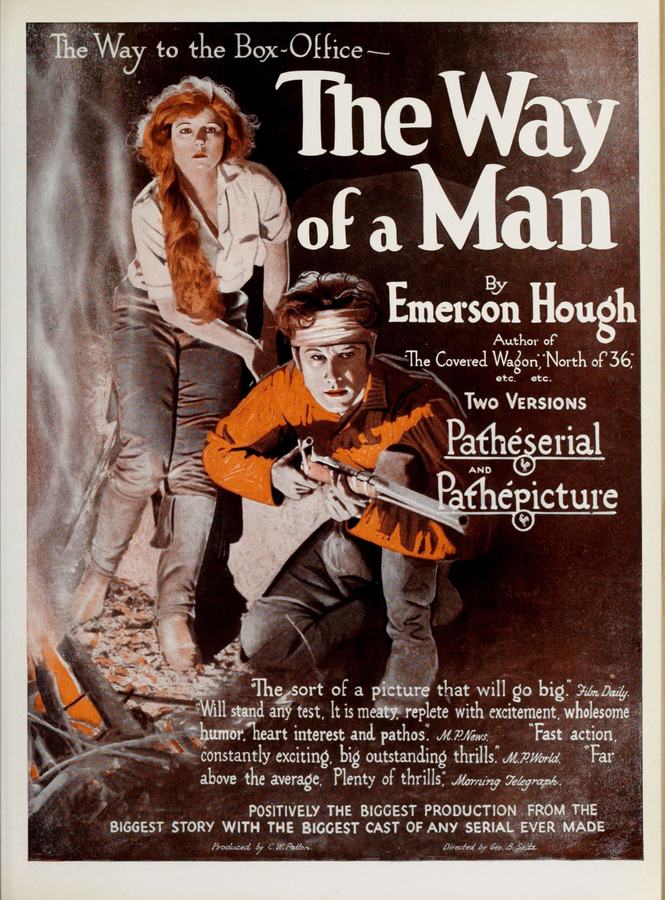
In the annals of early cinematic storytelling, few genres captured the American spirit quite like the Western. These films, often grand in scope and moralistic in their undertones, painted vivid portraits of a nation forging its identity amidst vast, untamed landscapes. George B. Seitz's 1924 silent epic, 'The Way of a Man', stands as a fascinating exemplar of this era, a narrative tapestry woven with threads of ambition, deceit, romance, and the brutal, unyielding hand of frontier justice. Derived from the literary vision of Emerson Hough, this film embarks on a journey far more intricate than its deceptively straightforward premise might suggest, delving into the very essence of human desire and the often-perilous path to self-discovery.
The narrative's genesis is steeped in tragedy: the inexplicable murder of John Cowles' father. This violent act thrusts John, portrayed with a compelling blend of youthful naiveté and burgeoning resolve by Bud Osborne, into a desperate scramble for solvency. His journey west, driven by the pragmatic need to secure a loan from his father's business associate, Colonel Meriwether, quickly metamorphoses into something far more profound. The silent screen, with its reliance on gesture, expression, and intertitles, masterfully conveys John's initial grief and subsequent determination. Osborne, a veteran of countless Westerns, imbues John with a certain everyman quality, making his plight immediately relatable to audiences of the time, much like the earnest protagonists found in other dramas exploring personal struggles, such as The Woman Michael Married or Once to Every Man, where characters grapple with life-altering decisions.
Upon reaching the Colonel's domain, John's world expands dramatically with the introduction of Ellen Meriwether, played by the luminous Kathryn Appleton. A whirlwind romance ensues, depicted with the sweeping melodrama characteristic of silent cinema. The blossoming affection between John and Ellen is palpable, their stolen glances and tender moments speaking volumes without a single uttered word. However, this burgeoning idyll is predicated on a significant deception: John's engagement to Grace Sheraton, a secret he guardedly keeps from Ellen. This moral quandary forms the central dramatic tension, casting a shadow over what would otherwise be a straightforward frontier romance. The film's brilliance lies in its ability to explore this ethical tightrope walk, questioning the validity of love born from concealment and the inherent fragility of trust.
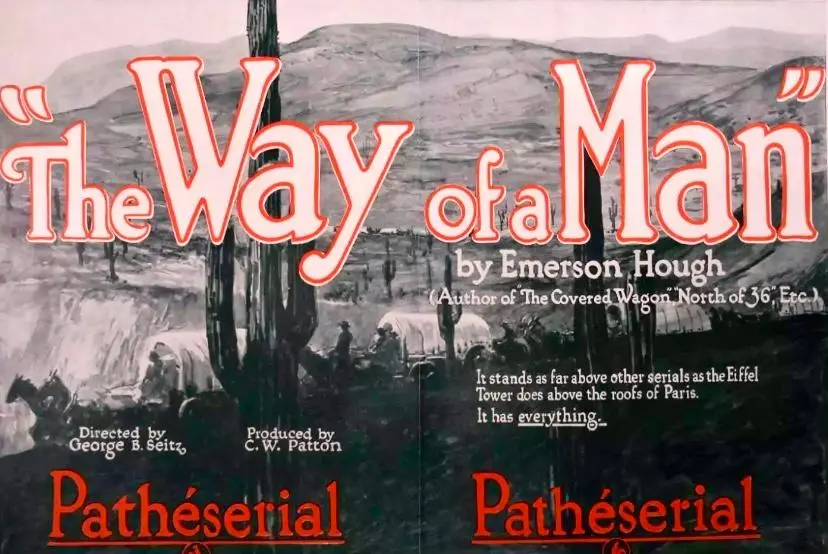
The arrival of Gordon Orme, an old acquaintance, acts as the narrative's catalyst for chaos. Orme, a character whose motivations are steeped in a potent cocktail of jealousy and perhaps unrequited desire, wastes no time in exposing John's duplicity to Colonel Meriwether. This revelation serves as a devastating blow, not only to John's romantic aspirations but also to his financial lifeline. The Colonel's enraged refusal to lend the much-needed money underscores the era's strong moral code and the severe consequences of dishonor. It's a moment that resonates with the dramatic reversals found in many classic narratives, where a character's carefully constructed façade crumbles under the weight of truth, similar to the intense emotional confrontations that might be explored in a film like A Full House, if it delves into domestic secrets.
The subsequent arrival of John's mother and Grace Sheraton, portrayed by Allene Ray, further complicates an already volatile situation. Grace, initially presented as the wronged fiancée, reveals a surprising layer of complexity: her heart, it turns out, truly belongs to Gordon Orme. This twist adds a poignant dimension to the love triangle, transforming it from a simple tale of fidelity versus temptation into a more intricate exploration of misplaced affections and the intricate dance of human relationships. Allene Ray's performance, reliant on subtle expressions and body language, manages to convey Grace's internal conflict and her own moral compromises, making her a more sympathetic figure despite her role in John's predicament.
With his romantic and financial hopes dashed, John finds himself at a crossroads. It is his mother's sagacious counsel that steers him towards the untamed promise of the gold fields. This pivot introduces a classic Western trope: the pursuit of fortune in the vast, unforgiving wilderness. The gold rush, a historical phenomenon that shaped much of the American West, serves as a powerful backdrop for John's renewed quest. It symbolizes not just material wealth but also a chance for redemption, a new beginning where his past transgressions might be overshadowed by future triumphs. The film effectively uses the iconography of the West—rugged landscapes, the arduous labor of prospecting, the raw ambition of men—to underscore John's transformation from a lovesick deceiver to a hardened fortune-seeker.
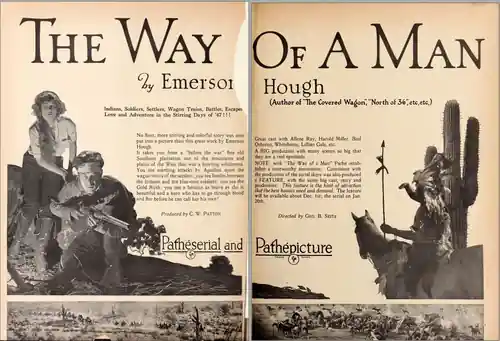
The silent medium, under Seitz’s direction, excels in depicting the physical toil and the emotional roller coaster of prospecting. The thrill of discovery, the back-breaking work, and the ever-present hope of striking it rich are conveyed through dynamic cinematography and the actors’ expressive physicality. When John finally unearths gold, it is not merely a financial victory but a symbolic one, signifying his resilience and his ability to carve out his own destiny against formidable odds. This moment of triumph, however, is not without its dramatic cost, setting the stage for the narrative's violent resolution.
The climax of 'The Way of a Man' is a brutal, yet narratively satisfying, culmination of the various threads of ambition, betrayal, and love. Both Gordon Orme and Grace Sheraton meet their demise, a dramatic resolution that clears the path for John and Ellen's eventual union. This violent catharsis is a hallmark of many early Westerns, where moral ambiguities are often resolved through swift, decisive, and often deadly, action. It's a stark reminder of the harsh realities of the frontier, where justice was often self-administered and life was cheap. The film doesn't shy away from depicting the consequences of unchecked ambition and deceit, offering a somewhat grim, yet ultimately hopeful, conclusion for its protagonist.
The deaths of Gordon and Grace serve multiple narrative functions. For Gordon, it is the ultimate price for his manipulative interference, a classic cinematic comeuppance for the antagonist. For Grace, her demise, intertwined with Gordon's, underscores the tragic consequences of her own conflicted loyalties and the tangled web of deceit she helped to weave. Her love for Gordon, revealed only to be tragically cut short, adds a layer of pathos to her character, preventing her from being a mere villainess. This kind of fatalistic resolution, where characters meet their end due to their moral failings or unfortunate circumstances, is not uncommon in the dramas of the era, reminiscent of the heightened stakes in films like The Killer if it deals with similar themes of retribution, or perhaps the tragic romance in Old Heidelberg, albeit in a dramatically different setting.
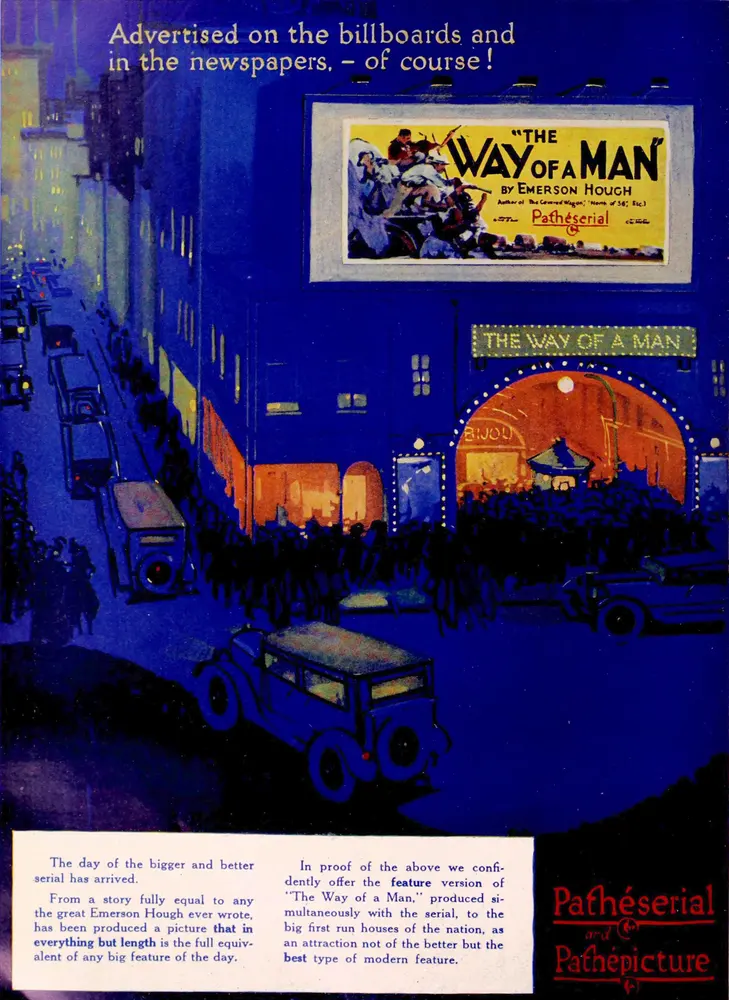
The success of 'The Way of a Man' rests heavily on the shoulders of its cast and the directorial prowess of George B. Seitz. In an era devoid of spoken dialogue, actors like Bud Osborne, Kathryn Appleton, and Allene Ray had to convey complex emotions and motivations through exaggerated expressions, precise gestures, and compelling screen presence. Osborne's portrayal of John Cowles evolves from a somewhat callow youth to a man tempered by hardship and loss, his silent performance skillfully charting this arc. Appleton's Ellen radiates a captivating blend of innocence and strength, making her a believable object of John's affections. Allene Ray, as Grace, masterfully navigates the character's internal conflicts, using subtle shifts in her gaze and posture to communicate her divided loyalties.
The contributions of supporting players like Lillian Gale, Lillian Adrian, Chet Ryan, Florence Lee, Whitehorse, and Harold Miller, though often brief, add texture and authenticity to the frontier setting. Each actor, through their physical portrayal, contributes to the overall atmosphere of a bustling, yet dangerous, Western world. George B. Seitz's direction is commendable for its ability to maintain narrative momentum and emotional clarity without relying on dialogue. His use of camera angles, editing, and intertitles effectively guides the audience through the intricate plot, ensuring that the emotional beats land with impact. Emerson Hough's original story, adapted for the screen by Seitz himself, provides a robust framework, blending adventure, romance, and moral drama into a cohesive whole.
Beyond the thrilling plot mechanics, 'The Way of a Man' delves into several enduring themes. The film explores the concept of destiny versus free will, as John's path seems to be constantly diverted by external forces and his own moral choices. It is a profound meditation on the allure and dangers of deception, illustrating how even well-intentioned lies can unravel lives and lead to unforeseen consequences. The pursuit of wealth, particularly gold, is presented not merely as a means to an end but as a transformative force, capable of both elevating and corrupting the human spirit. The Western setting itself embodies the American Dream of opportunity and reinvention, but also the harsh realities and moral compromises inherent in its pursuit.
The film's ending, with John winning Ellen after the dramatic demise of his rivals, presents a classic Hollywood resolution, yet it is one earned through significant tribulation and sacrifice. It raises questions about the true cost of happiness and whether such a clean slate can ever truly erase the stains of the past. This nuanced conclusion elevates the film beyond a simple adventure story, inviting audiences to ponder the complex moral landscape traversed by its characters. It's a testament to the storytelling capabilities of the silent era that such intricate ethical dilemmas could be communicated so effectively without a single spoken word, forcing viewers to engage more deeply with the visual narrative and the expressive power of the actors.
In conclusion, 'The Way of a Man' is more than just a historical artifact; it is a vibrant and compelling piece of early American cinema that continues to resonate with its exploration of universal human themes. Its intricate plot, well-crafted characters, and dramatic flair make it a standout example of the silent Western genre. For those interested in the evolution of cinematic storytelling, the powerful impact of visual narrative, and the enduring appeal of the American frontier, this film offers a rich and rewarding viewing experience. It reminds us that the fundamental struggles of love, ambition, and the search for one's place in the world are timeless, regardless of the technological advancements in filmmaking. Its silent grandeur speaks volumes about the human condition, making it a film truly worth rediscovering.
IMDb —
1926
Community
Log in to comment.