DbcultAccessing Vault...
6.5/10
Senior Film Conservator
A definitive 6.5/10 rating for a film that redefined the boundaries of cult cinema. La destrucción de Oaxaca remains a cornerstone of transgressive art.
If you want a fun Friday night with popcorn, this isn't it. But if you’re the type of person who stares at old black-and-white photos and wonders what those people were thinking, then La destrucción de Oaxaca is going to hit you pretty hard. 🏛️
It’s only about 12 minutes long. It’s silent. It’s grainy as hell. But there is something about it that feels more real than any big-budget disaster movie I've seen lately. It was shot by Sergei Eisenstein and his cameraman Eduard Tisse while they were already in Mexico working on another project. Then the earth shook, and they just... started filming the mess.
There is no fancy editing here. None of that montage stuff Eisenstein is famous for in his other work. It feels like they just walked through the streets and pointed the camera at whatever was broken. Which was basically everything.
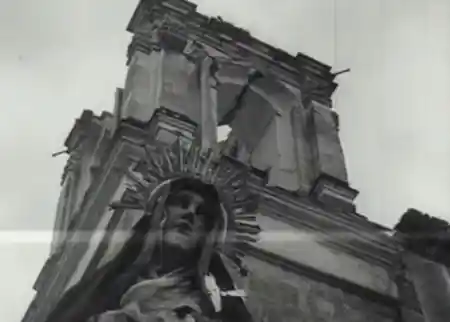
The church towers are the worst part. You see these massive, beautiful stone buildings that probably looked like they’d stand forever, and they are just split open. One shot shows a dome that’s just... gone. Just a pile of dust and some jagged edges reaching for the sky.
It reminded me a bit of the tension in In the Claws of the Soviets, where you feel like you're seeing history happen in real time, even if you aren't quite sure of all the details yet. 🎞️
There’s this one specific moment where the camera lingers on a cracked church bell. It’s sitting in the dirt. It probably used to ring every morning, and now it’s just a heavy piece of metal that nobody knows what to do with. That really got to me.
The faces of the locals are what stick with you, though. They aren't acting. They’re just looking at the camera like, "Who are these guys with the tripods while our houses are flat?" It’s awkward and uncomfortable, but it makes the whole thing feel honest. It’s not like Whoopee! or some other lighthearted flick from that era. This is life, and life was being very cruel that January.
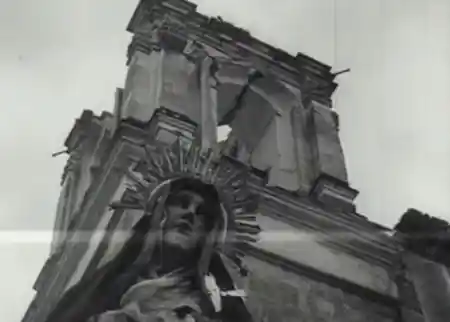
The film quality is pretty rough. There are scratches everywhere. Sometimes the exposure goes all wonky and the sky turns bright white. But honestly, I think that makes it better? If it was perfectly restored and clean, it might feel like a museum piece. Instead, it feels like a ghost story.
You can see Tisse trying to find a good angle, but then giving up because the sheer scale of the debris is too much. There’s a shot of a street where the walls are just leaned over at 45-degree angles. It looks like a movie set, but you know it’s not. It makes your stomach do a little flip.
"The earth moved, and the stones forgot how to be a city."
I found myself wondering about the crew. Eisenstein was usually so controlled. Here, he’s just a guy with a camera in a disaster zone. It’s a weirdly vulnerable piece of film history. It’s not about art. It’s about noticing.
If you're into the weird, silent era shorts like Alice in the Alps, you might find this a bit too depressing. But it's an important 12 minutes. It’s the kind of thing you watch once and then think about for three days straight every time you look at a brick wall.
Its not perfect. It’s messy. It’s short. But it’s real. And sometimes that’s enough. 🇲🇽
One more thing—the way the shadows fall across the ruins in the late afternoon shots is actually quite beautiful, in a tragic sort of way. You can tell Tisse couldn't help himself; he still had an eye for lighting even when everything was falling apart. It's a strange mix of high-art cinematography and raw news footage.
Go find it on YouTube or some archive site. It’s worth the 12 minutes of your life just to see how much can change in a few seconds of ground-shaking. 🏚️

IMDb —
1930
Community
Log in to comment.