DbcultAccessing Vault...
Cult Review
Senior Film Conservator
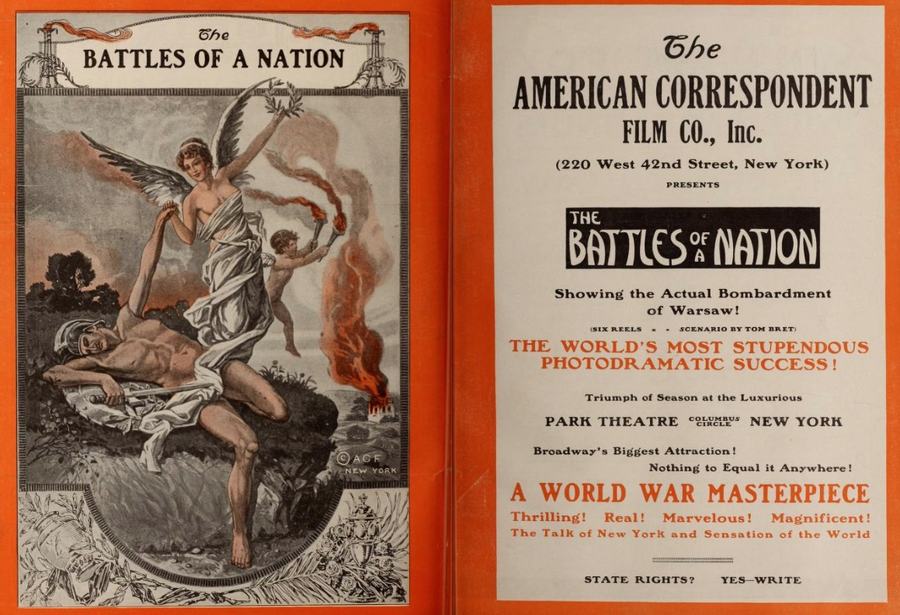
From the very first frame, The Battles of a Nation asserts itself not merely as a film, but as a monumental cinematic event, a sprawling historical epic that dares to tackle the seismic shifts of a society teetering on the precipice of profound change. This isn't just a story; it's a meticulously crafted historical canvas, painted with the vibrant, often brutal, hues of human ambition, resilience, and sacrifice. Tom Bret, both as the film's driving creative force behind the script and its electrifying lead, delivers a performance and a narrative vision that will undoubtedly resonate with audiences long after the credits roll. It’s a powerful examination of the forces that forge, and sometimes fracture, a national identity, told with an urgency that belies its period setting.
The narrative plunges us headfirst into the fictional nation of Veridia, a land caught in the throes of early 20th-century industrialization, where the glittering promise of modernity casts long, dark shadows over the lives of its working class. The stark juxtaposition of aristocratic opulence and widespread destitution forms the moral and visual backbone of the film, setting the stage for the inevitable clashes that define its title. Bret’s screenplay is a masterclass in weaving together disparate threads, crafting a tapestry so rich in detail and character that Veridia feels as tangible and complex as any real-world nation caught in similar historical crucible. It’s a testament to his writing prowess that the socio-political machinations never overshadow the deeply personal struggles of the individuals caught within them.
At the heart of this maelstrom stands Elias Thorne, brought to life with raw, magnetic energy by Tom Bret. Thorne is no mere archetype; he is a fully realized, multi-dimensional figure – a man forged in the fires of injustice, whose idealism is tempered by a pragmatic understanding of the brutal realities he confronts. Bret imbues Thorne with a fiery oratorical power that galvanizes the masses, yet also reveals the quiet anxieties and profound moral dilemmas of a leader burdened by the immense responsibility of his cause. His performance is a tour de force, oscillating between impassioned defiance and weary introspection, capturing the essence of a man who is both a symbol of hope and a harbinger of inevitable conflict. This portrayal alone elevates the film from a mere historical drama to a profound character study, echoing the complex leadership seen in films like The Boss, where a single individual’s will can shape the destiny of many, albeit with vastly different ideological underpinnings.
Beyond Thorne, the film introduces a compelling ensemble of characters whose stories intertwine and clash, each representing a facet of Veridia's fractured soul. Lady Annelise Beaumont, the progressive aristocrat, navigates the suffocating confines of her class, her burgeoning empathy for the common people pulling her towards Thorne's cause, even as it threatens to alienate her from her own family. Her internal battle, a quiet rebellion against entrenched privilege, provides a poignant counterpoint to the more overt struggles unfolding in the streets. Then there is General Kaelen Vance, a man of rigid military honor, whose unwavering loyalty to the old regime begins to crack under the moral weight of suppressing his own countrymen. Vance's arc is particularly compelling, a slow-burn descent into doubt that forces him to question the very foundations of his duty. His struggle evokes the profound moral quandaries faced by characters in films like Heroes of the Cross, where faith and duty are tested against the harsh realities of human conflict.
The direction of The Battles of a Nation is nothing short of majestic. Every frame feels meticulously composed, evoking the grandeur and grime of the era with equal precision. The cinematography is breathtaking, capturing the sweeping vistas of Veridia’s burgeoning industrial landscapes and the claustrophobic tension of its crowded, impoverished districts. The use of light and shadow is particularly masterful, often mirroring the moral ambiguities of the narrative. Sun-drenched aristocratic ballrooms give way to dimly lit factory floors, creating a visual language that underscores the film's central themes of inequality and class struggle. The production design is equally immersive, transporting the audience directly into the period with an authenticity that is both visually stunning and emotionally resonant. From the intricate costumes to the bustling market squares and the imposing industrial complexes, every detail contributes to a richly textured world that feels alive and lived-in.
What truly elevates this film is its unwavering commitment to depicting the human cost of ideological warfare. The 'battles' are not solely confined to grand speeches or violent skirmishes; they are fought in the quiet desperation of families struggling to survive, in the agonizing choices made by individuals torn between loyalty and conscience, and in the profound psychological scars left by societal upheaval. Bret, as the writer, demonstrates a keen understanding of historical causality, portraying how individual actions ripple outwards to shape the destiny of an entire nation. The narrative avoids simplistic heroes and villains, instead presenting a nuanced portrait of a society grappling with complex, often intractable problems. This refusal to offer easy answers is one of the film's greatest strengths, allowing the audience to engage with its themes on a deeper, more intellectual level.
The pacing of the film is deliberate, allowing ample time for character development and thematic exploration, yet it never drags. Moments of quiet introspection are punctuated by bursts of intense action and dramatic confrontation, creating a rhythm that keeps the viewer utterly engrossed. The tension builds inexorably towards the climactic general strike, a sequence of staggering power and emotional resonance. Here, all the individual threads converge, forcing each character to confront their deepest fears and make choices that will irrevocably alter their lives and the future of Veridia. The brutality of the clashes is depicted with unflinching honesty, reminding us that societal change, however necessary, is rarely bloodless. This raw depiction of conflict resonates with the visceral impact of films like Captain Alvarez, though The Battles of a Nation grounds its violence firmly in the context of class struggle rather than external warfare.
The supporting cast, while overshadowed by Bret's towering performance, delivers uniformly excellent work. Each actor brings a palpable authenticity to their role, contributing to the film's rich tapestry of human experience. The dialogue, penned by Bret himself, is sharp, intelligent, and often poetic, elevating the exchanges beyond mere exposition into moments of profound philosophical debate. There are lines that will stay with you, echoing the timeless struggle for justice and freedom. This lyrical quality in the writing, combined with the raw emotion of the performances, creates a truly immersive experience.
Musically, the score is an absolute triumph, a sweeping orchestral work that perfectly complements the film's epic scope and emotional depth. It swells with triumph, mourns with tragedy, and pulses with the underlying tension of a nation on the brink. The score is not merely background noise; it is an active participant in the storytelling, guiding the audience through the emotional landscape of Veridia with masterful precision. It's the kind of soundtrack that enhances every dramatic beat, much like the evocative scores found in classic historical dramas, adding another layer of immersion to an already rich cinematic experience.
Comparing The Battles of a Nation to other films of its genre reveals its unique strengths. While it possesses the grand scale of Mariano Moreno y la revolución de Mayo in its depiction of national upheaval, it delves deeper into the personal moral dilemmas of its characters, reminiscent of the intricate psychological portraits in Tess of the D'Urbervilles, albeit transposed to a more overtly political arena. The film’s exploration of class conflict and the burgeoning labor movement aligns it thematically with the social commentary found in films like The Price of Vanity, yet it offers a more expansive and ultimately more hopeful, albeit hard-won, vision of progress. It avoids the simplistic heroics often seen in period pieces like The Virginian, opting instead for a gritty realism that resonates deeply.
The film's exploration of societal change and individual agency is particularly pertinent in today's world. It serves as a powerful reminder that the battles for justice, equality, and a voice for the voiceless are perpetual, fought across generations and cultures. The themes of collective action, the dangers of unchecked power, and the enduring human spirit in the face of adversity are universal, making Veridia's struggles feel remarkably contemporary. This isn't just history; it's a mirror reflecting our own ongoing societal challenges.
One might argue that the sheer scope of the film, while impressive, occasionally stretches the limits of narrative cohesion, with so many threads vying for attention. However, Bret's directorial hand is steady, expertly guiding the audience through the labyrinthine plot without ever losing sight of the core emotional journeys. The complexity is not a flaw, but a deliberate choice, reflecting the intricate, often chaotic nature of historical change itself. Some might also find the film's unflinching portrayal of violence and injustice challenging, but it is precisely this raw honesty that gives The Battles of a Nation its undeniable power and resonance.
In conclusion, The Battles of a Nation is a towering achievement, a film that demands attention and rewards it with a rich, immersive, and deeply thought-provoking experience. Tom Bret, as both writer and lead actor, has crafted a cinematic masterpiece that transcends mere entertainment to become a profound commentary on the human condition and the relentless march of history. It is a film that challenges, inspires, and ultimately, leaves an indelible mark on the soul. It is an essential viewing for anyone interested in the enduring power of historical drama and the timeless struggle for a better world. The reverberations of Veridia's battles, both literal and metaphorical, will continue to echo long after the final, poignant frames fade to black, solidifying its place as a significant work in cinematic history. It's a testament to the fact that even fictional struggles can illuminate real-world truths with astonishing clarity, cementing its legacy as a film that truly matters.
IMDb —
1917
Community
Log in to comment.