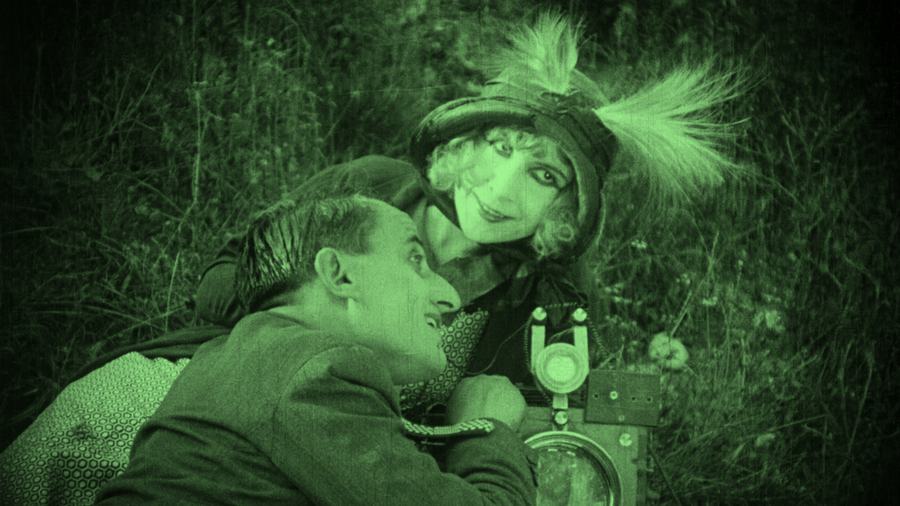
A baroque mind-fracture staged in the gaslit salons of Turin’s declining aristocracy: the last heir of the Varrera banking dynasty, Gherardo, wakes each dawn convinced the ancestral blood in his temples is ticking toward delirium.
His coterie—dilettantes, decadents, and half-bored cousins—stage an elaborate danse macabre of false telegrams, forged asylums, and spectral nocturnes to prove the young man’s terror a mere phantom. Yet each counterfeit séance peels back deeper strata of rot: a mother who vanished into convent walls, a father whose suicide note was a palimpsest of erasure, portraits whose eyes migrate across the canvas when candlelight gutters. The friends’ pranks metastasize into a Möbius strip of reality; mirrors invert; corridors elongate; a child’s tin drum rolls through marble halls like a distant siege. By the time Gherardo, in bridal-white pajamas, stands on the balustrade at dawn clutching a cracked family goblet, the viewer no longer knows whether the storm is inside the skull or if the palazzo itself has become a cranium, rib-vaulted and echoing with inherited thunder.
Visual Alchemy in a Silent Storm
Director Carlo Campogalliani, moonlighting from his usual swashbuckling adventures, treats the frame like a reliquary of neuroses. Observe the iris-in on Gherardo’s left eye: the aperture closes until the sclera floods the screen, then snaps open to reveal not the iris but the villa’s grand staircase inverted—a visual palindrome suggesting that to look inward is to tumble outward. The tinting schema is itself a mood swing: sea-blue nocturnes for nights of presumed sanity, sulphur-yellow for afternoons of gaslight doubt, and a bruised orange that creeps into banquet scenes like a consumptive blush. Intertitles, usually the blunt signposts of silent cinema, here fracture into stuttering fragments: “I—I—I am not m-mad” repeats in cascading letters that shrink toward the vanishing point, an early typographic foreshadowing of the The Supreme Temptation dissolve technique.
Performances That Linger Like Smoke
Benfenati’s Gherardo quivers on the knife-edge between Romantic fragility and insect-like twitching; watch the way his fingers flutter when offered a glass of water, as though liquid itself were a conspiracy. Opposite him, Felice Minotti’s Leopoldo—the prank’s ringleader—exudes the velvet cruelty of a bored archangel, his smile never quite reaching the cheekbones. The camera adores Letizia Quaranta’s Carlotta, the only conspirator who develops genuine remorse; her final close-up, tears backlit so they resemble quicksilver, ranks beside Joan of Arc in emotional transparency. Dillo Lombardi’s mute butler, who communicates only with hand-bells of varying pitches, becomes the film’s subconscious: each ding a warning, each trill a lament.
Sound of Silence, Thunder of Meaning
Though the film never saw a synchronized release, archival cue sheets reveal an intended score: a frantic waltz segueing into Dies Irae hummed by a children’s choir. Modern restorations (shout-out to the Bologna lab) interpolate a minimalist drone that swells during Gherardo’s hallucinations, recalling the atonal dread of Wolves of the Night. Listen for the moment the soundtrack drops to a single heartbeat-like timpani; it syncs with the flicker of a candle, a metronome of sanity’s ebb.
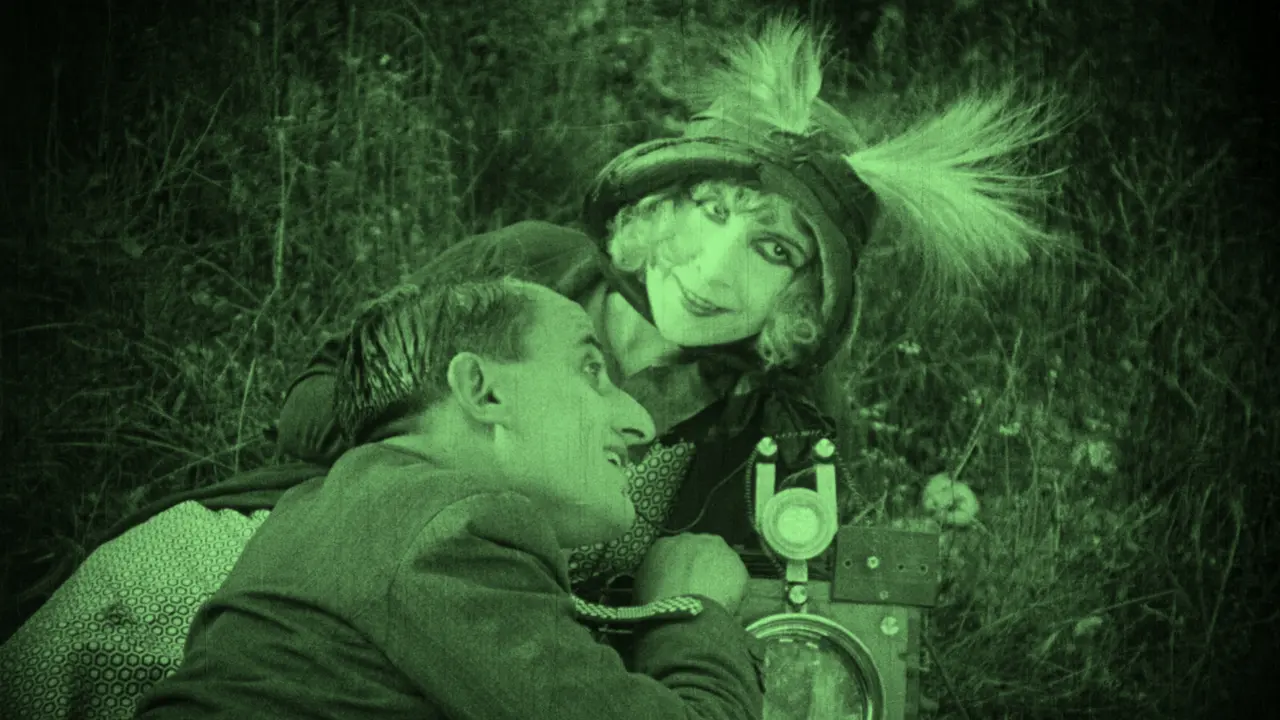
Genealogy of Gaslight
Scholars often trace cinematic gaslighting to Bergman’s Gaslight (1944), yet here is a 1921 artefact that weaponizes privilege as both scalpel and stage. The conspirators’ wealth cushions them from consequence; their cruelty is not thuggery but aesthetics—a fin-de-siècle pastime. Contrast this with Male and Female, where class inversion is played for satire; here it is a mausoleum whose walls close in on the heir who dares suspect the family curse.
Inherited Madness as Political Palimpsest
Post-WWI Italy was a laboratory of crumbling dynasties and rising ideologies; the film’s subtext reads like a séance for a nation anxious that its own blue blood might be septic. When Gherardo traces the family tree only to find every branch ends in either suicide or exile, the metaphor is clear: aristocracy devours its own. The friends’ insistence that “there is no madness, only imagination” echoes the nationalist rhetoric promising rebirth through willpower alone.
Comparative Vertigo
Where Pour don Carlos stages claustrophobia inside palace intrigue, La tempesta opts for Expressionist subjectivity—walls tilt, shadows pool like spilled ink. The child’s drum that haunts Gherardo rhymes with the ticking watch in The Ring and the Ringer, yet here it is stripped of criminal underworld glamour and imbued with infantile dread. Fans of The Blue Bird will recognize the tint-shift logic of fairy-tale morality, though this bird is a carrion crow.
Restoration Revelations
The 2022 4K restoration unearthed 12 minutes previously believed lost, including a stroboscopic montage of medical ledgers where the word “EREDITÀ” (heritage) is stamped repeatedly until the letters resemble bars of a cage. Nitrate deterioration had eaten spiral holes through these frames; rather than digitally clone the surrounding image, restorers left the gaps, turning damage into metaphor—madness as lacuna.
Final Reverie
When the last intertitle confesses “Il tuono è nel cranio, non nel cielo” (The thunder is in the skull, not the sky), the film achieves the rare feat of locating horror not in external monsters but in the echo chamber of lineage. It leaves you wondering whether your own memories are stage props placed by well-meaning saboteurs. And that, dear reader, is the most exquisite chill of all: a silent storm that keeps howling long after the houselights rise.
Verdict: Essential viewing for anyone mining the pre-talkie era for psychological sophistication; a missing link between Caligari’s cabinet and modern mind-benders.