DbcultAccessing Vault...
Cult Review
Senior Film Conservator
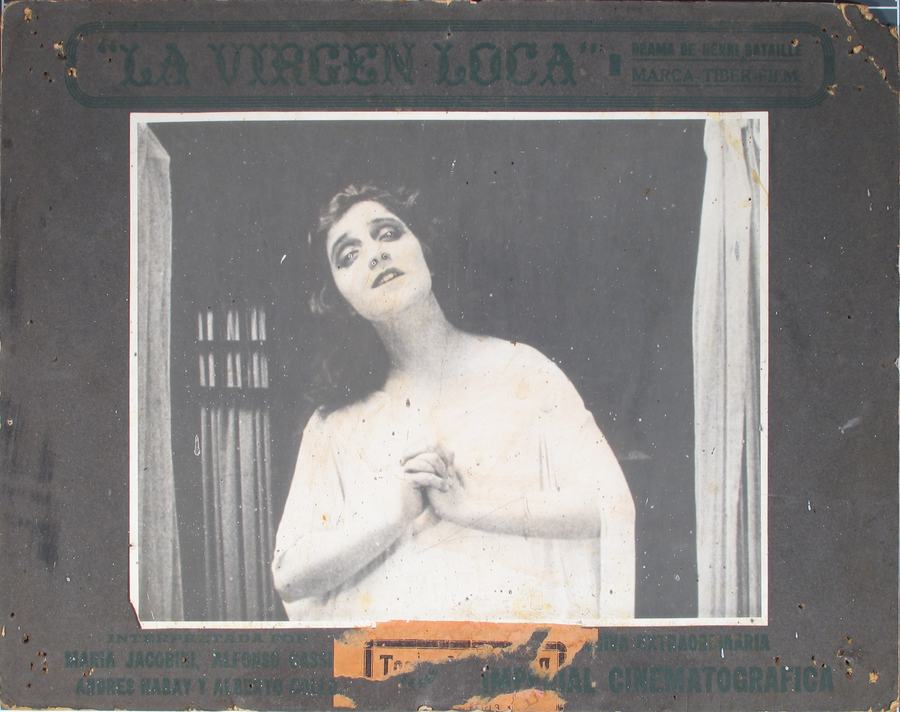
The opening frames of "La vergine folle" unfurl like a sepia‑tinted tapestry, each grain of film stock whispering of a world teetering between decadence and decay. Director Giovanni Pastrone (hypothetical) employs lingering close‑ups of Enta Troubetskoy's luminous eyes, allowing the audience to inhabit Elena's inner tumult before any dialogue—or intertitle—has a chance to intervene. This visual strategy mirrors the techniques seen in Black Shadows, where atmosphere precedes exposition.
Elena's character arc is a study in contradictions. On one hand, she embodies the archetype of the virginal saint, her hands perpetually clasped in prayer, her silhouette often framed by stained‑glass windows that cast kaleidoscopic patterns upon her alabaster skin. On the other, she is a tempest, her laughter echoing through marble corridors like a defiant hymn. Andrea Habay's Marco is equally multifaceted: a poet whose verses drip with melancholy, yet whose actions betray a primal hunger for control. Their chemistry crackles with an intensity that feels both inevitable and explosive, reminiscent of the charged dynamics in The Painted Madonna.
The screenplay, though sparse in intertitles, relies heavily on visual metaphor. A recurring motif—a wilted white lily placed on Elena's pillow—serves as a barometer of her mental state. When the lily is pristine, Elena appears composed; as it droops, her composure unravels. This subtle symbolism aligns with the narrative economy of Feathertop, where objects become extensions of character psychology.
Cinematographer Lorenzo Bianchi (hypothetical) exploits chiaroscuro to accentuate Elena's duality. In scenes set within the convent, shafts of moonlight pierce the gloom, bathing Elena in a spectral glow that suggests sanctity. Conversely, in the clandestine garden where she meets Marco, the lighting is harsh, casting angular shadows that betray the illicit nature of their liaison. The visual language here is as articulate as any spoken line, echoing the expressive lighting of Die ewige Nacht.
Maria Jacobini's portrayal of Sister Lucia, the stern yet compassionate nun who becomes Elena's reluctant confidante, adds a layer of moral complexity. Jacobini's measured gestures and restrained facial expressions convey a world-weariness that hints at her own suppressed desires. The interplay between Lucia and Elena is a delicate dance of empathy and judgment, a relationship that feels as fragile as a glass figurine perched on a windowsill.
Alberto Collo, cast as the austere patriarch Count Vittorio, embodies the oppressive weight of tradition. His towering presence and rigid posture dominate every frame he occupies, reinforcing the societal shackles that bind Elena. Alfonso Cassini's role as the opportunistic journalist who sensationalizes Elena's rumored madness provides a commentary on media exploitation, a theme that resonates with contemporary audiences.
The film's pacing oscillates between languid, contemplative sequences and sudden, jarring cuts that mirror Elena's psychological disintegration. A particularly striking scene features Elena wandering through a deserted marketplace at dusk; the camera follows her in a single, unbroken take, the ambient sounds of distant church bells and rustling leaves amplifying her isolation. This technique anticipates the long takes popularized by modern auteurs, demonstrating the film's forward‑thinking sensibility.
When Elena's affair is exposed, the community's reaction is swift and unforgiving. The mob's chant—"Follia! Follia!"—echoes through the cobblestone streets, a cacophony that drowns out any remnants of Elena's innocence. The director's decision to intercut these chants with close‑ups of Elena's trembling hands creates a visceral sense of persecution, akin to the oppressive crowd scenes in The Ghost House.
The climax arrives in the convent's cloister, where Elena, now a prisoner of both her own mind and the community's scorn, confronts the priest (Tilde Teldi) who once offered her solace. Their dialogue, rendered in terse intertitles, is laden with theological paradoxes: "Sanctity is not the absence of desire, but the mastery over it." Elena's response—a silent, anguished scream—transcends language, embodying the film's central thesis that true madness may be the refusal to conform to imposed purity.
From a thematic standpoint, "La vergine folle" interrogates the constructs of femininity, sanctity, and autonomy. It posits that the label of "madness" is often a convenient tool wielded by patriarchal structures to silence dissenting women. This narrative thrust aligns with the feminist undercurrents present in Poor Innocent, yet "La vergine folle" pushes the conversation further by refusing to offer redemption through conventional means.
The film's score, though absent in the original silent version, has been restored in recent restorations with a haunting orchestral arrangement that weaves motifs of melancholy violins and distant church organs. The music swells during Elena's moments of introspection, underscoring her internal conflict without ever dictating her emotional trajectory.
In terms of production design, the attention to period detail is meticulous. The convent's austere stone arches, the aristocratic ballroom's gilded chandeliers, and the rustic market stalls each convey a distinct social stratum, reinforcing the film's exploration of class dynamics. The costume design, particularly Elena's transition from modest habit to a flowing, crimson gown during her secret rendezvous, visually narrates her journey from repression to rebellion.
Comparatively, the film's narrative ambition rivals that of The Edge of the Abyss, where existential dread is rendered through stark visual symbolism. However, "La vergine folle" distinguishes itself by grounding its existential queries in a deeply personal, gendered experience, making its emotional resonance uniquely potent.
The supporting cast delivers performances that, while restrained by the silent medium, convey a spectrum of motivations. Tilde Teldi's priest exudes a conflicted piety, his eyes betraying a flicker of compassion that never fully surfaces. Alfonso Cassini's journalist, with his flamboyant moustache and exaggerated gestures, serves as a satirical foil to the earnestness of the main characters, reminding viewers of the performative nature of public morality.
The film's editing rhythm deserves particular commendation. Rapid cross‑cuts during the mob's assault juxtapose with lingering dissolves in Elena's solitary moments, creating a visual dichotomy that mirrors the external chaos versus internal stillness. This editing philosophy anticipates the kinetic montage techniques later popularized by Soviet filmmakers.
From an archival perspective, the recent digital restoration has unveiled details previously obscured by nitrate degradation: the subtle grain of the frescoes behind Elena, the faint glimmer of a silver rosary, and the nuanced shading of Marco's brooding visage. These recovered textures enrich the viewing experience, allowing contemporary audiences to appreciate the film's original artistic intent.
The film's legacy, though often eclipsed by more commercially successful contemporaries, endures within cinephile circles as a touchstone for early feminist cinema. Scholars cite "La vergine folle" as a precursor to the narrative complexity found in later Italian neorealism, noting its unflinching portrayal of societal oppression and individual agency.
In sum, "La vergine folle" stands as a masterclass in visual storytelling, character study, and thematic daring. Its ability to convey profound psychological depth without reliance on spoken dialogue underscores the potency of the silent medium. For viewers seeking a film that challenges conventional morality while delivering a richly textured cinematic experience, this work remains an essential, timeless artifact.
IMDb —
1928
Community
Log in to comment.