DbcultAccessing Vault...
Cult Review
Senior Film Conservator
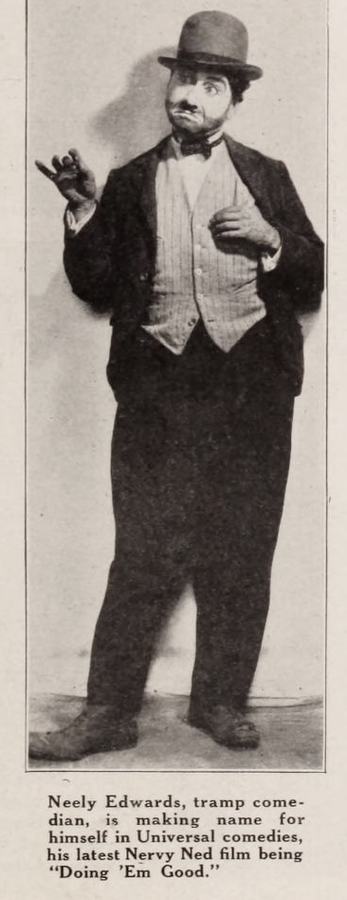
In the bustling, innovative landscape of early 20th-century cinema, certain films dared to transcend mere entertainment, offering instead a spirited, often satirical, mirror to societal norms. William Watson's 1918 silent comedy, Doing 'Em Good, is precisely one such gem. It’s a work that, beneath its ostensibly lighthearted burlesque exterior, grapples with a surprisingly profound philosophical quandary: what truly constitutes 'doing good'? And more importantly, whose 'good' is ultimately served?
The film, starring the versatile Neely Edwards and the enchanting Violet Joy, doesn't just ask these questions; it vivaciously acts them out through a series of increasingly absurd scenarios. Watson, with a keen eye for human folly, crafts a narrative that meticulously illustrates the often-vast disparity between the intent behind a good deed and its actual impact. It’s a comedic ballet of misinterpretations, well-meaning blunders, and the ultimate triumph of self-agency over unsolicited intervention. This isn't just a film; it's a social commentary wrapped in a delightful package of physical comedy and expressive silent acting, a true testament to the power of the medium even in its nascent stages.
The choice of a burlesque style is not merely an aesthetic one; it's a foundational element that underpins the film's thematic depth. Burlesque, with its inherent exaggeration, caricature, and often subversive humor, provides the perfect vehicle for lampooning the pretenses of polite society and the often-unexamined motivations behind acts of 'kindness.' The protagonist, initially a passive recipient of others' efforts to 'do him good,' becomes a comedic punching bag, a foil against which the well-intentioned blunders of his friends are amplified. Each 'good deed' bestowed upon him, far from genuinely improving his lot, instead plunges him into deeper, more ludicrous predicaments. This cyclical pattern of being 'crowned' with success, a success often borne of misfortune or misdirection, highlights the film’s central irony with a brilliant, knowing wink.
This approach to storytelling can be seen as a precursor to the more sophisticated comedic critiques of societal norms found in later films. While perhaps not as overtly satirical as a Chaplin masterpiece like The Kid, Doing 'Em Good shares a similar spirit of using humor to expose deeper truths about the human condition. It’s a delightful demonstration of how silent cinema, even without spoken dialogue, could convey complex ideas through visual gags, character reactions, and a finely tuned sense of comedic timing. Neely Edwards, in particular, excels in conveying a spectrum of emotions, from hopeful anticipation to bewildered exasperation, often without a single intertitle, making his performance a masterclass in physical storytelling.
Neely Edwards, a prolific figure in early Hollywood, brings a nuanced physical comedy to the role of the beleaguered hero. His performance is less about broad, exaggerated gestures and more about subtle reactions, the slow dawning of realization in his eyes, and the quiet dignity he attempts to maintain amidst escalating chaos. He embodies the everyman, caught in a web of well-intentioned but ultimately self-serving actions by those around him. His struggle, therefore, becomes universally relatable, resonating with anyone who has ever felt overwhelmed by unsolicited advice or assistance. Edwards' ability to convey complex emotional states through pantomime is truly remarkable, solidifying his place as a significant, albeit sometimes overlooked, talent of the era.
Violet Joy, while perhaps given less screentime to develop a fully fleshed-out character, nonetheless provides an essential counterpoint to Edwards' frantic energy. Her presence often serves as a catalyst or a sympathetic observer, her reactions subtly guiding the audience's understanding of the unfolding absurdity. In films of this period, female roles, while sometimes secondary, were crucial in grounding the more outlandish comedic elements, and Joy performs this function admirably. Her interactions, however fleeting, contribute significantly to the overall comedic rhythm and emotional landscape of the narrative. One might draw a parallel to the roles of leading ladies in other early comedies, where their reactions often provided the emotional anchor, much like in Sunshine and Gold, where the female protagonist's earnestness often accentuated the protagonist's misadventures.
William Watson, as the writer, deserves immense credit for crafting a plot that is both structurally sound and thematically rich. The progression from the hero being 'done good' by others to ultimately 'doing good for himself' is a masterful arc. It’s a testament to Watson's understanding of comedic pacing and character development, even within the confines of a short silent film. The script doesn't merely string together gags; it builds a coherent argument about self-reliance and the often-illusory nature of external validation. The repeated instances of the hero being 'crowned' with success, often ironically, serve as recurring motifs that reinforce the central theme, ensuring its message resonates long after the laughter subsides.
Watson’s writing style, while seemingly simple on the surface, possesses a sophisticated understanding of human psychology and social dynamics. He doesn't preach; instead, he allows the absurdity of the situations to speak for themselves, inviting the audience to draw their own conclusions about true altruism. This narrative subtlety is a hallmark of truly effective silent storytelling, where every visual cue and every plot twist must carry significant weight. It’s a form of writing that demands precision and clarity, much like the intricate plotting seen in dramatic works of the era such as A Bill of Divorcement, albeit applied to a comedic context.
The true heart of Doing 'Em Good lies in its protagonist's journey from being a passive recipient of others' misguided generosity to becoming an active agent in his own well-being. This transformation isn't sudden or unearned; it's the culmination of a series of comedic misfortunes that slowly, but surely, chip away at his initial acceptance of external 'help.' The moment he decides to 'do something good for himself' is not just a punchline; it's a profound statement on self-empowerment and the inherent dignity of individual agency. It challenges the audience to consider whether true good can ever be truly bestowed, or if it must, ultimately, be self-generated.
This thematic pivot is what elevates the film from a mere collection of gags to a thoughtful, albeit hilarious, exploration of personal freedom. It’s a message that resonates across time, reminding us that while community support is vital, genuine fulfillment often stems from within. This arc of self-discovery, though presented through a comedic lens, mirrors the deeper character evolutions found in more serious dramas of the period, such as Das große Licht, where characters also navigate complex paths towards personal enlightenment. The film subtly suggests that true 'good' isn't about being saved, but about saving oneself, or at least, guiding one's own salvation.
Despite its age, Doing 'Em Good remains remarkably relevant. The human impulse to 'help' others, sometimes without truly understanding their needs, and the equally human tendency to passively accept what is offered, are timeless aspects of our collective psychology. The film playfully exposes the performative aspects of altruism, where actions are sometimes undertaken more for the satisfaction of the giver than the genuine benefit of the receiver. It's a gentle critique of social conventions, urging a deeper examination of motives and consequences.
In an era where personal branding and public perception often dictate behavior, the film's message about genuine self-interest versus ostentatious benevolence feels particularly poignant. It reminds us that true well-being is often a deeply personal journey, not a public spectacle. The silent era, often underestimated in its capacity for nuanced storytelling, frequently delivered such profound observations, sometimes more effectively than their sound counterparts. Films like The Man from Bitter Roots, while a Western, also delved into themes of self-reliance and personal justice, echoing the spirit of individual agency that pervades Watson's comedy.
For modern audiences, engaging with silent films can sometimes feel like stepping into a different world. Yet, the universal language of physical comedy, expressive acting, and compelling storytelling in Doing 'Em Good transcends the passage of time. The film's energy, its rapid-fire gags, and its underlying warmth continue to charm and entertain. It’s a valuable piece of cinematic history, showcasing the ingenuity of filmmakers who had to rely solely on visual cues and performance to convey their narratives.
The legacy of films like Doing 'Em Good is not just in their historical significance, but in their continued ability to elicit laughter and provoke thought. They serve as a powerful reminder that the fundamental elements of compelling storytelling—character, conflict, and resolution—remain constant, regardless of technological advancements. Much like the subtle social critiques embedded in films such as The Chicken in the Case, which used comedic situations to highlight absurdities of the legal system, Doing 'Em Good employs its burlesque framework to dissect the complexities of human interaction and self-interest.
In conclusion, Doing 'Em Good is far more than a simple silent comedy. It’s a shrewd, entertaining, and ultimately uplifting exploration of what it means to truly 'do good,' both for others and, crucially, for oneself. William Watson's ingenious writing, combined with the delightful performances of Neely Edwards and Violet Joy, creates a cinematic experience that is both uproarious and thought-provoking. It's a film that encourages us to look beyond superficial acts of kindness and consider the deeper implications of our actions, both as givers and receivers. A must-see for anyone interested in the rich tapestry of early cinema and its enduring power to illuminate the human condition.
So, if you’re seeking a film that offers more than just fleeting amusement—a film that gently nudges you to ponder the nature of genuine benevolence and the liberating power of self-determination—then make sure to seek out Doing 'Em Good. It's a timeless piece of art that continues to resonate, proving that some lessons, especially when delivered with a good laugh, are truly eternal. It stands proudly alongside other compelling narratives of the era, such as Syndig Kærlighed, in its ability to captivate and challenge its audience, albeit through a very different thematic lens.
IMDb 3.5
1917
Community
Log in to comment.