DbcultAccessing Vault...
Cult Review
Senior Film Conservator
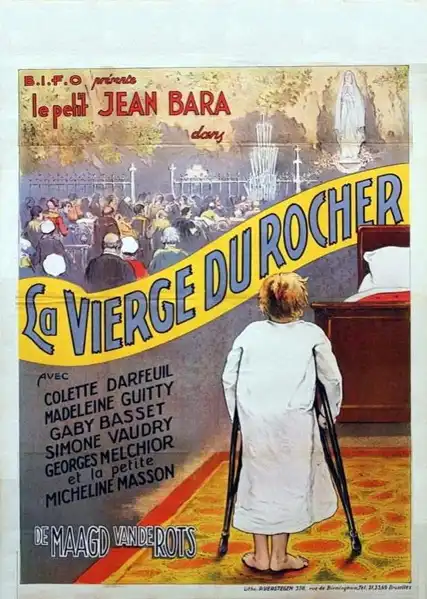
You should probably only watch La vierge du rocher if you have a massive soft spot for early French talkies or if you really, really like boys' choirs. It is not a fun Friday night movie. If you hate slow, pious stories where children look like they are being forced to stand perfectly still, you will absolutely loathe this.
It’s a 1933 production, which means the sound is a bit fuzzy. Everything feels like it was filmed inside a very quiet, very damp cave. Which, considering the title, actually makes some sense.
The whole thing centers around a miraculous statue and Les Petits Chanteurs à la Croix de Bois. They were a real choir, and they are basically the main event here. They sing. A lot. Sometimes it feels like the plot is just an excuse to get to the next song.
Jean Bara plays the lead kid, and he has this very intense way of staring. He doesn't act so much as he just exists in the frame while looking slightly worried. It’s that specific kind of child acting from the 30s where you can tell a director is just off-camera pointing at a mark on the floor.
There’s one scene where the kids are all gathered together and the lighting is so harsh it makes them look like tiny ghosts. It’s supposed to be touching, I think? But it mostly just felt a little eerie.
I found myself thinking about The Isle of Hope while watching this. Not because they are similar in story, but because they both have that same weird, stilted pacing of early sound cinema where nobody knows quite how long a shot should last.
One reaction shot of a priest lingers for about five seconds too long. I actually checked my internet connection to see if the video had frozen. It hadn't. He was just... staring.
Colette Darfeuil is probably the only reason I didn't tab away to look at something else. She has this energy that feels way more modern than anyone else in the cast. When she's on screen, the movie actually feels like a movie and not just a recorded church service.
Jean Garat is fine, I guess. He plays his role with a lot of seriousness. Like, he is very concerned about everything at all times. It's a bit much.
The plot moves like molasses. It’s a very simple story about faith and miracles, but it takes its sweet time getting anywhere. If you’ve seen Le mariage de Mademoiselle Beulemans, you know that French films from this era can be quite charming and chatty, but this one is more on the somber side.
"It's the kind of film that feels like it should be watched in a dusty basement on a projector that smells like burning dust."
I noticed a small mistake in one of the outdoor scenes. There’s a shadow that definitely looks like a boom mic for a split second. Or maybe it was just a very straight tree branch. Either way, it was the most exciting thing that happened in that ten-minute stretch.
There is a lot of crying. People in 1933 French dramas really knew how to weep. It’s not subtle. It’s full-body sobbing.
It isn't a total waste of time, but it's definitely a niche taste. It reminded me of The Wife's Relations only in the sense that both movies feel like they belong to a completely different planet than the movies we have now. The way they talk, the way they move... it’s all so theatrical.
The ending is exactly what you expect it to be. There are no big twists. No surprises. Just a lot of high-pitched singing and a sense of "well, that was a miracle, I suppose."
I don't think I'll ever watch it again. But I’m glad I saw it once, if only to see the choir in their prime. They really could hit those high notes.
If you're bored and want to feel like you're in a French village in 1933, give it a go. Otherwise, maybe skip it. It's a long way to go for a few songs and a statue.
IMDb 6.1
1934
Community
Log in to comment.