DbcultAccessing Vault...
Cult Review
Senior Film Conservator
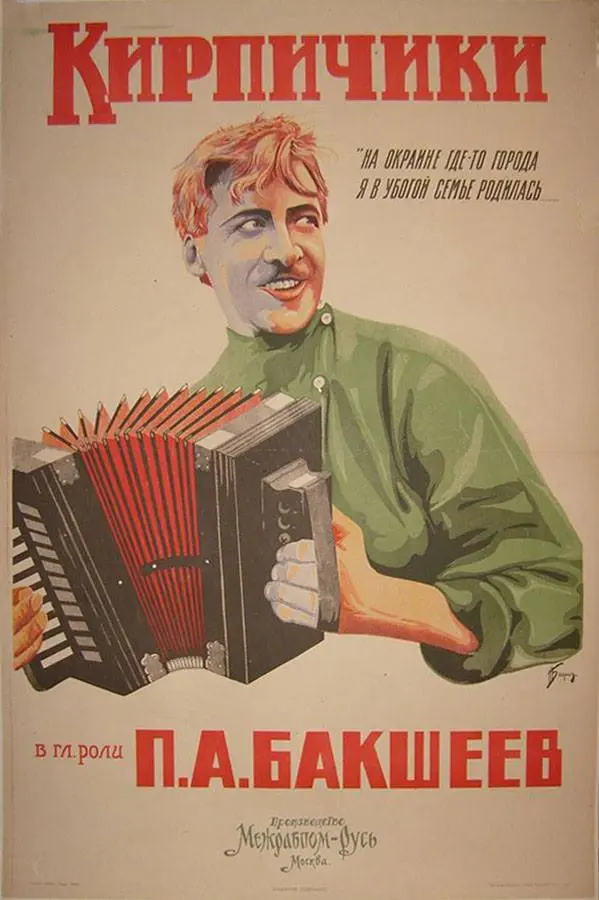
Is 'Kirpichiki' worth watching today? Short answer: yes, but with significant caveats. This early Soviet-era drama offers a fascinating, often raw, glimpse into a specific historical and cinematic moment, making it a valuable experience for those interested in film history, social realism, and the origins of Soviet cinema. However, it is decidedly not for viewers seeking modern pacing or conventional narrative arcs.
It's a film for the patient observer, the student of socio-political storytelling, and anyone curious about how foundational cinematic language was forged under ideological pressures. It is decidedly NOT for those who demand slick production values, rapid-fire dialogue, or clear-cut resolutions. Approach it as an artifact, and its power becomes undeniable.
Georgiy Grebner's 'Kirpichiki' translates literally to 'Little Bricks,' a title that perfectly encapsulates its thematic core: the individual contributions that form a larger, often oppressive, structure. The film is less a conventional narrative and more a stark, almost documentary-like, observation of human endurance against the backdrop of industrial exploitation. We are introduced to the relentless rhythm of a brick factory, a place where sweat and dust are the prevailing elements, and the human spirit is constantly tested.
At the heart of this industrial crucible is Ivan, portrayed with a compelling, quiet dignity by Vladimir Uralskiy. Uralskiy's performance is a masterclass in subtlety, conveying profound internal struggle and simmering defiance through gesture and gaze rather than overt dialogue, a necessity given the cinematic conventions of the era. His Ivan is not a firebrand revolutionary from the outset, but a man pushed to his limits, his spirit slowly hardening like the very bricks he lays.
The antagonist, Pyotr Baksheyev's Stepan, is less a mustache-twirling villain and more a chilling embodiment of systemic greed. Baksheyev plays Stepan with a cold, bureaucratic efficiency that makes his exploitation of the workers all the more insidious. He is not merely cruel; he is indifferent, a cog in a larger machine of avarice that prioritizes profit over humanity. This portrayal grounds the conflict in a stark realism that transcends simple good-versus-evil dynamics.
Mariya Tokareva, as Anya, provides the film's emotional anchor. Her portrayal of a woman equally burdened by labor but possessing an unyielding inner strength offers a crucial counterpoint to the prevailing despair. Her scenes with Uralskiy are sparse but potent, communicating a shared understanding and nascent hope that feels deeply authentic. The film, in its quiet way, suggests that true power lies not in grand gestures but in the collective spirit forged in shared adversity.
Georgiy Grebner's direction in 'Kirpichiki' is characterized by its unvarnished realism. There's a deliberate lack of embellishment, a commitment to depicting the brutal physicality of labor. Grebner uses deep focus and long takes to emphasize the scale of the factory and the smallness of the individual within it. One particular sequence, showing a montage of workers moving bricks from kiln to stack, is shot with a rhythmic, almost hypnotic quality, underscoring the monotonous, back-breaking nature of their daily lives. The camera often lingers on faces etched with fatigue, capturing the raw emotion without needing dialogue.
The cinematography, while technically limited by the era, manages to evoke a powerful sense of place. The film utilizes natural light where possible, creating stark contrasts between the dusty, sun-baked exterior of the brickyard and the cavernous, shadowy interiors of the kilns. The visual language is stark, almost oppressive, mirroring the lives of the characters. There are no sweeping vistas or grand aesthetic flourishes; instead, the beauty, if one can call it that, lies in the stark authenticity of its frames. The grit of the factory floor feels palpable, almost tactile.
One surprising observation is how effectively Grebner uses the sheer volume of bricks as a visual motif. Piles of bricks dominate the background, the foreground, and even the mid-ground of many shots, serving as a constant reminder of the workers' Sisyphean task. This isn't subtle, but its directness works. It's a visual metaphor for the weight of their existence, a solid, tangible representation of their exploitation. This visual repetition might be considered heavy-handed by modern standards, but in its time, it was a powerful statement of cinematic intent.
The pacing of 'Kirpichiki' is deliberately slow, reflective of the grinding pace of manual labor it portrays. This is not a film driven by plot twists or rapid narrative progression; rather, it’s an experiential piece. The rhythm of the film is dictated by the factory bell, the turning of machinery, and the slow, arduous movements of the workers. This deliberate tempo allows the audience to immerse themselves in the drudgery and the subtle shifts in character dynamics.
The tone is overwhelmingly somber, bordering on bleak. Hope, when it appears, is a fragile, nascent thing, often flickering in the quiet solidarity between Ivan and Anya, or in the hesitant glances of Fyodor Ivanov's youthful, idealistic character. This unyielding tone might be off-putting for some, but it’s crucial to the film’s message. It refuses to sugarcoat the realities it depicts, demanding that the viewer confront the harshness of the era head-on. This commitment to an unwavering, almost melancholic, tone is one of the film's strongest artistic choices, even if it tests the patience of a contemporary audience.
Why watch 'Kirpichiki'? It offers a raw, unfiltered look at early Soviet-era labor and filmmaking. It's a vital historical document and a testament to the power of social realism. The film's performances, particularly Vladimir Uralskiy's, resonate with an understated power that transcends time. It provides a unique lens into the socio-political climate that shaped a nascent film industry. This film works because of its unflinching commitment to its subject matter and its remarkable ability to convey profound emotion through stark, minimalist storytelling. It fails because its slow pacing and lack of conventional narrative resolution can alienate modern viewers, and its technical limitations are evident. You should watch it if you appreciate historical cinema, social commentary, and character studies over plot-driven blockbusters.
The ensemble cast of 'Kirpichiki' delivers performances that are both understated and deeply impactful. Vladimir Uralskiy's Ivan is the stoic heart of the film. His journey from quiet suffering to tentative defiance is compelling, even without extensive dialogue. Watch his eyes in the scene where Stepan dismisses the workers' complaints; the subtle shift from resignation to a spark of anger is palpable. This kind of nuanced acting is often overlooked in silent or early sound films, but Uralskiy proves its enduring power.
Pyotr Baksheyev as Stepan manages to be menacing without resorting to theatricality. His power comes from his cold indifference, a portrayal that feels chillingly modern. He doesn't rage; he simply enacts the will of the system, making him a more terrifying figure than any caricature. Mariya Tokareva's Anya, on the other hand, exudes a quiet strength, a warmth that is never sentimental. Her scenes, often shared in silent understanding with Ivan, speak volumes about shared hardship and burgeoning hope. The supporting cast, including Mariya Blyumental-Tamarina as an older, resigned worker and Georgi Kholmsky, add layers of authenticity to the factory environment, each face telling a story of a life worn down by toil.
Fyodor Ivanov, as a younger worker, embodies the nascent idealism that often accompanies the early stages of social awakening. His character serves as a foil, a reminder of what could be lost or gained. The interactions between the workers feel organic, a testament to Grebner's direction and the actors' ability to convey complex relationships within a minimalist framework. It works. But it’s flawed. The lack of individual character arcs for many of the supporting cast means they sometimes feel more like archetypes than fully fleshed-out individuals, a common trait in early social realist cinema.
Understanding 'Kirpichiki' requires placing it within its historical and cinematic context. It's a film that emerged from an era grappling with profound social change and the nascent possibilities of cinema as a tool for ideological expression. While it may lack the polished narrative of a film like The Scarecrow or the romantic sweep of Fanchon, the Cricket, it carves out its own niche. It's a foundational text, a precursor to the more sophisticated social dramas that would follow.
Its influence, though perhaps not immediately obvious, can be traced in later films that explore labor and social injustice. It's a raw, unpolished gem that speaks to the power of cinema to reflect and shape societal consciousness. The film's commitment to portraying the dignity of the working class, even amidst suffering, is a powerful and enduring theme that continues to resonate. It's a stark contrast to some of the more escapist fare of its time, such as The Dancer of the Nile or Anything Once, firmly planting itself in the realm of serious social commentary.
‘Kirpichiki’ is not an easy watch, nor is it designed to be. It is a cinematic experience rooted in the harsh realities of its time, a powerful testament to the human spirit under duress. While its pacing and early cinematic techniques might challenge modern sensibilities, its raw authenticity and the quiet power of its performances make it an invaluable piece of film history. It demands patience and an open mind, but for those willing to engage, it offers a profound, if somber, reflection on labor, resilience, and the slow, arduous process of social change. This film is more than just a historical curiosity; it is a resonant, if imperfect, cry for dignity that continues to echo today. It’s certainly worth your time, provided you know what you’re getting into.
IMDb —
1925
Community
Log in to comment.