DbcultAccessing Vault...
Cult Review
Senior Film Conservator
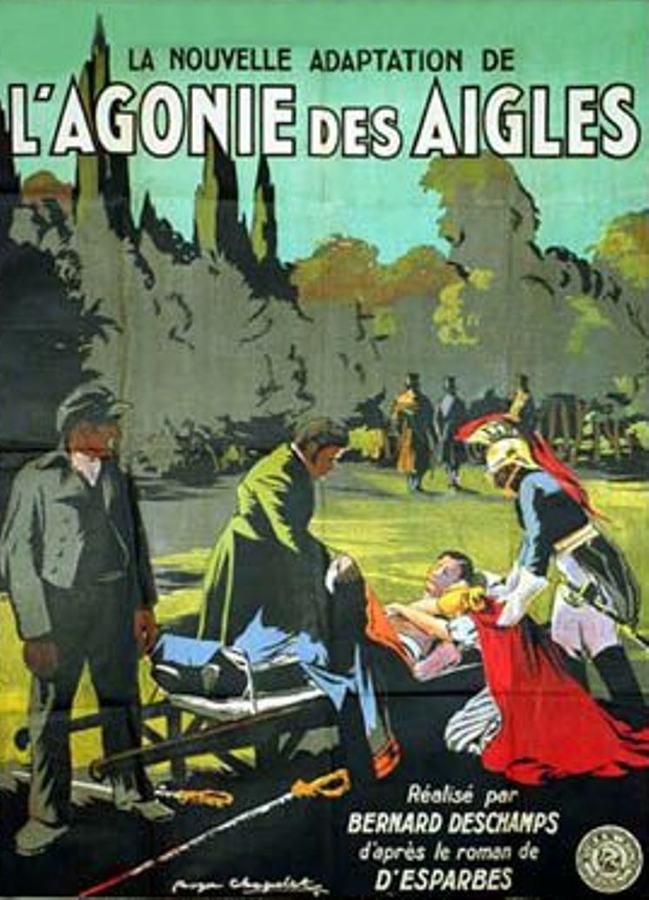
Cinema has always flirted with the cadaver of history, but few corpses have been kissed as hungrily as the Napoleonic legend in L'agonie des aigles. Shot in 1922, when Europe’s bones still ached from the Great War, the film arrives like a blood-spattered love letter smuggled out of a mausoleum. Director Julien Duvivier—years before his canonical Pépé le Moko—treats the Restoration era as a fever dream: lace handkerchiefs soaked in gun-oil, chandeliers that swing like guillotines, dancers whose calves remember the march of grenadiers.
Visual Alchemy in Monotone
The print that survives is bruised, nitrate-scarred, yet the chiaroscuro is so ferocious it feels intentional. Blacks swallow entire regiments; whites explode like musket flashes. In the sequence where Montaner first spies Lise at the Théâtre des Variétés, the camera glides past rows of officers whose faces are half-eclipsed by cocked hats—each frame a Goya etching dipped in liquid mercury. Compare this tactile gloom to the postcard brightness of Petticoats and Politics; where that American farce polishes its suffragette comedy until it gleams, L'agonie smears the lens with lamp-soot and human breath.
Séverin-Mars: A Face Carved by Regret
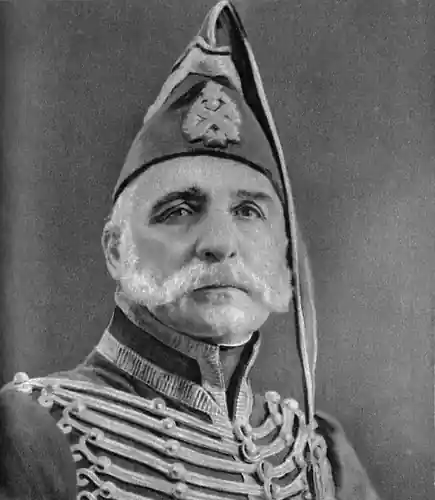
As Montaner, Séverin-Mars gives perhaps the most underappreciated performance in silent French cinema. His body is a map of obsolete campaigns: shoulders that once bore epaulettes now slump under the invisible weight of exile. Watch the micro-tremor in his left eyelid when Lise whispers "Je t’aime"—the whole Napoleonic enterprise flickers like a candle in that twitch. The actor died months after shooting wrapped; the knowledge haunts every close-up, turning his stoicism into a living death mask.
Lise: Dancer as Insurgent Metaphor
Gaby Morlay’s Lise is no courtesan-with-a-heart-of-gold template. Her choreography is political insurgency: a pas de bourrée that swipes a secret dossier from a general’s coat; a fountain-side arabesque that signals waiting Bonapartists. In one bravura long take, the camera follows her en pointe through a midnight garden while, in the background, Montaner buries rifles inside hollowed statuary. The two strands of action—corporeal poetry and seditious labor—braid into a single suspenseful breath. Compare this synthesis of movement and espionage to the static tableaux of Valdemar Sejr; the Danish medieval pageant stands still, but L'agonie pirouettes on a powder keg.
Script: Royalist Nihilism vs Romantic Fatalism
The intertitles, adapted from Georges d’Esparbès’ serialized novel, bite like cold steel. "Empires collapse; women dance on." The aphorism ricochets across the narrative: every time Montaner unfurls a map of Europe, Lise rehearses a new divertissement; cartography and choreography duel for the soul of the century. The dialogue cards eschew the florid curlicues common in early ’20s French silents; instead, they arrive as stark white on velvet black—telegrams from a battlefield where vocabulary itself bleeds out.
Sound of Silence: Musical Restoration
Archivists at Cinémathèque de Bologna recently commissioned a new score—low woodwinds, snare brushes, distant field drums. When screened at Il Cinema Ritrovato, the absence of spoken word felt electric: the creak of seats became part of the soundtrack, a reminder that silence itself can be orchestrated. Unlike the bombastic, wall-to-wall orchestration that mars many restorations of The Beloved Vagabond, here the musicians know when to drop out, letting the whir of the projector stand in for the ventre-mou of history.
Gendered Gazes: The Male Trauma Spectacle
Contemporary bloggers love to tag old films with modern hashtags—#MeToo, #ToxicMasculinity. Yet L'agonie pre-empts such labels by exposing male trauma as self-indulgent spectacle. Montaner’s scarred torso is fetishized in lingering shots, but the camera refuses to rescue him. In contrast, Lise’s body—though desired—remains inviolate, sovereign. She exits the narrative not broken but airborne, a comet leaving the colonel’s terrestrial obsessions in smoky tatters. Compare this to the rape-revenge subtext of A Voice in the Dark; American silents often punish female agency, whereas French fatalism here elevates the dancer beyond the reach of punitive plot mechanics.
Colonial Echoes: Marseille as Palimpsest
The film was shot on location in the Old Port, where Algerian dockworkers unload cargo in the background of several frames. Their presence is unspoken, yet it anchors the narrative in France’s imperial hangover. Montaner wants to resurrect an empire that will send these very laborers to desert forts; Lise’s cosmopolitan audiences sip absinthe underwritten by Caribbean sugar. The movie doesn’t critique colonialism outright—1922 was no year for anthems—but the harbour’s salt-stacked crates and tar-seared ropes seep into the mise-en-scène like guilty afterimages. This subtle embedding of empire’s underbelly feels more honest than the exotic caricatures of Snowblind, where Inuit extras serve merely as frosty local colour.
Temporal Vertigo: Editing as Historical Whiplash
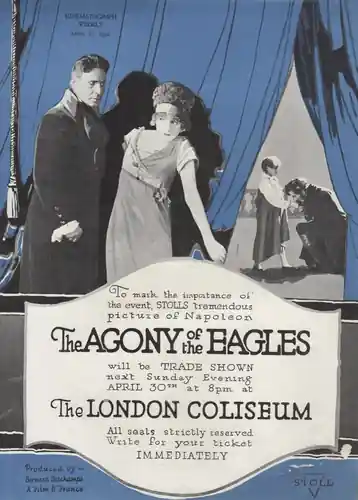
Duvivier and editor André Versein fracture chronology with match cuts that feel avant-garde even by 2020s standards. A close-up of Lise’s spinning coin dissolves into a roulette wheel at a royalist gambling den; the wheel’s spokes morph into the spokes of a prisoner’s wagon trundling toward the Château d’If. Time folds like wet parchment: yesterday’s battle, tomorrow’s scaffold, tonight’s kiss—all coexist in a single breathless montage. The effect predates the temporal labyrinths of La Jetée by four decades, yet achieves it without voice-over or photo-roman gimmicks.
Reception Then and Now
In 1922, conservative critics sniffed at the film’s "morbid eroticism"; the leftist press derided its "royalist nostalgia." Both camps missed the dialectic: the movie mourns and mocks its own reactionary heart. A century on, Letterboxd lists fewer than fifty ratings, and most reviews gush about the cinematography while stumbling over politics. Cine-twitter, addicted to hot takes, doesn’t know whether to cancel or canonize. The truth? The film is neither heroic nor reprehensible; it is a mirror held up to our own compulsions—our itch to resurrect lost causes, whether empires, relationships, or 35 mm prints.
The Missing Reel: Legend and Loss
Rumors persist that two reels depicting Montaner’s botched uprising were censored by the French government and subsequently lost in a nitrate fire. Film historians pore over production stills showing extras in Napoleonic uniforms storming a coastal battery. Whether this climactic sequence ever existed is almost irrelevant; its absence amplifies the agony promised by the title. We are left with aftershocks rather than battles, and that void feels truer to post-war despair than any reconstructed skirmish could achieve. In this sense, the mutilated print parallels the mutilated ambitions of its protagonist—history as negative space.
Comparative Canon: Where It Lives
If you stitched the doomed romanticism of The Narrow Trail onto the political fatalism of Der violette Tod, then soaked the splice in absinthe, you’d approximate the cocktail that is L'agonie des aigles. Yet the brew remains uniquely French: its pessimism is chic, its eroticism cerebral, its nostalgia laced with arsenic. Unlike the crowd-pleasing melodrama of The Heart Specialist, this picture refuses catharsis; unlike the drawing-room sleuthing of The Great Bradley Mystery, it insists that personal desire is always already political.
Final Celluloid Breath
The last image—Lise’s silhouette dissolving into theatre smoke—feels prophetic: cinema itself is a dancer who vanishes once the music ends. Montaner’s eagle never takes wing; instead, it plummets into the Mediterranean, a stone dragged down by the gravity of human folly. We exit the screening hall blinking at neon billboards advertising streaming wars and algorithmic reboots, suddenly aware that our own era teems with colonels plotting resurrections—of nations, of myths, of franchises. The agony endures; only the plumage changes.
Watch it if: You crave silent cinema that bruises rather than comforts. Avoid it if: You need tidy resolutions or virtuous heroes. Pair with: A glass of pastis, a worn volume of Mémoires de Chateaubriand, and the sinking knowledge that revolutions, like love affairs, rarely survive the morning after.
IMDb —
1922
Community
Log in to comment.