DbcultAccessing Vault...
Cult Review
Senior Film Conservator
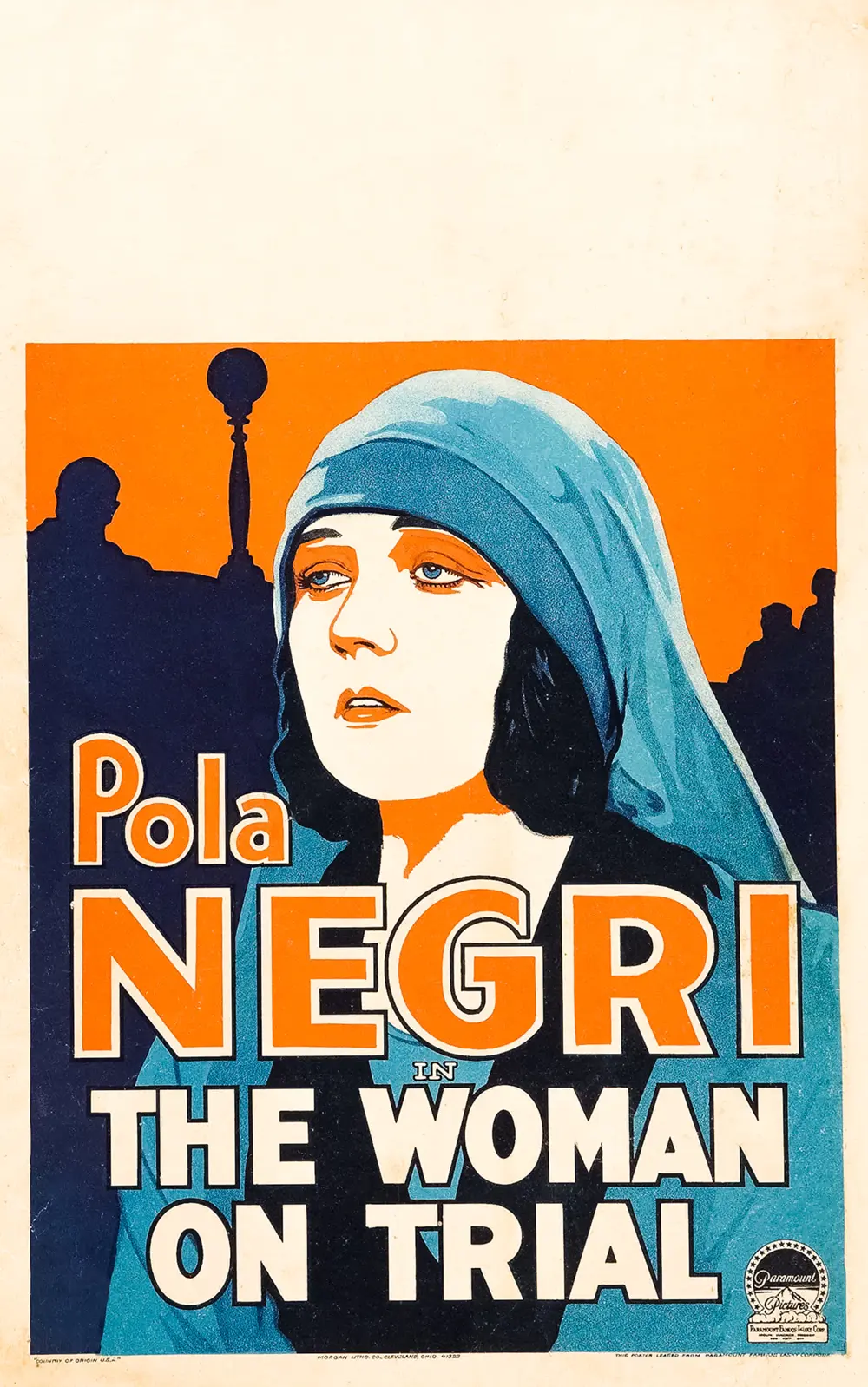
Is The Woman on Trial worth watching today? Short answer: yes, but with significant caveats that demand a particular cinematic palate. This silent-era courtroom drama, a fascinating relic from a foundational period of filmmaking, offers a unique, if challenging, window into early narrative ambition.
This film is an essential watch for cinephiles, historians of early cinema, and those fascinated by the evolution of legal dramas and psychological character studies. It is decidedly not for viewers seeking fast-paced action, modern narrative conventions, or a film easily consumed in a casual, distraction-filled viewing session. Its demands are high, but its rewards, for the right audience, are considerable.
This film works because: Its ambitious narrative structure, relying heavily on extended, subjective flashbacks to dissect a life, was remarkably progressive for its time, creating a compelling psychological study within a legal framework that felt genuinely new.
This film fails because: Its pacing often grinds to a halt, suffering from the inherent limitations of early silent film exposition and a tendency towards melodramatic overstatement that can feel profoundly dated to contemporary eyes, hindering sustained engagement.
You should watch it if: You appreciate historical cinema, are curious about the origins of the courtroom drama genre, and possess the patience to engage with a film that prioritizes character depth and the slow unspooling of memory over plot velocity or modern cinematic thrills.
The Woman on Trial, despite its considerable age, attempts something remarkably sophisticated within its narrative framework. It takes a seemingly straightforward premise – a woman accused of murder – and transforms it into an elaborate, almost archaeological excavation of memory and motive. The French courtroom serves as both stage and crucible, a solemn arena where a life is not merely recounted, but painstakingly re-lived through the defendant's eyes, her testimony acting as a portal to a bygone, fateful past.
This isn't merely a recounting of events; it's an immersive dive into the subjective truth of one woman. The film boldly challenges its audience to move beyond the simple fact of a crime and consider the intricate, often tragic, web of personal history, societal pressures, and emotional turmoil that might lead an individual to such a desperate act. This deep dive into the 'why' rather than just the 'what' was a bold move for any era, let alone the nascent period of silent cinema, demonstrating a nascent understanding of cinematic psychology.
The film’s central conceit, that of the courtroom testimony triggering extensive, almost dreamlike flashbacks, feels surprisingly modern in its psychological approach. It stands as an early, albeit rudimentary, example of how cinema could explore the complexities of human motivation, rather than just depicting a sequence of events. This narrative framework, while occasionally cumbersome, allows for a deep, if sometimes meandering, character study that attempts to rationalize the unthinkable.
It's a testament to the ambition of the writers, Elsie Fuller, Ernest Vajda, Julian Johnson, and Hope Loring, that they crafted a script demanding such a complex structure. They understood that the true drama lay not in the final act, but in the long, tortuous path that led to it. This approach foreshadows countless modern legal dramas, where the defendant's character and past are as central as the evidence itself.
Valentina Zimina, as the accused woman, carries the immense emotional weight of the entire production. Her performance is a masterclass in silent-era acting, relying heavily on exaggerated gestures, poignant body language, and intensely expressive facial features to convey a torrent of internal conflict. It’s a style that modern audiences might initially find theatrical or even over-the-top, but for its time, it was the universal language of emotion, a necessary conduit for conveying unspoken turmoil.
Consider, for instance, a particular flashback sequence where her character faces a profound moral dilemma – a moment of betrayal or desperate choice. Zimina’s eyes, even in the grainy black and white of the surviving prints, convey a profound struggle, her body language shifting from tentative defiance to utter despair, all without a single spoken word. This requires immense skill and control, preventing the character from becoming a mere caricature and instead grounding her in a palpable, if heightened, reality.
However, this reliance on overt emoting occasionally tips into melodrama, a common pitfall of the era. There are moments where the sheer intensity of the performance feels overwhelming, almost pushing the viewer away rather than drawing them closer into her plight. It’s a fine line between powerful expression and theatrical excess, and Zimina, while largely successful in her portrayal, sometimes crosses it, particularly in scenes designed for maximum emotional impact.
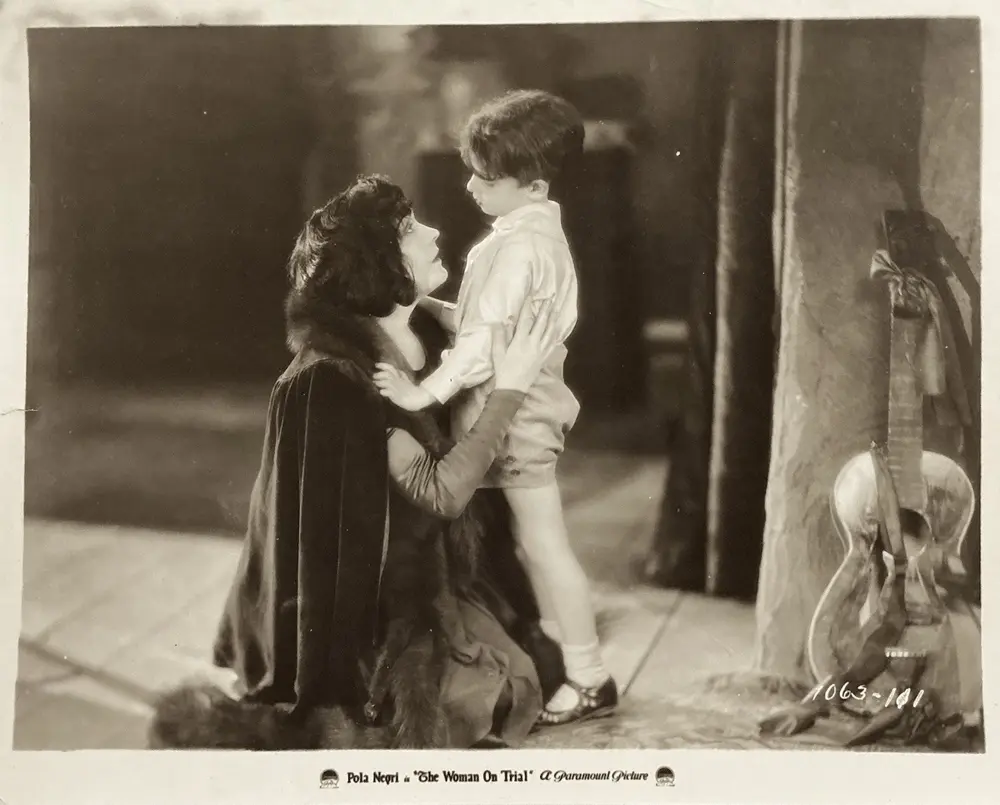
The supporting cast, including Arnold Kent, André Sarti, and Pola Negri, provide solid, if less impactful, performances. Their roles are largely reactive, serving to illuminate Zimina’s character and her predicament rather than developing fully fleshed-out individuals in their own right. This directorial choice keeps the focus squarely on the woman on trial, which is both a strength, ensuring narrative clarity, and a limitation, as it restricts the exploration of other perspectives.
The direction of The Woman on Trial, while often uncredited or attributed to multiple hands in early cinema's fluid production environment, navigates the complex flashback structure with a surprising degree of clarity. The transitions between the somber courtroom present and the vivid, often harrowing, past events are generally smooth, guided by visual cues and the unfolding testimony. This prevents the ambitious narrative from becoming a confusing jumble, a common risk with non-linear storytelling.
Cinematographically, the film is a fascinating document of its period. The use of close-ups to emphasize emotional states, particularly on Zimina’s face as she recounts her story, is effective in drawing the audience into her internal world. However, the overall visual language, while competent and functional, doesn't quite reach the poetic or experimental heights of some of its contemporaries, particularly European films like Le brasier ardent or the German Expressionist works that were pushing boundaries in visual storytelling and mise-en-scène.
There are instances of inventive shot composition, particularly within the courtroom scenes, which manage to convey the solemnity and tension of the proceedings. The way the camera frames the judge, the jury, and the accused creates a palpable sense of oppressive scrutiny, subtly reinforcing the woman's vulnerability and isolation. It’s not flashy, but it works to establish the gravity of her situation, making the audience feel like participants in the judgment.

However, the film occasionally suffers from an overall lack of dynamic visual flair. Many scenes are shot in a rather static manner, relying heavily on the actors’ performances and the explanatory intertitles to convey meaning and advance the plot. This can make some of the longer flashback sequences feel visually monotonous, especially when compared to the more visually audacious films emerging from Europe and even Hollywood at the same time, leading to moments where attention can wane.
The pacing of The Woman on Trial is, without a doubt, its most challenging aspect for a modern audience. This is a film that takes its time, often lingering on moments or expanding on details that a contemporary narrative might condense into a few brisk shots. The "long flashbacks" mentioned in the plot summary are indeed long, sometimes feeling like mini-films within the main narrative, demanding significant patience.
This deliberate, almost stately, pace, while occasionally frustrating, contributes significantly to the film’s overall tone. There’s a melancholic, almost elegiac quality to the way the past is revisited, imbuing each memory with a sense of irreversible consequence and tragic inevitability. It feels like a genuine attempt to understand the full scope of a life, rather than merely to judge a single act. The weight of memory is palpable, almost oppressive.
The tone is consistently serious, verging on somber. There’s little levity or comedic relief, which, while appropriate for a murder trial, means the film demands sustained emotional and intellectual engagement from its audience. Viewers expecting any lighter moments or breaks in the dramatic tension will find themselves disappointed. It's a heavy film, unwavering in its dramatic intent.
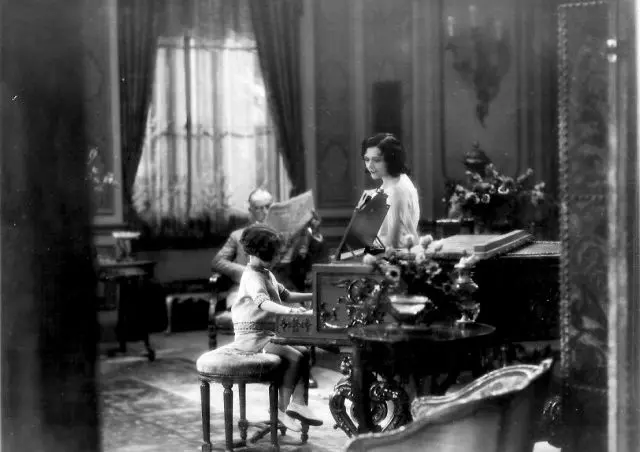
One unconventional observation: the film’s relentless focus on the why rather than the what almost makes the murder itself secondary. The crime becomes a narrative device, a catalyst for a sprawling, detailed character study, rather than the primary dramatic engine. This shift in focus is both its profound strength, elevating it beyond a simple whodunit, and, at times, its biggest hurdle for maintaining consistent audience engagement in an era of instant gratification.
Absolutely, but with a clear, informed understanding of what you're getting into. For those interested in the foundational elements of cinematic drama, particularly the legal procedural and the psychological character study, The Woman on Trial offers invaluable insights. It showcases early attempts at complex narrative structures and underlines the enduring power of silent performance, demonstrating how much could be conveyed without dialogue.
However, if your cinematic palate prefers rapid cuts, intricate sound design, and narratives that adhere to modern pacing conventions, this film will likely test your patience. It requires a willingness to slow down, to appreciate the nuances of a bygone era's storytelling techniques, and to actively engage with the visual and intertitle-driven narrative. This is not a film for casual viewing on a Saturday night with distractions; it demands focused attention.
It serves as a crucial historical document, illustrating how filmmakers of the silent era grappled with mature, complex themes and ambitious storytelling. Its influence, though perhaps indirect and often overlooked, can be felt in countless later courtroom dramas that delve into the protagonist’s past to explain their present circumstances. It works. But it’s flawed. Its ambition alone makes it worthy of study, even if its execution occasionally falters.
The Woman on Trial is not an easy watch, nor is it a forgotten masterpiece waiting to be rediscovered by the masses. Instead, it stands as a fascinating, if imperfect, artifact of early cinema. Its ambition to tell a story through the lens of subjective memory, meticulously unspooling a life in reverse, is commendable and, frankly, quite bold for its era. It represents a significant step in cinematic storytelling, pushing beyond simple spectacle to explore inner lives.
It asks its audience to engage with cinema on its own terms, to appreciate the craft of silent acting and the nascent art of cinematic storytelling. While its pacing can certainly be a test of endurance and its melodramatic flourishes occasionally distract from its core strengths, the central idea – the profound exploration of a human life leading to an unthinkable act – remains compelling and resonant.
This film is a strong recommendation for those who approach cinema with an archaeological curiosity, eager to understand the building blocks of storytelling that paved the way for modern narratives. It offers a rich, if sometimes arduous, journey into the past, proving that even in its earliest forms, cinema was grappling with the profound complexities of the human condition. It’s a valuable piece of history, deserving of recognition and study, even if it won't be everyone's cup of tea on a casual movie night. Its enduring power lies in its audacious attempt to portray the untidy truths of human experience.
IMDb —
1928
Community
Log in to comment.