DbcultAccessing Vault...
Cult Review
Senior Film Conservator
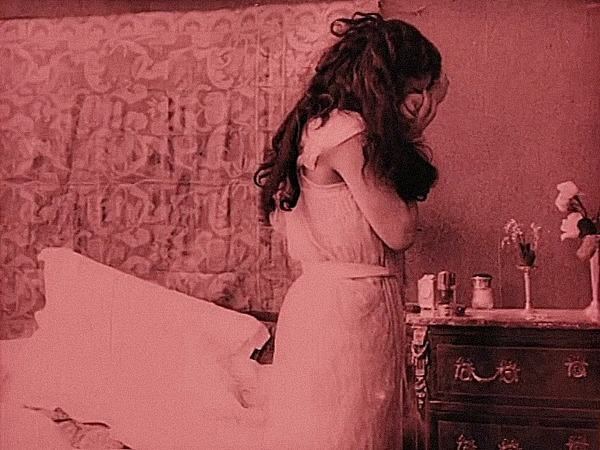
As the flickering shadows of the Great War stretched across Europe, cinema, still in its nascent, silent form, grappled with the monumental task of reflecting, interpreting, and often, influencing the collective consciousness. Amidst this tumultuous backdrop emerged 'Mariute,' a film that, even a century later, resonates with a profound duality, a stark, almost brutal contrast between the gilded cage of celebrity and the visceral, unyielding reality of wartime suffering. It’s a narrative structure that feels remarkably prescient, a meta-commentary on the power of storytelling and the awakening of conscience, all wrapped in the dramatic flourishes typical of the era, yet elevated by its unflinching gaze.
The genius of 'Mariute' lies in its audacious structural conceit: the parallel lives of two women, seemingly worlds apart, yet destined to intersect through the sheer force of human experience. On one side, we have Francesca Bertini, portraying herself, the reigning diva of Italian silent cinema. Her day unfolds in a kaleidoscope of opulent sets, elaborate costumes, and the adulation of her crew. We witness the meticulous rituals of a star, the controlled chaos of a film set, the performative grace that defined her public persona. This segment is a fascinating glimpse into the mechanics of early filmmaking and the cult of personality surrounding figures like Bertini, whose charisma could fill the largest of theaters without uttering a single word. Her world is one of carefully constructed illusion, where emotions are amplified for the camera, and reality is a pliable medium for artistic expression.
In stark, almost painful contrast, the film plunges us into the desolate world of Mariute, a Friulian peasant. Her life is stripped bare of any theatrical pretense. She is a single mother, burdened by the care of three young children, her husband a phantom presence, swallowed by the insatiable maw of war. Her struggle is not for applause or critical acclaim but for mere survival. The fields she toils, the meager meals she prepares, the silent anxieties etched upon her face – these are her 'scenes,' devoid of artifice, steeped in the harshness of a reality few could comprehend from the comfort of a city cinema. The film’s power here is immense, a raw, unembellished portrayal of the civilian toll of conflict, a theme explored with varying degrees of success in other contemporary dramas like Out of the Night, but rarely with such personal intimacy.
The narrative reaches its agonizing crescendo with the depiction of Mariute’s brutal assault by three Austrian soldiers. This is not merely a plot point; it is a visceral, gut-wrenching moment that underscores the unspeakable barbarity of war, especially against the most vulnerable. The film, through its silent visual language, manages to convey the terror and degradation without resorting to explicit gore, relying instead on the audience's imagination and empathy. The ensuing act of vengeance by Mariute’s father-in-law, while a moment of grim satisfaction, does not erase the trauma but rather highlights the desperate measures people are driven to when law and order collapse under the weight of conflict. It’s a stark reminder of the breakdown of societal norms, a theme that resonates through many war films, from the immediate aftermath to later reflections like Soldiers of the Emperor, though 'Mariute' grounds it in a deeply personal tragedy.
The brilliance of Bertini's performance, both as herself and as the conduit for Mariute's story, cannot be overstated. As the film progresses, the carefully constructed facade of the diva begins to crack. The catalyst is a fellow actor, recently returned from the front, who recounts Mariute's harrowing tale. This is the film's meta-narrative at its most potent: a story within a story, a real-life horror breaking through the theatrical fourth wall. Bertini, initially absorbed in her cinematic world, is forced to confront a reality more profound and devastating than any script could conjure. Her transformation is gradual, yet utterly convincing. The initial shock gives way to profound sorrow, then to a burning indignation. This isn't merely an actress playing a role; it's a star, a cultural icon, being fundamentally reshaped by the suffering of her compatriots.
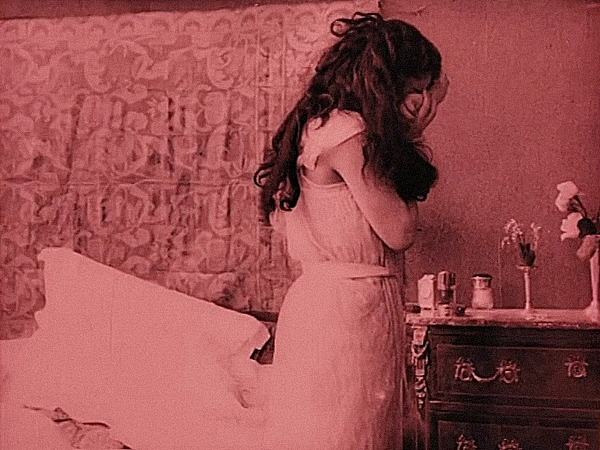
The surge of patriotic solidarity that washes over Bertini is the film’s ultimate goal. It's a powerful call to arms, not necessarily for physical combat, but for a collective empathy and support for those on the front lines and those suffering behind them. In an era when cinema was a potent tool for propaganda and nation-building, 'Mariute' transcends simple jingoism by rooting its patriotic appeal in genuine human suffering and an individual's moral awakening. Bertini, through her character, becomes a symbol of the nation's conscience, urging viewers to look beyond their daily lives and acknowledge the sacrifices being made.
The silent film medium, often underestimated in its expressive capabilities, finds a powerful voice in 'Mariute'. Without spoken dialogue, the burden of storytelling falls heavily on visual composition, facial expressions, and intertitles. The director, along with writers like Robert de Flers, masterfully employs these tools to convey the vast emotional chasm between Bertini’s world and Mariute’s. Close-ups of Bertini’s changing expressions, from detached professionalism to profound anguish, are particularly effective. The stark, almost documentary-like shots of Mariute’s rural existence contrast sharply with the theatricality of Bertini’s studio scenes, emphasizing the film’s central theme of reality versus artifice. The visual language speaks volumes, perhaps more eloquently than words ever could, in capturing the nuances of grief, resilience, and awakening.
The performances, particularly from Francesca Bertini, Livio Pavanelli, and Camillo De Riso, are a testament to the power of silent acting. Bertini, a celebrated diva, was known for her dramatic flair, but here she delivers a performance that is both grand and deeply internalized, showcasing her range beyond mere melodrama. Her transformation from an oblivious star to a deeply moved patriot is the film's emotional anchor. The supporting cast, though given less screen time, effectively embodies the various facets of wartime society, from the stoic father-in-law to the brutal soldiers, each contributing to the film's rich tapestry of human experience. This nuanced acting elevates 'Mariute' above many of its contemporaries, placing it in a league with other character-driven dramas like The Cinderella Man or The Girl Angle in terms of emotional depth, despite their vastly different contexts.
To fully appreciate 'Mariute', one must place it within its specific historical context. Released during World War I, it wasn't just entertainment; it was a cultural artifact designed to galvanize public sentiment. The film's patriotic message was clear, but it was delivered with a sophistication that went beyond simple flag-waving. By humanizing the victims of war and depicting the profound impact on civilian life, it aimed to foster a deeper, more empathetic understanding of the conflict's cost. This approach contrasts with more overtly propagandistic films of the era, offering a more emotionally resonant argument for solidarity. The film's portrayal of violence against women, while shocking, was also a stark reflection of the realities of war, often overlooked in official narratives.
The casting of Francesca Bertini as herself was a stroke of genius. As one of Italy's most beloved and recognizable stars, her personal journey of awakening within the film was meant to mirror and inspire a similar awakening in the audience. Her celebrity status lent immense weight to the film's message, making it a powerful vehicle for social commentary. This self-referential casting was an innovative choice, blurring the lines between the actress and her public persona, and adding layers of authenticity to the patriotic call. One could draw parallels to how other prominent figures were used in their respective eras to lend gravitas, though often in more direct biographical narratives, such as in The Fall of the Romanoffs, which relied on the notoriety of historical figures.
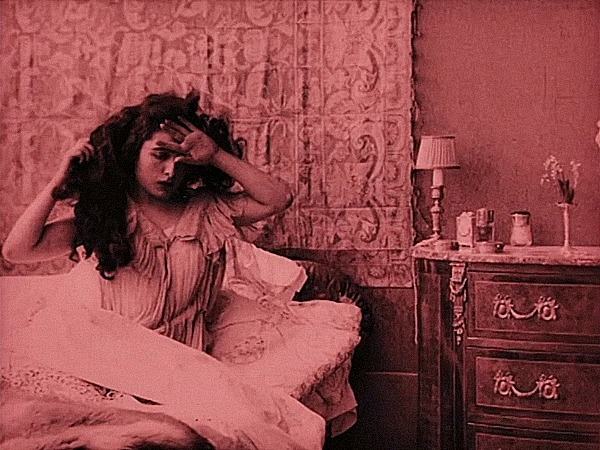
When considering 'Mariute' alongside its contemporaries, its unique blend of social realism and meta-narrative truly stands out. While films like The Colonel might have explored military heroism, 'Mariute' delves into the often-unseen suffering of those left behind. It’s a powerful counter-narrative, reminding us that war's impact extends far beyond the battlefield. The film's depiction of female resilience and suffering, while not unique (one might consider A Daughter of France or even The Price She Paid in terms of broader female struggle), is particularly poignant because it is framed within the context of national sacrifice and a celebrity's awakening.
Moreover, the film’s willingness to portray a violent act against a woman, and the subsequent, albeit brutal, justice, speaks to a certain boldness in its storytelling. Many films of the era, while dramatic, often shied away from such stark depictions, preferring more romanticized or sanitized versions of conflict. 'Mariute' doesn't flinch, presenting a grim reality that serves to underscore the urgency of its patriotic message. It eschews the innocent charm of films like Little Lord Fauntleroy or the domestic focus of Little Women (1918), opting instead for a raw, uncompromising look at the intersection of personal tragedy and national crisis.
The enduring power of 'Mariute' lies in its timeless themes. The contrast between privilege and suffering, the awakening of conscience, the devastating cost of war on civilians, and the role of art in reflecting and shaping society – these are all concepts that remain profoundly relevant today. The film serves as a powerful historical document, offering insight into the cultural and emotional landscape of Italy during World War I. It also stands as a testament to the sophisticated storytelling capabilities of early silent cinema, proving that even without sound, films could deliver complex narratives and profound emotional impact.
While perhaps not as widely known as some other silent classics, 'Mariute' deserves renewed attention for its innovative structure, its courageous subject matter, and the compelling performance by Francesca Bertini. It's a film that challenges its audience, forcing them to confront uncomfortable truths, and ultimately, inspiring a sense of shared humanity. It reminds us that empathy, even across vast social divides, can be a powerful catalyst for change and solidarity. Its unique narrative choice, positioning a real-life star within a fictionalized retelling of a true event, makes it a fascinating precursor to meta-narratives in cinema, demonstrating that the boundaries of storytelling were being pushed even in the medium's earliest days. This is not just a film about war; it is a film about the human spirit's capacity for both immense suffering and profound compassion.
The film’s exploration of the personal impact of global conflict continues to resonate, echoing the sentiments found in countless stories of resilience against adversity, much like the struggles depicted in The Wharf Rat or Such a Little Pirate, albeit with a vastly different scale of societal upheaval. 'Mariute' is a poignant reminder that while the lights of the silver screen may dazzle, the shadows of reality often hold the deepest truths, capable of transforming even the most celebrated of stars into an advocate for the voiceless. It’s a masterclass in silent storytelling, a cinematic journey that begins in the realm of make-believe and ends with a powerful, undeniable plea for humanity.
IMDb —
1926
Community
Log in to comment.