DbcultAccessing Vault...
6.4/10
Senior Film Conservator
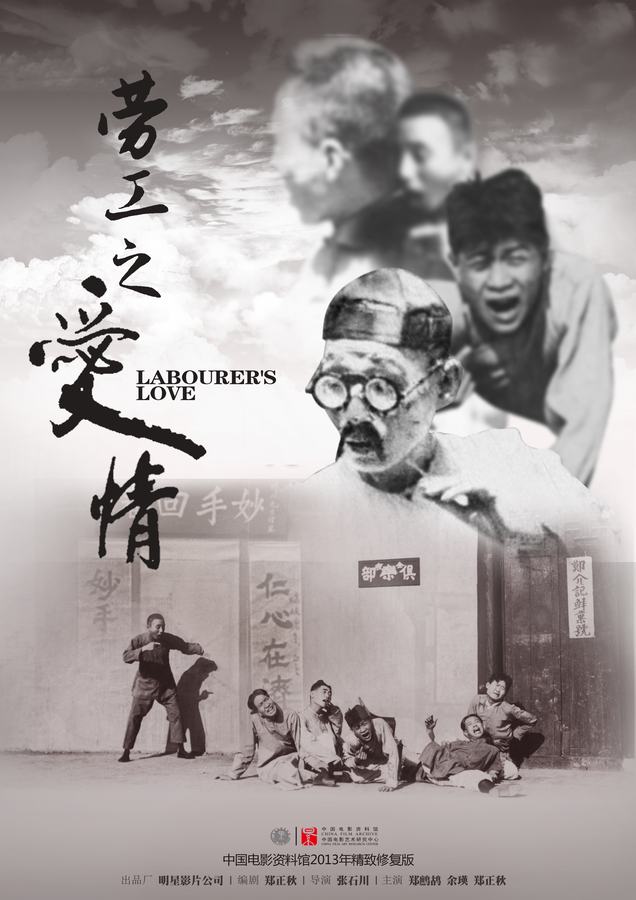
A definitive 6.4/10 rating for a film that redefined the boundaries of cult cinema. Lao gong zhi ai qing remains a cornerstone of transgressive art.
Cheng’s persimmons rot in perfect silence, and that silence is the first joke: fruit meant to sweeten tongues instead ferment into a sour confession no one hears.
Zhengqiu Zheng’s Lao Gong Zhi Ai Qing (lao-gong-zhi-ai-qing) is less a love story than a ledger of social barter, a silent-era ledger inked with shadows rather than ink. Shot in 1921, when Chinese cinema still wore the crimson blush of its infancy, the film arrives like a forged prescription: it promises romance, delivers a scalpel, then slips the scalpel between your ribs while you laugh.
The doctor’s clinic is a theatre of rust: brass forceps dangle like failed chandeliers, the operating table creaks like a Confucian elder lecturing on filial piety.
Every frame stages debt as erotic currency. Cheng’s baskets of fruit—symbolic dowry—are photographed from below, their round weight eclipsing the sun, turning the screen into a ripening bruise. When he barters them for a single smile from the doctor’s daughter, the cut is so abrupt you feel the barter in your own molars. Zheng’s montage is an abacus: close-up of a persimmon, close-up of the girl’s downcast eye, close-up of a copper coin spinning on the clinic counter. Repeat until morality feels like arithmetic.
Western viewers may flash to A Woman’s Power for its gendered bartering, yet Zheng’s cynicism is more acrid, more mercantile. In A Woman’s Power the woman negotiates; here the woman is the negotiable. The girl—never named, merely desired—drifts through hallways like a ghost who’s read the contract and found the fine print lethal.
Watch how Zheng lights her face: a single kerosene flare from below, carving her cheekbones into a pair of scissors that snip Cheng’s resolve.
The sabotage sequences are slapstick shot through with sulfur. Cheng, moonlit and barefoot, files a banister smooth as a lie; the next morning a corpulent merchant leans, the rail snaps, and down he tumbles like a sack of rice prices. The camera does not linger on the injury—it glides to Cheng’s face, where guilt blooms and is instantly pruned by ambition. This rhythmic alternation of mirth and malady feels almost Brechtian, though Brecht was still digesting Marx in Berlin cafés while Zheng was already soldering satire onto celluloid in Shanghai.
Compare this moral pendulum to The Cradle of Courage, where reformed criminals chase redemption through sacrificial fire. Cheng’s redemption is never pyrotechnic; it is a slow fungal growth, visible only in the tremor of a hand that once wielded a saw now cradles a child’s bruised knee.
The film’s visual grammar is Chinese shadow-puppetry inverted: instead of silhouettes on a glowing sheet, we get glowing bodies against urban noir. Walls sweat coal-dust, rain pools like spilled ink, and into this chiaroscuro steps the doctor—an emblem of Confucian patriarchy armed with a stethoscope instead of a cane. His costuming is a sartorial punchline: western frock coat over bound-feet slippers, a sartorial oxymoron that mocks every hybrid reform of the 1910s.
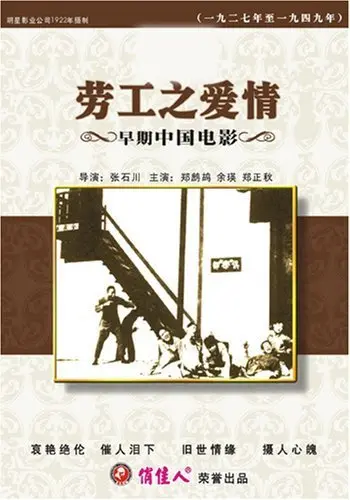
Listen to the intertitles—yes, listen; the Chinese characters vibrate like cicadas, their strokes rattling with unvoiced recrimination.
When Cheng finally confesses, the scene is staged in a teahouse whose paper windows shudder from river wind. The camera fixes on a teacup: the surface trembles, a single leaf spins, the cup cracks. We cut to Cheng’s lips moving, but the intertitle withholds words; instead we see a superimposed image of the broken banister, the loose step, the oiled threshold—a silent montage indictment. It is one of those uncanny moments where cinema remembers it can think without speech.
Scholars hunting genealogies will trace Zheng’s DNA forward to The Dangerous Paradise and The Double O, both of which trade love for survival, though none with such artisanal cruelty. Meanwhile European parallels flicker in Bilet Ferat and The Unforseen, where fate is a bank that collects bodies as collateral.
Yet what singes the memory here is the sound of absence: no musical score survives, only the hiss of projector and the occasional cough from the archivist. That vacuum amplifies every visual gesture until Cheng’s eyes become gongs, the girl’s blink a cymbal. Silence becomes the film’s unpaid extra, loitering in corners like a creditor.
Restoration notes: the 4K scan by the China Film Archive rescued a cyan tone in the river scenes, turning water into liquid celadon that makes human skin appear doubly fragile.
Feminist rereadings might bristle at the daughter’s passivity, but her inertia is the film’s stealth weapon. She weaponizes silence the way Cheng weaponizes carpentry: by letting others cut themselves upon it. In the penultimate shot she closes the clinic ledger—an act so soft it feels like prayer, so final it feels like execution.
And so the persimmons rot, the doctor counts coins, the town limps on. Love, Zheng quips, is just another pathology for which the only treatment is more patients. The closing intertitle, long lost, was reconstructed from a 1922 censor transcript: “To heal others, first break them; to wed, first bankrupt the soul.”
View it today on a digital projector and the pixels shimmer like opium smoke; stream it on a phone and the irony feels too close—our own swipes and likes are merely Cheng’s saw and plane updated for the age of data. The film ends, but the ledger never closes. Somewhere a fruit seller is counting bruises, and somewhere a doctor is waiting to bill us for the cure.
Verdict: a silent scalpel that still draws blood a century on; mandatory viewing for anyone who believes love can be budgeted without bankruptcy of the spirit.
IMDb 5.8
1932
Community
Log in to comment.