DbcultAccessing Vault...
7.2/10
Senior Film Conservator
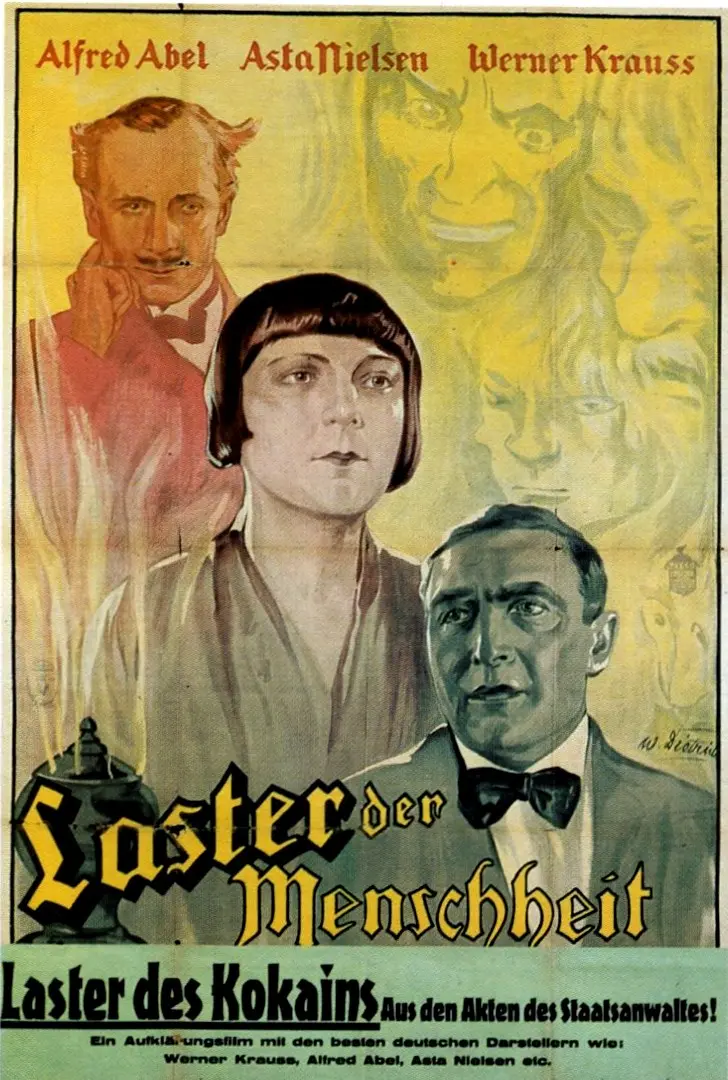
A definitive 7.2/10 rating for a film that redefined the boundaries of cult cinema. Laster der Menschheit remains a cornerstone of transgressive art.
Is *Laster der Menschheit* worth watching today? Short answer: yes, but with significant caveats that anchor it firmly in its historical context. This film is a potent, if at times melodramatic, artifact of early German cinema, offering a stark look at the ravages of addiction through the expressive lens of the silent era.
It is unequivocally for cinephiles, historians of early film, and those with a keen interest in the social dramas of the 1920s. Conversely, it is decidedly NOT for viewers seeking modern pacing, nuanced character development free of theatricality, or those unaccustomed to the visual language of silent cinema.
This film works because of Asta Nielsen’s mesmerizing, raw performance and its unflinching, if moralistic, portrayal of addiction’s destructive power.
This film fails because its narrative can feel simplistic and its melodramatic flourishes occasionally overshadow genuine emotional depth.
You should watch it if you appreciate the artistry of silent film and are willing to engage with a story told through heightened visual and physical expression.
Leo Birinsky's *Laster der Menschheit* (translated as 'Vices of Humanity' or 'Human Vices') plunges viewers into the grim reality of addiction, a subject that, even a century later, retains its tragic resonance. The narrative centers on Tamara, whose life unravels with terrifying speed once cocaine takes hold. It’s a story less about the 'how' of addiction and more about the devastating 'what next' – the abandonment, the deceit, and the long shadow cast over an innocent life.
The film doesn't shy away from the brutal consequences. Tamara's move to live with Mangol, the dealer, isn't just a plot point; it's a symbolic descent into a personal hell, a complete severance from respectability and family. The decision by the father to tell their daughter that Tamara is dead is perhaps the most heartbreaking element, an act of erasure born of shame and a desperate attempt to protect a child from an unbearable truth. This parental deception creates a profound emotional chasm that the film later attempts, perhaps too neatly, to bridge.
The sudden rediscovery of Tamara on stage, years later, serves as the primary dramatic catalyst. It's a classic silent film trope – the long-lost parent reappearing – but here, it's infused with a potent mix of shock, betrayal, and the faint glimmer of hope. This moment, when the past crashes into the present, is where the film's emotional stakes are highest. The ensuing pursuit of the daughter by Mangol, a truly predatory figure, adds a layer of escalating danger, transforming the drama into a desperate fight for the next generation's soul.
The climax, with Tamara's intervention and subsequent death among her family, is pure melodrama, yet it carries a raw, visceral power. It's a final, desperate act of maternal protection, a tragic redemption that feels earned through suffering, even if it arrives with the inevitability of a morality play. The film's plot, while straightforward, is an effective vehicle for exploring themes of addiction, abandonment, and the enduring, often destructive, ties of family.
The true beating heart of *Laster der Menschheit* is undoubtedly Asta Nielsen as Tamara. Nielsen, a titan of the silent screen, brings an unparalleled intensity to the role, transforming Tamara from a mere victim into a figure of tragic grandeur. Her performance is a masterclass in silent acting, utilizing every muscle in her face and every gesture of her body to convey the agony, craving, and fleeting moments of clarity that define an addict's existence. I found her portrayal of withdrawal symptoms particularly harrowing, executed with a physical commitment that transcends the era's often exaggerated theatrics.
Consider the scene where Tamara first succumbs to the drug's allure, or later, her desperate attempts to hide her addiction from her daughter. Nielsen's eyes, wide with fear and shame, speak volumes that no intertitle could capture. Her physical contortions, though perhaps over-the-top by today's standards, were precisely the language of the silent screen, designed to communicate complex internal states without a spoken word. It's a performance that truly grounds the film, preventing it from devolving into mere sensationalism.
Werner Krauss, a formidable presence in films like *The Cabinet of Dr. Caligari*, delivers a chilling portrayal of Mangol, the dealer. Krauss imbues Mangol with a reptilian cunning and a predatory gaze that makes him genuinely unsettling. He is not merely a supplier but an embodiment of the vice itself, a dark puppet master pulling strings. His pursuit of the daughter later in the film is driven by a cold, calculating malice that makes him a truly memorable antagonist. His physicality, often hunched and lurking, contrasts sharply with Nielsen's more overt expressions of suffering.
The supporting cast, including Maria Forescu and Trude Hesterberg, provide solid, if less electrifying, performances. Forescu, in particular, often played strong, sometimes morally ambiguous women, and her presence adds a layer of gritty realism to the film’s underworld settings. While their roles are largely functional, they contribute to the oppressive atmosphere that surrounds Tamara's choices. The ensemble, under Birinsky's direction, creates a world where every character feels either trapped by circumstance or complicit in the unfolding tragedy.
Leo Birinsky's direction in *Laster der Menschheit* is a fascinating blend of German Expressionism's emerging influence and the more traditional melodramatic impulses of the era. The tone is consistently bleak, a moralistic cautionary tale that leaves little room for levity. Birinsky uses pacing effectively, allowing moments of quiet despair to linger before accelerating into dramatic confrontations. The film’s rhythm feels deliberate, building a sense of inescapable doom around Tamara.
Birinsky's use of close-ups is particularly effective in amplifying the emotional weight of Nielsen's performance. He understands that in silent cinema, the human face is the primary canvas for emotion. When Tamara is wracked by addiction, the camera often isolates her, allowing her anguish to fill the frame, creating a powerful intimacy with the viewer. This technique ensures that even when the plot verges on the theatrical, the raw emotion remains palpable.
However, the film occasionally succumbs to the era's penchant for overt moralizing. While the message against addiction is clear and impactful, some scenes feel overtly staged to drive home a point, rather than allowing the narrative to unfold more organically. For instance, the stark contrast between Tamara's initial domestic bliss and her later squalor is painted with broad strokes, leaving little room for ambiguity. This didactic approach, common in silent dramas, might feel heavy-handed to a contemporary audience.
One unconventional observation I made is how Birinsky, perhaps unintentionally, critiques societal hypocrisy. While the film condemns Tamara's addiction, it also subtly highlights the societal structures that enable such a fall – the hidden underbelly where Mangol operates, seemingly unhindered. The very existence of such a destructive force in the shadows points to a larger societal failing, a nuance often overlooked in straightforward morality tales.
The visual language of *Laster der Menschheit* is deeply rooted in the aesthetic traditions of German silent cinema. While perhaps not as overtly Expressionistic as films like *The Cabinet of Dr. Caligari* or The House of Mystery, it certainly draws on the dramatic use of light and shadow to convey mood and psychological states. The cinematography masterfully creates a sense of oppressive gloom in Mangol's den, using stark contrasts and deep shadows to emphasize the nefarious nature of his trade and the trap Tamara finds herself in.
The production design, though not lavish, is highly functional and symbolic. Tamara's initial home is depicted with a warmth and domesticity that sharply contrasts with the cold, cluttered, and often claustrophobic spaces she inhabits once addiction takes hold. Mangol's lair, in particular, is a visual metaphor for the dark corners of society where vice thrives – shadowy, unwelcoming, and dangerous. The stage setting where Tamara is rediscovered is another key visual, representing both a fleeting escape and a public exposure of her tragic fate.
The visual storytelling relies heavily on these contrasts. The bright, innocent world of the daughter is visually distinct from the dark, corrupt world of the mother. This stark dichotomy helps to simplify the moral landscape, making the film's message clear without needing extensive intertitles. The camera work, while not groundbreaking, is competent and serves the narrative well, consistently framing the actors to maximize their expressive potential.
There's a raw, almost documentary-like quality to some of the street scenes, which grounds the otherwise theatrical performances. This blend of gritty realism and dramatic stylization is a hallmark of many German silent films, lending *Laster der Menschheit* a particular authenticity that elevates it beyond a mere period piece. It works. But it’s flawed. The visual storytelling, while effective, sometimes sacrifices subtlety for impact, which is typical for its time.
Yes, for the right viewer, *Laster der Menschheit* is absolutely worth watching.
It offers a compelling glimpse into early German cinema.
Asta Nielsen's performance alone justifies the viewing.
The film tackles addiction with a raw intensity.
However, its melodramatic style might not appeal to everyone.
It requires patience for silent film conventions.
*Laster der Menschheit* is a compelling, if sometimes challenging, watch. It’s a film that demands an appreciation for its historical context and the unique artistry of silent cinema. While its narrative can feel a touch simplistic and its moralizing overt, these are largely stylistic conventions of its era. What truly endures is the raw, almost uncomfortable power of Asta Nielsen’s performance, a tour de force that transcends time and medium. She embodies the film’s central tragedy with such conviction that it’s impossible to look away. Werner Krauss provides a chilling counterpoint, solidifying the film’s status as a stark, if somewhat grim, exploration of human frailty and the corrosive nature of addiction. It’s not a film for casual viewing, nor is it a forgotten masterpiece in the vein of a Protéa or a more celebrated Expressionist work. Instead, it’s a robust, emotionally charged drama that serves as a vital historical document and a testament to the enduring power of silent storytelling. For those willing to engage with its unique language, *Laster der Menschheit* offers a profound, albeit bleak, cinematic experience that continues to resonate with its timeless themes of despair, deception, and the desperate yearning for redemption. It’s a film that deserves to be seen, discussed, and remembered, not just as a historical curiosity, but as a testament to the emotional depth silent cinema could achieve.

IMDb —
1917
Community
Log in to comment.