DbcultAccessing Vault...
Cult Review
Senior Film Conservator
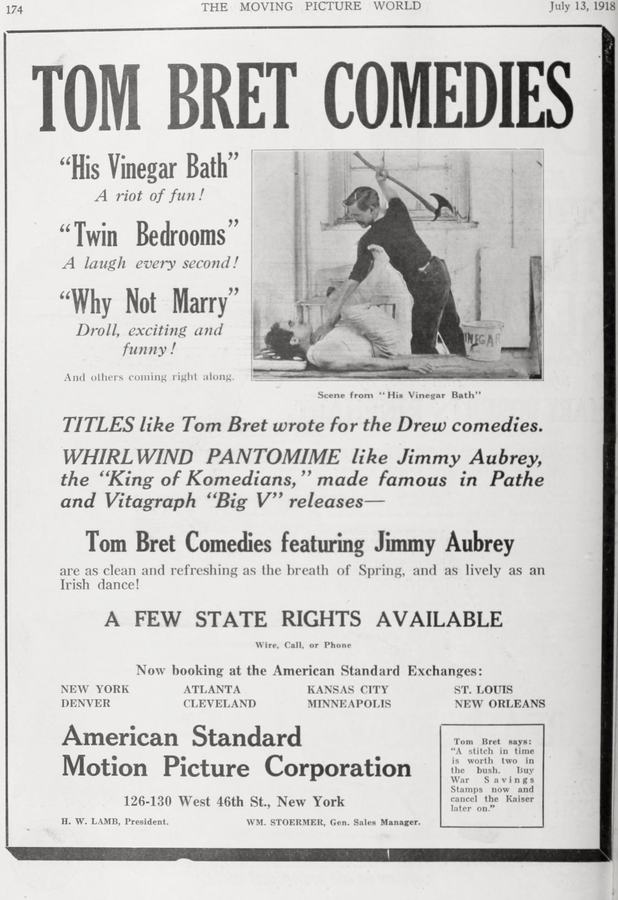
Ah, the silent era. A time when storytelling relied not on booming dialogue, but on the nuanced flicker of an actor's eye, the exaggerated sweep of a gesture, and the carefully crafted intertitle. It was a period ripe for experimentation, for exploring the very essence of human experience through visual poetry. And in the midst of this artistic ferment, we find 'Twin Bed Rooms' (slug: twin-bed-rooms), a film that, despite its seemingly simple premise, manages to capture a delightful slice of life, love, and the delightful chaos that often accompanies both.
Directed with an astute eye for comedic timing, and penned by the clever hand of Tom Bret, 'Twin Bed Rooms' is more than just a forgotten relic; it's a testament to the enduring power of a well-told story, even one wrapped in the gentle patina of age. The film takes a classic comedic trope—mistaken identity and spatial confusion—and elevates it through genuinely engaging performances and a narrative rhythm that keeps the audience captivated, even in the absence of spoken words. It’s a film that speaks volumes without uttering a single syllable.
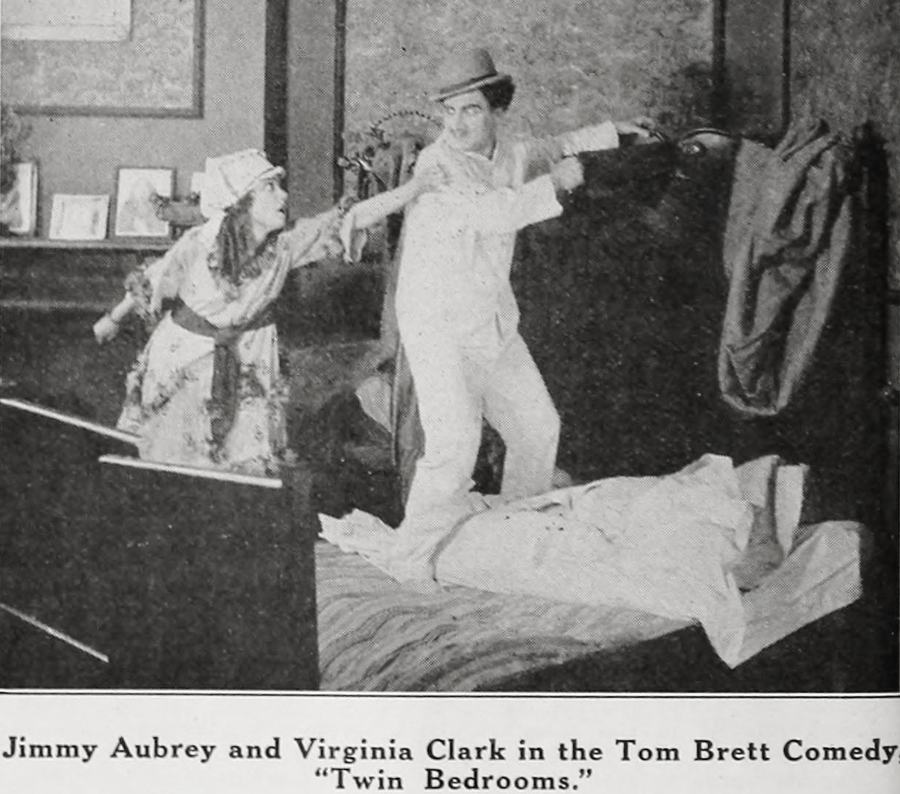
At its heart, 'Twin Bed Rooms' is a meticulously constructed farce. We are introduced to Alice (Virginia Clark) and Jack (Jimmy Aubrey), a pair of fresh-faced newlyweds, brimming with the innocent enthusiasm of their new union. Their chosen honeymoon destination is a grand, bustling seaside hotel, a microcosm of society itself, where every corner holds the potential for both romance and utter pandemonium. The initial setup is deceptively simple: an administrative gaffe. Through some bureaucratic oversight, or perhaps the mischievous hand of fate, they are assigned not one shared marital suite, but two separate, yet identically appointed, 'twin bed rooms' on different floors. The brilliance of this premise lies in its immediate generation of dramatic irony; we, the audience, are privy to the truth, while our protagonists are left to flounder in a sea of increasingly absurd misinterpretations.
Virginia Clark, as Alice, delivers a performance that is both nuanced and utterly charming. Her initial bewilderment gradually transforms into a delightful blend of frustration and indignant confusion. We see her character's journey from blissful bride to a woman convinced her new husband is either playing an elaborate, cruel joke, or has perhaps suffered some form of amnesia. Clark's expressive face, a canvas for subtle emotions, conveys Alice’s escalating distress with remarkable clarity. Her physical comedy, though restrained, is impeccable, adding layers to the character without resorting to overt exaggeration. It's a portrayal that resonates, inviting empathy even as we chuckle at her predicament. One cannot help but draw parallels to the spirited resilience seen in characters from films like The Plow Girl, where leading ladies often navigate challenging circumstances with a certain indomitable spirit, albeit in a more dramatic context.
Opposite her, Jimmy Aubrey's Jack is a masterclass in bewildered earnestness. Aubrey embodies the well-meaning, utterly clueless husband with a comedic timing that is truly remarkable. His attempts to understand Alice's perceived coldness, his own growing confusion at the identical rooms, and his increasingly frantic efforts to connect with his wife, are played for maximum comedic effect. Jack’s physical comedy is broader, more prone to pratfalls and wide-eyed confusion, perfectly complementing Clark's more refined portrayal. He’s the everyman caught in an impossible situation, and Aubrey makes us root for him, even as we delight in his escalating misfortunes. His performance here, with its blend of physical comedy and a certain sweet naivete, reminds one of the earnest, often put-upon male leads in comedies of errors from the era, perhaps even a lighter touch than the more dramatic roles seen in films like Powers That Prey, where men often grapple with far more sinister forces.
Tom Bret’s direction of 'Twin Bed Rooms' is a study in controlled chaos. The visual composition of each scene is carefully considered, often using parallel editing to highlight the simultaneous, yet separate, predicaments of Alice and Jack. The film's pacing is brisk, propelling the narrative forward with an almost breathless energy that is crucial for a successful farce. Bret understands that the comedic impact hinges on the rapid escalation of misunderstandings, and he orchestrates these moments with a deft hand. The use of intertitles is sparse but effective, providing just enough information to guide the audience without over-explaining the visual gags.
The setting of the grand hotel itself becomes a character, its labyrinthine corridors and bustling common areas serving as the perfect backdrop for the unfolding drama. The identical 'twin bed rooms' are a stroke of genius, allowing for visual gags involving swapped luggage, misplaced notes, and the general disarray that arises when two people believe they are in the same place, but are, in fact, miles apart in their understanding. The film’s visual language is clear, precise, and remarkably effective, proving that complex narratives can be conveyed with elegant simplicity. The way Bret uses the visual space to create tension and humor is noteworthy; it's a testament to the directorial acumen of the era, much like the masterful spatial awareness displayed in films such as Hell's Hinges, though obviously in a vastly different genre and tone.
Tom Bret's screenplay for 'Twin Bed Rooms' is a marvel of structural integrity. Farce, by its very nature, demands meticulous plotting, where every misunderstanding builds upon the last, leading to an inevitable, explosive climax. Bret delivers on this promise with aplomb. The introduction of supporting characters—Alice's overprotective aunt, who arrives unexpectedly and immediately suspects foul play, and Jack's boisterous college friend, whose drunken antics further complicate matters—is expertly handled. These characters are not merely plot devices; they are catalysts, each adding their own unique brand of chaos to the already swirling vortex of confusion.
The dialogue, conveyed through intertitles, is sharp and witty, often highlighting the irony of the situation. More importantly, the scenarios themselves are inherently humorous, relying on universal human foibles and the timeless comedy of errors. Bret understands that the audience's enjoyment comes from witnessing characters dig themselves deeper and deeper into a hole, only to be extricated in a grand, satisfying reveal. The script is a tightly wound spring, releasing its tension in bursts of laughter and culminating in a wonderfully chaotic resolution at a hotel ball, where all the disparate threads finally intertwine in a glorious, public reckoning. This intricate plotting, while serving comedic ends, is reminiscent of the careful character and narrative development seen in more dramatic fare like The Woman and the Law, where every character interaction and plot twist is designed to move the story forward with purpose.
'Twin Bed Rooms' transcends mere slapstick; it offers a subtle commentary on communication, or the lack thereof, in relationships. The entire premise rests on a failure to simply ask or clarify, a universal human tendency that remains relevant today. It explores the fragility of perception, how easily we can misinterpret intentions and situations, especially when clouded by personal anxieties or societal expectations. The film playfully pokes fun at the nascent institution of marriage, highlighting the humorous awkwardness and the often-unspoken rules that govern newlywed life. The societal pressure to maintain appearances, even amidst utter confusion, is another theme subtly explored, particularly through the reactions of the supporting characters.
The film's enduring charm lies in its relatability. Who hasn't experienced a minor misunderstanding that escalated into something far more complicated? Who hasn't felt the sting of being misinterpreted, or the frustration of trying to explain a simple truth that seems to elude everyone else? 'Twin Bed Rooms' taps into these universal experiences, rendering them not as sources of despair, but as fodder for delightful comedy. It’s a gentle reminder that sometimes, the greatest obstacles in our lives are the ones we inadvertently create for ourselves. This exploration of human foibles and the comedy inherent in everyday life gives it a depth that many contemporary films often lack, distinguishing it from more straightforward romantic narratives like A Woman's Power which, while impactful, often lean into more dramatic expressions of relational dynamics.
'Twin Bed Rooms' fits comfortably within the tradition of early 20th-century comedic cinema, a period that saw the rise of intricate farces and character-driven humor. While it may not possess the grand scale of historical epics like King Charles II: England's Merry Monarch, or the stark social realism of films like A Factory Magdalen, its contribution to the genre of domestic comedy is significant. It showcases the burgeoning talent of its cast and crew, demonstrating a sophisticated understanding of cinematic language and comedic timing that would influence generations of filmmakers.
The film's exploration of modern anxieties, even lighthearted ones, through the lens of a honeymoon mishap, reflects a society grappling with new technologies and changing social mores. The grand hotel, a symbol of modernity and bustling activity, serves as a perfect stage for these interactions. It’s a far cry from the rural simplicity of A Petticoat Pilot, yet both films, in their own ways, capture a snapshot of a changing world. The emphasis on visual comedy, the careful staging of gags, and the reliance on expressive acting are hallmarks of the silent era, and 'Twin Bed Rooms' executes these elements with commendable skill.
When we consider the broader landscape of cinema from this period, 'Twin Bed Rooms' stands out not for revolutionary techniques, but for its sheer effectiveness in delivering pure, unadulterated entertainment. It lacks the intense emotional gravitas of Triste crepúsculo or the gripping suspense of The Unforseen, but it carves its own niche as a charming, well-executed comedy. It’s a film that proves that sometimes, the most complex human emotions can be explored through the simplest of scenarios, and that laughter, truly, is a universal language. Its lightheartedness offers a pleasant contrast to the more somber or dramatic narratives prevalent in the era, such as Under the Gaslight, showcasing the diverse range of storytelling available to audiences of the time.
The chemistry between Virginia Clark and Jimmy Aubrey is palpable, a crucial element for any successful romantic comedy, silent or otherwise. Their interactions, though devoid of spoken words, convey a genuine affection interspersed with bursts of comedic exasperation. Clark's delicate expressions of hurt and confusion are beautifully counterpointed by Aubrey's flustered attempts at reconciliation, creating a dynamic that is both believable and endlessly entertaining. Their ability to communicate complex emotions solely through gesture and facial expression is a testament to their acting prowess and the training prevalent in early cinema.
The supporting cast, while not given as much screen time, contributes significantly to the film's comedic tapestry. The nosy hotel manager, whose attempts to 'help' only exacerbate the situation, and the mischievous bellboy, who seems to delight in the unfolding chaos, add layers of farce. Alice's aunt, a formidable figure of maternal concern, provides a wonderful foil, her suspicious glares and dramatic pronouncements (via intertitles) adding another dimension to the growing misunderstandings. Jack's college friend, a caricature of youthful exuberance, brings a boisterous energy that throws yet another wrench into the works. Each character, no matter how minor, plays a vital role in propelling the narrative forward and amplifying the comedic tension, much like the intricate ensemble work required in more serious dramas such as För sin kärleks skull, where every character's motivation contributes to the overall emotional impact.
The film's aesthetic, while constrained by the technology of its time, is thoughtfully executed. The set design of the hotel rooms, particularly their identical nature, is key to the plot's success. The costumes are era-appropriate, subtly highlighting character traits without being overtly distracting. The cinematography, while perhaps not as groundbreaking as some of its contemporaries, is clear and functional, serving the story effectively. It’s a film that understands its limitations and works within them to create a compelling and humorous experience. The visual language, though simple, is effective in conveying the narrative's intricacies, a skill that was paramount in silent filmmaking, much like the clear visual storytelling in A Venetian Night, which relied heavily on setting and tableau to convey atmosphere and plot.
In an era where films often grappled with grand social issues or epic historical narratives, 'Twin Bed Rooms' offers a refreshing, intimate look at human relationships and the lighter side of life's absurdities. It stands as a charming example of how effective storytelling doesn't always require profound drama or groundbreaking special effects. Sometimes, all it takes is a clever premise, engaging performances, and a keen understanding of comedic timing to craft a film that resonates across the decades. It offers a counterpoint to the more dramatic explorations of human frailty and ambition found in films like The Might of Gold or the moral dilemmas presented in Your Obedient Servant, demonstrating the wide spectrum of human experience that early cinema bravely tackled. 'Twin Bed Rooms' is a delightful cinematic confection, a testament to the enduring power of laughter and the timeless appeal of a good old-fashioned mix-up.
IMDb —
1927
Community
Log in to comment.