DbcultAccessing Vault...
7/10
Senior Film Conservator
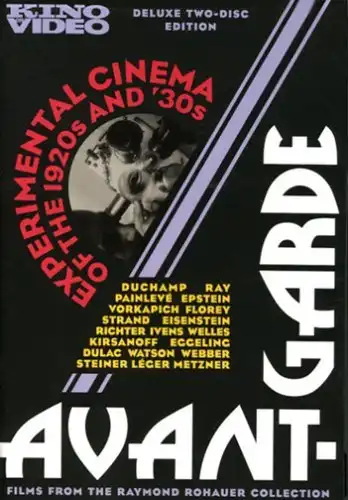
A definitive 7/10 rating for a film that redefined the boundaries of cult cinema. L'Étoile de mer remains a cornerstone of transgressive art.
If you are looking for a coherent plot or a traditional narrative arc, L'Étoile de mer (1928) will likely frustrate you within the first ninety seconds. However, if you are interested in how cinema can function as visual poetry—or if you simply want to see what happens when one of the 20th century’s greatest photographers turns his lens toward a moving image—it is essential viewing. Today, it remains a vital artifact for anyone fascinated by the avant-garde, though its distorted, voyeuristic style might alienate those who prefer the crisp clarity of modern digital filmmaking.
This is not a film to be "understood" in the literal sense; it is a film to be felt. It is for the viewer who enjoys the ambiguity of a dream that lingers after waking. Conversely, it will likely irritate viewers who find the self-indulgence of the 1920s Parisian art scene pretentious. There is no middle ground here: you either succumb to its rhythmic, blurry beauty or you find it a tedious exercise in historical abstraction.
The most striking technical choice Man Ray makes is the use of a textured, out-of-focus filter—likely a sheet of gelatin or frosted glass—placed between the camera and the subject. This isn't just a gimmick; it transforms the entire viewing experience into an act of voyeurism. When we see Kiki of Montparnasse undressing in the bedroom, the distortion strips away the literalness of the nudity, turning her body into a series of shifting, impressionistic shapes. It feels private, not because we are seeing something forbidden, but because we are seeing it through the hazy filter of memory or desire.
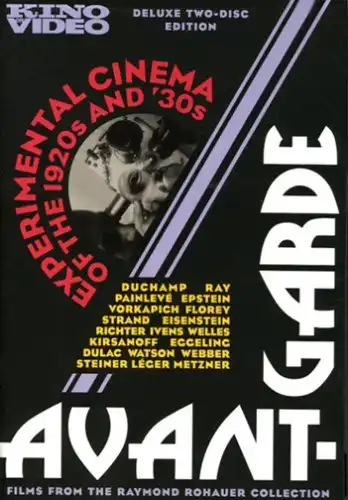
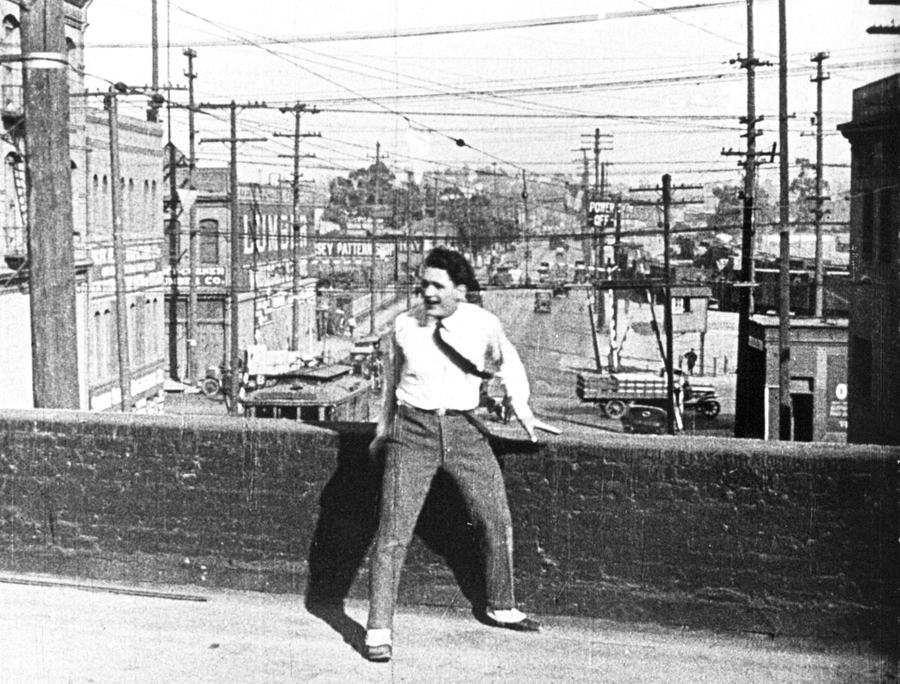
There is a specific shot early on where two figures stand on a road, completely out of focus. They look like smudges against a grey sky. It’s a bold choice that forces the eye to stop looking for detail and start looking for movement and composition. In an era where other filmmakers like Buster Keaton in Hard Luck were using the camera to capture crystal-clear physical comedy, Man Ray was doing the opposite—using the camera to obscure the world.
The presence of Kiki of Montparnasse is the film's grounding force. Even through the heavy distortion, her screen presence is undeniable. There is a moment where the filter is momentarily lifted, and her face is shown in sharp relief. The contrast is startling. It’s as if the film itself is taking a breath, allowing us to see the "real" world before plunging back into the subconscious. Her performance isn't about dialogue—the intertitles handle the poetic heavy lifting—but about the way she holds a gaze or moves through a room.
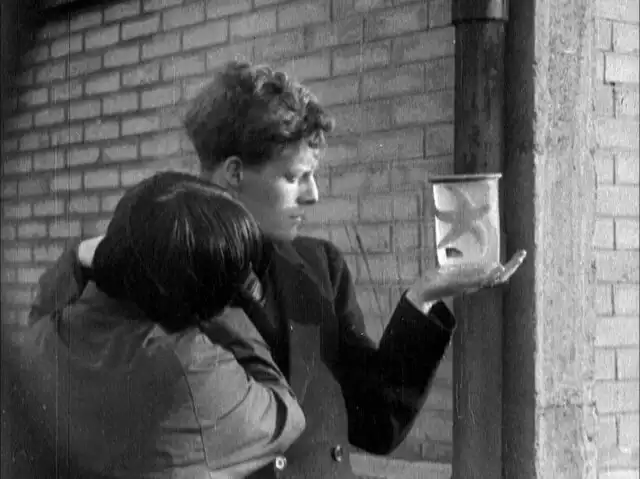
The starfish itself, kept in a glass jar, becomes a bizarrely potent symbol. It is tactile and strange. One of the most haunting sequences involves the man advancing up a staircase with a knife in his hand, while a starfish rests on one of the steps. The editing here creates a genuine sense of dread that feels modern, almost proto-horror. The way the camera lingers on the starfish—an alien, multi-limbed creature—next to the cold steel of the knife creates a tonal dissonance that is hard to shake. It makes the viewer wonder if the threat is directed at the woman, the object, or the man's own sanity.
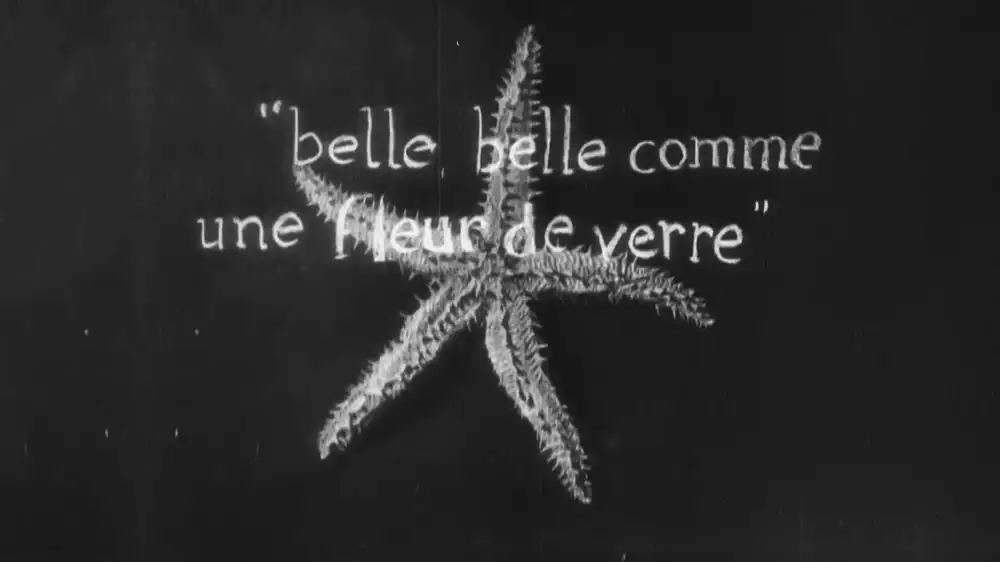
The film moves with the logic of a poem rather than a play. The repetition of the phrase "Si belle" (How beautiful she is) acts as a refrain. Each time the text appears, the context has shifted slightly—from the woman to the starfish to the city itself. This repetition could have felt redundant, but because the film is so short, it functions more like a musical hook. It builds a sense of obsession.
The pacing does occasionally drag during the transition scenes featuring tugboats and city streets. While these shots are meant to ground the dream in the reality of 1920s Paris, they lack the visceral impact of the bedroom or staircase sequences. Some of the cuts between the newspapers and the still-life images feel a bit like a slideshow, momentarily breaking the hypnotic spell the film works so hard to cast. However, the rhythmic return to the starfish always pulls the focus back in.
Man Ray’s background as a photographer is evident in every frame. He understands how to use high-contrast lighting to create depth, even when the image is blurred. Look closely at the scenes in the bedroom; the way the light hits the white sheets and the dark shadows of the furniture creates a graphic composition that would work as a standalone photograph. There is a specific shot of the starfish on a pane of glass where the lighting makes it look almost translucent, like a ghost of a creature rather than a biological specimen.
The film also benefits from its lack of "prestige" polish. There are scratches on the negative, slight wobbles in the frame, and moments where the lighting seems to flicker. In a modern context, these imperfections add to the film’s haunting quality. It feels like a recovered transmission from a lost civilization. Unlike the polished satire found in films like The Snob, L'Étoile de mer feels raw and experimental, as if the creators were discovering the rules of cinema as they went along.
L'Étoile de mer is a film that demands you meet it on its own terms. It doesn't care if you know what the starfish represents or why the man has a knife. It only cares that you look. It is a study in the texture of film and the weight of a gaze. While the middle section slows down slightly with its city imagery, the final moments—returning to the blurred figures on the road and the final declaration of beauty—bring the experience to a satisfying, if enigmatic, close.
Is it worth watching today? Absolutely, but only if you have fifteen minutes to give it your undivided attention. It is a masterclass in how to use technical limitations—or intentional distortions—to create an atmosphere that a high-definition camera could never replicate. It remains one of the most successful attempts to put the logic of a poem onto celluloid.
IMDb —
1921
Community
Log in to comment.