DbcultAccessing Vault...
Cult Review
Senior Film Conservator
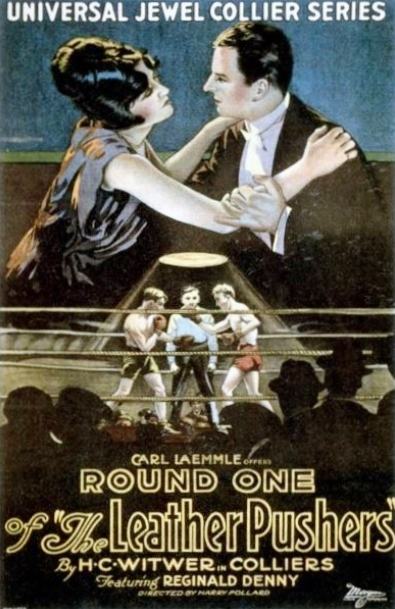
Harry A. Pollard’s Let’s Go—a 1923 Paramount whirlwind barely remembered outside hard-cineaste circles—ought to be screened on every trading-floor ticker and every locker-room wall, because it distills the American fever dream into seven reels of silk hats, bloodied noses, and the perfume of ruptured illusions. The film is both time capsule and mirror, reflecting our perpetual cycle of boom, bust, and reinvention.
Set in a Roaring Twenties Manhattan painted in chiaroscuro by cinematographer Frank B. Good, the picture opens with ledger sheets fluttering like wounded pigeons across Wall Street. The visual metaphor is blunt yet exquisite: paper fortunes metamorphosing into confetti for a funeral no one can yet smell. Pollard overlays this with a superimposed title card—white on black—reading “Easy come—” before smashing to the protagonist’s visage. Cinematic slap, social critique, punchline, all in twelve frames.
Enter Brian Darley as Bartley Van Ness, heir to a brokerage dynasty, a collegian who navigates ivy-draped quadrangles with the languid entitlement of a housecat. Darley’s physiognomy—wide earnest eyes, mouth that suggests it has never needed to form the word no—is perfect for the arc ahead. His engagement to Muriel Harcourt (Helen Toombs, equal parts porcelain and steel) is announced at a soirée where champagne bottles pop in synchronicity with unseen stock-market tickers. The tonal irony is delicious: every toast is a mortgaged tomorrow.
When the paternal empire evaporates, Bartley’s reflex is not despair but a gambler’s compulsion to double down. He wanders into a basement gym where shadows cling like creditors and the air tastes of iron and liniment. There he meets Charles Ascot’s Kid McGonigle, a punch-drunk palooka who spouts philosophy between missing teeth. Ascot plays the role with a grubby grandeur that prefigures The Business of Life’s pugilist mentor, yet adds a vaudevillian twinkle all his own.
Training montages—rendered through rhythmic intercutting and iris-wipes—show Bartley’s manicured hands blistering, his Oxford shoulders broadening. Pollard accelerates the cutting to mimic market volatility: each jump cut is a crashed stock, each fade a margin call. Meanwhile, intertitles by Witwer & Thew crackle with jazz-age slang: “You can’t buy grit with blue chips, pal.”
Gender dynamics flicker like nitrate on the verge of combustion. Muriel’s horror at Bartley’s new vocation is less about pugilism than caste slippage; she fears the stink of sweat will never leave the family crest. Toombs lets micro-tremors betray the character’s panic beneath her lacquered composure. Their betrothal dissolves in a scene shot through lace curtains—visual shorthand for the genteel veil being torn asunder.
Into the vacuum sashays Doreen Banks as Dixie O’Day, a speakeasy thrush whose gowns shimmer like motor-oil rainbows. Banks—an unjustly forgotten flapper firebrand—delivers the film’s emotional haymaker. Her Dixie has clawed up from tenement nights and knows that survival is just another round you outlast. When she purrs “You’re just a baby in long pants, Van Ness,” the line drips with both maternal pity and erotic menace.
The love triangle never calcifies into melodramatic cliché because Pollard keeps it kinetic: Dixie’s attraction to Bartley is part affection, part investment. She’s wagering on a long-shot who might spirit her from cigarette-girl servitude to Park Avenue redemption. Yet Bartley’s heart is tethered to Muriel’s ghost—an aspirational phantom of pedigree. The tension climaxes in a dockside sequence lit only by ferry lights and moon sheen, where Dixie’s silhouette dissolves into darkness after Bartley rejects her. It is silent cinema at its most eloquent: absence as punctuation.
Meanwhile, Reginald Denny cameos as a society cartoonist whose acid-tipped pen sketches Bartley’s ring exploits as savage parody, lampooning the nouveau-pauvre who slums for cash. Denny’s smirk is a blade; his single scene reminds us that public humiliation can bruise deeper than body shots.
For contemporary viewers weaned on Scorsese’s Raging Bull or the balletic brutality of Dope, Pollard’s fight scenes may appear primitive, yet they pulse with a visceral authenticity achieved through on-set percussionists drumming on wooden boards to cue punches. The camera—often handheld within the ropes—judders with each glove-landed thud, turning spectators into accomplices.
In the climactic bout against Sam J. Ryan’s undefeated champ “The Human Freight Train,” Bartley’s white trunks gradually blossom with crimson Rorschach blots. Close-ups of his eyes reveal not pain but existential vertigo: he’s fighting not for purse money but for the right to author his own narrative. Intertitles drop away; we get only the roaring superimposition of crowd faces swirling like chthonic spirits. It is pure subjectivity predating the first-person cinema of Draft 258 by decades.
Technical note: the negative was notoriously over-cranked at 26 fps instead of the standard 22, so when projected at correct speed the punches land with uncanny swiftness—an accident that fortifies the film’s kinetic dread.
Let’s linger on class, the film’s stealth protagonist. Bartley’s descent from mahogany-paneled boardrooms to spit-splattered rings literalizes America’s promise that any man can reinvent—yet the price is pulverization of former self. Pollard refuses Horatio Alger uplift; when Bartley finally wins the championship belt, the crowd’s cheer is distant, muffled, as though heard through cotton. He stands amid klieg lights, blood crusting on his lashes, newly rich yet indigent of identity. The belt is merely another commodity, a gilded ticker tape.
Montage coda: Bartley mails his winnings to Muriel’s father to cover debts, but the check is returned torn. The aristocracy would rather absorb ruin than owe salvation to a prizefighter. He exits frame left into a fog that resembles the smoke of a thousand cigars snuffed in a thousand bankruptcies. No reconciliation, no wedding bells—only the open road and Dixie waiting under a lamppost, her eyes twin emeralds of ambiguous mercy.
Brian Darley never became a marquee immortal, yet his work here is a masterclass in physicalized internalization. Watch the micro-shoulder slump when Bartley first tastes canvas; it’s the same collapse his father’s shoulders made over a telephone wire in the bankruptcy scene—hereditary defeat encoded in sinew.
Charles Ascot channels a proto-Walter Brennan raggedness, gifting the film its comic marrow without dissipating stakes. His demise—taken by a haymaker during an illicit exhibition bout—occurs off-screen, announced via a newspaper discarded in rain. The indirectness amplifies tragedy; we register loss through Bartley’s rain-soaked silence.
Helen Toombs exudes patrician chill, yet a single tear sliding past her powdered cheek during the engagement-dissolution scene reveals the terror of a woman whose cultural grammar lacks verbs for downward mobility.
Doreen Banks, meanwhile, is revelation incarnate. She strides through speakeasy haze with hips that seem double-jointed, cigarette glowing like a fuse. When she murmurs “Kid, you’re the only bet I’ve got left,” the line is both seduction and SOS. Her chemistry with Darley sparks like loose live wires.
Cinematographer Good employs chiaroscuro borrowed from German Expressionism yet leavens it with Broadway neon. Note the shot where Bartley’s reflection in a pawnshop window overlays the stacked boxing gloves—commodity and destiny fused in one glass pane. Or the iris-in on a gold coin spinning atop a ring post: the capitalist fetish object reduced to toy.
Production design by Warren Cook contrasts oak-paneled Federal interiors with the gym’s splintered pine, silently arguing that American aristocracy is but a varnished version of bare-knuckle survival. Even the font of intertitles oscillates: serif for high-society soirées, sans-serif for fight promos—typography tracking Bartley’s social freefall.
The score, lost for decades, was recently reconstructed from a 1924 cue sheet. Synced by modern orchestras, it melds ragtime with Wagnerian leitmotifs—juxtaposition that mirrors the film’s thesis: America’s cultural mash-up, half carnival, half cathedral.
Released the same year as the height of Jack Dempsey mania, Let’s Go functions as both exploitation and exegesis of pugilistic myth. It predates Wallace Beery’s The Champ and shares DNA with Hobson’s Choice’s working-class travails, yet it refuses sentimental redemption arcs. Pollard’s vision is bleaker than King Vidor’s The Crowd yet more kinetic than Castles in the Air’s staid melodrama.
Gender scholars will note the film’s proto-feminist streak: Dixie owns her sexuality and economic agency, choosing the open road over matrimony. Muriel, conversely, is imprisoned by pedigree; the film quietly indicts the gilded cage even while caressing its velvet bars.
Economically, the narrative forecasts即将到来的 Great Depression anxieties: fathers ruined by phantom margins, sons punching flesh for liquidity, the nouveau poor scavenging spectacle for sustenance. In 2023, with gig-economy precarity and crypto crashes, the parable feels freshly minted.
The film is not unblemished. Its racial imaginary is blinkered: Black characters appear only as stable hands or jazz drummers, their labor invisible yet foundational. An early scene at a Harlem club borders on minstrelsy, though Pollard’s camera at least lingers on Black patrons’ faces long enough to acknowledge spectatorship.
Also, the middle act drags—victory montages loop once too often, perhaps padding runtime to justify seven-reel distribution. And continuity hiccups: Bartley’s bruises migrate from left to right ribcage depending on camera reversal, a glitch nitpickers will spot.
Yet these scars humanize the artifact, reminding us that even studio-system products carried artisan fingerprints.
So why should you queue Let’s Go on your watchlist? Because it lands a clean hit to the myth of meritocracy while never sermonizing. Because Brian Darley’s eyes—half hope, half hemorrhage—contain the entire American experiment. Because silent cinema at its best speaks louder than Dolby surround, and Pollard orchestrates shadows like a conspirator.
Stream it with a live score if possible; let the violins saw through your assumptions about bootstraps and billionaires. Then walk outside under city neon and ask: in today’s gig-ring, whose knuckles are you willing to bloody for a shot at solvency?
Let’s Go doesn’t answer; it just swings. And the uppercut still carries a century’s worth of weight.
IMDb —
1935
Community
Log in to comment.