DbcultAccessing Vault...
Cult Review
Senior Film Conservator
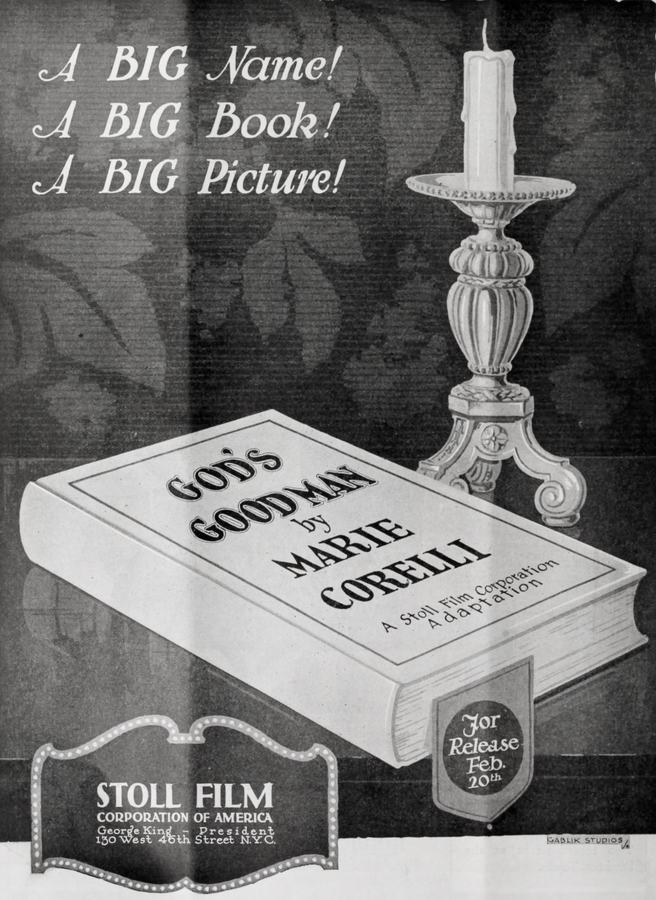
Stepping back into the nascent era of cinematic storytelling, one encounters a fascinating tapestry of human emotion and societal critique in films like God's Good Man. Released in 1919, this British silent drama, an adaptation of Marie Corelli's novel, offers more than just a glimpse into early filmmaking; it presents a compelling examination of class divides, the capriciousness of fate, and the unexpected blossoming of affection across seemingly insurmountable social chasms. It’s a work that, despite its vintage, resonates with a profound understanding of human nature, challenging audiences to ponder the true meaning of worth and the serendipitous routes destiny often takes.
The plot, deceptively simple on its surface, unravels with an intricate weave of circumstance and consequence. We are introduced to an heiress, a figure emblematic of Edwardian privilege and insulated comfort, whose life of leisure is abruptly interrupted. Her world, meticulously constructed from wealth and social standing, is poised for a dramatic shift. Concurrently, we observe the life of a parson, a man of humble means and unyielding moral conviction, whose existence stands in stark contrast to the heiress's opulence. The catalyst for their convergence is an unforeseen accident during a spirited fox hunt, an event not orchestrated by romantic design but by pure, unadulterated chance. The injury sustained by the heiress is, remarkably, inflicted by the parson's recently discharged agent. This detail is crucial, for it implies a ripple effect of past decisions and unintended repercussions, binding the parson, however indirectly, to the heiress's misfortune. It’s a narrative device that elevates the story beyond a mere romance, imbuing it with a sense of karmic entanglement and the profound interconnectedness of disparate lives.
This incident, far from being a mere plot point, serves as a crucible for transformation. The heiress, initially a victim of circumstance, finds her perspective irrevocably altered. The pain of her injury, the vulnerability it exposes, forces her to look beyond the superficial allure of wealth and status. Her gaze is drawn, perhaps for the first time, to the inherent dignity and moral fortitude residing within the impoverished clergyman. His 'goodness,' implied by the film's very title, is not contingent on material possessions but on an intrinsic ethical compass. Their subsequent marriage, therefore, transcends the conventional societal expectations of the era, where unions were often forged for convenience or consolidation of wealth. Instead, it emerges as a testament to the transformative power of empathy, mutual respect, and the unexpected pathways through which genuine affection can blossom. It's a bold statement for its time, suggesting that true alliance stems from character rather than class.
In the realm of silent cinema, the burden of character development falls squarely on the shoulders of the actors' physical expressions, their body language, and the nuanced portrayal of emotion through gesture and gaze. God's Good Man benefits immensely from a dedicated cast who masterfully navigate this challenge, bringing a rich internal life to their roles without the aid of spoken dialogue.
Temple Bell, in her portrayal of the heiress, delivers a performance that skillfully charts a journey from aristocratic detachment to empathetic connection. Initially, her demeanor likely conveys the serene confidence of one born into privilege – perhaps a touch of haughtiness, an air of being unaccustomed to hardship. The accident becomes her awakening. Bell's acting would have needed to convey the shock, the vulnerability, and the gradual dawning of a new perspective. Her expressions would shift from pain to curiosity, then to a burgeoning respect, and finally, affection, demonstrating a character who sheds the superficial trappings of her world to embrace a deeper form of humanity. It's a nuanced performance, demanding the ability to convey profound internal shifts through external, often subtle, cues.
Basil Gill as the titular 'good man' is tasked with embodying virtue without being sanctimonious. His parson must exude humility, integrity, and a quiet strength that draws the heiress to him. Gill's performance would likely emphasize a gentle countenance, perhaps a worn but noble bearing, reflecting a life of service and sincerity despite his impoverished circumstances. The parson's reaction to the accidental injury, his concern, and his inherent kindness would be pivotal in establishing his character's appeal. He represents an ideal, a moral anchor in a society often swayed by material concerns, and Gill's challenge would be to make this ideal feel authentic and relatable rather than merely symbolic.
Hugh Dabernon-Stoke, as the agent whose actions set the entire narrative in motion, plays a pivotal, if perhaps less sympathetic, role. His character is the instrument of fate, and his discharge by the parson adds a layer of complexity. Was the discharge justified? Was there resentment? Dabernon-Stoke's portrayal would need to hint at these underlying tensions, perhaps through a restless energy or a subtle air of desperation, making his involvement in the accident feel like a natural, albeit tragic, consequence of his circumstances. His character serves as a stark reminder of how seemingly minor personal conflicts can have far-reaching and unexpected societal implications.
The ensemble cast, including Julian Henry, Peggy Carlisle, Barry Bernard, Teddy Arundell, and Kate Gurney, would have been crucial in fleshing out the societal backdrop against which this unusual romance unfolds. Their reactions to the heiress's choice, their whispers of gossip or expressions of disapproval or acceptance, would serve to highlight the societal pressures and expectations that the main characters navigate. In silent film, every extra, every supporting role, becomes a vital part of the visual narrative, conveying the mood and opinions of the broader community.
While at its heart a romance, God's Good Man delves into a multitude of profound themes that elevate it beyond simple romantic melodrama. It engages with the very fabric of early 20th-century British society, questioning its values and exposing its inherent paradoxes.
The stark contrast between the heiress's world of inherited wealth and the parson's life of humble service is a central pillar of the narrative. The film implicitly critiques the rigid social stratification of the era, where marriage was often a transaction to maintain or elevate status. By having the heiress choose a 'poor parson,' the film makes a powerful statement about the true value of an individual, suggesting that character and moral integrity far outweigh material possessions or social standing. This theme resonates with other films of the period that grappled with social disparity, such as The Eternal Grind, which depicted the harsh realities of urban poverty and the struggles of the working class, or Old Wives for New, which explored the evolving social mores surrounding marriage and divorce within different societal strata. Both, in their own ways, challenged conventional notions of happiness and societal success.
The accidental nature of the heiress's injury and her subsequent encounter with the parson raises questions about fate versus free will. Is it simply a random occurrence, or is there a guiding hand – perhaps even a divine one, as the title implies – orchestrating these events? The film suggests a providential design, where an act of misfortune becomes the unlikely conduit for a deeper, more meaningful connection. This narrative thrust aligns with a broader sensibility in early cinema, where grand gestures and significant coincidences often served to propel the plot and underscore moral lessons. The idea that a single, unforeseen event can irrevocably alter the course of lives is a powerful and timeless storytelling device.
The role of the discharged agent adds a layer of complexity regarding forgiveness and the consequences of past actions. While the plot summary doesn't detail the agent's fate, his involvement in the accident raises questions about his own redemption or the heiress's capacity for forgiveness towards the man who caused her suffering. This element introduces a moral dimension beyond the central romance, hinting at the broader human capacity for empathy and understanding even in the face of adversity. It subtly echoes themes found in films like Scandal, which explored the repercussions of reputation and societal judgment, and the path to moral reconciliation.
Analyzing God's Good Man also offers an invaluable opportunity to appreciate the artistry and technical ingenuity of early silent filmmaking. Without synchronous sound, directors and cinematographers had to rely on a sophisticated visual language to convey narrative, emotion, and character depth.
The director would have employed a range of techniques to ensure clarity and emotional impact. Close-ups would be crucial for revealing the nuanced expressions of Bell and Gill, allowing the audience to intimately connect with their internal states. Wide shots would establish the grandeur of the heiress's estate versus the simplicity of the parsonage, visually reinforcing the class divide. Lighting would be used dramatically, perhaps casting the parson in a soft, ethereal glow to emphasize his 'goodness,' or using stark contrasts to highlight moments of tension or despair. The pacing of the edits would also be key, with slower cuts for poignant moments and faster sequences for the excitement of the hunt or moments of dramatic climax. This meticulous visual choreography was the backbone of silent cinema, demanding a keen eye for composition and symbolic imagery.
Intertitles, those textual inserts that conveyed dialogue, exposition, and character thoughts, were an indispensable component of silent films. In God's Good Man, they would serve not only to advance the plot but also to deepen character understanding, perhaps revealing the heiress's initial disdain or the parson's quiet prayers. The choice of language, font, and even the design of the intertitle cards themselves contributed to the film's overall aesthetic and emotional tone. They were a bridge between the purely visual and the narrative complexities, ensuring that even the most intricate plot points or emotional subtleties were not lost on the audience.
The film's origin as an adaptation of Marie Corelli's novel is significant. Corelli was an immensely popular, albeit often critically dismissed, novelist of the late Victorian and Edwardian eras. Her works often featured strong moralizing tones, dramatic plots, and a fascination with spiritual and social themes. This literary heritage undoubtedly shaped the film's narrative structure, its emphasis on moral rectitude, and its exploration of societal values. Kate Gurney's adaptation would have faced the challenge of translating Corelli's often verbose prose into a concise, visually driven narrative suitable for the screen. The success of the film, therefore, lies not only in its cinematic execution but also in its ability to capture the essence of Corelli's thematic concerns in a new medium.
While God's Good Man stands on its own merits, placing it alongside contemporary films offers a richer understanding of its place within the broader cinematic landscape of the late 1910s. Its thematic concerns often found parallels in other productions grappling with similar societal questions.
The film's exploration of an unlikely union across social strata finds echoes in works like The Wooing of Princess Pat, which also navigated the complexities of romance against a backdrop of social expectations, albeit with a different set of class dynamics. Both films, in their own ways, questioned the rigid boundaries of societal acceptance when confronted with genuine affection. Similarly, the examination of moral choices and their societal repercussions can be seen in films like Marta of the Lowlands, which delved into human passions and ethical dilemmas within a rural setting, or A Hungry Heart, where love and sacrifice often transcended personal comfort or societal norms.
The central plot device of an accidental injury triggering a profound life change is a recurring motif in storytelling. While not a direct comparison, the idea of an external event dramatically altering personal trajectories can be observed in various forms, from the dramatic battles of The Battle of Shiloh, where individual fates are irrevocably tied to grander conflicts, to the more personal dramas where an unexpected turn of events forces characters to confront new realities. The power of a single moment to redefine an entire existence is a compelling narrative engine.
God's Good Man, though a product of its time, offers a timeless narrative. Its exploration of love transcending class, the role of fate in human affairs, and the intrinsic value of moral character remains relevant even in contemporary discussions. For enthusiasts of cinematic history, it provides a valuable window into the techniques and thematic concerns that preoccupied early filmmakers. It reminds us of the power of visual storytelling, the eloquence of silence, and the enduring human desire for connection and understanding that defies superficial boundaries.
Its legacy lies not just in its historical significance as a silent film but in its persistent ability to move audiences with a story that champions genuine goodness over material gain. It stands as a testament to the idea that true worth is found not in one's station, but in one's soul, and that sometimes, the most unexpected paths lead to the most profound unions. The film, in its quiet dignity, continues to provoke thought about what truly defines a 'good man' and, indeed, a good life.
IMDb 5
1930
Community
Log in to comment.