DbcultAccessing Vault...
Cult Review
Senior Film Conservator
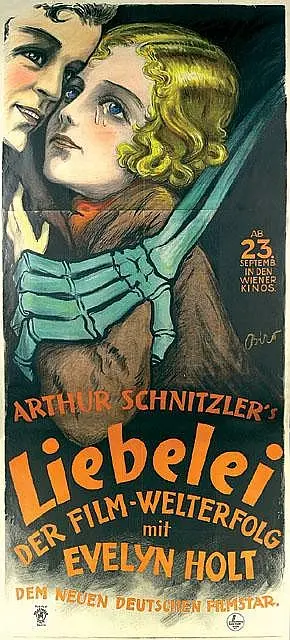
Is "Liebelei" (1927) a silent film worth seeking out in today's crowded cinematic landscape? Short answer: yes, but with significant caveats that demand a certain cinematic palate. This early adaptation of Arthur Schnitzler's enduring play offers a stark, unvarnished look into the societal pressures of the Austro-Hungarian Empire, making it a compelling, if challenging, watch for those interested in film history and the evolution of dramatic storytelling.
It is unequivocally for cinephiles, historians, and anyone with an appreciation for the foundational narrative techniques of the silent era. Conversely, it is decidedly not for viewers accustomed to rapid pacing, overt emotional exposition, or the intricate soundscapes of modern cinema. Temper your expectations, and you might find a quiet power within its frames.
"Liebelei" is a fascinating artifact, not just for its place in German cinema, but as a testament to Schnitzler’s timeless themes. While Max Ophuls' 1933 sound remake often overshadows it, this silent predecessor holds a raw, almost skeletal power that modern audiences too often overlook. It strips the narrative down to its emotional core, relying on the visual language of silent film to convey its tragic message.
The film’s central conflict – the clash between personal affection and rigid societal honor – resonates with an uncomfortable truth that transcends its period setting. It forces viewers to confront the devastating consequences when abstract ideals are prioritized over human lives, a theme as relevant today as it was in 1927 Vienna.
This film works because it commits wholeheartedly to its tragic premise, allowing the slow burn of societal pressure to suffocate individual happiness. Its visual storytelling, while occasionally rudimentary by modern standards, effectively communicates the suffocating atmosphere of its setting.
This film fails because its silent era conventions, particularly the reliance on exaggerated expressions and frequent intertitles, can alienate contemporary viewers seeking more nuanced performances and fluid narrative progression. The pacing, typical for its time, might feel glacial to an impatient audience.
You should watch it if you are a student of film history, a fan of European silent cinema, or someone who appreciates exploring how fundamental dramatic narratives were constructed before the advent of sound. It’s a valuable piece of the cinematic puzzle, offering insight into the roots of German realism.
At its core, "Liebelei" is a somber character study, meticulously illustrating the fatal intersection of youthful dalliance and an antiquated code of honor. The narrative, penned by Arthur Schnitzler, Georg C. Klaren, and Herbert Juttke, introduces us to a young officer whose romantic entanglement, initially light-hearted, becomes a dangerous liability within the hierarchical structure of the Austro-Hungarian military. The film’s strength lies in its ability to depict the seemingly innocuous beginnings of an affair that spirals into a life-or-death confrontation, solely due to the era's inflated sense of reputation.
The film doesn’t just tell a story; it paints a vivid, albeit silent, portrait of a society on the precipice. The casualness with which a duel is discussed, almost as a bureaucratic necessity rather than a personal tragedy, is chilling. It highlights a cultural pathology where a man’s honor, often tied to his social standing and military rank, was literally worth more than his life.
This theme is not merely a backdrop; it is the driving force of the tragedy. Every stolen glance, every secret meeting, every moment of tender affection between the young officer and his lover is shadowed by the unspoken threat of exposure. The film masterfully builds this tension, not through dialogue, but through the anxious expressions of its characters and the stark framing of their environments, often emphasizing their isolation within a rigid social order.
The concept of "Liebelei" itself—a flirtation, a casual love affair—is tragically ironic here. What begins as a relatively innocent dalliance is transformed into a matter of life and death by external forces. It’s a powerful critique, albeit a subtle one, of a society that valued superficial adherence to custom over genuine human connection and compassion.
The direction in "Liebelei" relies heavily on the visual lexicon of the silent era, employing close-ups to convey emotion and thoughtful compositions to establish mood and setting. While not as overtly expressionistic as some German films of the period like Der Hund von Baskerville, there's a clear emphasis on atmosphere. The opulent yet often stifling interiors of the Viennese aristocracy are contrasted with the more modest, yet equally constrained, settings of the lovers.
One particularly effective sequence involves the preparations for the duel. The camera often lingers on the faces of those involved, capturing their grim determination or quiet despair. The lack of sound amplifies the visual weight of these moments, forcing the viewer to interpret every gesture, every flicker of an eye. This reliance on visual cues is a double-edged sword; when it works, it's profoundly impactful, but when it falters, it can feel static.
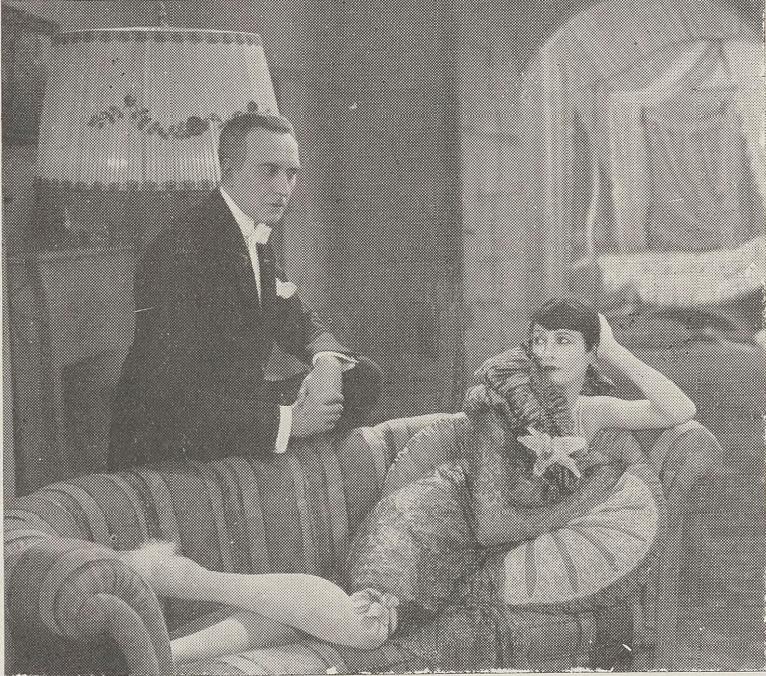
The cinematography, though not groundbreaking, serves the narrative effectively. It's clean, functional, and prioritizes clarity in storytelling. There are moments of genuine visual poetry, especially in scenes depicting the quiet intimacy between the lovers, often bathed in soft, natural light, contrasting with the harsher, more formal lighting of the military or aristocratic settings. These subtle shifts in lighting and framing speak volumes without a single spoken word, a testament to the era's visual ingenuity.
However, the film occasionally suffers from the inherent limitations of silent filmmaking, where complex emotional states or intricate plot points must be conveyed through intertitles. While necessary, these breaks in visual flow can disrupt immersion, reminding the audience of the medium's constraints. It's a reminder that silent film, for all its artistry, was a stepping stone to the more fluid narratives enabled by sound.
The cast of "Liebelei" faces the formidable challenge of conveying profound emotion without dialogue, a task that demands a specific kind of physical and facial expressiveness. Vivian Gibson, as the young woman caught in the affair, delivers a performance that oscillates between youthful exuberance and heartbreaking vulnerability. Her expressive eyes and subtle gestures are crucial in portraying her character's journey from innocent flirtation to crushing grief.
Fred Louis Lerch, as the doomed officer, embodies the conflicted man torn between duty and desire. His portrayal of a man trapped by honor, showing a quiet resignation to his fate, is particularly poignant. There’s a palpable sense of dread in his movements, a subtle stiffening of the posture that communicates his awareness of the impending tragedy long before it unfolds.
Evelyn Holt, Hilde Maroff, and Robert Scholz provide strong supporting performances, each contributing to the tapestry of Viennese society. Holt, in particular, adds a layer of nuanced friendship and concern, serving as a vital emotional anchor. The collective acting, while adhering to the more theatrical conventions of silent film, manages to evoke genuine pathos, particularly in the film's devastating final act.
It's easy for modern audiences to dismiss silent acting as over-the-top or melodramatic. Yet, within the context of its time, these performances were highly skilled, relying on a universally understood grammar of gesture and expression. "Liebelei" showcases this skill, reminding us that emotional depth can be achieved through purely visual means, even if the delivery style feels alien to contemporary sensibilities. The quiet moments, where characters simply react to news or contemplate their fate, are often the most powerful, allowing the audience to project their own understanding onto their silent suffering.
The pacing of "Liebelei" is characteristic of many silent dramas: deliberate, unhurried, and designed to allow the emotional weight of each scene to fully settle. This slow burn approach can be a test of patience for viewers accustomed to the rapid-fire editing and plot developments of contemporary cinema. However, it is precisely this measured pace that allows the film's tragic tone to deepen and permeate every frame.
The film doesn't rush to its inevitable conclusion; instead, it meticulously constructs the environment and the emotional stakes that lead to it. We spend ample time with the characters, observing their interactions, their anxieties, and their fleeting moments of joy. This investment in character development makes the eventual tragedy all the more impactful. When the duel finally occurs, it feels less like a sudden plot device and more like the grim, logical outcome of a society's inflexible rules.
The tone is consistently somber, tinged with a romantic melancholy that is characteristic of Schnitzler's work. There are brief respites of levity, particularly in the early scenes of flirtation, but these only serve to heighten the contrast with the impending doom. The film maintains a sense of quiet desperation throughout, a feeling that its characters are pawns in a larger, unforgiving game of social decorum. This unwavering commitment to its tragic tone is, in my opinion, one of its strongest artistic achievements, even if it makes for a less "entertaining" viewing experience in the modern sense.
It is impossible to discuss this silent "Liebelei" without acknowledging Max Ophuls’ 1933 sound version, often considered the definitive adaptation. While Ophuls' film benefits immensely from its intricate camera movements and the added layers of dialogue and music, the 1927 silent film offers a unique, almost purer, interpretation of Schnitzler's play. The absence of sound forces a different kind of engagement, demanding that the audience infer more, fill in the blanks, and rely entirely on visual cues.
Some might argue that the silent version, by necessity, simplifies the emotional complexities that Ophuls later explored with greater nuance through spoken word. And they wouldn't be entirely wrong. However, I contend that this simplification is also its strength. It distills the narrative to its bare essentials: love, honor, and sacrifice. The silent medium, in its starkness, sometimes achieves a universal emotional resonance that dialogue, for all its precision, can occasionally obscure. It’s a matter of taste, certainly, but to dismiss the silent version is to miss a crucial step in the play's cinematic evolution.
Yes, for a specific audience. "Liebelei" is a significant piece of silent German cinema. It offers a powerful, albeit slow-paced, tragic narrative. It’s an essential watch for film historians. It requires patience and an appreciation for the medium's early conventions. It works as a standalone drama. It also works as a historical comparison to the later sound version.
"Liebelei" (1927) is not an easy watch, nor is it a film that will appeal to everyone. Its silent nature and deliberate pacing demand a specific kind of engagement, a willingness to surrender to the conventions of a bygone era. Yet, for those who do, it offers a profoundly moving experience. It’s a tragedy, pure and simple, told with an earnestness and visual clarity that still resonates. While it may not possess the sophisticated artistry of its later, more famous sound counterpart, this silent "Liebelei" stands as a vital piece of cinematic history, a testament to the enduring power of Schnitzler's narrative, and a stark reminder of the sacrifices made at the altar of honor. It’s a film that earns its place in the annals of cinema, not as a mere curiosity, but as a compelling, if flawed, work of art.
IMDb —
1929
Community
Log in to comment.