DbcultAccessing Vault...
1.8/10
Senior Film Conservator
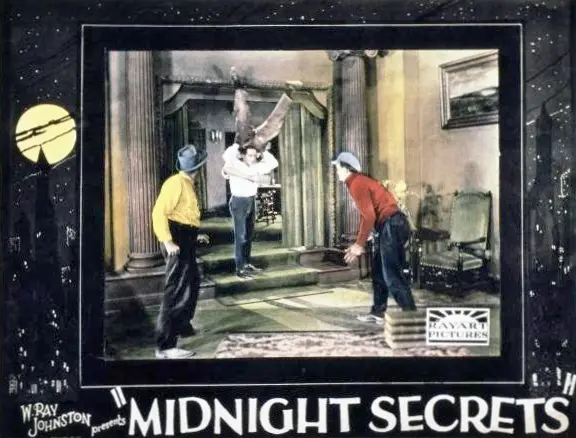
A definitive 1.8/10 rating for a film that redefined the boundaries of cult cinema. Midnight Secrets remains a cornerstone of transgressive art.
Step back into an era when shadows danced and narratives unfolded without the spoken word, yet with an intensity that could rival any modern-day exposé. Midnight Secrets, a film from a bygone age, plunges us headfirst into a world where the pen truly is mightier than the sword, and corruption lurks in the highest echelons of society. It’s a compelling testament to the enduring power of investigative journalism, even when faced with seemingly insurmountable odds. This isn't just a relic of early cinema; it's a masterclass in building tension and weaving a complex web of deceit, betrayal, and ultimate redemption.
At its pulsating core lies Tip O'Neil, portrayed with commendable verve by Ollie Kirby. O'Neil isn't merely a reporter; he's a crusader, a relentless force of nature for the Herald, armed with an unyielding moral compass and an uncanny knack for unearthing inconvenient truths. His latest quarry? A formidable duo comprising Logan, the shadowy figurehead of the Titanic Construction Co., and the notoriously slippery politician, Dan Macey. The evidence Tip has painstakingly amassed isn't just damning; it's a ticking time bomb poised to detonate their carefully constructed empires of graft and influence. Kirby embodies the archetypal intrepid journalist, a figure both vulnerable and indomitable, whose convictions drive the very engine of the narrative. His performance, reliant solely on gesture and expression, paints a vivid picture of a man consumed by his mission, yet deeply human in his affections.
The plot, meticulously crafted by writer Arthur Henry Gooden, unfurls with an almost surgical precision, each twist building upon the last to heighten the stakes. Macey, played with a chilling blend of arrogance and desperation by George Larkin, quickly reveals his true colors. His audacious attempt to strong-arm Inspector Murphy, urging him to 'lay off' the investigation, sets the stage for the moral quagmire that defines the film. It's during this confrontation that Macey's gaze falls upon Ruth, Tip's beloved, depicted with a captivating innocence by Pauline Curley, standing innocently near the safe containing the very evidence that could undo him. This chance sighting sparks a perilous idea, one that leverages love and resemblance for nefarious ends.
The introduction of Rita, Macey's 'sweetie' and the astute owner of a Beauty Shoppe, adds another layer of intrigue. Kathleen Myers brings a compelling blend of cunning and wounded pride to the role. Together, Macey and Rita concoct a scheme that is both audacious and cruel: to employ Sophie, a woman who bears an uncanny resemblance to Ruth, to pilfer the evidence. This doppelgänger plot device, while a staple of early cinema, is executed here with a particular effectiveness, ratcheting up the tension and misdirection. The subsequent double-cross, when Macey absconds with the evidence without fully compensating Rita, ignites a fiery resolve within her. Her vow to 'get even' is not merely a throwaway line; it's a pivotal moment, signaling that Macey has sown the seeds of his own destruction, a common dramatic irony found in films like The Other Man's Wife where personal betrayals often lead to grander downfalls.
The immediate aftermath sees Inspector Murphy, played by Hugh Saxon with a stoic sense of duty, wrongly suspecting Ruth. This misdirection is a classic narrative trope, effectively isolating our hero and forcing him to act alone. Tip's unshakeable faith in Ruth's innocence is the emotional anchor of the film, his determination fueled by both his journalistic integrity and his profound affection. This personal stake elevates the quest beyond mere professional duty, infusing it with a desperate urgency. His ingenuity shines as he navigates the treacherous underworld, befriending Rita and cleverly extracting the crucial information about the evidence's true location. It's a testament to the character's resourcefulness, mirroring the investigative grit seen in other period thrillers such as Trigger Fingers, where protagonists often had to rely on their wits rather than official channels.
The climax is a masterclass in silent film action. Tip's clandestine entry into Macey's house transforms into a visceral battle against Macey's gang. The choreography of these silent skirmishes, relying on exaggerated movements and stark visual cues, manages to convey both the brutality and the desperation of the encounter. Amidst the chaos, the chilling revelation that Ruth is held captive on a boat injects a fresh wave of urgency, shifting the narrative from a mere pursuit of justice to a desperate race against time for love. Tip's daring escape and subsequent rescue of Ruth are executed with a breathless pace, showcasing Kirby's physical prowess and adding a heroic dimension to his character. These sequences, while lacking dialogue, communicate volumes through their kinetic energy and the actors' expressive performances, a hallmark of the era's best action-oriented films like The Storm, which also relied heavily on visual storytelling to convey high stakes.
As Inspector Murphy and his men finally descend upon Macey's residence, the politician, ever the schemer, attempts a final, desperate act of deception: burning a decoy envelope. This moment of near triumph for the antagonist is swiftly undercut by Tip's dramatic entrance. The reveal of the true evidence, cunningly hidden beneath a carpet beside the safe, is a triumphant moment, a testament to Tip's foresight and the meticulous plotting of Gooden. It’s a satisfying conclusion, where the villain's hubris is exposed, and justice, though hard-won, ultimately prevails. The arrests of Dan Macey and his confederates are not just a resolution to the plot; they represent the restoration of order and the triumph of truth over corruption, a theme that resonates powerfully even today, echoing the moral clarity sought in films like As a Man Sows.
The ensemble cast, under the direction of an uncredited but clearly capable hand, delivers performances that transcend the limitations of silent film. Ollie Kirby's Tip O'Neil is charismatic and determined, his wide-eyed intensity conveying both his idealism and his resolve. Pauline Curley’s Ruth is the quintessential damsel in distress, yet imbues her character with a quiet strength that makes her more than just a plot device. George Larkin’s Dan Macey is deliciously villainous, his sneers and menacing gestures perfectly capturing the essence of a corrupt politician. Kathleen Myers, as Rita, arguably delivers one of the most nuanced performances, her shift from Macey's accomplice to his vengeful adversary being particularly compelling. Supporting roles by Hugh Saxon as Inspector Murphy, Jack Richardson, Miles McCarthy, and Frank Bond, though often brief, add texture and authenticity to the bustling world of Midnight Secrets. Their collective efforts demonstrate the collaborative artistry required to bring such a vibrant narrative to life without dialogue, relying instead on expressive pantomime and stark facial expressions, a technique perfected in the likes of Greed, which pushed the boundaries of visual storytelling.
What truly elevates Midnight Secrets beyond a mere historical curiosity is its sophisticated use of visual storytelling. The cinematography, though perhaps rudimentary by today's standards, effectively uses light and shadow to create mood and suspense. The close-ups on the characters' faces convey their inner turmoil and intentions, while wider shots establish the grandeur and danger of their surroundings. The pacing, a crucial element in silent film, is expertly managed, oscillating between moments of quiet suspense and frenetic action. The intertitles, far from being mere informational placards, are crafted to enhance the dramatic tension, often delivered with a flourish that mirrors the characters' heightened emotions. It’s a masterclass in how to communicate complex ideas and emotions without a single spoken word, a skill honed by many filmmakers of the era, notably in films like Whom the Gods Would Destroy, which also navigated intricate plots through purely visual means.
The film also serves as a fascinating historical document, offering a glimpse into the social anxieties and moral concerns of the early 20th century. The themes of corporate greed, political corruption, and the integrity of the press are as relevant today as they were a century ago. It reminds us that while technology and communication methods evolve, the fundamental struggles between right and wrong, power and justice, remain constant. The depiction of the beauty shoppe as a hub of clandestine meetings, or the 'Titanic Construction Co.' as a symbol of unchecked industrial power, are subtle yet effective touches that ground the narrative in its specific historical context while allowing its themes to transcend time. This blend of period detail and timeless themes is a hallmark of well-crafted historical dramas, even those from the silent era, such as Der Leibeigene.
In conclusion, Midnight Secrets is far more than a historical curiosity; it is a vibrant, engaging thriller that holds its own even in the pantheon of modern suspense films. Its intricate plot, compelling characters, and masterful silent storytelling make it a film worthy of rediscovery. Arthur Henry Gooden’s narrative prowess ensures that every plot thread is expertly woven, leading to a satisfying and impactful resolution. It serves as a powerful reminder of the foundational storytelling techniques that continue to influence cinema today, proving that a compelling narrative, well-acted characters, and a dash of daring can captivate audiences regardless of the technological age. For aficionados of early cinema, or indeed anyone with an appreciation for a well-told story, Midnight Secrets offers a thrilling journey into the heart of a bygone era, where the silence spoke volumes and justice, against all odds, found its voice.
Its influence can be seen in the lineage of investigative thrillers, establishing tropes and character archetypes that would be revisited time and again. The intrepid reporter, the corrupt official, the femme fatale – these are archetypes that found firm footing in films like this one. While it might not possess the grand scale of an epic like The Man Unconquerable, its focused narrative on a singular quest for justice gives it an intimate power. It's a film that demands attention, rewarding the viewer with a tightly wound plot and a satisfying resolution, a true gem for those willing to look beyond the spoken word to find the beating heart of cinema.
The film’s enduring quality lies in its ability to tell a complex story with clarity and emotional resonance, a testament to the skill of its creators. From the subtle glances of Pauline Curley to the menacing posturing of George Larkin, every element works in concert to propel the narrative forward. It is a film that, despite its age, continues to echo with relevance, reminding us that the fight for truth is a timeless endeavor. And for that, Midnight Secrets deserves its place as a significant, albeit perhaps underappreciated, piece of cinematic history.
IMDb —
1916
Community
Log in to comment.