DbcultAccessing Vault...
Cult Review
Senior Film Conservator
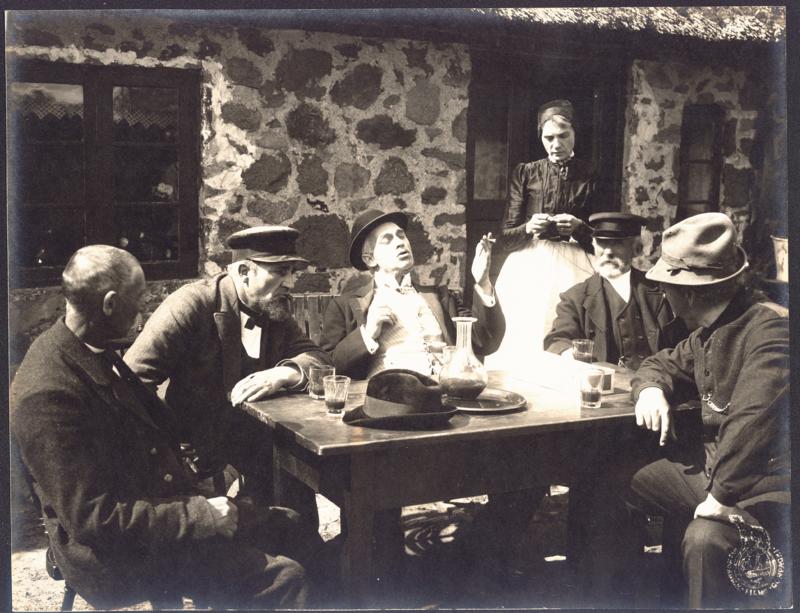
Valdemar Andersen's "Krigsmillionæren," a cinematic artifact from an era when silent films spoke volumes through gesture and tableau, emerges as a profound, if largely unheralded, examination of human morality under the immense pressure of global conflict. This Danish production, whose title translates evocatively to "The War Millionaire," plunges into the moral quagmire of a society grappling with the economic and ethical fallout of a protracted war. It's a film that, even a century later, resonates with disquieting relevance, probing the very essence of opportunistic wealth and its corrosive impact on the human spirit.
The narrative, penned with a keen eye for societal critique by Valdemar Andersen, introduces us to Jens Krog, portrayed with a chilling blend of calculated ambition and burgeoning emptiness by Frederik Jacobsen. Krog is not born into villainy, but rather, he is forged in the crucible of wartime scarcity. As the world around him descends into rationing and hardship, Krog, a seemingly unassuming merchant, identifies a grotesque opportunity. His initial ventures, perhaps justifiable as shrewd business, quickly morph into an insidious campaign of market manipulation. He corners essential goods, exploits supply chain vulnerabilities, and inflates prices with a cold, almost clinical detachment. Jacobsen's performance is a masterclass in silent film acting, conveying Krog's moral erosion not through dialogue, but through subtle shifts in posture, the hardening of his gaze, and the gradual, almost imperceptible, loss of his initial, modest demeanor. It’s a compelling study in how avarice, once unleashed, can consume the individual entirely, leaving behind a shell of their former self.
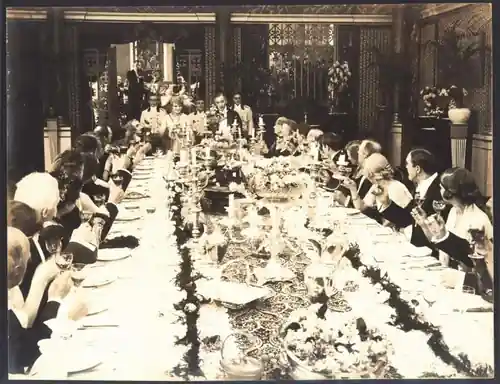
Krog's personal life mirrors his professional decline. He casts aside his principled fiancée, Else, played by Else Weng, whose quiet dignity offers a stark contrast to Krog's escalating materialism. Weng imbues Else with a heartbreaking blend of sorrow and steadfastness, representing the moral compass Krog so readily abandons. His new object of affection, the socially ambitious Clara (Agnes Lorentzen), embodies the superficial allure of the upper echelons to which Krog now aspires. Lorentzen's portrayal of Clara is suitably detached and calculating, her beauty a gilded cage for Krog's newly acquired status. Their union, devoid of genuine affection, underscores the hollow nature of Krog's ascent, a powerful commentary on the price of social climbing at the expense of authentic human connection.
The film deftly populates Krog's world with a rich tapestry of characters who react to his rise in various ways. Peter Nielsen as Erik, Krog's former business partner, serves as a tragic figure, a man of integrity who attempts to expose Krog's unethical practices but is ruthlessly outmaneuvered and financially ruined. Nielsen's performance elicits genuine sympathy, embodying the plight of the honest individual crushed beneath the weight of unchecked ambition. Erik's sister, Maria, brought to life by Ella Hansen, provides the film's moral core. As a nurse, Maria witnesses the devastating human cost of the war firsthand, her experiences fueling a passionate, albeit initially unwitting, crusade against profiteers like Krog. Hansen's portrayal is one of quiet strength and profound empathy, her character representing the suffering populace and their yearning for justice.
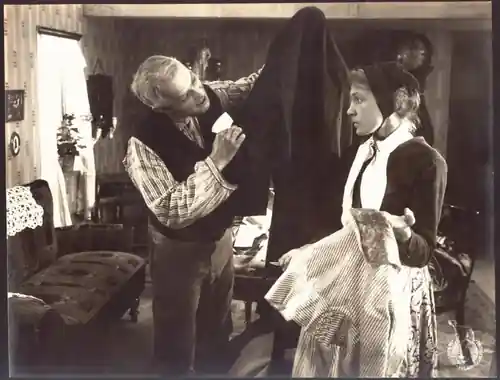
The supporting cast further enriches this complex social drama. Figures like Gerhard Jessen, Jutta Lund, and
Perhaps the most poignant moral voice, however, comes from Ingeborg Spangsfeldt as Krog's aging mother. Her initial pride in her son's success slowly gives way to profound disquiet as she discerns the tainted origins of his fortune. Spangsfeldt's performance, likely relying on subtle expressions of sorrow and disappointment, embodies the traditional moral conscience, a force of quiet judgment that Krog cannot easily dismiss. Her confrontations with Krog, though silent, are immensely powerful, representing the unshakeable moral foundation that his newfound wealth has shattered. Similarly, Elisabeth Frederiksen, in her role, would have contributed to the emotional texture, perhaps as a servant, a victim, or another voice of reason, further solidifying the film's intricate character dynamics.

Andersen's screenplay is remarkable for its ability to convey complex ethical dilemmas without the benefit of spoken dialogue. The film relies heavily on strong visual storytelling, expressive acting, and carefully crafted intertitles to drive its narrative and thematic points home. The cinematography of the era, while lacking the sophisticated camera movements of later periods, often utilized deep focus and carefully composed tableau shots to emphasize social stratification and emotional states. The stark contrast between Krog's lavish interiors and the austere, often shadowy exteriors depicting the suffering populace is a recurring visual motif, powerfully underscoring the film's central conflict.
Thematically, "Krigsmillionæren" is a searing critique of unchecked capitalism and the moral compromises made in times of crisis. It's a precursor to later films that would explore similar territory, such as the grand narratives of American cinema dealing with the 'robber barons,' though with a distinct Danish sensibility, perhaps more muted in its melodrama but no less potent in its message. The film doesn't shy away from depicting the consequences of Krog's actions, both on others and on his own soul. The question it poses is whether wealth acquired through such exploitation can ever truly bring happiness or if such a fortune is forever tainted, a burden rather than a blessing. This idea resonates with films like Sins of the Parents, which similarly explore the intergenerational impact of moral failings, though "Krigsmillionæren" focuses more acutely on the personal damnation of the individual who transgresses.

The film's exploration of moral reckoning also draws parallels with the broader allegorical dramas of the silent era. One could find echoes of the hubris and eventual downfall seen in works that touch upon the consequences of defying natural or divine order, much like the thematic undercurrents that might be present in a film titled Dionysus' Anger, where excessive ambition or transgression against moral boundaries invariably leads to tragic outcomes. Krog's journey, while rooted in socio-economic realities, takes on a almost mythological quality in its depiction of a man's soul being devoured by his own creations.
Comparing it to other films that tackle illicit gains, while "Krigsmillionæren" isn't about outright criminality like The $5,000,000 Counterfeiting Plot, it deals with a form of legal, yet morally reprehensible, theft – the exploitation of public need. The psychological toll on Krog, as he becomes increasingly isolated by his wealth and his choices, is a central dramatic engine. This internal conflict, the battle between conscience and avarice, is a testament to Andersen's insightful writing. The narrative, while focused on Krog, expands to encompass the wider societal implications, making it a powerful social commentary rather than just a personal drama.

The subtle nuances of performance, particularly from Jacobsen, are crucial in conveying this internal struggle. Silent cinema often demanded a more theatrical, outwardly expressive style, but the best actors of the era, like Jacobsen, could convey immense emotional depth through restraint. His transformation from a man with a glint of ambition to a hollow, haunted figure is genuinely compelling. The film's conclusion, whether it offers redemption, tragic isolation, or unsettling ambiguity, is designed to provoke thought long after the final frame. It forces the audience to confront the uncomfortable truth that justice, especially in the realm of economic exploitation, is often elusive and complex.
In its depiction of Krog's choices and their consequences, the film also touches upon themes of deceit and self-deception, echoing the moral quandaries found in a film like The Liar (1918). Krog's lies are not just to others, but fundamentally to himself, convincing himself that his actions are justifiable in the pursuit of success. This self-deception is a potent element of his tragic character arc, gradually corroding his soul until he is barely recognizable. The path he chooses, the 'beckoning roads' of wealth and power, ultimately lead him to a moral wilderness, a journey that can be metaphorically linked to Beckoning Roads, where choices made at crucial junctures determine one's ultimate destiny.
"Krigsmillionæren" stands as a stark reminder of the enduring questions surrounding wealth, power, and morality, particularly in times of conflict. It's a profound cinematic experience that, despite its age and the absence of sound, speaks with a resonant voice about the human condition. The film is not just a historical curiosity; it is a timeless piece of art that invites introspection into the cost of ambition and the true meaning of prosperity. The meticulous attention to detail in character development and the stark, impactful visuals make it a compelling watch for anyone interested in early cinema or the timeless themes it so courageously tackles. The legacy of such films is not merely in their historical value, but in their continued ability to spark dialogue about enduring human dilemmas, making "Krigsmillionæren" a vital contribution to the cinematic canon, one that should not be overlooked by those seeking profound storytelling from the silent era.
The direction, while not explicitly credited to Andersen, carries the distinctive narrative weight of his writing, suggesting a cohesive vision for the film. The pacing, typical of the era, allows for moments of quiet contemplation, letting the audience absorb the emotional weight of each scene. The use of close-ups, though perhaps less frequent than in later films, is employed effectively to emphasize crucial emotional beats, drawing the viewer into the characters' internal worlds. The film's overall aesthetic is one of somber realism, occasionally punctuated by the opulent excesses of Krog's new life, creating a powerful visual contrast that reinforces the central themes of disparity and moral decay. The costumes and set designs, while functional for the period, also serve to highlight social class and character aspirations, further enriching the film's visual language.
This cinematic gem from the Danish silent era is a testament to the power of early filmmaking to tackle complex societal issues. It doesn't offer easy answers, but rather, presents a nuanced portrayal of a man consumed by his own ambition, and the ripple effects of his choices on an entire community. The film's enduring message lies in its timeless warning against the seductive allure of ill-gotten gains and the profound spiritual cost of sacrificing one's integrity on the altar of material success. It’s a film that demands to be seen, discussed, and remembered as a significant piece of cinematic history that speaks volumes, even in silence. The film's exploration of a 'burning question' – the moral legitimacy of wealth acquired through exploitation – aligns it with the thematic depth of films like The Burning Question, which sought to grapple with pressing social and ethical dilemmas of their time. It’s a compelling work that, through its cast and story, constructs a narrative bridge, much like the metaphorical construction explored in The Builder of Bridges, between individual ambition and societal well-being, often showing where those bridges crumble.
In an age where the ethical boundaries of commerce and conflict continue to blur, "Krigsmillionæren" serves as a potent historical mirror. Its quiet power lies not just in its dramatic narrative, but in its ability to provoke introspection about our own values and the choices we make when faced with opportunities that test the limits of our integrity. It's a film that, despite its lack of modern fanfare, holds a crucial place in the lineage of socially conscious cinema, a stark and unforgettable portrait of a 'war millionaire' and the indelible mark his fortune leaves upon his soul and the world around him. This profound tale, though set in a specific historical context, transcends its origins to deliver a universal commentary on human nature and the societal costs of avarice. The sheer breadth of the cast, from the central figures to the array of supporting characters, each contributes to the rich tapestry of this moral drama, making it a comprehensive and deeply affecting cinematic experience.
The film’s climax, without revealing its precise nature, is designed to be a moment of profound reckoning for Krog. Whether it’s a public disgrace, a personal tragedy, or a subtle, internal realization, the film ensures that the consequences of his actions are felt. This journey towards a climactic moral confrontation, often arduous and painful, can be seen as a metaphorical ascent, perhaps even a Golgotha for the soul, drawing thematic parallels with films like O aniforos tou Golgotha, which depict difficult paths towards spiritual or moral enlightenment, or despair. The film, therefore, is not merely a story of a man who gets rich, but a cautionary tale about the spiritual bankruptcy that can accompany such a path, a narrative that remains compelling and relevant for modern audiences seeking depth and meaning in classic cinema.
IMDb —
1931
Community
Log in to comment.