DbcultAccessing Vault...
Cult Review
Senior Film Conservator

Is 'Life's Crossroads' worth watching today? Short answer: yes, but with the understanding that it’s a product of its time that still manages to resonate. This film is an essential watch for cinephiles interested in the evolution of survival narratives and early cinematic tension, particularly those who appreciate character-driven drama over spectacle. However, if you're seeking fast-paced action or a modern visual aesthetic, this particular journey might test your patience.
From its opening moments, 'Life's Crossroads' establishes a compelling, albeit simple, premise that belies a deeper exploration of human nature under duress. It’s a film that asks fundamental questions about trust, prejudice, and the thin veneer of civilization. While it doesn't always stick the landing with modern sensibilities, its core themes remain surprisingly potent.
This film works because of its unflinching focus on character dynamics, the palpable tension between its leads, and a narrative twist that genuinely challenges audience expectations. It strips away the comfort of society, forcing its protagonists – and by extension, the viewer – to confront primal fears.
This film fails because its pacing can feel deliberate to a fault by contemporary standards, and some of its dramatic beats are telegraphed a little too clearly, diminishing the impact of its intended surprises. The constraints of early filmmaking also mean certain emotional nuances are hinted at rather than fully explored.
You should watch it if you appreciate historical cinema, enjoy psychological survival stories, or are keen to see how foundational genre tropes were established without the benefit of extensive dialogue or special effects. It's a masterclass in silent storytelling, despite its occasional stumbles.
Eloise Macie Lewis’s ‘Life's Crossroads’ thrusts its audience into a narrative crucible, beginning with the stark reality of two strangers, a man and a woman, cast adrift by the sea and deposited onto an alien African shore. This isn't merely a tale of physical endurance; it's an immediate, visceral examination of human friction. Their survival is contingent upon a fragile, often antagonistic, alliance, forcing them to reconcile their inherent differences against the backdrop of an indifferent, vast wilderness. The film brilliantly uses this initial isolation to strip away societal pretenses, revealing the raw edges of their personalities.
The turning point arrives not with a grand escape, but with the appearance of a seemingly benevolent figure from a nearby ranch. This introduction is initially framed as salvation, a reprieve from the relentless struggle against the elements and each other. Yet, Lewis, with a subtle but effective hand, injects a creeping sense of unease. The question shifts from ‘will they survive?’ to ‘can they trust?’ It’s a masterful pivot, transforming a straightforward survival tale into something far more psychologically charged. The African setting, though often depicted through a lens of period exoticism, serves as an effective crucible for these shifting loyalties.
The beauty of this narrative lies in its quiet subversion. What initially appears to be a clear path to safety becomes a labyrinth of suspicion. The ranch, a symbol of civilization and rescue, slowly morphs into a potential cage, forcing the protagonists to question the very nature of their deliverance. This early example of a ‘false sense of security’ trope is handled with a commendable degree of tension, even in a silent film format. It keeps the audience guessing, even if some of the dramatic reveals feel a touch dated by modern standards.
The success of 'Life's Crossroads' hinges significantly on the non-verbal communication of its principal cast, a demanding feat in the silent era. Gladys Hulette, as the unnamed woman, delivers a performance that oscillates between vulnerability and surprising resilience. Her initial terror and despair are palpable, conveyed through wide, expressive eyes and a trembling posture. Yet, as the narrative progresses, she imbues her character with a growing strength, particularly in her guarded interactions with William Conklin’s character. There's a memorable scene where she silently challenges Conklin's authority, a fierce glint in her eye that speaks volumes without a single intertitle. It’s a nuanced portrayal for the period, avoiding pure damsel-in-distress clichés.
William Conklin, portraying the shipwrecked man, embodies a gruff, survivalist pragmatism. His performance is less about overt emotion and more about a stoic determination, punctuated by flashes of frustration and suspicion. His physical presence dominates, often using his stature to convey a sense of protective, albeit sometimes overbearing, command. The chemistry, or rather anti-chemistry, between Conklin and Hulette is crucial; their initial animosity is believable, slowly thawing into a wary dependence. This isn't a romance born of convenience, but a partnership forged in desperation, and both actors sell that difficult transition effectively.
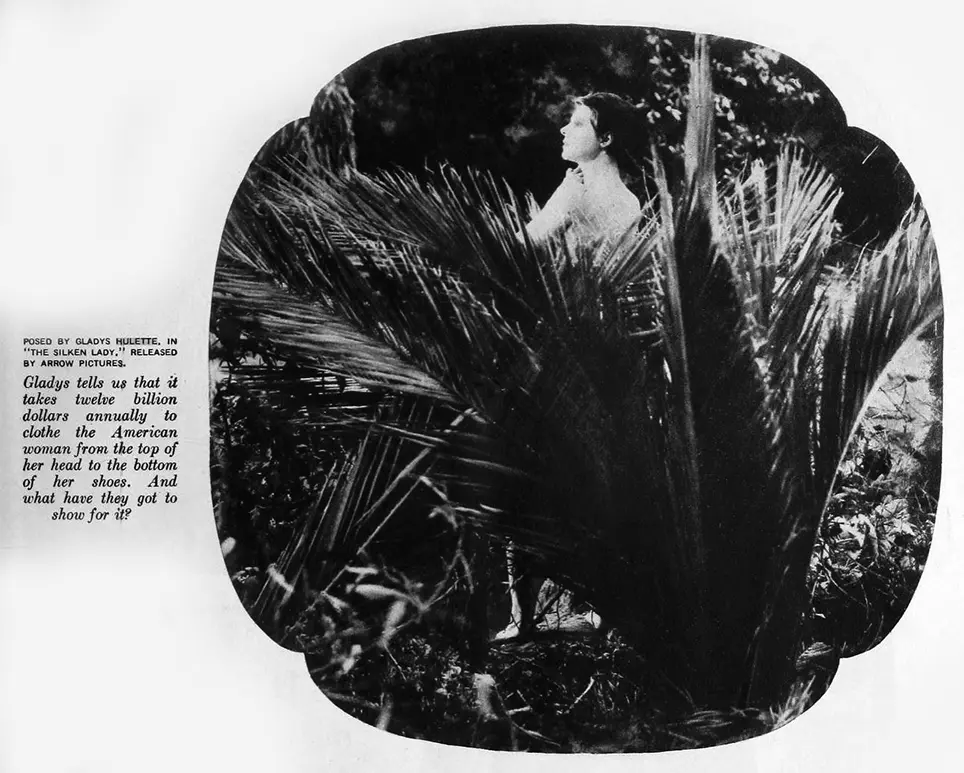
The arrival of Mahlon Hamilton, as the rancher, introduces an entirely new dynamic, and his performance is arguably the most unsettling. Hamilton projects an unsettling blend of charm and veiled menace. His smile rarely reaches his eyes, and his gestures, while outwardly hospitable, carry an underlying possessiveness. This subtle shift in demeanor is critical to the film's second act, transforming the perceived rescuer into a potential threat. He doesn't need to be overtly villainous; the quiet ambiguity he brings to the role is far more effective, leaving the audience to constantly question his true intentions. His portrayal is a standout, demonstrating how much could be communicated through precise physical acting and facial expressions.
William Humphrey, though in a smaller role, provides solid support, often serving as a foil or a source of exposition. While the film’s character development naturally prioritizes the central trio, Humphrey grounds the world of the ranch, adding another layer of potential complication to the survivors' predicament. The ensemble, under Eloise Macie Lewis's direction, manages to convey a complex web of emotions and motivations, relying heavily on the expressive power of their craft. For a film of this vintage, the depth achieved through these silent performances is genuinely impressive, standing in stark contrast to the more theatrical acting often seen in contemporary productions like The Grip of Evil.
Eloise Macie Lewis, as both writer and director, crafts a surprisingly taut narrative for 'Life's Crossroads', especially considering the nascent state of cinematic storytelling. Her direction is marked by a clear understanding of visual storytelling, prioritizing action and reaction over verbose intertitles. The early scenes of survival on the African shore are particularly strong, with Lewis effectively using wide shots to emphasize the isolation and close-ups to capture the raw fear and determination on her actors' faces. There’s a commendable economy of storytelling at play; every gesture, every lingering glance, feels intentional.
The film's pacing, while undeniably slower than modern thrillers, possesses a deliberate rhythm that builds tension gradually. Lewis understands that the horror of being stranded isn't just in immediate danger, but in the grinding monotony and psychological toll of uncertainty. She allows scenes to breathe, letting the audience sit with the characters' plight. This choice might test the patience of viewers accustomed to rapid-fire editing, but it ultimately enhances the impact of the film's more dramatic turns. The transition from the stark survival phase to the ranch's ambiguous safety is handled with a subtle shift in rhythm, mirroring the characters' own guarded optimism.
One particularly effective directorial choice is Lewis’s use of framing to convey power dynamics. When the rancher first appears, he is often framed from a slightly higher angle, or centrally, visually asserting his dominance over the weary survivors. Later, as suspicion mounts, the framing becomes more claustrophobic, often trapping the protagonists within the confines of the ranch house, even though it's meant to be their haven. This visual language is primitive but effective, a testament to Lewis's intuitive grasp of cinematic grammar. Her approach feels less like the melodramatic flourishes of films like Parisette and more like a focused, almost documentary-style observation of human behavior under duress.
While some of the dramatic revelations are presented with a straightforwardness that feels dated, Lewis's overall control of tone and narrative progression is noteworthy. She manages to maintain a pervasive sense of unease throughout the latter half of the film, ensuring that the audience never truly feels safe. It’s a foundational piece of filmmaking that demonstrates an early understanding of how to manipulate audience expectations through careful shot composition and scene construction.
The cinematography in 'Life's Crossroads', though limited by the technology of its era, plays a crucial role in establishing the film's oppressive atmosphere. The opening shots of the African coastline are expansive, conveying both the raw beauty and the overwhelming indifference of nature. The stark, sun-baked landscapes emphasize the vulnerability of the shipwrecked pair, making their struggle feel even more monumental. There’s a palpable sense of isolation created through these wide, often static, frames that effectively communicate their desperate predicament.
As the narrative shifts to the ranch, the visual tone subtly changes. While the outdoors still looms large, the interiors of the ranch house introduce a different kind of claustrophobia. Shadows are often utilized to create a sense of foreboding, particularly in scenes involving Mahlon Hamilton’s character. The contrast between the bright, unforgiving exterior and the dimly lit, potentially treacherous interior is a simple yet effective visual metaphor for the shift in the characters' peril. This is not a visually stunning film in the modern sense, but it is remarkably effective in its use of available light and composition to tell its story.
The film's tone is consistently one of simmering tension and uncertainty. Even moments of supposed relief are tinged with doubt, a credit to Lewis’s ability to maintain an undercurrent of suspense. The camera often lingers on characters' faces, capturing their suspicion and fear, making the audience privy to their internal struggles without the need for extensive dialogue. This focus on facial expressions and body language is a cornerstone of silent film, and 'Life's Crossroads' leverages it skillfully. For instance, a simple shot of Gladys Hulette's character nervously glancing over her shoulder while the rancher watches her from a distance speaks volumes about her growing discomfort. It's a testament to the power of suggestion over explicit exposition.
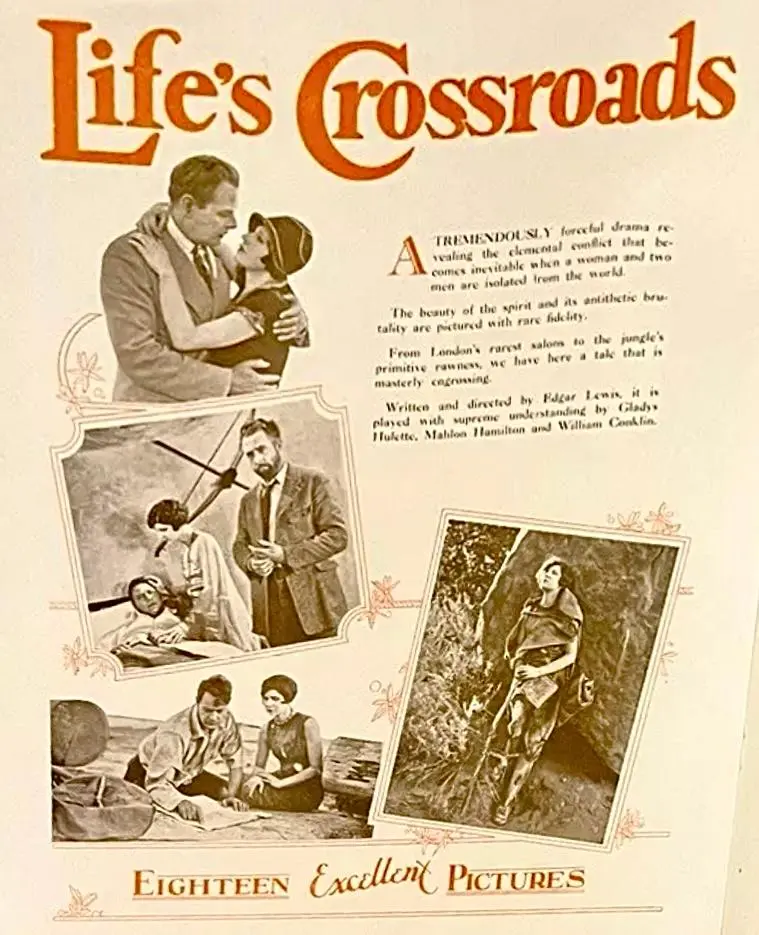
While the African setting is presented with a certain exoticism typical of the period, it serves its narrative purpose well as a backdrop for primal survival and moral ambiguity. It’s a place where the rules of civilization are distant, allowing human nature, both good and ill, to come to the forefront. The visual language, though not groundbreaking, is functional and contributes significantly to the film’s overall impact, creating a consistent mood that underscores the precariousness of the protagonists' situation.
'Life's Crossroads' is, at its heart, a profound exploration of trust and its fragility in extreme circumstances. The initial conflict between the man and woman after the shipwreck forces an uneasy alliance, built not on affection but on the sheer necessity of survival. Their differences – implied by their clashing personalities – must be set aside for the greater good, a testament to the instinctual drive for self-preservation. This early dynamic establishes a baseline for the film's central thematic question: how do humans react when stripped of societal structures and forced to rely on strangers?
The arrival of the rancher complicates this theme exponentially. What begins as a beacon of hope quickly devolves into a test of discernment. Is this man genuinely benevolent, or does his hospitality mask a more sinister intent? The film masterfully plays on the audience's natural inclination to trust a rescuer, only to subtly undermine it. This subversion of expectation is the film's greatest strength, transforming a simple survival story into a psychological thriller. It forces the characters, and us, to question appearances and motives, a concept that feels surprisingly modern.
The film also touches upon the theme of civilization versus wilderness, not just in terms of geography, but in the human heart. The wild African shore forces a reversion to primal instincts, but the 'civilized' ranch proves to be its own kind of wilderness, where predatory instincts are merely cloaked by a veneer of order. This is a genuinely unsettling observation. The idea that danger can be more insidious when it wears a friendly face is a powerful, timeless message that resonates long after the credits roll. It works. But it’s flawed.
Eloise Macie Lewis’s script, though economical, delves into the moral ambiguities that arise when survival is paramount. The protagonists are forced into difficult choices, and the lines between right and wrong become blurred. This makes 'Life's Crossroads' a surprisingly rich text for discussing human nature and the societal constructs we often take for granted. It's a stark reminder that sometimes, the greatest threats aren't the elements, but the intentions of other people.
Yes, 'Life's Crossroads' holds significant value for contemporary viewers, especially those with an appreciation for film history. It offers a fascinating glimpse into early cinematic storytelling techniques.
The film's exploration of trust and survival remains compelling, transcending its silent-era origins. Its characters are surprisingly complex for their time, making their struggles relatable.
While its pacing might feel slow to some, this deliberate approach builds tension effectively. It’s a strong example of how much could be achieved with limited resources.
For anyone interested in the foundational elements of the survival and psychological thriller genres, this film is an important watch. It demonstrates enduring themes without relying on modern spectacle.
'Life's Crossroads' is more than just a historical curiosity; it’s a surprisingly robust early survival drama that deftly weaves together themes of human nature, trust, and the deceptive nature of salvation. While its silent-era pacing and conventions require a certain viewing adjustment, the film’s core tension and strong performances from Gladys Hulette and Mahlon Hamilton ensure its lasting resonance. It’s a film that asks profound questions without needing a single spoken word, proving that genuine suspense can be crafted with simple yet powerful cinematic tools. For those willing to engage with its deliberate rhythm, it offers a rewarding and thought-provoking experience that still manages to chill the blood in places. It's not a timeless classic in the broadest sense, but it is an undeniably important one.

IMDb —
1924
Community
Log in to comment.