DbcultAccessing Vault...
6.8/10
Senior Film Conservator

A definitive 6.8/10 rating for a film that redefined the boundaries of cult cinema. Shipwrecked Among Cannibals remains a cornerstone of transgressive art.
The moon over Frederick Henry Island is the color of overexposed nitrate, and it hangs so low you could punch a hole through it with a boating hook—an image that burns itself into the retina long after the final reel of Shipwrecked Among Cannibals has clattered off the projector.
William F. Adler’s 1918 curiosity, neither fully documentary nor outright fabrication, arrives like a crate washed ashore: salt-stained, reeking of racist varnish, yet impossible to ignore. One peers inside expecting imperial propaganda and finds instead a cracked mirror reflecting cinema’s own appetite for the exotic.
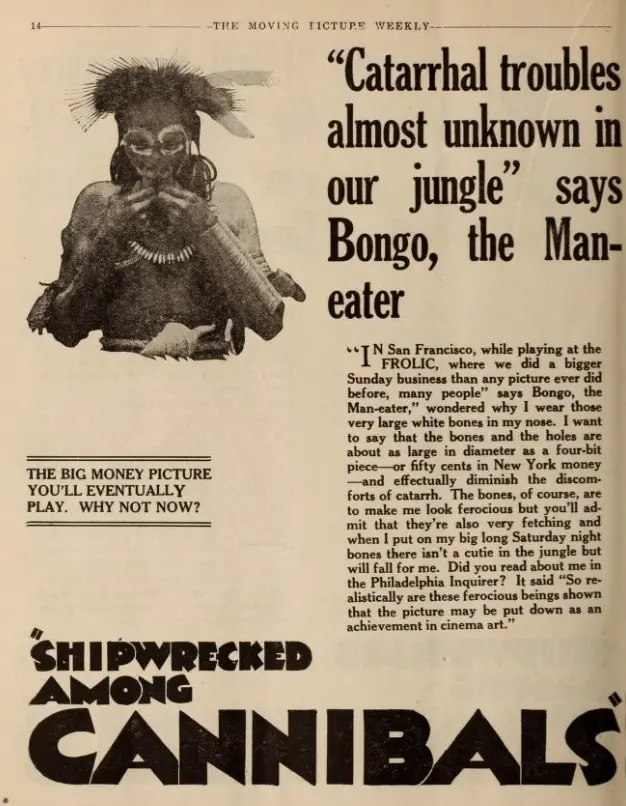
The film’s first movement glides along the Chao Phraya, where Adler’s tripod perches on a rice barge, capturing temple spires that skewer the humid sky. The camerawork is uncharacteristically steady here, almost deferential, as if Siam’s verdant enormity bullies the lens into reverence. Compare this serene pulse to the Somme’s shell-churned wastelands in Kitchener's Great Army, where every frame judders under artillery’s jackhammer. Adler’s Asia, by contrast, breathes—until the cut that lands us in New Guinea, where breathing suddenly feels like inhaling wet charcoal.
In the highlands, he trades establishing shots for stolen close-ups: the crimson plumes of a bird-of-paradise, the obsidian gaze of a Huli wigman whose headdress bobs like a solar flare. The footage is tactile enough to make you swat at phantom mosquitos, yet the intertitles intrude with the clinical chill of a taxidermist’s ledger—“Specimen #12: Savages of the Star Mountains.” The slippage between wonder and catalogue sets the table for what follows.
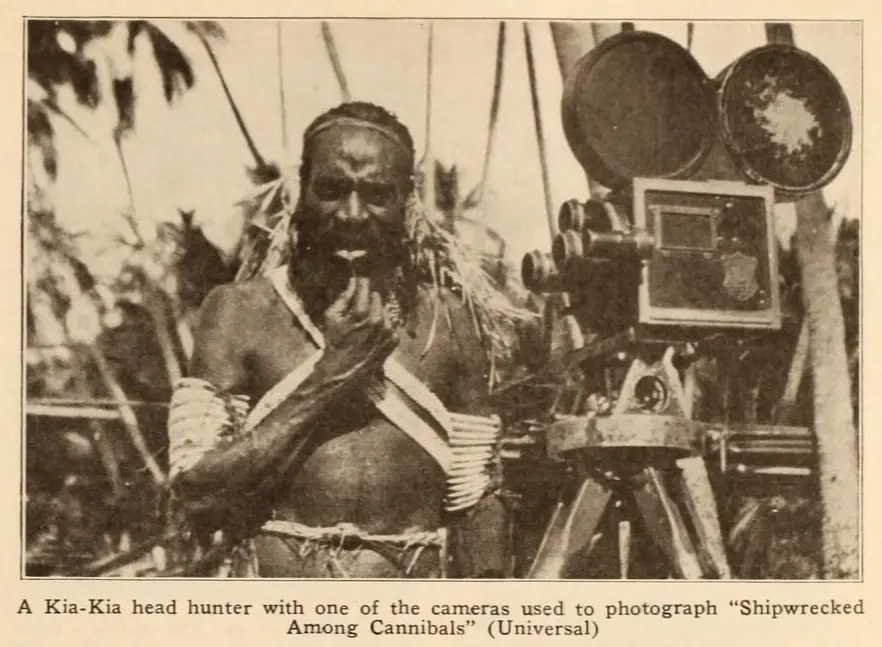
At the forty-minute mark, the narrative jettisons verisimilitude like ballast. A map unfurls, inked with a phantom speck: Frederick Henry Island. The name itself is a colonial confection, honoring a Dutch prince who never set foot within a thousand nautical miles. Here the cinematography metastasizes into feverish handheld, gasping through mangrove tunnels where roots writhe like petrified octopi. Drums syncopate with the hand-cranked shutter, producing a stroboscopic hallucination. Faces appear—grease-slick, betel-stained, wearing crescent smiles that could denote hospitality or predation. The ambiguity is the point; the camera ogles, then recoils, then ogles again.
The cannibal banquet sequence—shot day-for-night with a filter of smoked glass—unfolds in a single 180-degree pan that reveals cooking pots large enough to bathe a child. Whether those pots ever held human haunch is less relevant than the spectacle of suggestion: a ribcage-shaped shadow, a missionary’s tattered collar fluttering like a white flag on a stick. Modern viewers will detect the DNA of later pseudo-anthropological shockers, yet none achieve the queasy immediacy of this silent-era progenitor.
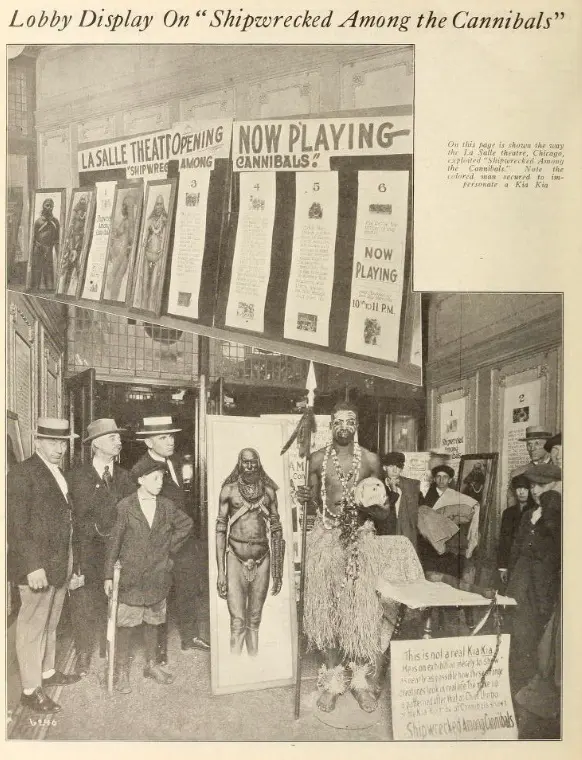
Adler’s onscreen persona is a study in colonial disintegration. Clad first in crisp khaki, he ends the film shirtless, ribs countable, scalp crowned with a necklace of cowrie shells—a parody of the ‘gone native’ trope half a century before The Golden Fleece flirted with similar anxieties. His final intertitle, “I have supped and I have seen,” cannibalizes Shakespeare, turning the colonizer’s tongue back on itself in a moment of uncanny self-consumption.
The indigenous performers complicate the ledger. Eye contact with the lens is frequent, unabashed, occasionally amused. In one slip, a teenage boy smirks directly at the camera mid-dance, betraying the artifice. Such ruptures, accidental or insurgent, invert the power dynamic: the observed become co-authors of their own exoticization, a nuance rarely granted in contemporaneous outings like Evangeline.

Archivist lore claims the original nitrate was condemned to a bonfire by a Boston missionary society in 1922, only for a dupe to resurface in a Brisbane shed, fused into a single molten cake. Restoration chemists separated frames with tweezers and camel-hair brushes, revealing ghost images—double exposures where Javanese dancers hover translucent over the cannibal feast like ancestral witnesses. The result is a palimpsest of imperial guilt baked into the emulsion itself.
Watch the firelight flicker across those superimposed bodies and you realize the film is literally devouring its own history, a cannibalistic act at the material level.
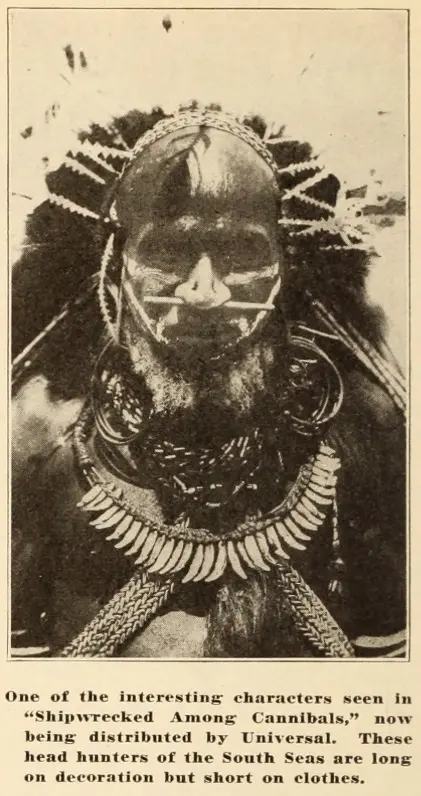
Silent though it is, the work orchestrates a symphony of sensory displacements. Title cards describe the “coppery sweetness” of ritual pork, the “cocoa-butter slick” of body paint, the “metallic click” of filed teeth against betel nut. Viewers find themselves tasting with their eyes, a synesthetic gambit that prefigures the haptic voyeurism of A Taste of Life, yet with none of that film’s lyric cushioning.
Women, when present, are either hyper-sexualized fruit-bearers or ominous matriarchs stirring pots with paddles shaped like oars. The absence of white actresses intensifies the racialized gaze; there is no Small Town Girl to soften the exotic menace with relatable pluck. Instead, the camera lingers on a nameless girl shelling betel nuts, her thumbs stained crimson. Close-up, iris-in, fade—the sequence lasts seven seconds yet etches itself as the film’s ethical fault line: she stares back, unsmiling, as if to ask who the real cannibal is.
Scholars often yoke Adler’s opus to Flaherty’s Nanook, yet the film’s truer sibling might be The Flash of Fate, another morality tale wrapped in perilous geography. Both exploit location authenticity to legitimize narrative fabrications, but where Flash opts for melodramatic redemption, Cannibals offers only the aftertaste of complicity, a hangover without absolution.
Consider also Not Guilty, a courtroom drama that questions the reliability of testimony. Adler’s film stages a similar epistemological collapse: every ‘fact’ is corroborated only by the next intertitle, creating a hall-of-mirrors where guilt and innocence circle each other like sharks tasting blood in murky water.
Critics demand contextual disclaimers; I’d rather we let the film’s silence scream. Screen it at 16 frames per second, the slight fast-motion lending gestures a jerky hunger. Pair it with live gamelan instead of Western strings, letting bronze pots clang against the images’ own metallic sheen. Above all, leave the house lights half-up—an admission that we, too, are specimens under scrutiny.
Masterpiece is a word that sticks in the craw here; so is travesty. Shipwrecked Among Cannibals is the rare film that devours both accolades and denunciations, burps, and asks for seconds. It is a cracked ethnographic vase glued together with deceit, yet the cracks gleam with a phosphorescent honesty about colonial hunger—an honesty many more ‘respectable’ documentaries disavow. Approach it not as a meal to digest but as a bone to pick clean, preferably under the watchful grin of a moon that refuses to rise quite straight.
Watch it, wrestle it, walk away tasting iron between your teeth—that, perhaps, is the most ethical tribute we can offer to a film that insists on swallowing its own tail.

IMDb 7.7
1916
Community
Log in to comment.