DbcultAccessing Vault...
Cult Review
Senior Film Conservator
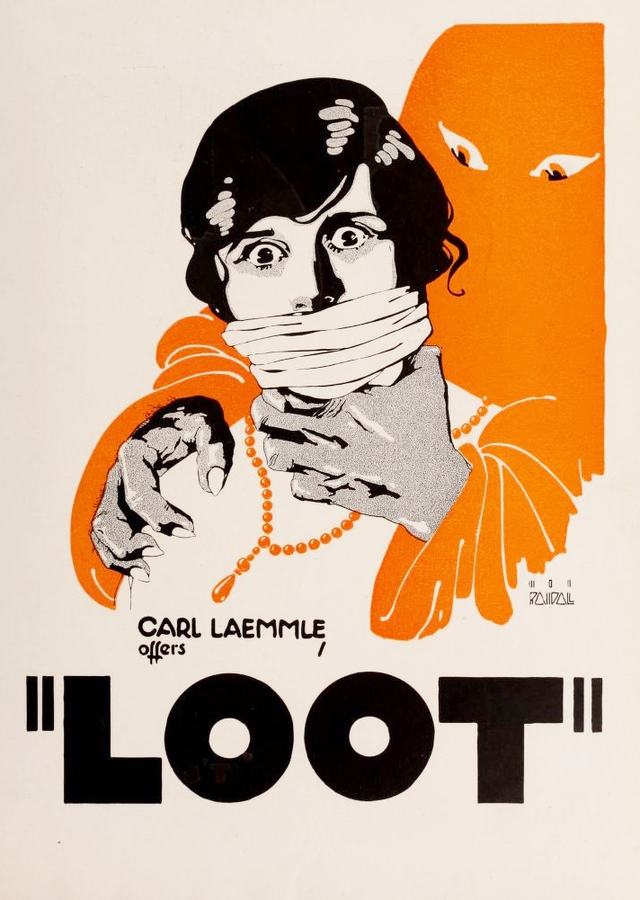
Stepping back into the cinematic landscape of 1918, one encounters a fascinating tapestry woven with nascent storytelling techniques and a burgeoning understanding of visual narrative. Amidst this fertile ground, a film like 'Loot' emerges, not merely as a relic of a bygone era, but as a compelling artifact that encapsulates the spirit of its time, particularly its burgeoning fascination with urban crime, high-stakes drama, and the complex interplay of human motivations. As the world reeled from the Great War's final throes, audiences sought escapism, thrills, and stories that mirrored, albeit hyperbolically, the moral ambiguities of a rapidly changing society. 'Loot' delivers on these fronts, offering a vibrant, if silent, spectacle of a meticulously planned heist, personal vendettas, and an unexpected romance blossoming amidst chaos.
At its core, 'Loot' unfurls a narrative that, while seemingly straightforward, is laced with layers of intrigue. The protagonist, Wade Hildreth, a representative from London, arrives in the bustling, often perilous, urban sprawl of New York. His mission: to retrieve a diamond necklace of immense value, a symbol of aristocratic opulence destined for Lady Gwendolyn. This premise alone, the innocent abroad in a city of shadows, immediately establishes a classic dramatic tension. However, the film quickly introduces its antagonistic force in Pete Fielding, a criminal mastermind who operates under the evocative moniker of "The Shadow." Fielding is not merely a common thief; he represents a calculated, almost theatrical, brand of villainy, driven by ambition and a meticulous eye for detail. His objective is not just the necklace, but the systematic disruption of Hildreth's journey to the esteemed jeweler Arabin, setting the stage for a grand larceny.
The plot thickens with the introduction of Morn Light, an actress of considerable allure and, crucially, a woman entangled in a relationship with The Shadow. Her role is pivotal: to lure Hildreth into a trap, a gilded cage within her apartment, effectively neutralizing him while the heist unfolds. Yet, Morn Light is no mere pawn. Her character is imbued with a depth that transcends the typical femme fatale archetype of early cinema. A festering desire for retribution against The Shadow for her father's death fuels her actions, transforming her from an accomplice into a potential saboteur. This internal conflict is a masterstroke in the narrative, lending a psychological complexity often underutilized in films of this period. When her attempt to warn Hildreth is overheard by the ever-vigilant Shadow, the stakes escalate dramatically, leading to their joint captivity and foreshadowing the inevitable confrontation.
The central heist sequence at Arabin's, undoubtedly a highlight of 'Loot,' must have been a visual marvel for contemporary audiences. The sheer audacity of the gang operating amidst a throng of unsuspecting shoppers speaks to a certain brazenness that defined cinematic villains of the era. It's a testament to the film's ambition to portray not just a simple snatch-and-grab, but a coordinated operation that targets not only the high-value necklace but also the personal possessions of the store's clientele, underscoring the gang's ruthlessness and the pervasive threat they represent. This scene, even without spoken dialogue, would have conveyed a palpable sense of tension and chaos, relying on exaggerated gestures, frantic movements, and expressive intertitles to convey the unfolding drama.
The narrative's resolution hinges on the dogged determination of Detective Tyron. A character initially burdened by a tarnished reputation, Tyron embodies the classic cinematic trope of the disgraced hero seeking redemption. His pursuit of the gang's getaway boat, a thrilling chase sequence that likely utilized the then-novel techniques of parallel editing, builds to a climactic showdown. The arrival of the Marines, a dramatic deus ex machina, serves to amplify the stakes and provide a decisive intervention, typical of the era's taste for grand, sweeping resolutions. The internal mutiny brewing within The Shadow's gang adds another layer of complexity, showcasing that even within the criminal underworld, loyalty is a fragile commodity. This fracturing of the villain's power base makes his eventual downfall, culminating in his dramatic leap overboard, feel both earned and inevitable.
The strength of 'Loot' lies significantly in its well-drawn, albeit broad, character archetypes. Wade Hildreth, portrayed by Alfred Allen, serves as the quintessential upright, somewhat naive, Englishman, thrust into a morally ambiguous American landscape. His journey is one of endurance and eventual triumph, a familiar and reassuring arc for audiences. The true standout, however, is likely Helen Gibson as Morn Light. Gibson, known for her daring stunts and strong female roles, would have brought a compelling blend of vulnerability and resilience to Morn. Her internal conflict—torn between her love (or perceived loyalty) to The Shadow and her burning desire for revenge—elevates her beyond a mere damsel in distress. This nuanced portrayal of a woman navigating treacherous moral waters would have resonated deeply, perhaps even more so than the more straightforward heroics of Hildreth.
Pete Fielding, as The Shadow, embodies the charismatic yet utterly ruthless villain. While specific cast roles are not always detailed in historical records, the description suggests a figure of considerable presence, capable of inspiring both fear and a misguided loyalty among his subordinates. His eventual descent into attacking Morn Light, his former lover, underscores his depravity and justifies his ultimate demise. Detective Tyron, likely played by Wadsworth Harris or Arthur Mackley, represents the persistent force of law and order. His "discredited" status adds a layer of personal stakes to his pursuit, making his eventual success a story of personal as well as professional redemption. This ensemble of characters, each fulfilling a clear dramatic function, contributed significantly to the film's dynamic appeal.
The cinematic language of 1918 was, by necessity, highly visual and often theatrical. Directors relied heavily on expressive acting, elaborate set designs, and innovative editing techniques to convey emotion, plot progression, and character motivations without the aid of synchronized sound. 'Loot' would have utilized dramatic close-ups to emphasize Morn Light's internal struggle or The Shadow's sinister gaze, and wide shots to capture the chaos of the heist or the grandeur of the New York setting. Intertitles, the textual inserts that provided dialogue or narrative exposition, were crucial. Their careful placement and evocative phrasing would have guided the audience through the complexities of the plot, ensuring clarity without breaking the visual flow too abruptly. The pacing, a critical element in silent film, would have been carefully modulated, alternating between moments of quiet tension and bursts of frenetic action, culminating in the thrilling chase and rescue.
Thematically, 'Loot' touches upon several enduring concepts. The most prominent is, of course, justice and retribution. Morn Light's quest for vengeance against The Shadow for her father's death provides a powerful emotional engine for the plot, elevating it beyond a simple crime story. The film also explores the allure and corrupting influence of wealth, symbolized by the diamond necklace, and the stark contrast between the ordered world of London aristocracy and the lawless underbelly of New York. The unexpected romance between Hildreth and Morn Light, blossoming amidst peril and betrayal, speaks to the redemptive power of love and the possibility of finding connection in the most unlikely circumstances. This blend of crime, melodrama, and romance was a potent combination for audiences of the era, offering something for everyone.
Comparing 'Loot' to other films of its time helps to contextualize its place in cinematic history. While not as overtly action-packed as serials featuring Ultus, its focus on a cunning villain and intricate plot aligns it with the burgeoning crime genre. The dramatic tension and moral ambiguities are reminiscent of the more complex narratives emerging, moving beyond simpler morality plays. The portrayal of a strong female character like Morn Light, while still operating within the confines of a patriarchal society, shows hints of the evolving roles for women in film, much like some of the more progressive female characters seen in films such as A Self-Made Widow or even the domestic dramas like Her Husband's Wife, though in a vastly different genre. The urban setting and the focus on organized crime also place it within a tradition that would eventually lead to the gritty noir films of later decades, even if 'Loot' itself retains a more adventurous, less cynical tone.
The film's blend of high-stakes crime with a romantic subplot was a popular formula, offering both excitement and emotional engagement. While not a Western like Hell's Hinges or The Squaw Man (1918), it shares a similar reliance on clear heroes, villains, and dramatic confrontations. The use of a "discredited" detective also resonates with the archetypal hero who must prove himself, a trope seen across various genres. The ingenuity of the criminal plot, though perhaps less intricate than the mysteries found in films like The Ring of the Borgias, still provides ample suspense and cleverness, making the eventual triumph of good over evil all the more satisfying. It’s a snapshot of a particular moment in film history where narratives were becoming more sophisticated, even as the technical means of storytelling were still evolving.
In its totality, 'Loot' stands as a robust example of early cinematic entertainment. It successfully combines elements of crime thriller, romantic drama, and a touch of the adventure serial, all wrapped in the visual poetry of silent film. The enduring appeal of its plot—the daring heist, the double-cross, the quest for vengeance, and the blossoming of an unexpected love—speaks to universal human experiences that transcend the limitations of its silent medium. While modern audiences might find the acting style overtly theatrical or the plot resolutions somewhat swift, it is crucial to appreciate 'Loot' within its historical context. It was a film designed to captivate, to thrill, and to transport its audience, and by all accounts, it succeeded admirably.
The technical prowess, even in its nascent stages, is evident in the film's ability to convey complex emotions and fast-paced action without dialogue. The director, likely working with a limited budget and rudimentary equipment, managed to craft a compelling narrative that holds up as an important piece of silent film history. The performances, particularly from actors like Helen Gibson, who brought a tangible depth to her character, elevate the material beyond mere spectacle. 'Loot' is more than just a historical curiosity; it is a testament to the enduring power of storytelling through images, a vibrant precursor to the sophisticated thrillers and character-driven dramas that would follow in subsequent decades. Its legacy lies in its contribution to the evolution of genre cinema and its demonstration of how compelling narratives could be forged even in the absence of spoken words. It’s a silent scream of excitement, a whispered promise of love, and a powerful visual declaration of justice served, all unfolding on the silver screen.
IMDb —
1921
Community
Log in to comment.