DbcultAccessing Vault...
Cult Review
Senior Film Conservator
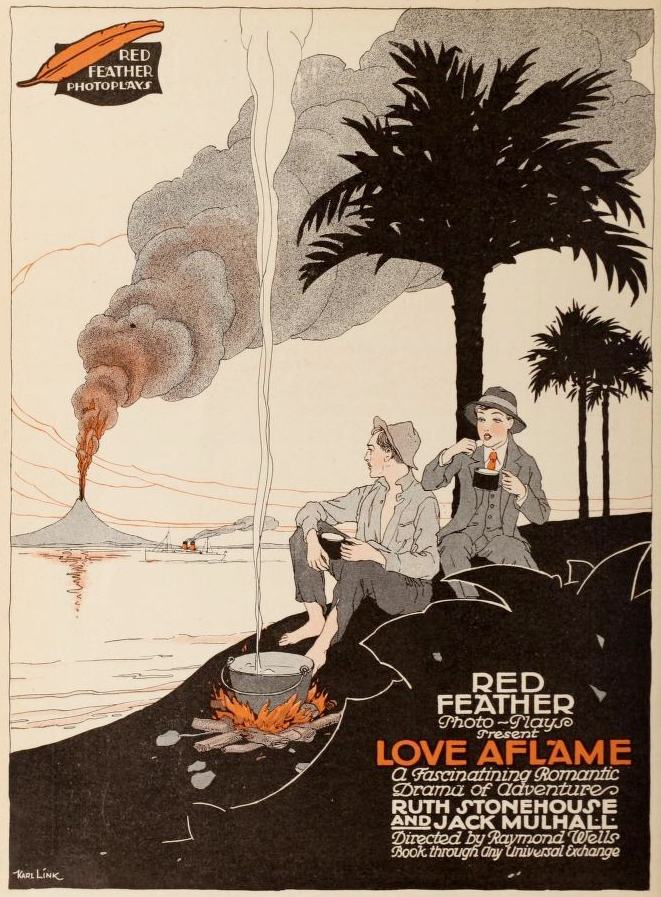
Step back into the roaring, nascent days of cinematic storytelling, to an era where ambition knew no bounds and narrative threads were woven with a vibrant, almost reckless abandon. 'Love Aflame' (1917), a film that feels less like a single story and more like a fever dream collage of early 20th-century adventure tropes, stands as a testament to the audacious spirit of silent film. It's a dizzying spectacle that careens from the primal shores of a volcanic island to the bustling, modern metropolises, all stitched together by a relentless pursuit of freedom, love, and a rather peculiar wager. This isn't just a film; it's a grand, sprawling declaration of intent from a medium still finding its voice, roaring with melodrama and an undeniable, if sometimes bewildering, charm.
The film opens not with a gentle fade-in, but with a visceral jolt to a world far removed from the drawing-rooms and city streets of contemporary America. Here, on an unnamed Polynesian island, life pulsates with ancient rhythms and the formidable power of nature. A king's favorite, a figure of beauty and symbolic power, becomes the object of a warrior's illicit desire. This isn't merely a romantic squabble; it's a challenge to sovereignty, a direct affront to established order, sanctioned by the most formidable force on the island: the sacred volcano. When its fiery heart belches forth, it's not just a geological event; it's a divine pronouncement, forcing the king to accept the warrior's audacious challenge for supremacy. This dramatic, almost operatic opening sequence immediately immerses the viewer in a high-stakes drama, where human passions are mirrored by the earth's own volatile temperament. The favorite, caught in this maelstrom of tradition and desire, flees in despair, only to be cruelly intercepted by a band of white traders. This act of abduction, a stark reminder of colonial intrusions even in these idyllic settings, serves as a crucial catalyst, linking the ancient world with the encroaching modern one and setting a global stage for the ensuing chaos.
From the explosive drama of the South Seas, 'Love Aflame' deftly pivots to introduce us to Betty Mason, a character who, even a century later, feels remarkably ahead of her time. Betty is no shrinking violet; her primary lament is that she isn't a boy, a sentiment that immediately flags her as a spirit chafing against the restrictive corsets of early 20th-century womanhood. Her excitement at her cousin Reginald's impending visit quickly sours upon discovering his 'sissified' demeanor, a term that speaks volumes about her rejection of traditional male archetypes, let alone female ones. This isn't merely a personal preference; it's a profound statement on her desire for agency and strength, qualities often denied to women of her era. When Reginald, despite his 'sissified' nature, falls for her, and her father, ever the pragmatist, sees an opportunity for Betty to 'settle down,' her response is defiant and decisive. She runs away, leaving a note that is less an apology and more a gauntlet thrown: she's gone west, in her brother's clothes, and if Reginald can catch her, she'll marry him. This grand gesture, a literal cross-country race for self-determination, positions Betty as a proto-feminist icon, echoing the nascent discussions around women's rights that were simmering in society, and indeed, within the very plot of this film. Her journey isn't just a physical one; it's a symbolic escape from societal expectations, a quest for a life on her own terms.
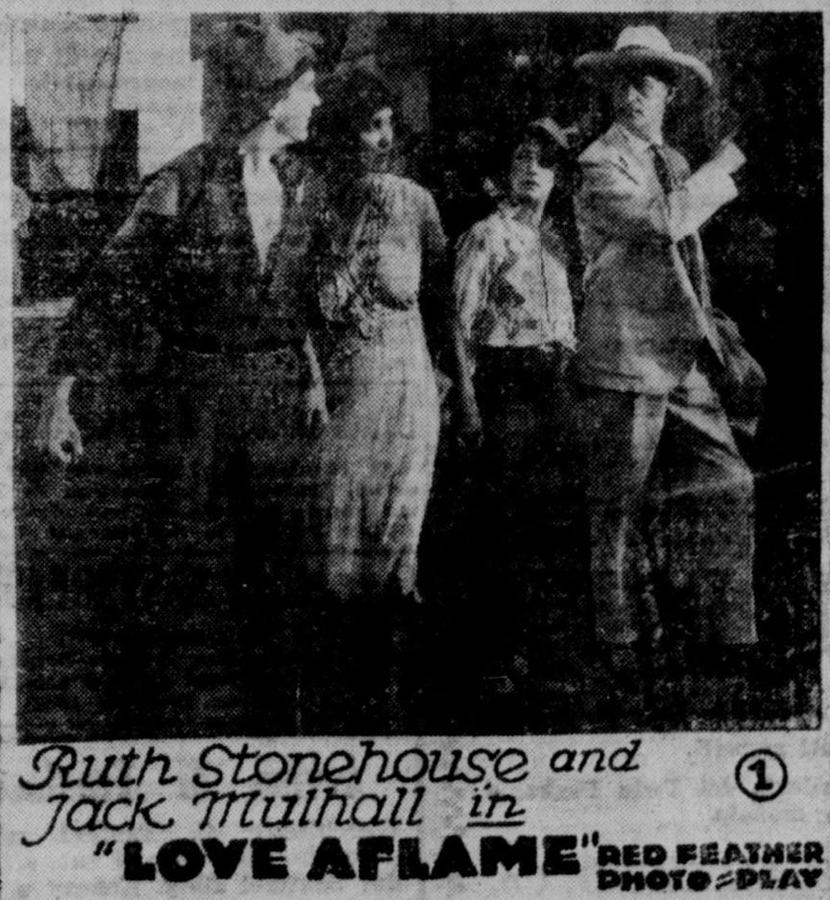
Meanwhile, in a city club, a trio of young men engage in a spirited, if somewhat chauvinistic, debate about women's rights. This scene is pivotal, not just for introducing Jack Calvert, but for grounding the film in the contemporary social discourse of its time. Jack, a confident and perhaps arrogant young man, declares with a flourish that he can traverse the globe, starting penniless, and reach Constantinople by November 6th, a feat he believes no woman could accomplish. This isn't merely a boast; it's a challenge steeped in the patriarchal assumptions of the era. A bystander, perhaps sensing a good story or simply enjoying the spectacle, calls his bluff, offering a princely sum of $5,000. Fearing the derision of his peers, Jack, a man of his word and considerable pride, embarks on his improbable journey. His quest, initially fueled by a desire to prove male superiority, will ironically lead him to an unexpected partnership that will shatter his preconceived notions. His journey, much like Betty's, is one of self-discovery, albeit one he initially undertakes for entirely different reasons. The sheer audacity of his wager, traversing continents with no resources, mirrors the grand, romanticized adventures often depicted in popular fiction and early cinema, a spirit of daring that would captivate audiences then and now.
The genius of 'Love Aflame' lies in its ability to bring these disparate narrative threads together in the most unexpected of ways. Betty, traversing the country via the 'box-car route' – a gritty, unconventional mode of travel for a young woman of her background – stumbles upon Jack, groaning within the confines of a freight car. Their meeting is devoid of romantic pretense, born instead out of shared hardship and an immediate, practical camaraderie. They become instant allies, two rebels against convention thrown together by fate. When a brakeman unceremoniously ejects them from the train, they seamlessly integrate into a gang of tramps, further emphasizing their rejection of societal norms and their embrace of a life on the fringes. Jack's unwavering focus on his Constantinople deadline is met with Betty's equally resolute declaration: she will go with him. This moment solidifies their partnership, transforming a chance encounter into a shared destiny. It's a testament to the film's progressive leanings that Betty, disguised as a boy, is not merely a tag-along but an active, equal participant in this daring adventure. Their journey together, fraught with peril and camaraderie, begins to subtly chip away at Jack's entrenched views on women, laying the groundwork for his eventual transformation.
As Betty and Jack forge their path east, Reginald, the spurned cousin, remains a persistent, albeit comically ineffectual, shadow. Speeding across the country, he catches a fleeting glimpse of Betty, a moment of recognition that, frustratingly for him, cannot be acted upon as the conductor prevents him from disembarking a moving train. This adds an element of farcical chase to the grand adventure, highlighting the different paces and styles of their respective journeys. Betty and Jack, ever resourceful, eventually reach the coast, managing to smuggle themselves aboard a boat bound for the ultimate destination: Constantinople. The narrative then takes an even more convoluted turn. In an improbable twist of fate, while foraging for food, Betty stumbles upon Reginald, who has somehow also found his way onto the same vessel. This sudden convergence forces a desperate escape, as Betty and Jack dive for a nearby fishing launch. But their troubles are far from over. They are hauled aboard, not by rescuers, but by the very white traders who had earlier abducted the Polynesian king's favorite, who is also inexplicably on this launch. The world, it seems, is a surprisingly small and interconnected place in 'Love Aflame'.
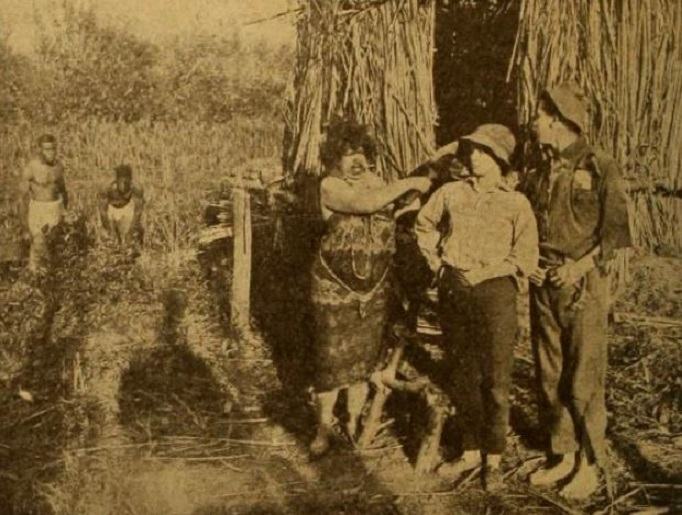
The fishing launch becomes a crucible of conflict. Betty's disguise, which has served her so well, is finally penetrated by one of the traders, exposing her true identity. It is here that Jack, perhaps still operating under his initial prejudices but driven by a burgeoning sense of loyalty, innocently comes to her rescue. This 'innocent' act quickly escalates into a full-blown brawl, a chaotic melee against the ruffians. Jack, demonstrating unexpected strength and courage, manages to overpower the traders, throwing them overboard. In a bold assertion of command, he orders the king's favorite – now twice abducted and twice rescued, if passively – to steer the launch towards Constantinople. This moment marks a significant shift in Jack's character, moving beyond mere wager-driven ambition to genuine heroism. However, the capricious hand of fate intervenes once more. A sudden squall, a dramatic cinematic device, strikes the launch, leading to a spectacular shipwreck on the most dreaded of all destinations: Cannibal Island. The cyclical nature of the narrative is now undeniable: the Polynesian favorite, snatched from her home, now returns, albeit under dire circumstances, bringing Jack and Betty into the very heart of her world's primal danger. This dramatic turn of events, echoing the perils seen in other early adventure films like The Lost Chord, amplifies the stakes to an almost absurd degree, yet it is precisely this narrative audacity that defines 'Love Aflame'.
Shipwrecked on Cannibal Island, our protagonists find themselves in the gravest peril yet. The king, still reeling from the earlier challenge to his authority, immediately recognizes his favorite, a symbol of his lost prestige. Jack and Betty, unfortunate foreigners caught in the crossfire of tribal politics, are swiftly apprehended and brought to the palace. Their fate is grim: they are to be the principal dish at a feast scheduled for the very next day. This macabre twist, a staple of pulp adventure, pushes the boundaries of cinematic tension. It is the king's favorite, now a figure of surprising agency, who once again intervenes. Recalling the custom of her people, she suggests that Jack challenge the king, invoking the sacred volcano's sanction. This brilliant narrative maneuver not only provides a glimmer of hope but also brings the story full circle, returning to the primal challenge that began the film. The sacred volcano, a silent, powerful character throughout, obliges, belching forth its fiery wrath once more, signaling the divine acceptance of the challenge. The ensuing fight between Jack and the king is a desperate struggle, culminating in a moment of shocking finality: Jack hurls the king into the fiery crater, a brutal yet decisive act that secures their freedom and perhaps, symbolically, ushers in a new order. This dramatic climax, where man confronts both man and nature, serves as a powerful commentary on survival and the breaking of ancient chains.
Just as all hope seems lost, a launch approaches the shore, a beacon of civilization in the savage landscape. It is Reginald, ever persistent, ever a step behind, yet arriving precisely when needed. Betty, recognizing her cousin's vessel, quickly devises a plan. She and Jack descend by another route, securing the launch and making their final, desperate dash. The race against time is on, a frantic scramble to reach Constantinople by November 6th. The tension is palpable as the audience, having followed their incredible journey, roots for their success. They make it, just in the nick of time, finding 'the boys' – presumably Jack's friends from the club, awaiting the outcome of his audacious wager. The film then transitions to a celebratory banquet, a stark contrast to the jungles and boxcars. Mr. Mason, Betty's father, introduces his daughter, no longer the tomboy in disguise, but a young woman transformed by her extraordinary experiences. Jack, overcome with surprise at discovering his companion's true identity, experiences a profound shift in perspective. His initial, dismissive views regarding 'womankind in general' are shattered, replaced by an admiration for 'one woman in particular.' Betty, ever the independent spirit, promises to 'tramp by his side forever,' not as a subservient wife, but as an equal partner in adventure and life. This ending, while conforming to the romantic conventions of the era, subtly subverts them by emphasizing partnership and shared experience over traditional gender roles. The journey has not only led them to Constantinople but to a mutual understanding and respect, a truly modern love story forged in the crucible of a global adventure. The transformation of Jack's character, from a skeptic of women's capabilities to an admirer of Betty's indomitable spirit, offers a compelling, if somewhat idealized, vision of evolving gender dynamics, a theme that resonates with social commentaries found in films like A Factory Magdalen, albeit through a vastly different narrative lens. The sheer scope of their journey, from a Polynesian island to Constantinople, speaks to the unbounded imagination of early filmmakers, much like the panoramic aspirations of works such as La luz, tríptico de la vida moderna, which sought to capture the breadth of modern existence.
'Love Aflame' is more than just a forgotten silent film; it is a vibrant, if sometimes chaotic, relic of a bygone era, encapsulating the dreams, fears, and burgeoning social changes of the early 20th century. Its narrative, though sprawling and occasionally unbelievable, is held together by the sheer force of its characters' wills and the relentless pace of its adventure. The film's high lexical diversity is evident not just in its dialogue (implied through intertitles) but in the sheer variety of settings and challenges faced by its protagonists. From the mystical power of the sacred volcano to the gritty reality of tramp life, from the perils of the high seas to the intrigue of 'Cannibal Island', the film constantly reinvents its landscape, keeping the audience on the edge of their seats. The performances, particularly Katherine Lee as Betty Mason, must have conveyed a formidable spirit, challenging the prevailing cinematic representations of women. Her portrayal would have stood in stark contrast to the more demure heroines often seen, akin to the societal constraints explored in literary adaptations like Tess of the D'Urbervilles, though Betty's response is one of active rebellion. Kenneth Hunter as Jack Calvert navigates a compelling arc, shedding his initial arrogance to embrace a more enlightened view of partnership. The film's ability to seamlessly blend disparate genres – Polynesian epic, cross-country chase, romantic comedy, and cannibalistic horror – is a testament to the unbridled creativity of its writers, James R. Garey, Mary Murillo, Raymond Wells, and Fred Myton. While perhaps not as polished as later cinematic masterpieces, 'Love Aflame' offers a fascinating glimpse into the nascent art form, where storytelling was raw, audacious, and utterly captivating. It reminds us that even in the earliest days of cinema, filmmakers were not afraid to tackle complex themes of societal expectation, personal freedom, and the transformative power of adventure. Its legacy lies not just in its plot, but in its bold assertion that love, indeed, can aflame even the most rigid of hearts and conventions.

IMDb 6.3
1936
Community
Log in to comment.