DbcultAccessing Vault...
5/10
Senior Film Conservator
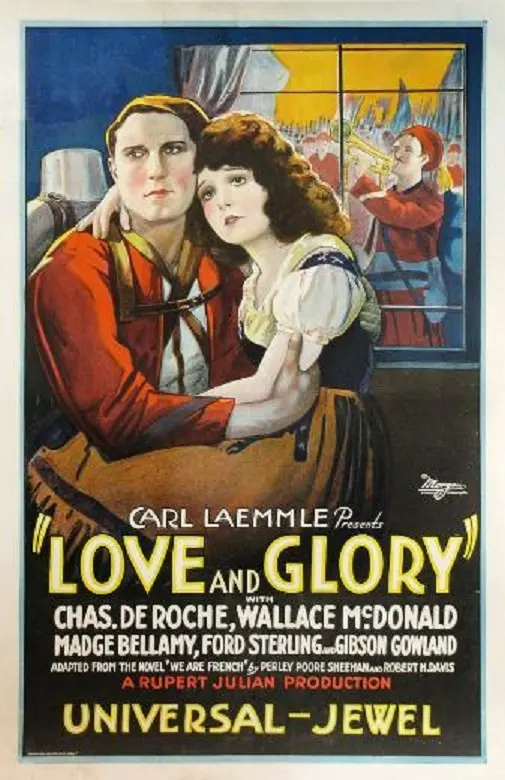
A definitive 5/10 rating for a film that redefined the boundaries of cult cinema. Love and Glory remains a cornerstone of transgressive art.
The film opens with a dramatic montage of soldiers marching in the Algerian landscape, a vivid depiction of the 1869 uprising. As the camera pans across the battlefield, we hear the voices of two Frenchmen, Anatole and Pierre, whose fates are intrinsically tied to this tumultuous period. The narrative is classic in its structure, yet there's a raw emotion that permeates the screen, capturing the audience's attention from the very first frame.
Anatole, a brother to Gabrielle, and Pierre, Gabrielle's sweetheart, both enlist in the military. Their stories diverge in the first half of the film, as each man is reported dead, leaving Gabrielle to grieve. She is then kidnapped and taken to Paris, where she is reduced to a servant in a wealthy household. The setting shifts, and we see Gabrielle's life unravel, marked by hardship and isolation, all while the soldiers, presumed dead, return to Paris.
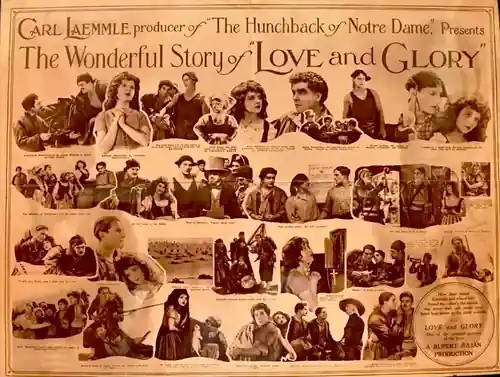
The film's second act is a masterclass in pacing and emotional resonance. As the years pass, Pierre, still resolute in his quest for Gabrielle, makes his way back to Paris. The journey is filled with suspense and a palpable sense of destiny. When he finally arrives, the reunion is bittersweet, a testament to the enduring power of love. The film masterfully juxtaposes the youthful Gabrielle from fifty years ago with the grown woman she has become, adding layers to the narrative and emotional depth.
The cast is impressive, with standout performances from Madge Bellamy as Gabrielle and Charles de Rochefort as Pierre. Bellamy brings a quiet strength to her role, embodying a character who has endured much. Her expressions and subtle movements convey the weight of her experiences, making Gabrielle a character one can't help but root for. De Rochefort, on the other hand, exudes a quiet dignity and determination, bringing a sense of nobility and resilience to Pierre's character. Their chemistry is palpable, anchoring the emotional core of the film.
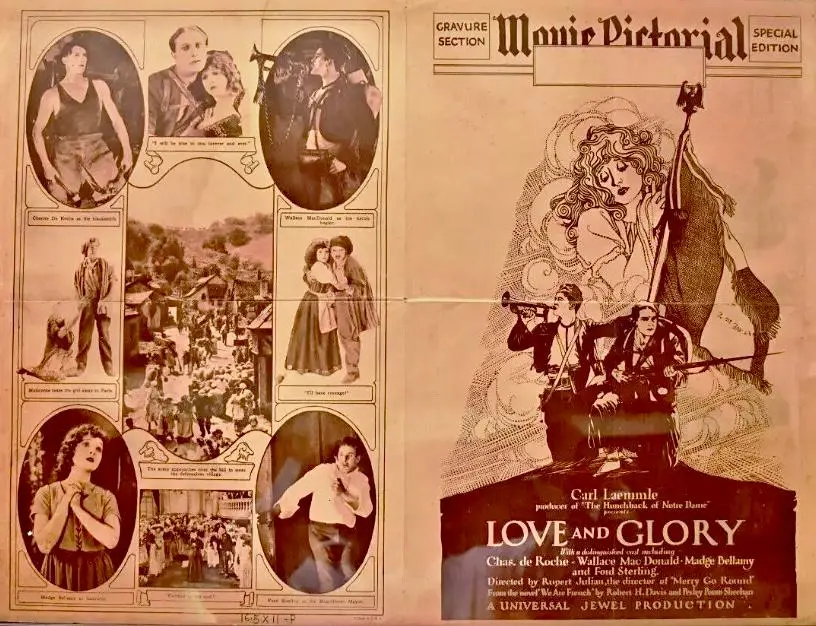
The film's direction, by Robert Hobart Davis, Perley Poore Sheehan, and Rupert Julian, is commendable. The use of period-specific costumes and sets adds authenticity to the historical setting, while the cinematography captures the grandeur of Paris and the raw emotion of the characters. The score, while not groundbreaking, supports the narrative effectively, enhancing the emotional arcs without overpowering the dialogue or action.
Comparatively, 'Love and Glory' shares thematic similarities with 'Pace That Kills' (1919), another film about love and loss set against a historical backdrop. Both films explore the resilience of the human spirit in the face of adversity, but 'Love and Glory' takes these themes further, delving into the complexities of time and memory. It also shares elements with 'The Winning of Sally Temple' (1919), which similarly deals with the challenges of reuniting after a long separation. However, 'Love and Glory' stands out for its nuanced portrayal of the characters and its exploration of the emotional impact of historical events on individual lives.

From a technical standpoint, the film excels in its period detail and the performances of its lead actors. Madge Bellamy's portrayal of Gabrielle is particularly noteworthy, as she pulls off the transformation from a young, hopeful woman to a wiser, more experienced one. Charles de Rochefort's performance as Pierre is equally compelling, his character's journey from a young lover to a seasoned man returning to a place and a woman he loves deeply.
The film's historical accuracy and authenticity are commendable, especially considering the time it was made. The depiction of the 1869 uprising in Algeria is detailed and evocative, offering a glimpse into a period often overshadowed by more well-known conflicts. The setting in Paris is equally well-realized, with the film capturing the spirit of the early 20th century in a way that is both nostalgic and vibrant.
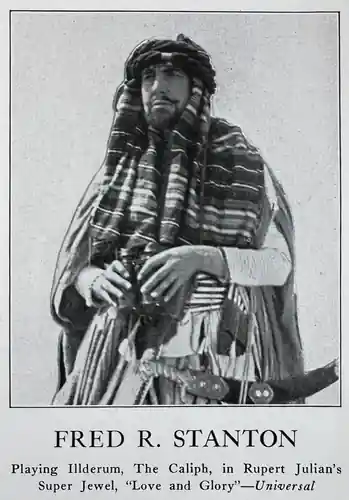
One of the film's strengths lies in its ability to balance historical drama with personal narrative. The characters' relationships, particularly the bond between Gabrielle and Pierre, are central to the film's emotional impact. Their reunion is not without its challenges, and the film adeptly explores the complexities of their situation, including the passage of time, the changes in their lives, and the lingering sense of loss and longing.
While the film's pacing is generally well-balanced, there are moments where the narrative could have benefited from a bit more tension. The resolution, while satisfying, feels somewhat predictable at times. However, these minor criticisms do not detract from the overall impact of the film. The emotional resonance and the performances are what truly make 'Love and Glory' a memorable experience.

In conclusion, 'Love and Glory' is a poignant and well-crafted film that explores themes of love, loss, and the enduring power of memory. With its strong performances, detailed historical setting, and emotional depth, it stands as a testament to the power of cinema to capture the human experience. While it may not be a groundbreaking masterpiece, it is a film that resonates on a deep level, offering viewers a compelling and moving narrative.
For those interested in historical dramas, romance, and the emotional impact of time, 'Love and Glory' is a must-watch. It invites viewers to reflect on the nature of love and the ways in which it can endure even in the face of great adversity. It's a film that speaks to the universal human experience, making it a timeless classic that continues to touch hearts.
It's worth noting that 'Love and Glory' is also available for viewing on our platform, allowing you to experience this captivating narrative in the comfort of your own home. Whether you're a fan of classic cinema or simply appreciate a well-told story, 'Love and Glory' is a film that you won't want to miss.

IMDb —
1927
Community
Log in to comment.