DbcultAccessing Vault...
6.2/10
Senior Film Conservator
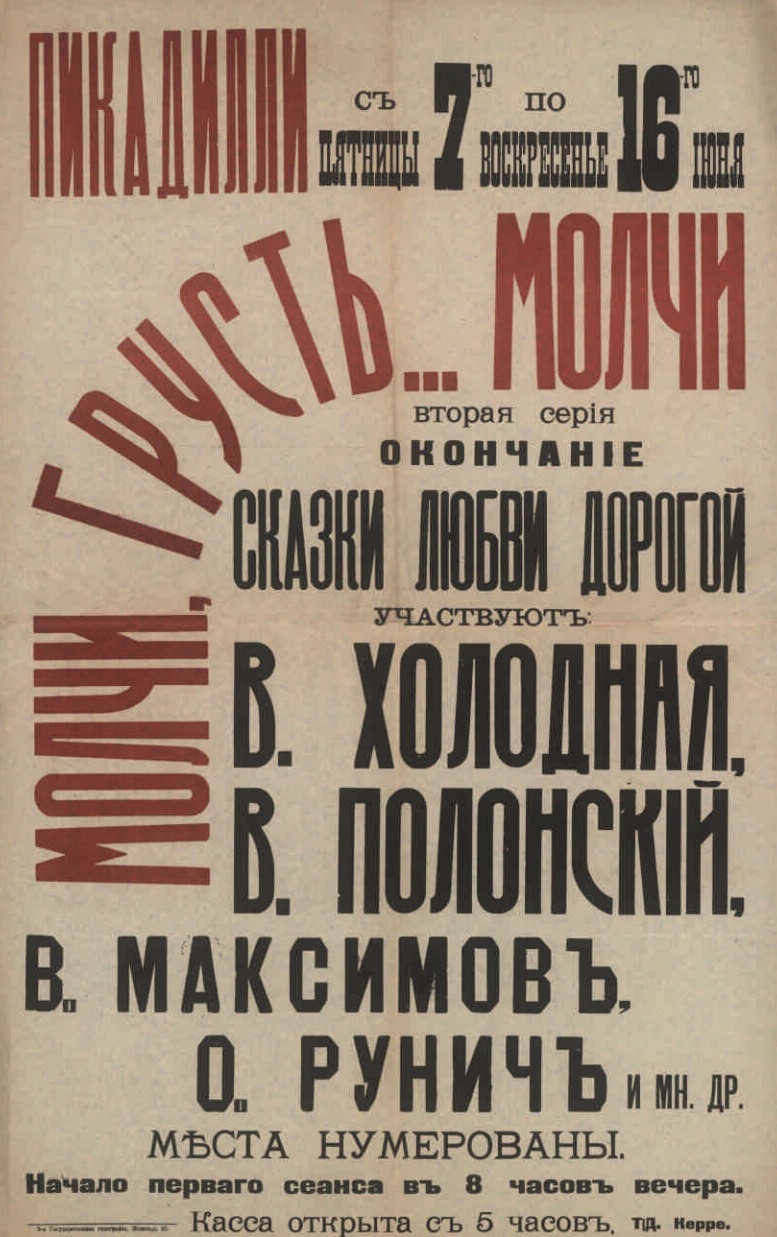
A definitive 6.2/10 rating for a film that redefined the boundaries of cult cinema. Molchi, grust... molchi remains a cornerstone of transgressive art.
There are silences that scream louder than any intertitle, and Molchi, grust... molchi hoards those silences like Fabergé eggs—ornate, cold, destined to crack under the thumb of anyone foolish enough to grip them.
Picture a ballroom lit by kerosene chandeliers: the flames shiver, throwing copper freckles across décolletages already bruised by whalebone stays. Into this gilded aquarium glides Paula—played by Olga Rakhmanova with the brittle poise of a porcelain figurine that has learned how to blink—trailing sawdust from her boots like evidence. She is the film’s wounded nucleus, but the electrons are men whose waistcoats cost more than a midwinter grain shipment: Vitold Polonsky’s banker, Pyotr Chardynin’s reptilian attorney, Konstantin Khokhlov’s circus manager whose moustache still smells of the tiger cage. Each frames her in a different gilt rectangle, a human stock certificate.
Director M. Masin orchestrates these transactions with the clinical detachment of an auctioneer who moonlights as a taxidermist. Note the match-cut: from Paula’s gloved hand signing a promissory note to the banker’s ringed fingers drumming atop a copy of The Russian Wealth magazine. In the blink of a splice, a woman’s flesh becomes parchment.
I am not leaving you, she writes to her crippled husband in an intertitle that burns like acid, I am trading one cage for another, and at least the new one has central heating.
The film’s temporal spine is the winter season of 1915–16, when inflation metastasized faster than gossip along the Nevsky Prospect. Masin shoots street scenes with a hand-crank that savors every flake of soot; the camera lingers on a queue for black bread that snakes out of frame like an accusation. Meanwhile, inside the banker’s mansion, a string quartet saws through Tchaikovsky while footmen replace caviar dishes faster than the guests can deplete them. The juxtaposition is so caustic it practically etches its own emulsion.
What makes Molchi, grust... molchi more than a didactic pamphlet is the way it weaponizes glamour against itself. Rakhmanova’s Paula never descends into caricatured harlotry; instead, she performs the role of courtesan with the mechanical grace of a marionette who can see the puppeteer’s reflection in every mirror. Watch her eyes in the boudoir scene—two matte disks that catch the yellow lamplight and throw nothing back, like coins dropped into a frozen well. She is already a ghost haunting her own future.
The film’s visual grammar predates German Expressionism yet rivals it for angular despair. Doorways taper into trapezoids; staircases corkscrew upward like augers boring into the sky. In one unforgettable insert, Masin films a child’s porcelain doll lying beneath a table while adult shoes—patent leather, size 9—pace overhead. The doll’s bisque skull cracks along the hairline, a prophecy written in spiderweb.
Compare this to Protéa where the femme fatale commands the frame with acrobatic agency, or Lucille Love’s colonial swagger—Paula’s power is purely negative, a magnetic void that draws predators. She is the anti-Protéa: instead of weaponizing secrecy, she is strip-mined by it.
Soundless cinema often struggles to evoke class antagonism without speechifying; Masin circumvents the hurdle through sonic absence itself. The lack of diegetic noise becomes a bourgeois luxury—only the poor would clamor for bread, while the rich purchase silence by the yard. When Paula’s discarded husband attempts to drag himself across the parquet on crutches, every thud lands like a muffled gunshot in a padded room. The banker, meanwhile, practices fencing in an echoing hall; the foil’s swish is conveyed only by the glint of silver across his eyes. We hear nothing, yet the contrast deafens.
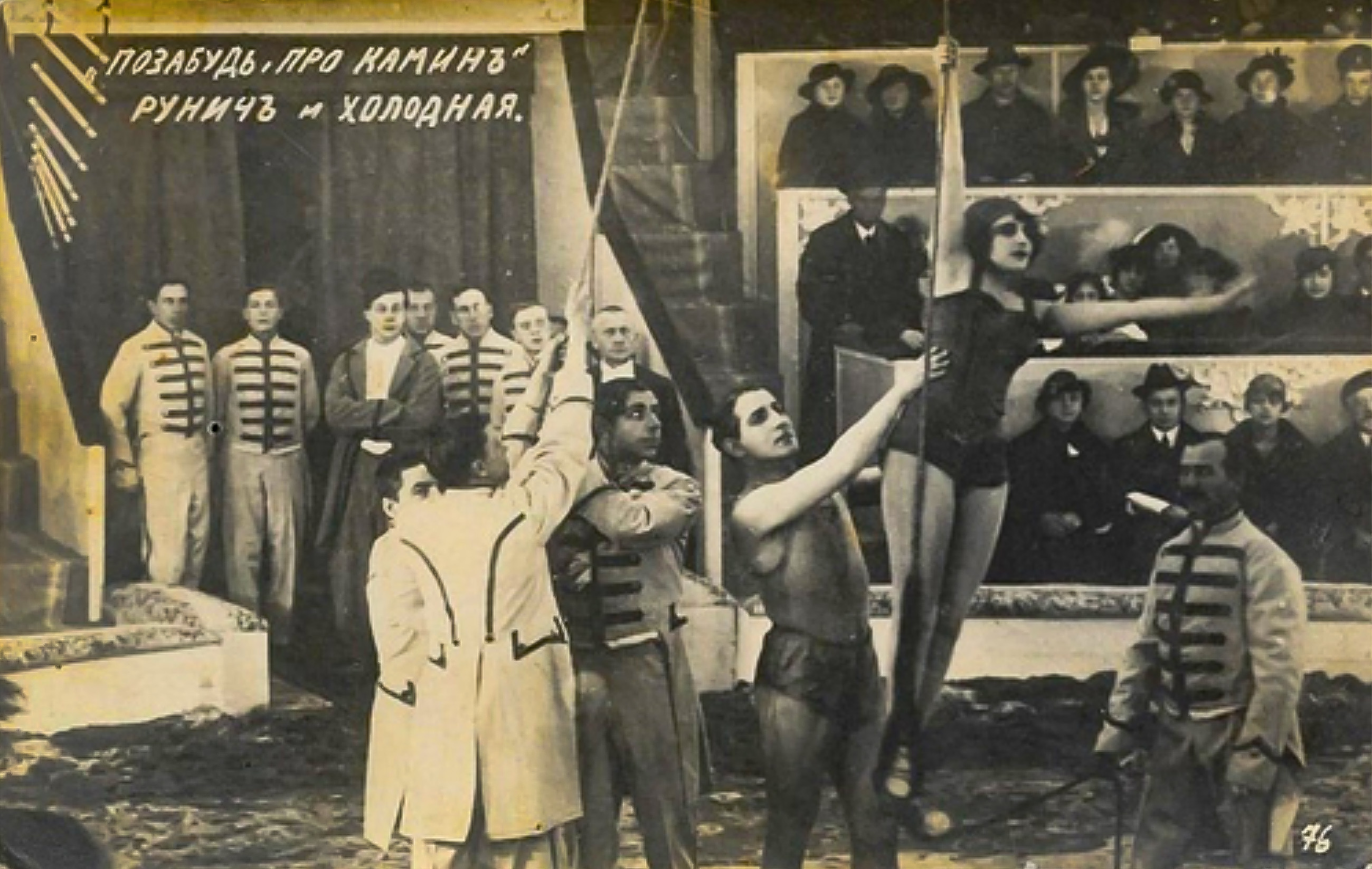
Supporting performances operate like minor keys in a Rachmaninoff prelude. Vera Kholodnaya—destined to become Russian cinema’s first megastar—appears fleetingly as a maid who trades gossip for lipstick. Her face, even in long shot, carries the luminescent premonition of stardom; the camera adores her with the same fatal ardor that history will show her (she died of influenza at twenty-five, a martyr to the revolution that this film foreshadows). Ivan Khudoleyev’s butler polishes silver while eavesdropping, his reflection in the tray multiplying like a guilt that has learned to reproduce asexually.
Cinematographer Vladimir Maksimov deserves scholarly exhumation. He lights night interiors with a single source—often an oil lamp—then floods the shadows with powdered magnesium flare, so that faces seem carved from butter left too near the stove. Note the sequence where Paula discovers the banker’s ledger: the page turns, a candle gutters, and for four frames the numbers transmute into Hebrew characters, a subliminal indictment of the era’s casual antisemitism folded into fiscal predation.
The screenplay, attributed to an anonymous collective (some sources whisper Osip Runich doctored it between gambling sprees), unfolds in five movements like a funeral mass: Exodus, Seduction, Transaction, Exposure, Silence. Each act is punctuated by a visual refrain—an empty birdcage swinging in a window. By the fifth iteration, the cage door hangs open, yet no bird remains; even metaphor has absconded.
Scholars often pigeonhole Molchi, grust... molchi alongside The Clemenceau Case for their shared fascination with female ruin, yet the comparison limps. Where Clemenceau wallows in moralizing melodrama, Masin’s film practices a surgeon’s detachment, dissecting without anesthesia. Likewise, Her Double Life flirts with redemption; Paula’s universe offers none—only a slow glaciation of the soul.
Restoration efforts remain fraught. The only known 35 mm nitrate print languished in a Riga basement until 1998, when archivists discovered it fused into a single caramelized reel. Digital reconstruction pieced together 73 minutes from 112 original, leaving lacunae that flicker like scorched lace. The missing segments—chiefly the circus prologue—survive only in censorship records, described as “excessive in depiction of bodily risk.” Thus the film begins in medias res, a mutilation that paradoxically heightens the sense of lives already half-devoured before we arrive.
Contemporary relevance? Observe any influencer hawking crypto on a yacht, any billionaire divorcing via spreadsheet: the same ledgers, the same carcasses, new fonts. Paula’s silence is the ancestor of every mute swipe-taxed despair we scroll past at 2 a.m. The Neva’s ice cracks; our screens glow; the cage swings empty.
Watch Molchi, grust... molchi at 3 a.m. with the heating off. Let your breath frost the monitor until the subtitles blur into snow. When the final iris-in closes like a wary eye, you will understand that history’s most authentic special effect is the human face learning it has a price, and finding the sum insufficient.
Grade: A- (for the surviving print; the lost footage is cinema’s collective amnesia)
IMDb —
1932
Community
Log in to comment.