DbcultAccessing Vault...
Cult Review
Senior Film Conservator
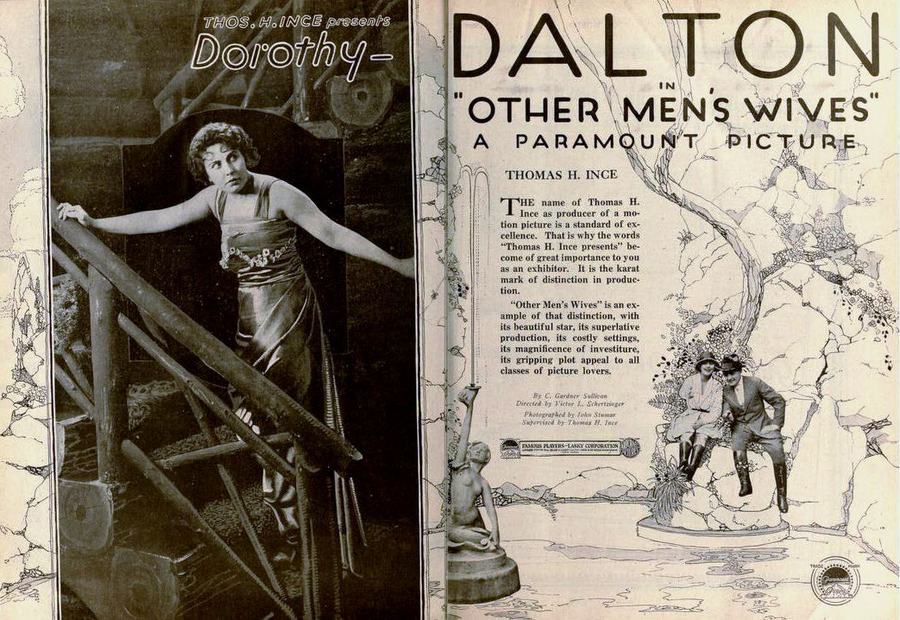
Stepping into the world of Other Men's Wives, one is immediately struck by its potent cocktail of societal critique and personal drama, a narrative tapestry woven with threads of ambition, desperation, and eventual redemption. This 1928 silent film, a compelling product of its era, delves into the precariousness of social standing and the moral compromises individuals are often compelled to make when faced with overwhelming adversity. At its core, it's a stark examination of a woman's struggle against the ruthless machinations of a newly moneyed elite, all set against a backdrop of Jazz Age extravagance and its inherent moral ambiguities. The film's exploration of these themes resonates with a timeless quality, revealing the enduring human struggle between integrity and the allure of material salvation.
The narrative introduces us to Cynthia Brock, portrayed with captivating vulnerability by Dorothy Dalton. Cynthia is a woman accustomed to the gilded cage of high society, where expensive clothes and fashionable gatherings are not mere luxuries but essential accoutrements of her identity. Her world, however, shatters with the sudden death of her father, leaving her utterly destitute and, more acutely, burdened by a staggering dressmaker's debt exceeding $6,000. This fiscal precipice is not merely a financial inconvenience; it represents the immediate threat of social ruin, a fall from grace that would strip her of her very sense of self. Dalton imbues Cynthia with a palpable sense of genteel despair, her expressive eyes conveying the silent terror of a woman whose entire existence is suddenly rendered null and void by economic reality. The societal expectations placed upon women of her class, to maintain appearances at all costs, intensify her predicament, making her vulnerability a potent weapon in the hands of those less scrupulous.
Enter Fenwick Flint, a character etched in the mold of the opportunistic villain, brought to life with a chilling blend of charm and menace by Holmes Herbert. Flint, a man who has recently ascended to great wealth, views human relationships not as connections but as transactions, pawns in his relentless pursuit of personal gratification. Learning of Cynthia's dire straits, he sees not a woman in distress but a tool, a lever to pry loose the object of his own illicit desires: James Gordon's wife. Flint’s scheme is audacious in its cruelty: he intends to exploit Cynthia’s desperation, coercing her into seducing James Gordon (Forrest Stanley) to facilitate a divorce, thereby clearing his path to Gordon's wife. This plot, a chilling reflection of the era’s fascination with marital intrigue and social climbing, positions Flint as a puppet master, pulling strings with ruthless precision. His character embodies the darker side of unchecked ambition, a man whose newfound affluence only serves to amplify his moral bankruptcy.
Cynthia's initial refusal is a testament to her lingering moral compass, a flicker of the integrity that still resides within her. She recoils from the sordid proposition, understanding the profound personal and ethical cost. Yet, Flint, an expert manipulator, understands the intoxicating power of desperation. His offer of $10,000 is not just money; it’s a lifeline, a chance to reclaim her dignity, to silence the whispers of destitution, and to escape the looming shadow of disgrace. The internal conflict etched on Dalton's face during this pivotal scene is a masterclass in silent film acting: the war between principle and survival, between self-respect and the crushing weight of circumstance. Her eventual capitulation is not an act of moral depravity, but a tragic surrender to an impossible situation, a choice born of an absence of alternatives. This moment resonates with the struggles faced by protagonists in films like The Primrose Ring, where external pressures force characters into morally ambiguous decisions, challenging their inherent goodness in a society that often prioritizes appearance over virtue.
The setting shifts to a secluded mountain lodge, a picturesque yet ironically confining stage for Flint's unfolding drama. Here, Cynthia begins her insidious task, but an unforeseen complication arises. As she spends time with James Gordon, intended as her unwitting victim, a genuine connection blossoms. Forrest Stanley portrays Gordon not as a caricature of a cuckolded husband, but as a man of decency and warmth, making Cynthia's task increasingly unbearable. The forced intimacy of the lodge setting, far from the artificiality of society, allows for a more authentic interaction, and Cynthia finds herself drawn to Gordon's genuine kindness and unsuspecting nature. Her initial resolve to go through with the scheme begins to crumble, replaced by a profound sense of remorse and moral anguish. This unexpected bond highlights the film's nuanced understanding of human connection, suggesting that even in the most cynical of plots, genuine feeling can emerge and disrupt the best-laid plans, proving to be a force more potent than any monetary incentive.
The turning point is exquisitely rendered. Overwhelmed by guilt and the burgeoning affection she feels for Gordon, Cynthia breaks down, her sobs echoing through the quiet lodge. Gordon, hearing her distress, enters her room, a moment that is immediately seized upon by Flint and his co-conspirators. They burst in, staging a scene of apparent infidelity, catching Gordon with his arms around a distraught Cynthia. This meticulously orchestrated entrapment is the climax of Flint's diabolical plan, designed to leave Gordon with no recourse but to agree to a divorce. The tension in this sequence is palpable, a testament to C. Gardner Sullivan's sharp writing and the director's ability to maximize dramatic impact without a single spoken word. The emotional turmoil here could be compared to the intense personal stakes in The Isle of Conquest, where characters are often caught in webs of circumstance and emotional entanglement, their fates seemingly sealed by forces beyond their control.
Cornered and seemingly compromised, Gordon agrees to the divorce. In a surprising act of chivalry, and to protect Cynthia's now-tarnished reputation, he offers to marry her. This proposition, born of a mistaken sense of obligation, becomes the catalyst for Cynthia's ultimate redemption. Facing a path to a respectable, albeit false, future, she chooses instead the arduous road of truth. With a raw and courageous honesty, she confesses the entire scheme, revealing Flint's manipulative plot and her own unwilling participation. This moment of profound integrity is where Cynthia truly reclaims her agency and her moral standing. It’s a powerful statement about the human spirit's capacity for self-correction, even after succumbing to immense pressure. This act of truth-telling, despite its immediate consequences, sets her on a path reminiscent of characters in Come Through, who find liberation and a new beginning through confronting their past mistakes and choosing the difficult path of honesty.
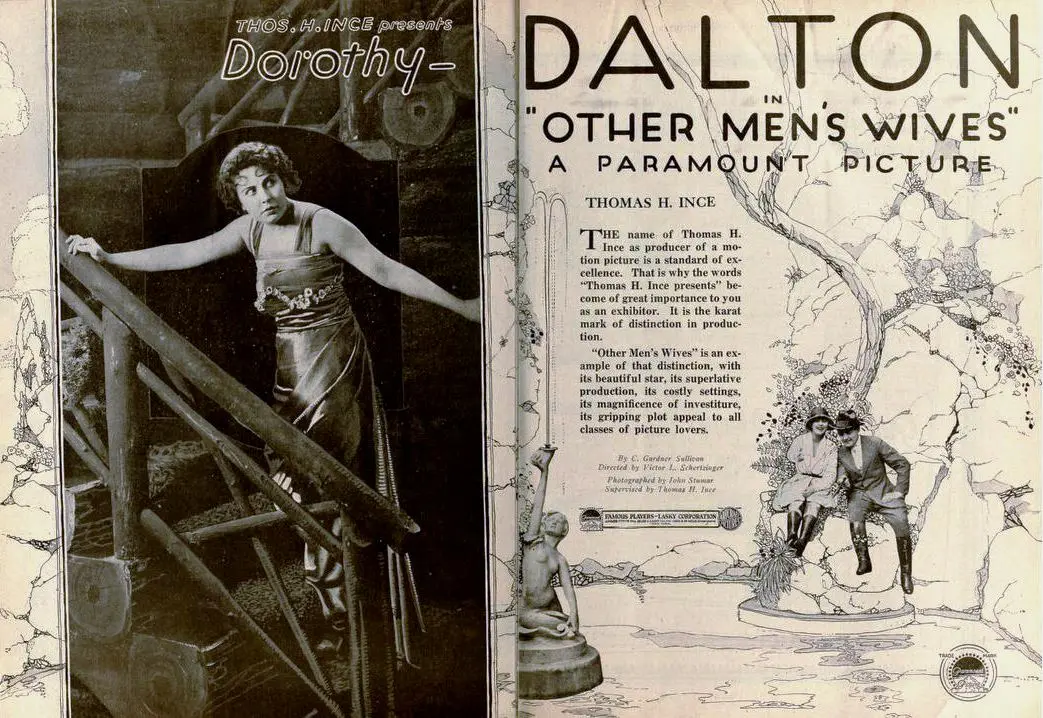
The aftermath sees Cynthia returning Flint's blood money, a symbolic rejection of her complicity and a definitive break from her past. She embraces a life of honest work, finding employment as a stenographer and diligently paying off her debts. This journey from socialite to working woman, while seemingly a downgrade in status in the eyes of society, is portrayed as an ascent in moral fortitude. It highlights the film's underlying critique of superficial societal values, suggesting that true worth lies not in inherited wealth or social standing, but in integrity and hard work. Her transformation echoes the resilience seen in protagonists of films like Hoodoo Ann, who navigate difficult circumstances with an unwavering spirit and a commitment to doing what is right, thereby finding a different kind of fulfillment.
Meanwhile, Flint's triumph is short-lived and ultimately hollow. He does marry Gordon's ex-wife, achieving his immediate objective. However, the film wisely illustrates the ephemeral nature of happiness built on deceit and manipulation. Their union, devoid of genuine affection or respect, soon dissolves, leaving Flint with a Pyrrhic victory. This narrative thread serves as a cautionary tale, reinforcing the idea that true contentment cannot be bought or stolen, but must be earned through genuine connection and ethical conduct. The swift decline of Flint's "happily ever after" provides a stark contrast to Cynthia's arduous but ultimately fulfilling journey, underscoring the film's moral message that ill-gotten gains rarely lead to lasting joy.
The film's denouement delivers a satisfying, if somewhat conventional, resolution. Gordon, initially embittered by the betrayal and the dissolution of his marriage, undergoes his own journey of healing and reflection. His encounter with Cynthia, now a woman transformed by her experiences and strengthened by her moral courage, is marked by a newfound understanding and respect. The initial false premise of their connection gives way to an authentic, earned love, built on shared experience and mutual admiration rather than deception. Their eventual marriage is not merely a happy ending but a symbolic union of two individuals who have navigated the treacherous waters of societal expectation and personal failing to emerge stronger and more genuinely connected. It’s a testament to the enduring power of forgiveness and the possibility of finding true companionship after immense personal trials, suggesting that true love often requires a journey through adversity.
From a thematic perspective, Other Men's Wives is a rich tapestry exploring the corrosive influence of wealth and ambition, the societal pressures placed upon women, and the redemptive power of honesty. C. Gardner Sullivan's screenplay, while rooted in the melodramatic conventions of the silent era, exhibits a keen understanding of human psychology. The characters, particularly Cynthia, are not simplistic archetypes but complex individuals grappling with moral dilemmas. The film's portrayal of class distinctions and the ease with which the wealthy can manipulate the less fortunate remains remarkably relevant, echoing themes explored in dramas like The Stainless Barrier, which also delves into the challenges posed by rigid social stratification and the desperate measures individuals might take to overcome them. The roaring twenties, with its economic boom and shifting moral landscape, provided fertile ground for stories of this nature, and "Other Men's Wives" captures that zeitgeist effectively.
The performances are uniformly strong, with Dorothy Dalton carrying the emotional weight of the film with remarkable grace and intensity. Her ability to convey a wide range of emotions—from despair and moral conflict to burgeoning affection and resolute courage—without the aid of dialogue is truly remarkable, showcasing the expressive power of silent film acting at its best. Forrest Stanley provides a sympathetic portrayal of James Gordon, making his journey from unsuspecting victim to understanding partner believable and deeply human. Holmes Herbert's Fenwick Flint is a deliciously malevolent antagonist, his subtle gestures and expressions conveying a calculating ruthlessness that drives the plot forward, making him a truly memorable villain. The supporting cast members also contribute effectively to the overall atmosphere, ensuring that each character, no matter how minor, serves a distinct purpose in advancing the narrative and enriching the film's dramatic texture.
Visually, the film makes effective use of its settings, from the opulent, yet ultimately suffocating, drawing rooms of high society to the rustic, liberating backdrop of the mountain lodge. The cinematography, typical of the period, relies on clear compositions and expressive close-ups to convey emotion and drive the story. While not revolutionary in its visual language, it is competent and effectively supports the dramatic thrust of the narrative, allowing the emotional arcs of the characters to shine through. The costumes, particularly Cynthia's initial expensive attire contrasted with her later simpler clothing, serve as potent visual metaphors for her shifting status and moral journey, subtly communicating her internal transformation. The film’s aesthetic choices subtly reinforce its thematic concerns, contributing to a cohesive and impactful viewing experience that transcends the limitations of the silent medium.
In conclusion, Other Men's Wives stands as a compelling example of silent era melodrama, transcending its genre conventions through strong character development and a nuanced exploration of morality. It’s a story that, despite its period trappings, speaks to universal truths about the choices we make, the consequences we face, and the enduring human desire for authenticity and connection. For enthusiasts of early cinema, and particularly those interested in the evolution of dramatic storytelling, this film offers a fascinating glimpse into a past era's anxieties and hopes, reminding us that the human condition, with its foibles and triumphs, remains a constant. It reminds us that even without spoken dialogue, the power of human emotion and complex narrative can resonate deeply, proving its lasting relevance and artistic merit. Its exploration of moral quandaries and personal growth aligns it with films like A Bachelor's Children and Fires of Youth, both of which also navigate the intricate pathways of personal integrity and societal expectations in the face of life's challenges. The film's ultimate message is one of hope: that even when one stumbles, redemption is always within reach, and true love can blossom from the most unlikely, and initially compromised, of circumstances. It’s a poignant cinematic artifact that continues to spark reflection on the true cost of ambition and the invaluable worth of an honest heart.
IMDb —
1919
Community
Log in to comment.