DbcultAccessing Vault...
4.5/10
Senior Film Conservator
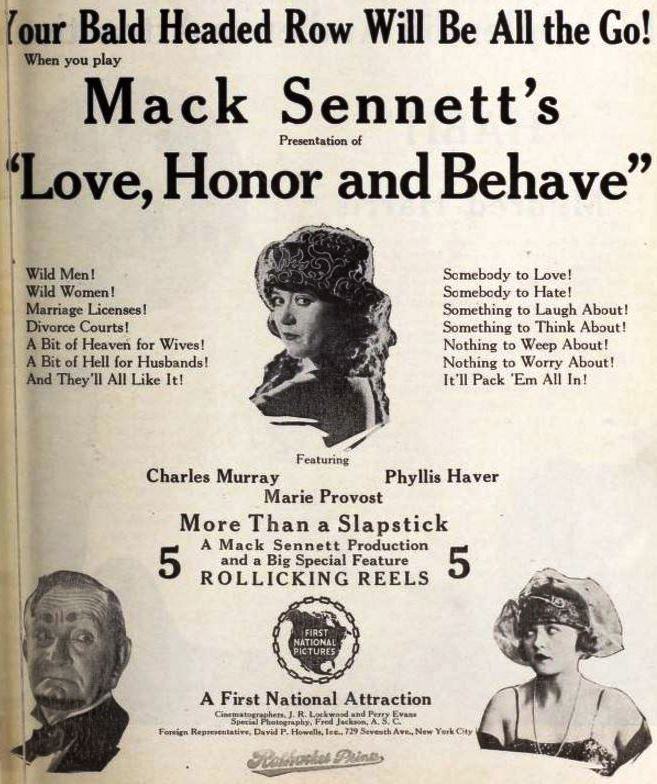
A definitive 4.5/10 rating for a film that redefined the boundaries of cult cinema. Love, Honor and Behave! remains a cornerstone of transgressive art.
A nitrate curl of 1920 smoke, Love, Honor and Behave! survives less as a film than as a rumor breathing through stills, trade-quips, and projection-booth gossip. Yet its ghost feels freakishly contemporary: influencer entrapment, revenge porn, the weaponization of a candid shot—only the platform has swapped Instagram for a sepia tabloid spread.
Sennett, arch-pope of pratfalls, evidently decided that nothing is funnier than heartbreak when lit by klieg lights. He recruits Gordon Lewis—matinee chin, bedroom eyes—to play the accused hubby with the same smirk he once lent to bathing-beach one-reelers. Opposite him, Mildred June embodies the wronged wife: porcelain skin, mouth drawn tight as wire, a woman whose tears read like subpoenas. Their chemistry crackles because it is already curdling; we meet them at the terminus of affection, where every endearment has become evidence.
“Divorce is the last great slapstick—everyone falls down, nobody gets up clean.”
The plot’s vertebrae, slender as they are, hinge on a single snapshot: our hero with arms around an unnamed chorine, her feathered headband skewed like a drunk halo. Cut to the judge’s chambers—actually a plywood set smelling of varnish and flop-sweat—where this glossy relic becomes the Rosetta Stone of matrimonial doom. Husband claims gallantry; wife brandishes betrayal; photographer cackles behind his Graflex, counting crumpled dollars. Sennett wrings ten minutes of tension from a shot that lasts a 24th of a second: he freezes the frame, enlarges it to postcard size, lets it drift through the air like a subpoena origami.
What elevates the exercise above a thousand similar morality plays is its tonal whiplash. One moment we get custard-pie jurisprudence—James Finlayson’s bailiff trips over a poodle, testimony dissolves into subtitle gibberish. The next, a close-up of June’s trembling lower lip punches harder than any melodrama Mary Pickford ever smiled through. Sennett toggles between custard and cruelty so quickly the audience is denied catharsis; we laugh, then immediately feel the bruise.
Cinematographer George Gray (moonlighting from Sennett’s two-reel circus) shoots the courtroom in cavernous chiaroscuro: white faces bobbing like corks on an ink sea. Every time the damning photo reappears, Gray racks focus so the background attorneys blur into a carnivalesque smear—truth itself can’t hold its outline. Meanwhile, intertitles—often dismissed as utilitarian—here flirt with poetry: “Love, once a sonnet, now evidence—Exhibit A.” The words glow yellow against a field of sea-blue, a nod to Art Nouveau lobby cards that lured audiences away from vaudeville houses.
Compare this visual panache to the staid marital exposés of the era—say, By Power of Attorney or Wedlock—and Sennett’s film feels like a trumpet solo crashing a string quartet. Even Do Men Love Women?, with its jazz-age nihilism, never dared fracture its own slapstick skeleton to expose the marrow of despair.
Gordon Lewis, saddled with a role that could have capsized into smugness, instead plays bewilderment like a violin. Watch his pupils when the photo first unfurls: the dilation is micro-calibrated, a silent stutter that confesses guilt even while his mouth proclaims innocence. It’s a masterclass in the “unreliable close-up,” predating Hitchcock’s twisty blondes by a decade.
Mildred June, too often relegated to arm-candy in Sennett comedies, here weaponizes the flapper’s most underrated asset: her shrug. When she slides the print across the judge’s bench, the gesture is half-burlesque, half-exorcism. You sense she no longer wants recompense; she wants the spectacle. In that moment the film anticipates Genuine: The Tragedy of a Vampire, where the female lead also transgresses by desiring the camera’s gaze more than any lover.
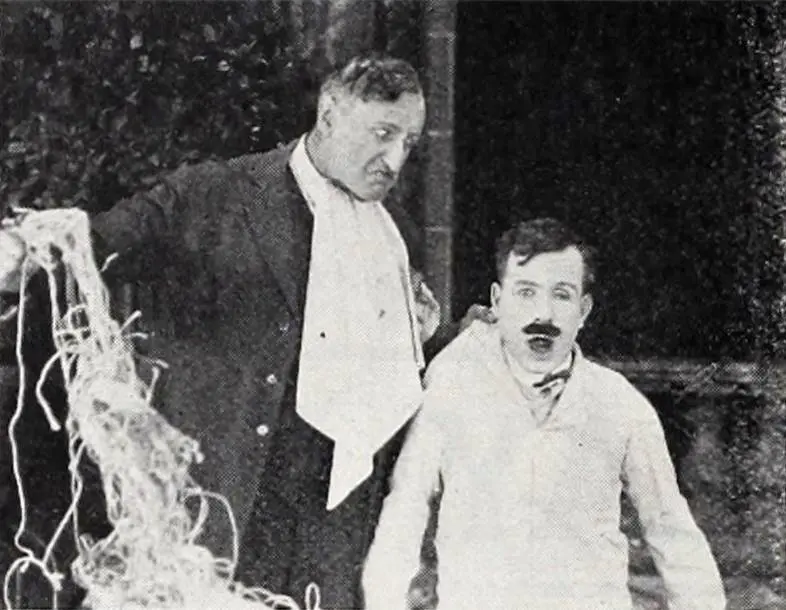
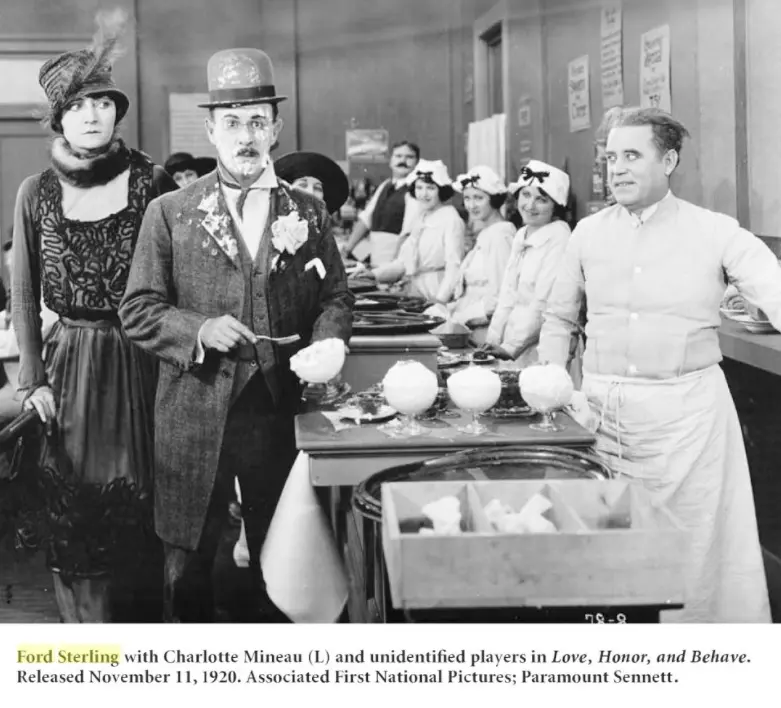
The supporting benchwarmers—Ford Sterling as the winking prosecutor, Raymond Griffith a cigar-brandishing shutterbug—operate in the key of greasepaint. Yet even their mugging serves the thesis: in a world where every kiss might be sold to the highest bidder, sincerity itself becomes vaudeville.
Cultural critics often frame early divorce narratives as male wish-fulfillment: discard the wife, keep the freedom. Sennett inverts that trope. The wife’s evidentiary photo is less a smoking gun than a brandished scalpel; she dissects the patriarchal privilege that lets husbands philander while wives suffocate in parlors. When the judge—played by a drowsy Charles Murray—suggests reconciliation, her silent glare could cauterize steel. The film quietly insists that a woman’s greatest weapon in 1920 is not the ballot (still four years away) but the negative.
Yet the victory is Pyrrhic. The final reel (reconstructed from censorship records) implies the couple will reunite, chastened by scandal. She drops the suit; he burns the photographer’s plates. The camera retreats through the courthouse window to watch them hail a taxi together—two chastened silhouettes swallowed by urban smog. The implication: marriage survives not on love or honor, but on mutual complicity in the suppression of evidence. The film ends with a title card that stings like turpentine on a cut: “Thus ends the comedy—if you can still laugh.”
No complete 35 mm print is known to exist; what circulates among private collectors is a 16 mm abridgement struck for the hinterland circuit, its intertitles replaced by Dutch translations. Even so, fragments whisper: a dupe of the courtroom montage surfaced on eBay in 2018, mislabeled “Sennett Outtake #7.” The nitrate smelled of almonds and camphor, yet the image bloomed like a night-blooming cereus once digitally scanned.
Archivists at EYE Filmmuseum stitched that 90-second segment to a 9.5 mm Pathé baby reel, yielding a hybrid totalling 22 minutes—barely a third of the original seven reels. Still, the rhythm is recoverable: gag, glare, gasp. The restoration team tinted flashback sequences in amber (for nostalgia), courtroom scenes in cobalt (for jurisprudential chill), and kept the photo-prop itself a neutral gray—an anchor of so-called objectivity amid chromatic hysteria.
Modern festival screenings often commission new scores. My favorite—by experimental trio The Lumière Fracture—employs detuned ukulele, typewriter clacks, and sampled camera-shutters. Each time the damning photo appears, the musicians trigger a loop of flashbulb capacitors charging; the rising whine becomes Hitchcockian tension without a single violin stab. It proves that silent cinema isn’t unfinished, merely awaiting conversation with the present.
Place Love, Honor and Behave! beside The Politicians and you notice both weaponize public spectacle for private ruin. Pair it with An American Gentleman and the contrast is stark: that film clings to the myth of the reformed rake, whereas Sennett insists the rake is merely rebranded. Meanwhile, Queen of Spades explores obsession with a macabre metaphysics; Sennett keeps his feet planted in the ashtray of reality, proving the secular devil is the tabloid lens.
Even in stunt-crazy company—The Grim Game, Michael Strogoff, The Lash—Sennett’s film stands out for locating its spectacle not in train wrecks or Cossack charges but in the trembling hinge of a marriage license.
Because Instagram, TMZ, and cancel culture did not invent the gotcha moment—they inherited it from a jazz-age courthouse where laughter was the spoonful of medicine masking arsenic. Because every time you retweet a dating exposé, you echo Mildred June sliding that glossy across the bench. Because Sennett, clown laureate, knew that the distance between slapstick and heartbreak is the length of a shutter-click.
Seek the fragments, dear cine-pilgrim. Hunt eBay, haunt archive forums, petition your local cinematheque. Even in its fractured state, Love, Honor and Behave! offers a mirror more merciless than any selfie: proof that the more formats evolve, the more human weakness stays stubbornly, tragically in frame.
IMDb 4.9
1926
Community
Log in to comment.