DbcultAccessing Vault...
5.7/10
Senior Film Conservator
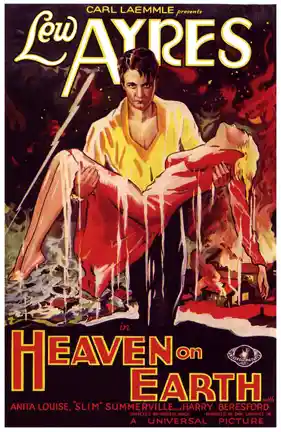
A definitive 5.7/10 rating for a film that redefined the boundaries of cult cinema. Heaven on Earth remains a cornerstone of transgressive art.
Okay, so if you're looking for big explosions or fancy CGI, just stop right here. Heaven on Earth from 1931 is absolutely not that movie. But for anyone who actually digs into old films, especially the grittier pre-Code stuff, this one's got a quiet, dark pull. If you want something that feels pretty raw in its emotions, even a little awkward sometimes, give it a shot. Otherwise, yeah, you might find it a real slow burn. It's definitely not for folks who get bored easily.
The premise itself is wild for 1931. We meet Ned, played by Lew Ayres, just a young boy living on a houseboat, content with his simple life and the man he thinks is his father. Then, bit by bit, he starts to figure out that his 'dad' actually, well, *killed* his real dad, and then just adopted him. 🤯 Talk about a heavy secret for a kid to carry around.

Lew Ayres as Ned really sells that earnest, almost too-innocent thing. You can see the confusion and the slow, awful realization dawn on him. It’s not a big, showy performance, which actually makes it more effective. He carries a lot just in his eyes.
The man Ned knows as his father, played by Bob Burns, is interesting too. He's not some cartoon villain. He’s just a guy who made a terrible choice and tried to live with it, raising the boy he wronged. There's this quiet desperation in his performance. You almost feel sorry for him, which is a complicated feeling.

And let's talk about Beans the Dog. Seriously, Beans the Dog! 🐶 He steals a few scenes just by existing. There's this one moment where Ned is sitting by the water, looking utterly lost, and Beans just comes and nudges his hand. It’s such a small thing, but it grounded the scene in a way a lot of dialogue couldn't.
The whole atmosphere of the film feels a bit damp and lived-in. You can almost smell the river, the old wood of the houseboat. It’s far from glamorous, which serves the story well. This isn't some big city drama; it's a small, personal tragedy unfolding.

There are these long stretches of quiet. No dramatic music swelling up every two minutes. Sometimes, the silence goes on just a beat too long, and you start to feel it, really *feel* what Ned is going through. It's a bold choice for a movie of this era, not always easy to watch, but it works.
One detail I found fascinating was the way information slowly trickles down. It's not one big 'aha!' moment. Instead, Ned overhears bits of conversations, sees old letters, pieces things together himself. It makes the discovery feel more organic, more painful, like a wound slowly opening. It's a smart way to build tension without a lot of flashy stunts.
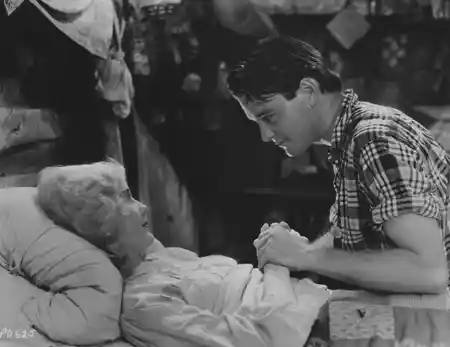
The supporting cast is solid, even in small roles. You see John Carradine in there, even for just a bit, and he always brings something unique, even when he's barely speaking. And Anita Louise, as Ned's sort of love interest, brings a bit of light to the otherwise heavy mood. She’s got this natural charm.
It’s not perfect, but what 1931 film really is? Some of the dialogue can feel a bit clunky to modern ears. And the pacing, as mentioned, is definitely from another era. It certainly doesn't have the broad, lighthearted humor you might find in something like Ruggles of Red Gap. This one takes itself very seriously, and mostly, it earns that seriousness.
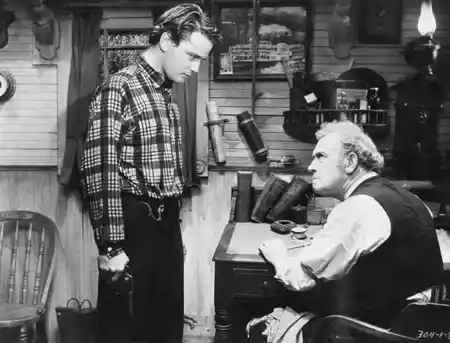
The ending isn't neat and tidy. It leaves you thinking, which I appreciate. There's no easy bow on top for a story this dark. It just... ends, with the weight of everything still hanging there. It feels more honest that way. It's less about a grand resolution and more about the impact of this terrible secret on one young man's life.
If you're curious about early sound films that tackled tough subjects, or you just appreciate a good, character-driven story that lets you sit with its emotions, give Heaven on Earth a try. It’s a quiet film, but it definitely leaves a mark. Sometimes those small, forgotten films are the ones that surprise you the most. 🌱
IMDb —
1914
Community
Log in to comment.