DbcultAccessing Vault...
Cult Review
Senior Film Conservator
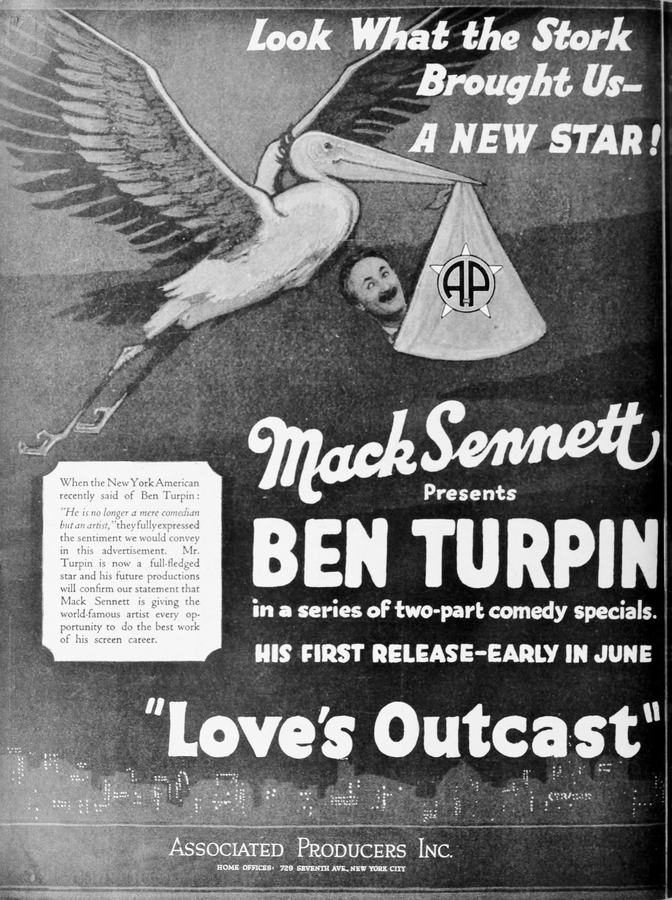
Nobody expects nuance from a two-reel custard-pie, yet Love's Outcast—that gleefully disreputable 1924 quickie—smuggles a miniature morality play inside its slapstick valise. The premise is as old as the first caveman alimony decree: serial flirt Franklyn Fairchilds faces a divorce court that resembles a shark tank choreographed by Mack Sennett. But watch how the film pirouettes on its own cynicism. Each witness who steps into frame is a living diorama of betrayal: hotel linen still warm, love letters inked in cheap perfume, a chorus girl’s garter that snaps like a rubber-band confession.
Director William Watson (never a household name, always a reliable traffic cop) lets the camera loiter in the courtroom like a tipsy reporter. We absorb every smirk, every eyebrow semaphore. The cumulative effect is an archaeological dig through masculine ego, layer upon layer of pomade and self-delusion.
Of course the gravitational center is Ben Turpin, whose famously wandering eyeball becomes a metaphor for roving desire. Notice how he times the gag: the pupil drifts like a lazy balloon, then snaps back into place the instant his wife’s attorney snarls a question. The twitch is not random; it’s a Freudian slip in ocular form. In a modern blockbuster you’d need pages of expository dialogue to explain a man’s inability to focus—Turpin does it with a single iris.
Compare this to A Sleeping Memory, where the adulterous husband is shot like a brooding matinee idol. Both films indict male inconstancy, yet Turpin’s googly-eyed caricature is infinitely more honest about the absurdity of the gender wars.
Enter Dot Farley as the Mrs., a firebrand whose legal strategy pivots on public humiliation—until jealousy rewrites the script. The moment she spies the sympathetic stenographer, her nostrils flare with primordial alarm. It’s a silent-era uh-oh that needs no subtitle. The rest of the reel becomes a masterclass in narrative whiplash: she drops the suit, clutches her wayward spouse, and exits the courthouse as though rescuing a drowning puppy she fully intends to strangle later.
This turn is easy to dismiss as contrived, yet it channels a brutal emotional truth: possession can masquerade as affection. Modern viewers, marinated in rom-com redemptive arcs, may gag at the reconciliation; historians will recognize the film’s fidelity to the era’s legal realities—divorce was expensive, scandalous, and socially annihilating. Staying married was often the lesser farce.
Around the leads orbits a carnival of second bananas: Mildred June as the tear-spilling chorine, Andy Clyde delivering a Scottish-tinged rant about modern womanhood, James Finlayson stealing a single shot with his patented double-take that could detonate TNT. Each cameo is timed like a metronome, proof that Sennett adjacent ensembles understood comedic tempo better than many modern sitcom rooms.
Contrast this with the melancholy minimalism of The Shine Girl, where solitude is the emotional keynote. Love's Outcast opts for cacophony, a polyphonic spree of accusation and desire.
Shot for peanuts at the Hal Roach backlot, the picture exploits every corner of its limited courtroom set. Watch how the camera placement makes the jury box feel like a shark’s jaw, each juror a tooth ready to snap at Franklyn’s reputation. The lighting is high-key, flattening faces into comic masks, yet the shadows under Farley’s eyes betray sleepless nights. Even in slapstick, chiaroscuro sneaks in.
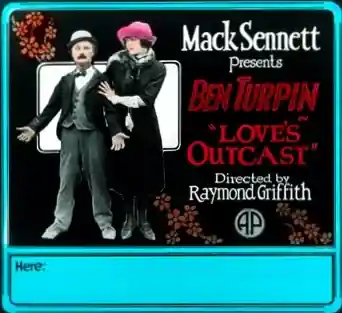
Film historians hunting for deep-focus bravura will scoff; those attuned to the grammar of necessity will admire how constraint breeds ingenuity. A zoom lens didn’t exist; Watson achieves equivalent emphasis by crowding faces into the foreground until they become living caricatures.
The picture’s sexual politics cut both ways. Yes, Franklyn is lampooned as a priapic clown, but the women are no angels—they weaponize tears, weaponize virtue, weaponize each other. The wife’s final act of reclamation reads less like forgiveness and more like brand repossession. In 2024 parlance, she cancels the divorce the way a studio cancels a problematic star: to prevent someone else from monetizing the asset.
That cynicism places Love's Outcast closer to Sowing the Wind than to the redemptive melodramas of its day. The film insists that marriage is not a sacrament but a joint-stock company, occasionally invaded by hostile takeovers.
Viewers new to silent comedy often complain about “missing” dialogue. Try watching Love's Outcast with a metronomic click track in your head—every gag lands on the off-beat. The absence of synchronized voices forces the filmmakers to choreograph bodies like percussion instruments. A stomp, a slap, a fluttering document: each becomes a snare hit. The soundtrack on surviving prints (typically a 1960s organ library score) is anachronistic but oddly fitting; the wheeze of chords mirrors the wheeze of Franklyn’s libido.
Most extant copies stem from a 16 mm classroom print discovered in a Duluth church basement in 1978. Scratches run like varicose veins; emulsion damage blooms like lichen. Yet the degradation adds patina, the way a cracked fresco still radiates divinity. The available Internet Archive rip clocks in at 22 minutes, two minutes shy of trade-press listings—suggesting either projectionist cuts or PAL speed-up.
Purists beg for a 4K scan; realists know the market for a forgotten Turpin one-reeler rivals the demand for bootlegged Prohibition tonics. Take what you can get, and be grateful the nitrate didn’t self-immolate.
Place Love's Outcast beside The Speakeasy and you see parallel riffs on social hypocrisy—both revel in the gap between public virtue and private appetite. Contrast it with La fièvre de l'or and you appreciate how hunger for gold mirrors hunger for flesh; both are vices that promise transcendence yet deliver farce.
History has no grand narrative for this minor trifle. It didn’t birth a genre, didn’t mint catchphrases, didn’t scandalize censors—yet its very modesty grants it anthropological charm. Watch it as you would examine a tintyped barroom photo: not for aesthetic glory but for the accidental revelations—a cufflink, a stray grin, the way human folly loops back like a Möbius strip.
Give yourself permission to laugh without footnotes, then rewind and notice the wife’s final glare—half triumph, half life sentence. In that flicker, the film transcends antique slapstick and becomes a time-traveling telegram: love and ownership have always been awkward bedfellows, and the law makes a lousy chaperone.
Seventeen minutes of celluloid, a century of déjà vu. Stream it, tweet it, blog it—just don’t call it harmless nostalgia. Underneath the pratfalls, Love's Outcast is the ghost of every modern comment-section gender war, winking at us with an eye that refuses to align.
IMDb 4.8
1929
Community
Log in to comment.