DbcultAccessing Vault...
Cult Review
Senior Film Conservator
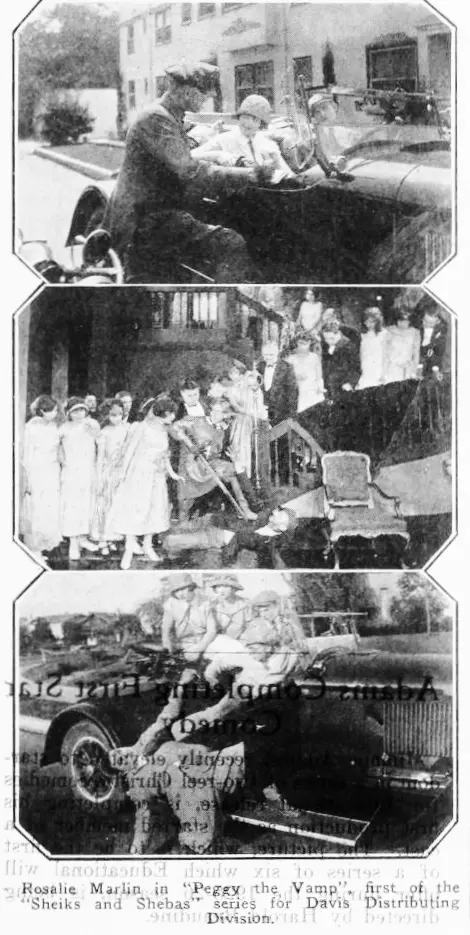
Is Peggy the Vamp worth your time in the modern era? Short answer: yes, but only if you appreciate the historical irony of a film that mocks its own audience's obsession with movie stars.
This film is specifically for silent cinema enthusiasts and those interested in the 'New Woman' archetype of the 1920s. It is definitely NOT for viewers who demand high-speed action or the polished narrative structures of contemporary romantic comedies.
1) This film works because it captures the exact moment when Hollywood began to realize its terrifying power to reshape the personalities of young people.
2) This film fails because the transition from high school innocence to calculated 'vamping' happens with a jarring lack of character development that even for a short, feels rushed.
3) You should watch it if you want to see a proto-meta comedy that understands the 'vamp' trope is more about performance than actual villainy.
Yes, Peggy the Vamp is worth watching for its cultural significance. It provides a window into the 1923 psyche, showing how the 'vamp' archetype—pioneered by stars like Theda Bara—filtered down into the lives of ordinary teenagers. The film is a short, punchy satire that doesn't overstay its welcome. It works. But it’s flawed.
Rosaline Marlin carries the weight of the film on her shoulders with a performance that is both exaggerated and strangely grounded. In the opening scenes, she embodies the classic 'ingénue' seen in films like The Innocence of Lizette. Her movements are light, her expressions wide-eyed and earnest. However, the shift occurs when she decides to 'emulate a movie vamp.'
Marlin’s transformation is the highlight of the film. She doesn't just change her clothes; she changes her entire physical geometry. She adopts a heavy-lidded gaze and a rigid, predatory posture. One specific scene in the second act shows her practicing her 'vamp' walk in a mirror, a moment that feels surprisingly modern. It’s a performance within a performance, and Marlin nails the awkwardness of a teenager trying to look dangerous.
Compared to the more serious dramatic turns in The Girl Who Came Back, Marlin’s work here is intentionally comedic. She isn't trying to be a real vamp; she’s trying to be a girl *playing* a vamp. This distinction is crucial and shows a level of self-awareness in the acting that was often missing from minor silent shorts of the era.
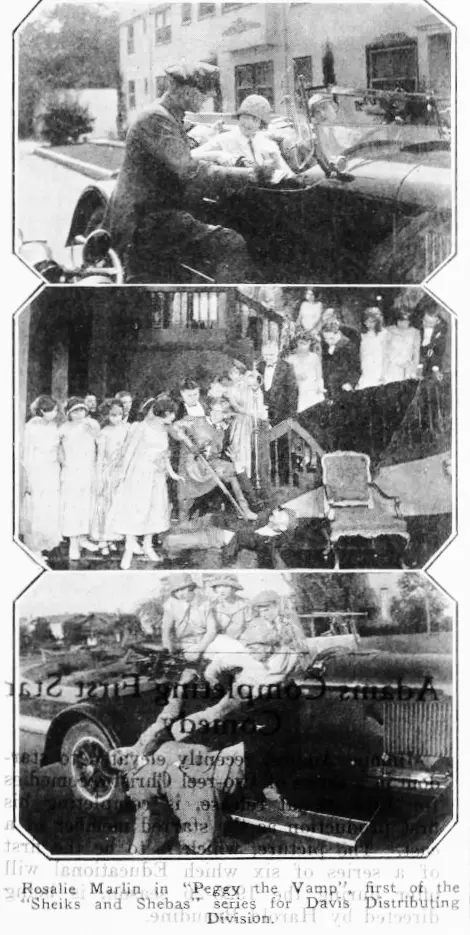
The writing credits for Peggy the Vamp include Pinto Colvig, who would later go on to be a legendary voice actor for Disney. You can see the seeds of that cartoonish energy here. The scenarios are built on a foundation of slapstick logic. When Peggy decides to treat men as 'playthings,' the script doesn't go for psychological depth; it goes for the jugular of social embarrassment.
The direction by the collective team is functional, focusing heavily on medium shots that allow the actors to use their full bodies for comedy. Unlike the grander scale of The Legion of Death, this film is intimate and confined to domestic and school settings. This claustrophobia actually helps the comedy, making Peggy’s grand theatrical gestures feel even more ridiculous in a mundane environment.
The pacing is frantic. While some silent films like Love's Boomerang take their time to build a romantic atmosphere, Peggy the Vamp moves with the speed of a freight train. This is a double-edged sword. While it keeps the energy high, it leaves little room for the emotional stakes to land. We don't really care about the 'flirtatious beau' because we barely know him before Peggy is already plotting his downfall.
Visually, the film is standard for 1923, but it uses lighting effectively during the 'vamping' sequences. There is a noticeable shift toward harsher shadows when Peggy is in her 'dark' persona. This visual shorthand was common in the era, but here it is used for comedic irony rather than genuine tension. The camera work is static, which was the norm, yet the framing of Peggy’s collection of beaus creates a sense of overwhelming chaos that suits the narrative.
In one particular scene, the camera captures Peggy surrounded by three different men, all vying for her attention. The way she navigates this space, using her newfound 'vamp' powers to keep them all at a distance, is a masterclass in silent blocking. It lacks the poetic grace of Unsühnbar, but it makes up for it with raw, energetic movement.
Cons:
Most critics would look at Peggy the Vamp as a simple morality play, but there is an unconventional undercurrent here. Peggy isn't just seeking revenge; she's discovering the joy of agency. Before she becomes a 'vamp,' she is reactive. After she adopts the persona, she is proactive. Even though the film frames this as a humorous mistake, there is a proto-feminist liberation in her decision to stop being the 'bored girlfriend' and start being the 'director' of her own romantic life.
This mirrors the energy of Women Men Forget, where the female lead must navigate a world that expects her to be invisible. Peggy chooses to be hyper-visible. It’s a bold move for a high schooler in 1923.
Peggy the Vamp is a jagged, energetic piece of 1920s ephemera. It doesn't have the sophisticated wit of A Gentleman of Leisure, nor does it have the dramatic weight of Number 17. However, it possesses a unique charm that comes from its meta-commentary. It is a film about movies, and how those movies bleed into our reality.
Rosaline Marlin is a delight, even if the script gives her little to do besides pout and pose. The film is a reminder that the struggle between 'who we are' and 'who the media tells us to be' is not a modern invention. It was happening in 1923, in grainy black and white, with just as much fervor as it happens on social media today. It’s a minor work, but a revealing one. Watch it for the history, stay for the hilariously bad advice on how to handle a cheating boyfriend.
IMDb —
1936
Community
Log in to comment.