DbcultAccessing Vault...
Cult Review
Senior Film Conservator
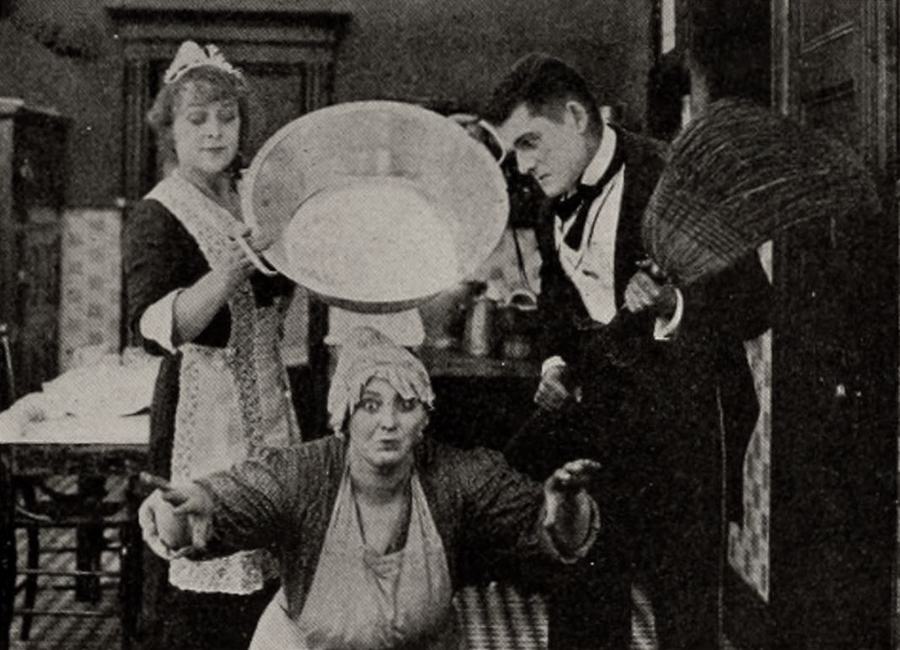
Seldom does a film from cinema’s infancy feel simultaneously like a brittle social caricature and a warm-blooded romp, yet Love’s Pilgrimage to America manages that improbable waltz. Shot in the bruised twilight of 1916, when Europe’s trenches were swallowing sons and America’s cities were inventing new ways to sell light, the picture arrives like a mislaced letter from a vanished civilization—genteel on the surface, carnivalesque underneath.
From the first iris-in, director Leslie T. Peacocke frames England as a country of manicured repression. Lulu’s bishop father, played with sanctimonious gusto by Hudson Liston, glides through candle-lit cloisters as though auditioning for a stained-glass window. Across the narrative moat, the Duke of Bilgewater (Joseph W. Girard) swaggers inside a castle where heraldic lions seem embarrassed by their owner’s bluster. The enmity between these patriarchs—never explained beyond “ancient grievance”—functions as the fairy-tale gearshift that catapults our lovers toward the Statue of Liberty’s deceptive torch.
Once the ocean liner dissolves into New York’s smoky docklands, the film’s palette—originally tinted lavender for English twilight—snaps into jaundiced amber, as though America itself were one gigantic gaslight. Cinematographer William Sloan relishes the visual punchline: Tom, top-hatted, clutching a suitcase of unsellable hagiographies, wanders past a Coney Island façade promising “SEE THE ELECTRIC CITY IN 5 MINUTES.” The gag lands harder because the camera refuses to nudge us; it merely records the absurdity of Old-World faith colliding with New-World appetite.
The Manhattan middle act is where the screenplay—co-written by Maie B. Havey, one of the era’s rare female scenarists—reveals its serrated edge. Lulu’s employment as a typewriter girl literalizes the commodification of women’s fingers, while Tom’s door-to-door martyrology route mocks masculine entrepreneurship. Adila Comer’s Lulu oscillates between porcelain determination and flustered rage; her eyes telegraph every indignity without the aid of intertitles. Conversely, Tom (Thomas Keeswald) carries the aristocratic hangdog charm of a man discovering that capitalism has little use for second sons unless they can hawk salvation.
The mansion sequence—where the lovers become scullery drudges under the lecherous employer who once fired Lulu—plays like a Marx Brothers takedown of Upstairs, Downstairs etiquette. When Tom upends the tureen, scalding bisque cascades over white tie and decency, a moment so perfectly timed that contemporary audiences reportedly yelped. Peacocke’s camera dollies back to reveal the grand dining table as a battlefield where soup becomes class warfare. Lulu’s whispered blackmail—her threat to unveil the master’s wandering hands to his wife—adds a feminist sting that feels startlingly modern.
The jailhouse detour, replete with striped-pajama slapstick, risks derailing the film’s emotional through-line, yet it inadvertently underscores America’s penchant for criminalizing poverty. Tom’s mugshot number—#127—flashes onscreen like a bureaucratic prophecy. One dissolve later, a telegram arrives announcing the Duke’s battlefield demise and Tom’s ascension to the title. The tonal whiplash—from chain-gang to coronation—should feel absurd, but in the giddy logic of silent melodrama it lands as cosmic punchline: destiny as Keystone chase.
Lulu Glaser—Broadway star making her celluloid debut—imbues the titular pilgrim with operatic transparency; every eyebrow arch registers like a exclamation mark in a silent sonnet. Opposite her, Keeswald eschews swashbuckling vanity for a gentler bewilderment, his shoulders perpetually shrugging toward an uncertain future. In supporting orbit, Mrs. A.C. Marston’s haughty Lady Mary supplies a delicious Prussian rigidity, while Henry Norman’s French chef preens like a Gallic rooster let loose in a henhouse of Anglo anxieties.
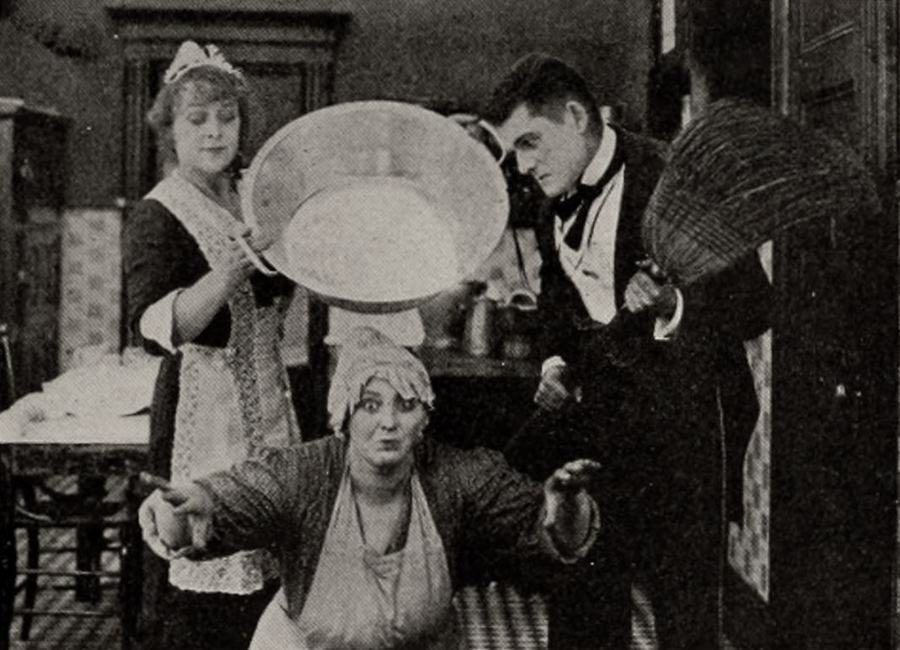
Unlike the pastoral romanticism of The Straight Road or the drawing-room fatalism of The Legacy of Happiness, this film bathes its American sequences in sulfuric yellows and bruised blues—colors chosen by the studio’s New York lab to evoke nickelodeon marquees. Interiors rely on single-source lighting, creating cavernous shadows that anticipate German Expressionism by half a decade. Note the scene where Lulu, clad in bell-boy drag, eavesdrops behind a hotel pillar: her silhouette elongates across the wallpaper like a noir phantom before noir existed.
For all its custard-pie frivolity, the narrative grants Lulu agency rare in 1916. She engineers their domestic employment, blackmails the master, and ultimately triggers Tom’s liberation by confronting the lawyer. The film refuses to punish her for transgressing social or sexual boundaries; instead, America’s chaos becomes the crucible that tempers her rebellion into authority. When she finally steps back into the English estate as duchess, her smile carries the steely satisfaction of someone who rewrote the rules mid-game.
Cinephiles may detect whispers of Mexico’s revolutionary disillusion or the anarchic coincidences found in A Motorcycle Adventure. Yet unlike those globe-trotting romps, Love’s Pilgrimage anchors its odyssey in emotional verity: love not as abstract virtue but as stubborn, adaptable, occasionally ridiculous practice.
Original exhibition reports mention a live orchestra segueing from Handel to cakewalk rhythms at each narrative pivot. Modern restorations often pair the film with jaunty piano, flattening its tonal complexity. I recommend curating a playlist that oscillates between Anglican hymns and early jazz—allow the collision to mirror the lovers’ cultural whiplash. The resulting dissonance resurrects the picture’s satirical heartbeat.
Even at a brisk five reels, the pacing stumbles during the hotel-servant montage, where repetitive pratfalls strain comedic momentum. Additionally, the deus-ex-inheritance resolution—though faithful to Victorian stage conventions—short-circuits the American class critique the film so meticulously constructs. One wishes the lovers could have conquered Manhattan on their own terms rather than retreating into hereditary fairy-tale. Yet perhaps that capitulation is the sharpest satire of all: even in the land of self-made myth, bloodline trumps bootstrap.
For decades the film languished in the Library of Congress’s paper-print archive until a 4K photochemical restoration debuted at Pordenone in 2019. Kino Lorber’s Blu-ray offers the tinted print, an audio commentary by yours truly, and a charming fragment of Glaser’s 1917 stage appearance as Peter Pan. Streamers can rent it on Criterion Channel under the banner “Silent Women Trailblazers,” nestled beside Qristine and In the Shadow.
Watching Love’s Pilgrimage to America today is akin to opening a tarnished locket and finding a hologram: quaint yet uncannily alive. It lampoons the ancestral absurdities that still ossify our social strata, while whispering that love—frail, foolish, embarrassingly resilient—can survive even the most sadistic plot twist fate (or screenwriters) devise. Grade it not on the curve of antiquity but on the audacity of its questions: Who gets to write your story? Who owns your labor? And if destiny hands you a dukedom, do you cash the check or torch the castle?
Verdict: 8.5/10 – A mischievous time-capsule that tickles the funny bone while needling the conscience. Perfect for date-night cinephiles, history buffs, and anyone who suspects that running away to America might still end in a surprise title deed.
IMDb 6.4
1929
Community
Log in to comment.