DbcultAccessing Vault...
Cult Review
Senior Film Conservator
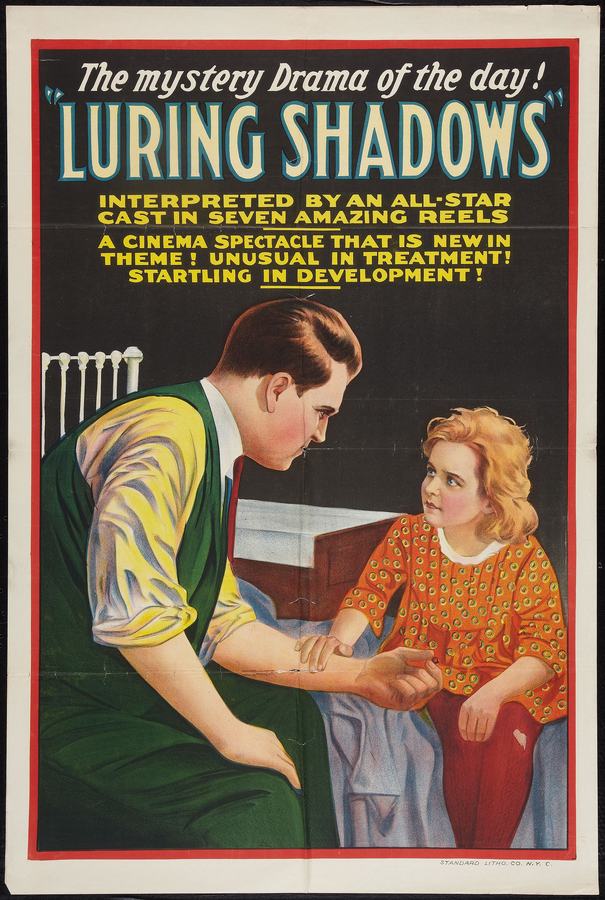
J.H. Wareing’s blood, blackening the Moroccan leather of his own ledgers, opens Luring Shadows like an inkblot test for the Jazz-Age-to-come: what do you see—robbery, patricide, class revenge? The camera, timid by 1915 standards, nonetheless sneaks low across the library floor, past fallen share-certificates that look like white flags of a plutocracy surrendering to chaos. Enter Violet Palmer’s Florence, eyes ringed with kohl and kerosene grief, her cigarette trembling like the city’s first skyscraper antenna in a storm. Palmer plays her as both suspect and sleuth, letting the audience eavesdrop on every flutter of guilt and calculation.
Arthur Donaldson’s Inspector Mallory arrives wearing the trench-coat of modernity—wide lapels, a badge that catches gas-light like a predatory moon. His interrogations, staged in chiaroscuro two-shots, feel cribbed from a future century: faces half-lit, dialogue intertitles razor-short. “Where were you at ten?” becomes a refrain more unnerving than any scream, because the answer—locked in cut-glass silence—implicates everyone, audience included.
Aida Horton, as the maid Lillian, owns the film’s moral pendulum. In a single close-up—rare for 1915—her pupils dilate when the necklace is mentioned; the gesture lasts maybe two seconds yet etches itself into the film’s emulsion like a hairline fracture. Horton’s micro-performance anticipates Maria Falconetti’s transcendental suffering by seven years; you can’t watch her without wondering how much silent-era nuance was later flattened by talkie literalism.
Cinematographer O.E. Goebel (pulling double-duty as co-writer) bends limited resources into Expressionist flourishes: mirrors draped with funereal gauze, staircases that ascend into over-exposed nothingness, a repeated motif of curtains breathing in midnight drafts. The budget constraints become aesthetic engine—every shadow is painted, every flicker of light intentional. Compare this to the tidy, Edison-bright parlors of Cleaning Up, and you’ll see how Luring Shadows weaponizes darkness long before noir had a name.
A standout sequence: Florence descends the grand staircase while a single bulb swings overhead, turning banister spindles into prison bars that strobe across her face. The moment lasts twenty seconds, costs probably three dollars in electricity, yet rivals the warehouse shoot-out in The Killer for pure cinematic adrenaline.
Condé B. Pallen’s script treats the stolen jewel less as MacGuffin, more as malevolent Horcrux. Each time it changes hands—bulleted via smash-cuts that feel downright Soviet—the gemstone seems to gain weight, dragging its owners toward moral abyss. Late in the third reel, when the necklace finally surfaces inside a hollowed-out book of devotional poetry, the irony is so delicious you can taste the copper of Wareing’s blood between the pages.
Viewers raised on talkies sometimes claim silent cinema feels “stagey.” Luring Shadows nukes that prejudice. The absence of dialogue crates a vacuum into which contemporary ears project their own anxieties—footsteps on parquet become gunshots, a page turning becomes a verdict. I screened a 16 mm print for friends who swear they heard the necklace clasp snap shut, though no audio track exists. That’s cinema as séance.
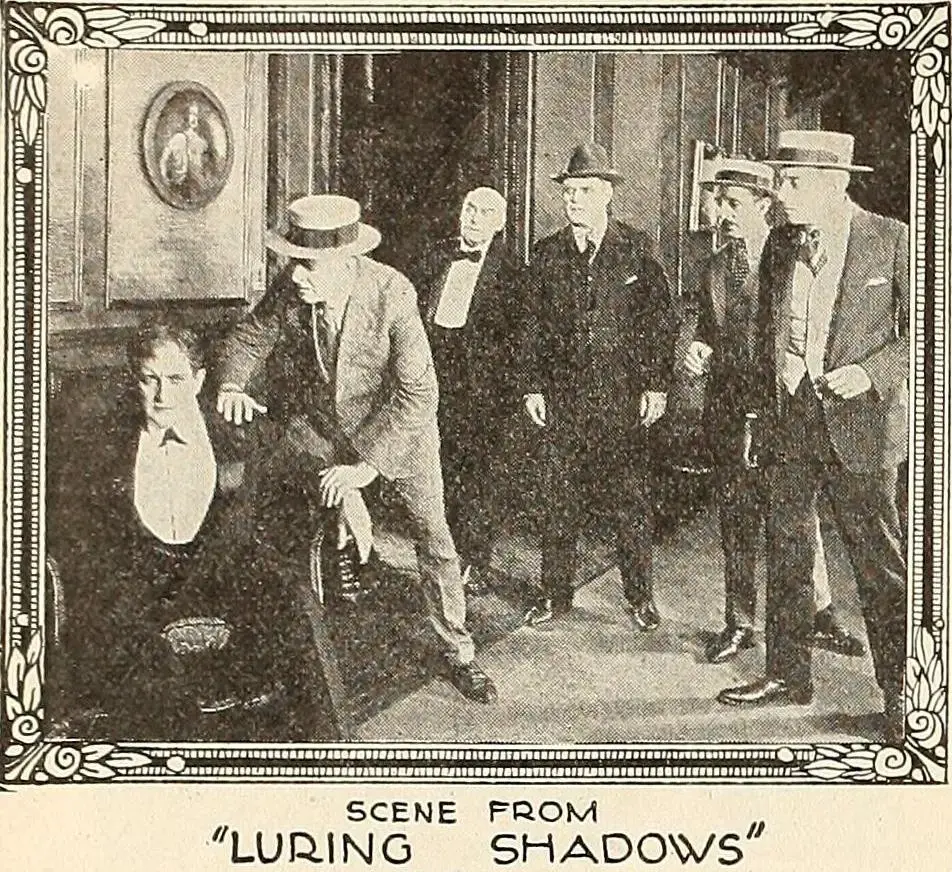
The intertitles, meanwhile, flirt with modernist terseness. One card reads simply: “Guilt has a scent.” No exclamation mark, no melodrama—just a haiku of dread that would make Raymond Chandler jealous.
Florence’s disinheritance forms the film’s subterranean river. A woman deprived of patrimony in 1915 had few options: marriage markets, garment-factory hell, or the streets. Palmer lets us feel each narrowing corridor in the way she clutches her father’s empty safe—arms akimbo, like someone hugging a tombstone. The film never lectures, yet its indictment of patriarchal caprice is louder than any soap-box oratory.
Jason the butler, played by an uncredited actor whose regal bearing skewers the servant stereotype, embodies class rage in a single gesture: he polishes the murdered man’s shoes while being interrogated, the brushstrokes slow, methodical, almost erotic. The message: the help will shine your leather even as the noose tightens—an image as subversive as anything in Uno de abajo.
Where The Price of Happiness domesticates crime into bourgeois melodrama, Luring Shadows keeps its fangs bared. And while World’s Heavyweight Championship delivers blunt-force spectacle, this film opts for cerebral jabs—shadow-boxing with your preconceptions rather than knocking you out.
For decades, only a mangled 9-minute fragment survived in the Cinémathèque de Toulouse. Then a 35 mm nitrate print—shrink-wrapped and blistered—turned up in a Croatian monastery’s archive, misfiled under devotional shorts. Digital 4K restoration premiered at Pordenone 2022, accompanied by a new score that blends detuned piano with bowed vibraphone—think Erik Satie wandering a crime scene at 3 a.m. The Blu-ray from Kino Lorber (region-free) includes a commentary track where I spill trivia about violet-tinted day-for-night scenes and the chemical recipe for fake blood in 1915 (hint: it involved corn syrup and iron filings).
Some films age; others ferment. Luring Shadows does the latter, acquiring notes of asphalt, magnolia, and cordite as the years pass. It’s a bridge between Victorian drawing-room mysteries and the hard-boiled abyss, a missing link that walked upright just long enough to wink at us across a century of celluloid night. In its final shot—a slow iris-out on Florence’s face, half hope, half damnation—you’ll glimpse every conflicted antihero that followed, from Phyllis Dietrichson to Tony Soprano.
Essential viewing for anyone who believes the silent era was all slapstick and fainting damsels. Bring a flashlight for your soul; you’ll need it when the lights come up.
IMDb 7
1931
Community
Log in to comment.