DbcultAccessing Vault...
Cult Review
Senior Film Conservator
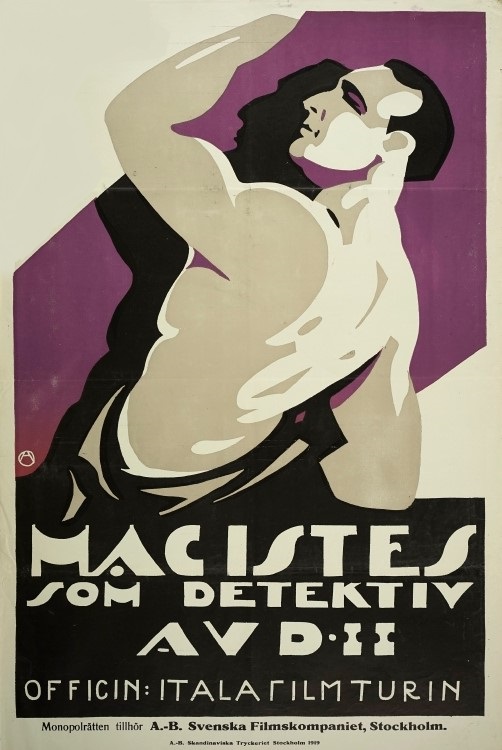
Ah, the silent era! A time of grand gestures, evocative chiaroscuro, and heroes cast in monumental molds. Among them, few figures loom as large, both literally and figuratively, as Maciste. In Maciste atleta, we are once again invited into the world of this iconic strongman, a character whose very essence embodies strength, justice, and an unwavering moral compass. This particular cinematic outing, though often overshadowed by its more fantastical brethren, offers a fascinating glimpse into the character's adaptability and the societal fascination with athletic prowess at the dawn of the 20th century. It’s a film that, despite its age, resonates with themes of integrity versus corruption, a timeless struggle that continues to captivate audiences.
The narrative thrust of Maciste atleta plunges our titular hero, masterfully brought to life by the imposing Bartolomeo Pagano, into a bustling urban landscape brimming with both spectacle and subterfuge. Pagano, whose physique alone was a testament to the character's power, effortlessly conveys Maciste's inherent goodness, a trait that stands in stark contrast to the film's antagonist. Here, the arena is not a mythical coliseum or a distant land, but a contemporary athletic circuit, a stage for both genuine achievement and insidious deceit. The film brilliantly uses this setting to explore the nascent commercialization of sport, a phenomenon that, even then, was ripe for exploitation. We witness the charismatic yet utterly ruthless Count Valerius, portrayed with a sinister charm by Ruggero Capodaglio, as he orchestrates a web of manipulation, turning athletic contests into a personal piggy bank. His schemes are not merely about winning; they are about control, about diminishing the spirit of fair play for monetary gain. This central conflict—the pure, unadulterated strength of Maciste against the calculating cunning of Valerius—forms the bedrock of the film's dramatic tension.
The introduction of Bianca, played by the spirited Italia Almirante-Manzini, serves as the catalyst for Maciste's involvement. Her family, victims of Valerius's unscrupulous tactics, represents the collateral damage of unchecked ambition. Bianca's plea for justice is not just a call to action for Maciste; it's an appeal to the audience's own sense of fairness. It highlights the vulnerability of the common person against powerful, corrupt forces, a theme that remains profoundly relevant. Maciste, initially a reluctant participant in what he might perceive as mere showmanship, is compelled by his innate sense of rectitude to intervene. This internal struggle—the hero's choice to engage with a world beneath his usual heroic scope—adds a layer of psychological depth to a character often celebrated primarily for his physical prowess. Giulio Andreotti's role, likely as one of Valerius's conniving lieutenants, further solidifies the antagonist's elaborate network of deceit, making Maciste's task seem all the more daunting.
As a silent film, Maciste atleta relies heavily on visual storytelling, and in this regard, it largely succeeds. The cinematography, while perhaps not groundbreaking for its time, effectively captures the spectacle of the athletic events. Close-ups on Maciste's strained muscles during his incredible feats convey the sheer effort involved, drawing the audience into the physical challenge. The staging of the competitions themselves is often quite dynamic, utilizing the depth of the frame to showcase multiple layers of action – the central strongman, the reactions of the crowd, and the scheming glances of Valerius and his associates. The use of intertitles is judicious, providing necessary exposition without bogging down the visual flow. One can appreciate the filmmakers' understanding that Maciste's appeal lay not just in his strength, but in the dramatic tension created by pitting that strength against seemingly insurmountable odds.
The performances, as is typical of the era, are often broad and theatrical, yet effective. Bartolomeo Pagano, with his imposing stature and expressive face, embodies Maciste with a quiet dignity that transcends the need for dialogue. His gestures are purposeful, his gaze resolute, communicating volumes about his character's unwavering conviction. Capodaglio, conversely, revels in his villainy, his smirks and furtive glances painting a clear picture of his malevolent intentions. Almirante-Manzini brings a necessary emotional core, her distress and hope serving as a relatable entry point for the audience. The ensemble cast works in concert to create a vibrant, albeit corrupt, world that Maciste must navigate. The film's visual style, while adhering to the conventions of early cinema, still manages to create moments of genuine excitement and dramatic impact, particularly during the climactic athletic showdowns.
Maciste, as an archetype, is fascinating because he is both a man of his time and a timeless figure. He represents the triumph of good over evil, brute force tempered by an unshakeable moral code. In Maciste atleta, this archetype is placed in a more grounded, albeit still heightened, reality. This shift from the fantastical settings of some Maciste films to a more contemporary athletic arena highlights the character's versatility and enduring appeal across different genres and narrative contexts. He is, in many ways, an early precursor to the modern action hero, a figure whose physical capabilities are matched only by his ethical fortitude.
Comparing Maciste atleta to other films of its era reveals both its unique qualities and its participation in broader cinematic trends. While films like Eternal Love might delve into the intricacies of romantic melodrama, Maciste atleta firmly plants itself in the realm of action and moral allegory. It shares thematic resonance with films exploring justice and societal ills, such as A Boy and the Law, though Maciste's approach is one of direct, physical intervention rather than legal maneuvering. The struggle against a corrupt system, evident in the film's depiction of Valerius's schemes, can also be seen mirrored in the broader social commentary sometimes found in films like A Modern Monte Cristo, where individuals often fight against overwhelming odds to right wrongs. However, Maciste's method is distinctly his own: an unyielding display of physical and moral power that leaves no room for ambiguity.
The film also subtly touches upon the idea of performance and spectacle, much like Balletdanserinden might explore the world of dance. Here, Maciste's athletic feats are a performance, but one imbued with genuine stakes and moral purpose, contrasting sharply with Valerius's fraudulent showmanship. This dichotomy between authentic skill and deceptive display forms a crucial undercurrent of the narrative. The climax of the film, where Maciste must not only win but also expose the intricate cheating mechanisms, is a masterclass in building tension through visual means. It’s a moment of collective revelation, where the audience, along with the on-screen crowd, comes to understand the true nature of the villain and the unassailable integrity of the hero. This public vindication is deeply satisfying, an emotional payoff that transcends the simple outcome of an athletic contest.
Ultimately, Maciste atleta stands as a testament to the enduring appeal of its central character and the straightforward, yet potent, storytelling of the silent era. It eschews the more mystical elements sometimes associated with Maciste, grounding him instead in a battle against human venality and corruption. This grounding makes his heroism all the more relatable, demonstrating that even in a world devoid of mythical beasts or ancient curses, there are still profound battles to be fought, and heroes needed to fight them. The film’s strength lies in its clarity of purpose and its unwavering belief in the power of moral integrity, personified by Maciste.
One cannot discuss Maciste without acknowledging the profound cultural impact of Bartolomeo Pagano's portrayal. He wasn't just an actor; he was the living embodiment of a cultural phenomenon, a symbol of Italian strength and virtue. His performances, particularly in films like Maciste atleta, cemented the character's place in cinematic history, inspiring countless imitations and continuing to resonate with audiences who appreciate tales of unambiguous heroism. The film, therefore, is not merely an entertaining strongman spectacle; it is a historical artifact, a window into the values and entertainment sensibilities of its time, while simultaneously offering a narrative that remains universally engaging. It reminds us that sometimes, the simplest stories—those of good versus evil, strength versus deceit—are the most powerful and enduring. Its influence, though perhaps not as overtly discussed as some other silent epics, is undeniable in the lineage of action cinema and the enduring fascination with the physically formidable, morally upright hero. The film captures a particular zeitgeist, where physical prowess was seen not just as entertainment, but as an expression of national character and individual virtue. This makes Maciste atleta a valuable piece of cinematic heritage, deserving of continued study and appreciation.
The themes explored here, such as the purity of sport corrupted by greed, are not unique to this specific film. We see echoes of such struggles in various forms across cinematic history, from documentaries about athletic scandals to fictionalized dramas. However, Maciste atleta tackles these issues with a directness and a moral clarity that is characteristic of its era. It's a morality play wrapped in an action spectacle, and it performs both functions admirably. The enduring image of Maciste, standing tall against injustice, remains a powerful one, a beacon of strength and integrity in a world that often seems to lack both. The sheer physical presence of Pagano, combined with the clear narrative arc, ensures that the film leaves a lasting impression, a testament to the fact that even without spoken words, a compelling story and a powerful hero can transcend time and language. This film is more than just a historical curiosity; it is a vibrant, engaging piece of storytelling that speaks to universal human experiences and desires for justice. Its continued relevance lies in its ability to inspire and entertain, proving that true strength comes not just from muscle, but from an unyielding spirit.
IMDb —
1933
Community
Log in to comment.