DbcultAccessing Vault...
Cult Review
Senior Film Conservator
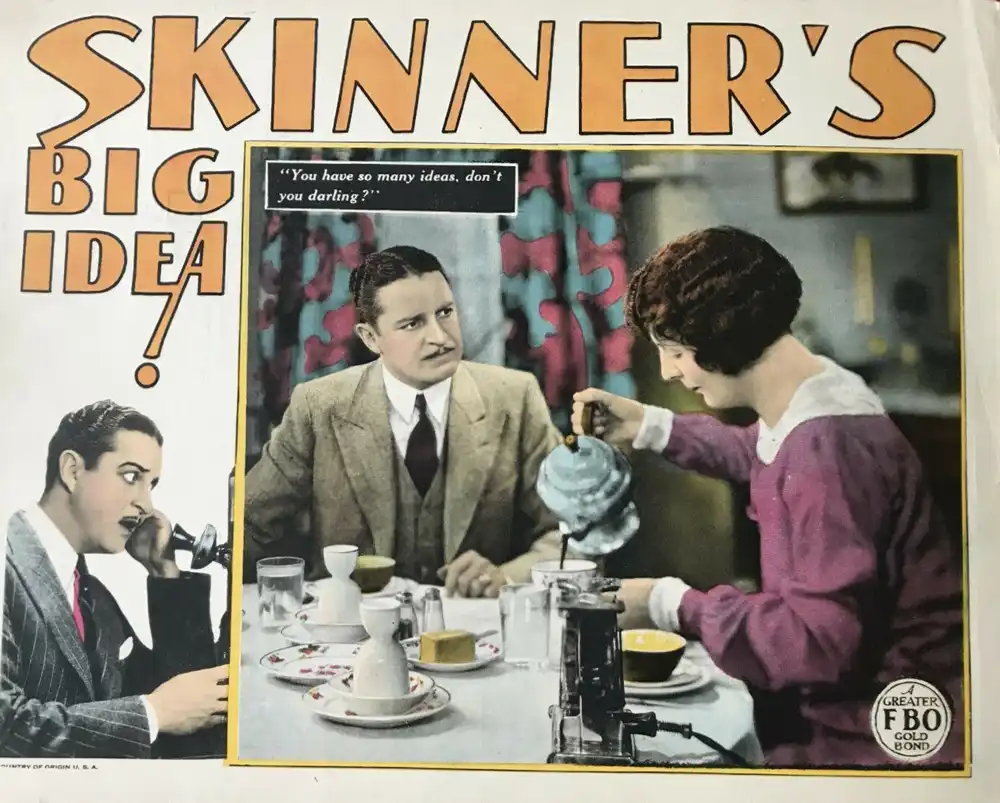
If you have ever sat through a modern corporate HR seminar about 'synergy' or 'pivoting,' you might find Skinner's Big Idea (1928) surprisingly triggering. It is a movie about the terror of being old in an office. It’s worth a watch if you’re into the niche world of late-silent-era comedies that aren’t trying to be slapstick masterpieces, but if you’re looking for the visual wit of Buster Keaton, you’re going to be bored out of your mind. It’s a movie for people who like looking at 1920s furniture and thinking about how little work actually gets done in movies about 'business.'
The premise is basically gaslighting as a management strategy. Bryant Washburn plays Skinner, a guy who is told by his boss that the 'old guard'—three guys who have been there forever—need to be put out to pasture. Instead of firing them, Skinner decides to give them a makeover. He tells them they’re being promoted to a fake 'special department' and convinces them to start dressing like college kids and acting 'peppy.' It’s meant to be heartwarming, I think, but there is something deeply uncomfortable about watching three elderly men try to act like they’re twenty years younger just to keep a paycheck.
James Bradbury Sr., Robert Dudley, and William Orlamond play the three old-timers. They are easily the best part of the movie because they look like they wandered in from a completely different, much grittier film. Their faces are maps of the 19th century. There’s a scene early on where they’re just sitting at their desks, and the way they move—slow, deliberate, slightly creaky—feels more real than anything else in the plot. Then Skinner comes in with his 'big idea,' and the movie forces them into these ridiculous outfits. One of them ends up in a suit that looks two sizes too small, and the visual is more sad than funny.
The pacing is… well, it’s a late silent. It takes a long time to get anywhere. There is a sequence involving a gymnasium that feels like it lasts for an eternity. You get the sense that the director, Claude Mitchell, just liked the look of the exercise equipment. We watch them struggle with weights and rowing machines, and while it’s supposed to show their 'rejuvenation,' the camera just lingers on their exhaustion. It’s one of those moments where the movie tries to convince you something funny is happening, but the silence of the medium makes it feel strangely heavy.
Martha Sleeper is in this, too, playing Skinner’s wife. She’s fine, but she doesn't have much to do besides look supportive and occasionally surprised. She has this one reaction shot when Skinner explains his plan where she looks genuinely confused, and I couldn’t tell if it was her character or if she was just trying to follow the logic of the script. It reminded me a bit of the energy in Stage Struck, where the domestic scenes feel like they’re just there to pad the runtime between the 'actual' plot points.
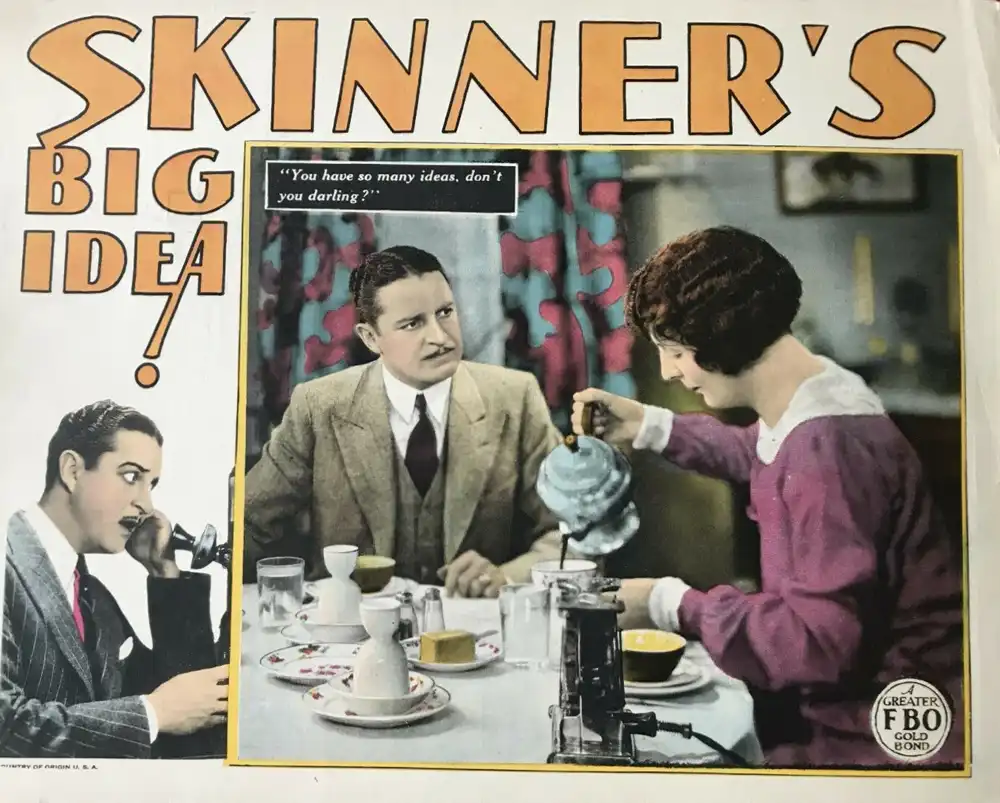
There’s a weirdly specific focus on the office doors. The movie loves showing people walking through doors, closing them, and then leaning against them to think. The sets are very 'stagey.' You can tell where the walls end and the studio rafters begin if you look at the top of the frame during the wide shots. The lighting is flat, which makes the makeup on the older actors look a bit cakey. In some shots, the 'rejuvenated' versions of the men look like they’ve been dipped in flour to hide their wrinkles, which only makes them look more ghostly.
I kept thinking about The Man Who Played God while watching this, mostly because of the weird power dynamics. Skinner is playing God with these men's lives, and the movie treats it like a lighthearted prank. There is a scene toward the end where the big boss comes back and sees the 'new' old men, and the way the camera cuts between the boss's shocked face and the men trying to look 'athletic' is actually pretty well-timed. It’s one of the few moments where the editing feels sharp.
The dialogue titles are incredibly wordy. Sometimes you’re reading a full paragraph of corporate jargon just to get to a simple joke. It slows everything down. By the time you finish reading what Skinner is saying about 'reorganizing the efficiency of the veteran staff,' you’ve forgotten what the actors were doing with their hands. It’s the opposite of the visual storytelling you see in something like Hot Heels, which moves with a lot more grace.
One thing that stuck with me is the background extras in the office. There’s a girl in the back of one scene who is supposed to be typing, but she’s clearly just hitting the same three keys over and over again while staring at the back of Bryant Washburn’s head. Once you notice her, it’s hard to look at anything else. It’s that kind of movie—the little mistakes are more interesting than the main story.
Is it a 'lost gem'? No. It’s a B-side. It’s a movie that probably played on the bottom half of a double bill and everyone forgot about it by the time they hit the sidewalk. But there is a charm to its clumsiness. It captures a very specific 1920s obsession with 'vitality' and 'youth' that feels like the ancestor of modern self-help culture. It’s a bit cynical, a bit sweet, and mostly just a weird artifact of a time when people thought a new suit and a haircut could solve the problem of aging.
The ending is rushed, as these things often are. Everything gets resolved in about three minutes of frantic title cards and handshaking. You don’t really feel like Skinner learned anything, and the old men are basically just back where they started, only now they’re wearing louder ties. It’s an odd little film that feels like it was made by people who were very tired but trying very hard to look energetic. Which, I guess, fits the theme perfectly.
IMDb 8
1924
Community
Log in to comment.