DbcultAccessing Vault...
Cult Review
Senior Film Conservator
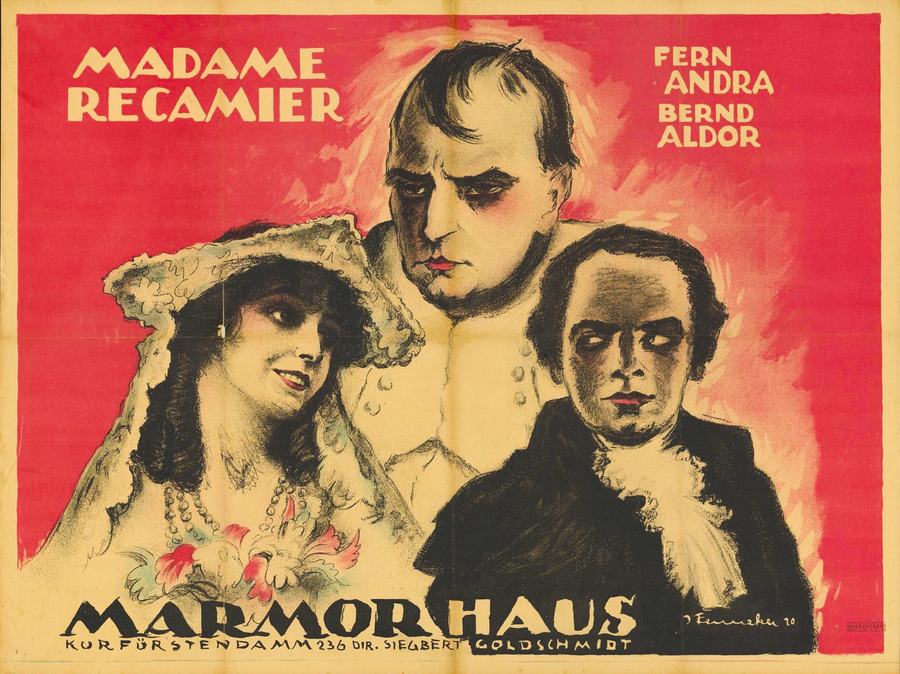
There are certain cinematic experiences that transcend mere storytelling, evolving into a profound meditation on an era, a personality, or the very essence of human resilience. Hans Gaus's 1920 silent epic, Madame Récamier, is precisely such a film. It isn't just a historical drama; it's a meticulously crafted period piece that attempts to capture the ineffable grace and formidable intellect of one of history's most compelling figures. In an age of burgeoning visual spectacle, Gaus and his collaborators dared to delve into the subtle power dynamics of a woman who wielded influence not through overt political maneuvering, but through an unparalleled command of social grace and intellectual salon culture.
From its opening frames, one is immediately transported to the opulent yet politically charged atmosphere of early 19th-century Paris. The film, a grand undertaking for its time, establishes a visual language that is both sumptuous and evocative. We are introduced to Juliette Récamier, portrayed with captivating intensity by Fern Andra, whose very presence commands the screen. Andra, known for her magnetic screen persona, embodies Récamier not just as a beauty, but as a woman of profound inner strength and an almost ethereal calm amidst surrounding chaos. Her performance is a masterclass in silent acting, conveying volumes with a mere glance, a subtle shift in posture, or the delicate tremor of a hand.
The narrative, while perhaps taking liberties with strict historical accuracy for dramatic effect, brilliantly illuminates the intricate social web Récamier navigated. Married to a considerably older and wealthy banker, the film portrays her initial existence as one of gilded confinement. Yet, it quickly pivots to showcase her transformation of this constraint into a platform for intellectual and cultural exchange. Her salon becomes a sanctuary for artists, philosophers, and even political dissidents—a vibrant counterpoint to the increasingly authoritarian grip of Napoleon's regime. The film subtly explores the inherent dangers of such a position; to be a woman of influence in a world dominated by men and burgeoning imperial ambition was to walk a tightrope, every step scrutinized, every word weighed. It's a fascinating look at how personal spaces could become battlegrounds for ideas, even without direct confrontation.
The ensemble cast surrounding Andra contributes significantly to the film's rich tapestry. Albert Steinrück, as a formidable and often menacing statesman, provides a compelling antagonist, embodying the rigid, unforgiving power structure that seeks to control Récamier's independent spirit. His presence is a stark, almost monolithic counterpoint to Andra's nuanced portrayal. Similarly, Boris Michailow and Adolf E. Licho, in their respective roles, paint vivid portraits of the various strata of society that orbited Récamier's world, from admiring intellectuals to calculating opportunists. The interplay between these characters, often conveyed through intense glances and subtle gestures rather than dialogue, is a testament to the sophistication of silent film acting when executed with such precision. One might even draw parallels to the intricate societal dances depicted in other period pieces of the era, such as The Dwelling Place of Light, where social ambition and class distinctions similarly drive much of the dramatic tension.
What truly elevates Madame Récamier is Fern Andra's performance. She doesn't merely play Récamier; she channels her essence. The iconic pose, immortalized in Jacques-Louis David's painting, is not just replicated but imbued with a living, breathing defiance. Andra's Récamier is not passive; her serenity is an active choice, a shield against a world attempting to dictate her terms. Her relationships, particularly those with figures like the idealistic artist (perhaps played by Bernd Aldor or Emil Rameau, bringing youthful fervor to the proceedings) and the more pragmatic, older admirers, are rendered with a delicate emotional complexity. We see the toll of her public persona, the personal sacrifices made to maintain a semblance of control over her destiny. This emotional depth is crucial, preventing the film from becoming a mere historical pageant. It grounds the grandeur in relatable human experience, reminding us that even icons grapple with loneliness, desire, and the pangs of unfulfilled longing.
Hans Gaus, as the writer, crafted a narrative that, despite the lack of spoken dialogue, feels remarkably verbose in its thematic scope. The screenplay deftly navigates the personal and political, showing how Récamier’s personal choices—her friendships, her refusal to conform, her eventual exile—were inextricably linked to the broader historical currents of her time. The film’s strength lies in its ability to tell a story of quiet rebellion, of a woman who, through sheer force of character and intellect, resisted the crushing weight of authoritarianism. This thematic resonance echoes in other narratives of strong female protagonists facing societal pressures, such as in The Scarlet Woman, where a woman's agency is similarly challenged by societal judgment.
Visually, the film is a triumph. The set designs are lavish, recreating the neoclassical elegance of the period with painstaking detail. The costumes are exquisite, each garment a work of art in itself, further immersing the viewer in Récamier's world. The cinematography, while constrained by the technology of its era, often achieves moments of breathtaking beauty and dramatic impact. The use of light and shadow, a hallmark of silent cinema, is particularly effective in conveying mood and character psychology. Close-ups of Andra’s face, for instance, are often bathed in a soft glow, emphasizing her ethereal quality, while scenes of political intrigue are rendered with sharper contrasts, reflecting the harsh realities of power. The visual storytelling here is so robust that it rarely feels the absence of sound, a testament to the director's vision and the technical prowess of the crew.
The direction of Madame Récamier is a masterclass in silent film pacing and emotional articulation. Scenes transition fluidly, building momentum and tension without ever feeling rushed or disjointed. The use of intertitles is judicious, providing necessary exposition without interrupting the visual flow. Gaus understands that the power of silent cinema lies in its ability to evoke, to suggest, rather than to explicitly state. He trusts his audience to interpret the nuances of performance and visual cues, creating a more immersive and intellectually engaging experience. This directorial confidence is something one appreciates retrospectively, understanding the challenges of crafting such a sprawling narrative without the crutch of dialogue. It requires a singular vision, much like the compelling narratives found in films such as Krähen fliegen um den Turm, which similarly relies on strong visual storytelling to convey complex themes.
What ultimately resonates about Madame Récamier is its profound exploration of influence. Juliette Récamier's power was not derived from a title or a political office, but from her intellect, her charm, and her unwavering commitment to fostering a space for independent thought. In an era where women were often relegated to domesticity or reduced to mere decorative figures, she carved out a significant public sphere, asserting her agency through cultural curation. The film deftly portrays the delicate balance she maintained, always on the precipice of political disfavor, yet always retaining a core of unyielding dignity. It’s a powerful narrative about how soft power, wielded with grace and intelligence, can be just as impactful, if not more so, than overt displays of force.
The supporting performances further enrich this narrative. Hermann Böttcher, Ferdinand von Alten, and Walter Formes, among others, contribute to the vibrant tapestry of characters that populate Récamier's world. Each actor, through their nuanced gestures and expressions, helps to build a believable and dynamic social environment. From the earnest admirer to the cynical observer, their collective presence paints a comprehensive picture of the Parisian elite and its undercurrents. Even minor roles, such as those played by Johanna Mund and Else Wasa, add texture and authenticity to the bustling salon scenes, making the world feel fully realized. This commitment to a rich ensemble is crucial for historical dramas seeking to recreate a bygone era, much like the intricate character work seen in Rio Grande, though in a vastly different setting.
Revisiting Madame Récamier today, one is struck not only by its historical significance as a piece of early cinema but also by its enduring thematic relevance. In an age where public figures are constantly scrutinized and personal lives often become political battlegrounds, Récamier's story of maintaining integrity and influence against formidable odds continues to resonate. The film asks profound questions about the nature of power, the role of beauty, and the courage required to live authentically in a world that constantly demands conformity. It's a poignant reminder that true strength often lies not in overt aggression, but in an unshakeable inner conviction and the ability to inspire others through intellect and grace. This exploration of personal integrity in the face of external pressures can be seen in other films of its time, such as The Hidden Scar, which similarly delves into the complex choices individuals make when confronted with societal judgment.
The contribution of Hans Gaus as a writer to this cinematic endeavor cannot be overstated. His ability to distill the complex life and times of Juliette Récamier into a compelling, silent narrative is a testament to his storytelling prowess. He understood the nuances of character development and plot progression required to sustain audience engagement without dialogue, relying instead on visual cues and the power of performance. This skillful adaptation of historical material into a dramatic arc is a hallmark of good writing, regardless of the medium. The careful crafting of the narrative ensures that every scene, every interaction, serves a purpose, propelling the story forward while deepening our understanding of the characters and their motivations. In this regard, it shares a certain narrative precision with films like Go and Get It, which, despite its different genre, also showcases tight, purposeful storytelling.
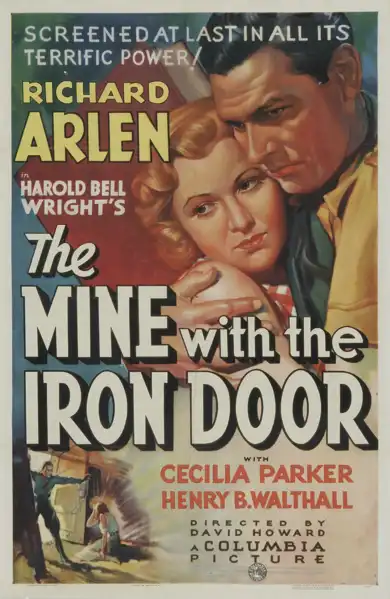
In conclusion, Madame Récamier is more than just a historical drama; it is a meticulously crafted character study, a visual feast, and a poignant commentary on the enduring power of the human spirit. Fern Andra’s iconic portrayal, supported by a strong ensemble and Gaus’s intelligent screenplay, ensures that this silent film remains a compelling and relevant piece of cinematic art. It invites us to look beyond the surface, to appreciate the quiet strength that can shape history, and to remember a woman who, through her grace and defiance, became an indelible legend. For those interested in the rich tapestry of early 20th-century cinema and the compelling narratives it produced, this film is an absolute must-see, offering a glimpse into a world both distant and surprisingly resonant with our own. Its exploration of personal and political struggles, and the resilience required to navigate them, makes it a timeless classic, a cinematic achievement that continues to captivate and inspire audiences almost a century after its release. It stands as a testament to the fact that compelling storytelling, regardless of the technological era, will always find its audience and leave a lasting impression, much like the enduring appeal of films such as The Littlest Rebel or Sandy, each captivating in their own distinct ways. The intricate dance between historical context and individual agency is beautifully rendered, making Madame Récamier a truly remarkable cinematic achievement that deserves to be rediscovered and celebrated by new generations of film enthusiasts.
The film’s exploration of societal expectations and the quiet rebellion against them is particularly striking. Juliette Récamier, as depicted by Andra, is not a firebrand revolutionary, but a woman who understands the subtle art of resistance. Her salon, rather than a place of overt political conspiracy, is a space where ideas can breathe, where intellect can flourish, and where the human spirit can find solace amidst a world increasingly constrained by authoritarian rule. This nuanced portrayal of defiance through cultural and intellectual means adds layers of depth to the narrative, making it a sophisticated study of power dynamics. It’s a powerful reminder that influence can be wielded in many forms, and that sometimes, the most profound changes begin with a quiet assertion of one’s identity and values. The film encourages viewers to consider the various ways individuals throughout history have pushed against the boundaries of their circumstances, a theme that resonates deeply and elevates Madame Récamier beyond a simple period piece into a timeless commentary on human freedom and expression. The subtle yet potent portrayal of these struggles makes it an invaluable watch for anyone interested in the intersection of personal narrative and grand historical events. In essence, it captures the spirit of an era through the lens of one extraordinary woman's journey, leaving a lasting impression that continues to spark conversation and admiration.
IMDb —
1924
Community
Log in to comment.