DbcultAccessing Vault...
Cult Review
Senior Film Conservator

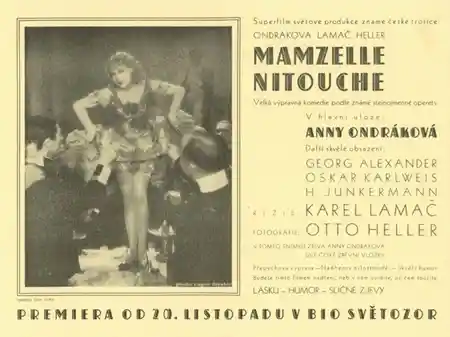
Alright, so if you're into those slightly silly, totally charming old operetta films, then Mamsell Nitouche might just be a little treat for you. It's definitely not for everyone, mind you. If your idea of a good time at the movies involves car chases or deep philosophical musings, then, yeah, you'll probably hate it. But for a Sunday afternoon, with a cup of tea, it’s a surprisingly engaging little piece of fluff that’s worth a look for film history buffs or just folks who like their comedies light and full of misunderstandings. ☕
The story follows Denise, a girl who’s lived her whole life in a convent. She’s super innocent, ready to be married off. Her organist, Célestin (played by Oskar Karlweis), is supposed to take her home. But, get this, Célestin has a whole secret life! He's actually a successful operetta composer known as Floridor. Naturally, chaos ensues when these two very different worlds collide.
What really works here is Anny Ondra as Denise. She's got this amazing innocence but also a mischievous twinkle in her eye. You believe she's been in a convent, yet she adapts to the outside world with such surprising speed. There's a scene where she first experiences a proper theatre, and her reactions are just priceless. She bounces between wide-eyed wonder and utter delight, it's really quite infectious. ✨
Oskar Karlweis as Célestin/Floridor? Oh, he's just delightful. He manages to be both the bumbling, anxious organist and the slightly more suave (but still awkward) composer. The way he tries to keep his two lives separate, constantly running between the convent and the theatre, leads to some truly funny moments. You can almost feel his sweat trying to keep the charade going. It’s a physical performance, you know?

There's a bit where Célestin has to conduct his own operetta, but he’s also trying to sneak back to the convent without being noticed. The quick changes, the whispered instructions, the panicked glances – it’s all very well-timed. It’s not laugh-out-loud slapstick, but more of a gentle, knowing chuckle.
The pacing, well, it’s a 1930s film. So, it takes its sweet time getting where it needs to go. There are moments that feel a touch drawn out, especially early on when they're just setting up the convent life. But once Denise and Célestin are out in the world, things pick up. The energy just shifts, suddenly there's a buzz. It's like the film itself wakes up.
The musical numbers are, you know, typical operetta stuff. Catchy, light, not super deep, but they fit the mood. The singing is pretty good, though sometimes the sound quality feels a bit… vintage. It’s part of the charm, though, you gotta lean into it.
One odd thing: the general's moustache. It’s just so perfectly *comical*. Every time he’s on screen, I couldn’t help but notice it. It’s these small, sometimes silly, details that really make these older films pop. They weren’t going for realism, they were going for a *vibe*.
The plot, with all its mistaken identities and lovers chasing the wrong people, is pretty standard fare for this type of story. But it's executed with a kind of earnestness that makes it hard not to root for everyone, even when they're making absolutely terrible decisions. You just want them all to find their happy ending, no matter how convoluted the path.
I also liked how the film kind of gently poked fun at the rigidness of convent life versus the free-spirited world of the theatre. It’s not a harsh critique, just a playful contrast. Denise's journey is really the heart of it all. Watching her blossom, even with all the silliness around her, is quite sweet. ❤️
So, yeah, if you're in the mood for something light, a bit old-fashioned, and full of musical misunderstandings, Mamsell Nitouche delivers. It's a charming little escape. Don’t expect too much, and you might find yourself surprisingly delighted.
IMDb —
1916
Community
Log in to comment.