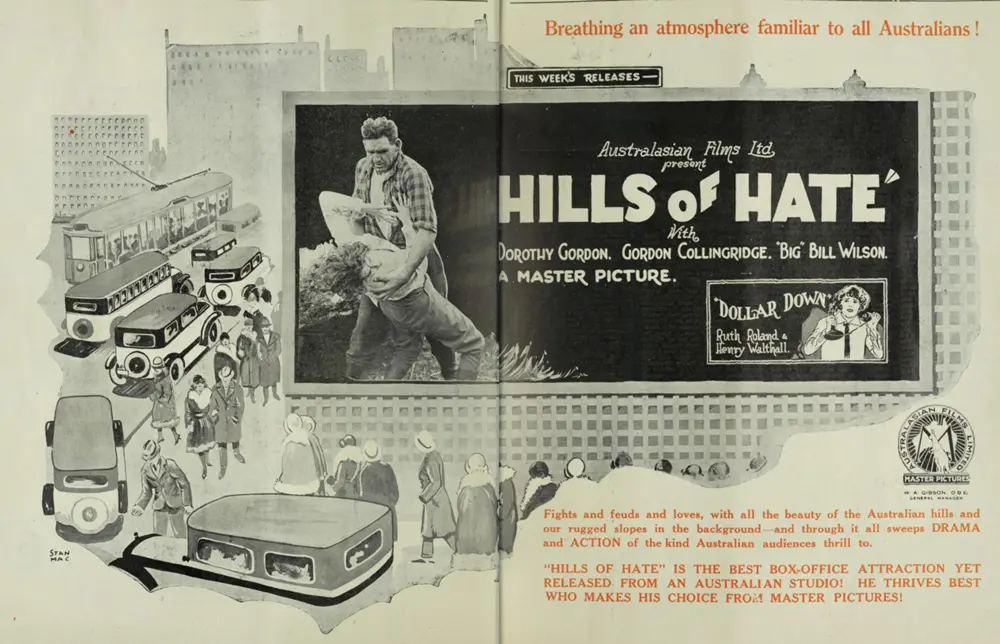
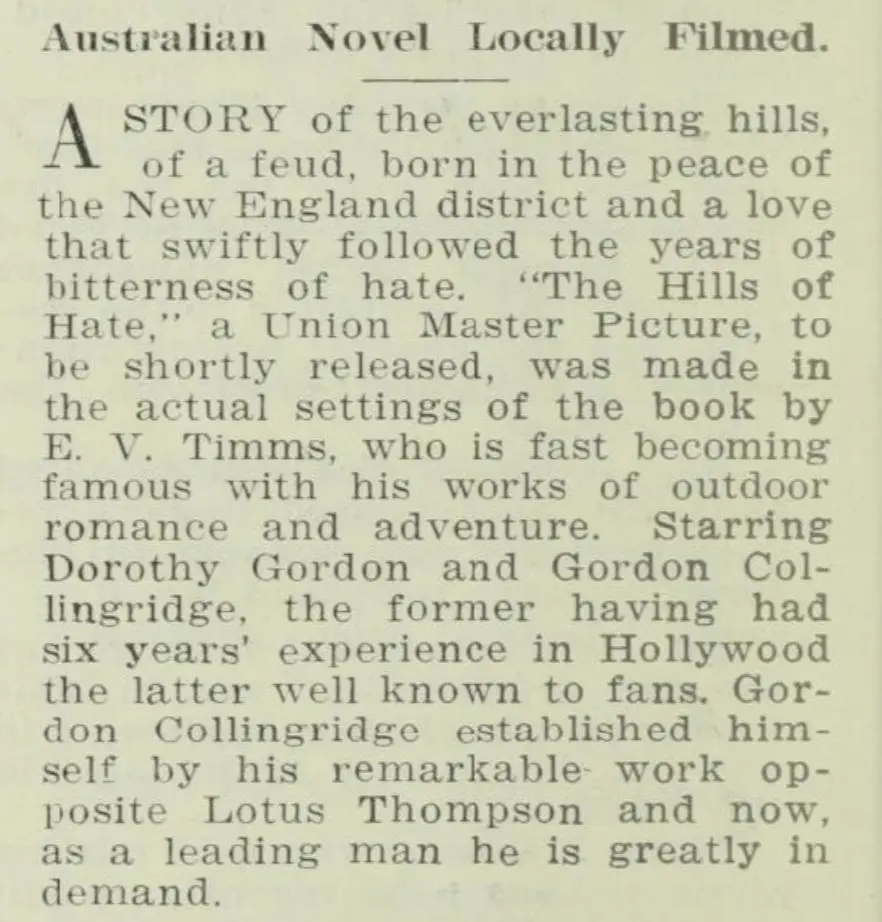
Is Hills of Hate (1926) worth watching today? Short answer: for the dedicated silent film enthusiast and cinematic archaeologist, absolutely. For the casual viewer accustomed to modern pacing and narrative clarity, probably not.
This rarely seen British production is an essential, if challenging, artifact for cinephiles and historians keen on understanding the nascent stages of national cinema. It is decidedly not for those seeking a fast-paced, easily digestible narrative or high-fidelity restoration.
Lost films carry a mystique, a promise of unearthed treasures, and while Hills of Hate might not be a lost masterpiece, it is undeniably a significant piece of cinematic history. Its existence alone speaks volumes about the vibrant, if often unheralded, film industry of the 1920s.
This film works because: it offers a rare, unfiltered glimpse into the storytelling conventions and social anxieties of early 20th-century rural Britain, delivered with a raw, earnest energy often missing in more polished productions. Its atmospheric setting and committed performances, however rudimentary by today’s standards, possess an undeniable primal power.
This film fails because: its narrative can feel rudimentary and predictable, its pacing deliberate to a fault, and its technical limitations stark, demanding significant interpretive effort and patience from the viewer. The melodrama, while authentic to its era, might alienate modern sensibilities.
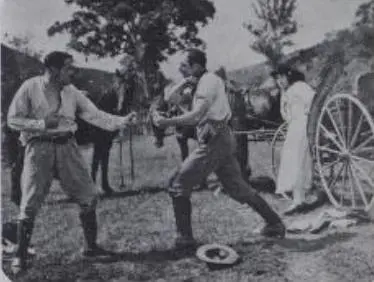
Scene from Hills of Hate
Cinematic perspective: Exploring the visual vocabulary of Hills of Hate (1926) through its definitive frames.
You should watch it if: you possess a genuine passion for silent cinema, enjoy historical reconstruction through film, or are specifically researching early British dramatic works. It’s a compelling case study in the evolution of cinematic language, even if it’s not a film you’d recommend for a Friday night popcorn flick.
A Glimpse into the Past: Plot & Themes
The scant details surrounding Hills of Hate necessitate a critical interpretation rather than a straightforward summary. The title itself is a potent signifier, immediately conjuring images of deep-seated animosity, likely rooted in land disputes or generational feuds within an isolated, rural community. This was a common trope in early cinema, where the starkness of nature often mirrored the harshness of human conflict.
One can infer a classic silent-era melodrama: a budding romance between Dorothy Gordon’s character, perhaps a symbol of innocence or reconciliation, and Gordon Collingridge’s, likely the earnest, heroic figure. Their love would inevitably be threatened by the titular 'hate,' personified by 'Big' Bill Wilson, whose very name suggests a formidable, perhaps intimidating, presence.
The narrative, though simple, seems to explore themes of inherited grudges, the struggle for property or survival, and the enduring human capacity for both vengeance and forgiveness. The 'hills' are not just a backdrop; they are an active character, silently observing and perhaps even influencing the fates of the inhabitants, their contours etched with the history of conflict.
It's a story that, despite its age, touches upon universal human struggles – the desire for peace, the burden of history, and the often-futile attempts to escape the shadows of the past. The stakes, while perhaps provincial, feel deeply personal and immediate to the characters involved.
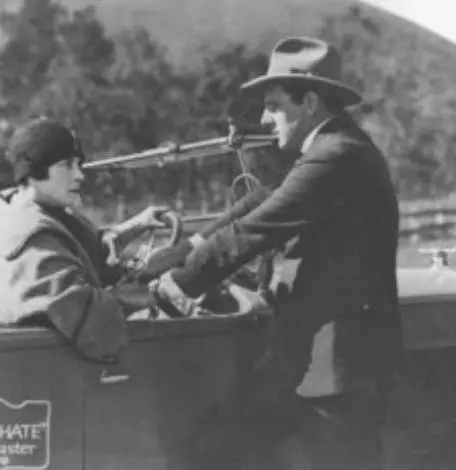
Scene from Hills of Hate
Cinematic perspective: Exploring the visual vocabulary of Hills of Hate (1926) through its definitive frames.
Performances: The Silent Language
Silent acting is a unique art form, demanding exaggerated gestures, expressive facial contortions, and a physical eloquence that transcends spoken dialogue. In Hills of Hate, the cast navigates this challenging medium with the conventions of their time.
Dorothy Gordon, likely the film's ingenue, relies on wide-eyed innocence and gestures of distress or hope to convey her character's emotional journey. Her performance, when viewed through a modern lens, might seem over-the-top, but it was precisely this theatricality that communicated complex emotions in the absence of sound. One can imagine a scene where her desperate pleas for peace are conveyed solely through the anguish in her eyes and the tremor in her hands.
Gordon Collingridge, as the presumed hero, embodies the stoic, determined male archetype. His performance would hinge on strong, resolute stances, perhaps a clenched jaw or a defiant glare, indicating his commitment to justice or love. The physical presence of a silent film hero was paramount, and Collingridge likely filled the frame with a commanding, if unvoiced, authority.
'Big' Bill Wilson, undoubtedly the antagonist or a figure of imposing power, would have leveraged his physicality. His sheer size, combined with menacing glares or aggressive postures, would have been enough to convey villainy. His performance would be less about subtlety and more about projecting an intimidating presence that looms over the protagonists, a force of nature as much as a man.
Clifford Toone, likely a supporting character, would contribute to the ensemble, perhaps as a loyal sidekick, a conniving rival, or a conflicted observer. Each actor’s ability to communicate purely through movement and expression is the bedrock of the film’s emotional landscape, a stark contrast to the nuanced vocal performances we expect today. It’s a fascinating study in how actors adapted to the limitations and strengths of their medium.
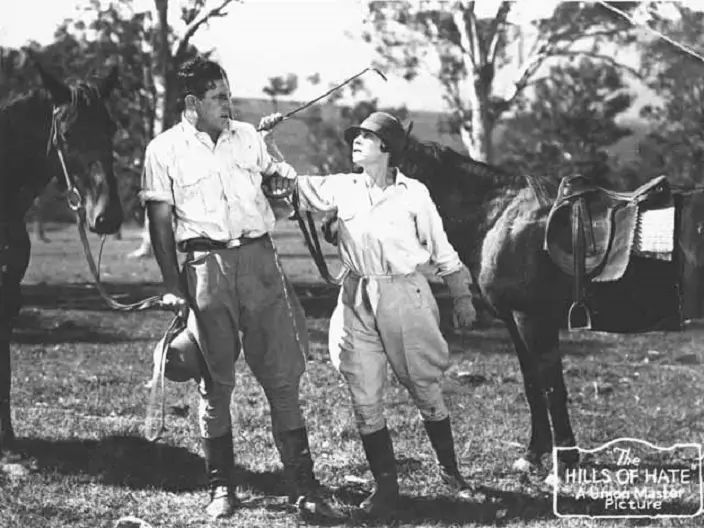
Scene from Hills of Hate
Cinematic perspective: Exploring the visual vocabulary of Hills of Hate (1926) through its definitive frames.
Directing and Cinematography: Capturing a Bygone Era
The technical aspects of Hills of Hate reflect the nascent stage of filmmaking in the mid-1920s. Direction would have prioritized clear storytelling through visual cues, framing, and intertitles. Camera movement, if present, would have been minimal, with static shots dominating, allowing the audience to absorb the scene and the actors' expressions.
The use of the natural landscape, implied by the title, would be a critical element. The rolling hills, stark fields, or rustic homesteads would not merely be backdrops but integral components of the narrative, emphasizing the isolation and the deep connection of the characters to their environment. Imagine sweeping shots that establish the vastness of the 'hills,' underscoring the smallness of human conflict within such a grand setting.
Cinematography would have relied heavily on natural light for outdoor scenes, creating a raw, authentic feel. Interior shots would likely be more controlled, perhaps utilizing rudimentary artificial lighting to create dramatic shadows or highlight key elements. The focus would be on clarity and dramatic impact, rather than stylistic flourish.
Editing would be functional, designed to advance the plot and build tension through simple cuts and cross-cutting between different action sequences. Unlike more experimental films of the era, such as the avant-garde Kino Pravda No. 16: Spring Kino-Pravda. A Picturesque, Lyrical Newsreel, Hills of Hate would likely adhere to more conventional narrative techniques, aiming for broad appeal through accessible storytelling.
The visual language of Hills of Hate, therefore, is a window into the practical artistry of early cinema. It’s not about flashy effects or complex camera work, but about the fundamental act of capturing a story on film, using the tools available to evoke emotion and convey meaning without a single spoken word.
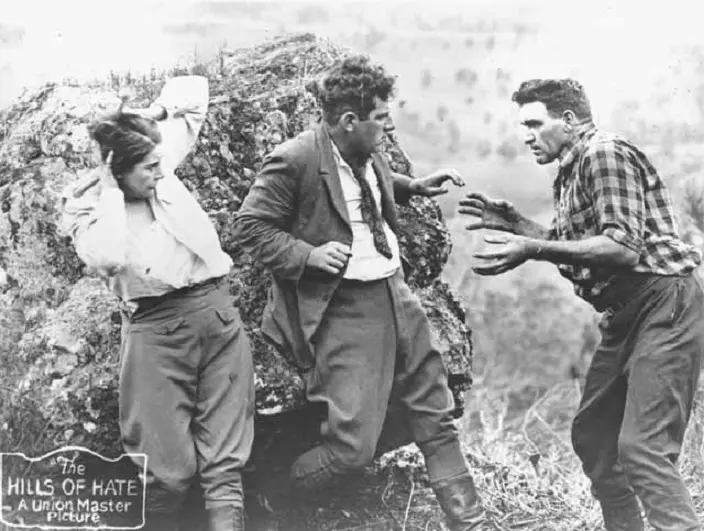
Scene from Hills of Hate
Cinematic perspective: Exploring the visual vocabulary of Hills of Hate (1926) through its definitive frames.
Pacing and Tone: A Product of its Time
The pacing of silent films often comes as a shock to modern audiences. Hills of Hate, like many productions of its era, would have unfolded at a deliberate, almost stately, pace. There are no quick cuts or rapid-fire dialogue exchanges to propel the plot. Instead, scenes are allowed to breathe, emotions are savored, and the audience is given ample time to absorb the visual information.
This slower rhythm was not a flaw but a convention, allowing for the full impact of the actors' exaggerated expressions and gestures to register. It also meant a greater reliance on intertitles to convey dialogue, exposition, and emotional beats, which inherently breaks the flow for contemporary viewers but was integral to the silent film experience.
The tone would undoubtedly be melodramatic. Conflict is stark, emotions are heightened, and characters often embody clear archetypes of good and evil. This isn’t subtle cinema; it’s bold, direct, and designed to evoke strong emotional responses. The 'hate' in the title isn't just a background element; it's a palpable force that drives the narrative towards its inevitable, dramatic conclusion.
Compared to a film like Discontented Husbands, which might explore social issues with a more satirical edge, Hills of Hate likely embraces the earnestness of its dramatic premise. The absence of a synchronized soundtrack meant that live musical accompaniment would have played a crucial role in shaping the film's emotional impact, guiding the audience through its peaks and valleys of tension and sentiment.
Is Hills of Hate Worth Watching Today?
For the casual viewer, probably not. Its pace is slow. Its technical limitations are obvious. The acting is theatrical.
Scene from Hills of Hate
Cinematic perspective: Exploring the visual vocabulary of Hills of Hate (1926) through its definitive frames.
For the film historian or silent cinema enthusiast, absolutely. It offers a unique window. It’s a rare artifact. It teaches us about early British film.
It's an archaeological dig, not a blockbuster. You watch it to understand, to appreciate the foundations, not necessarily for pure entertainment in the modern sense.
The value lies in its existence, in its ability to transport us to a different era of storytelling. It’s a piece of a larger puzzle, helping us reconstruct the rich, diverse tapestry of early cinema.
The Enduring Value of a Lost Film
The very fact that Hills of Hate is a 'lost' film, only recently rediscovered or sparsely available, imbues it with an almost mythical status. Every frame, every intertitle, becomes precious. It's a reminder of the fragility of early film and the immense importance of preservation efforts.
Unconventionally, I'd argue that the true 'hate' in the hills isn't just human conflict, but the unforgiving nature of the land itself. It's the struggle against a harsh environment that often forces people into desperate measures, fueling the very grudges that define the narrative. The film, in this light, becomes a testament to human resilience, or perhaps, human stubbornness.
Modern audiences, with their reliance on dialogue, intricate plots, and CGI, often miss the raw, visceral storytelling power inherent in a well-executed silent performance. There’s a purity to it, an unfiltered emotionality that can be incredibly compelling if one allows themselves to adjust to its rhythm. This is a debatable opinion, of course, but one I firmly hold.
To watch Hills of Hate is to engage in an act of historical empathy. It’s to understand how stories were told before sound, before color, before the myriad technologies we now take for granted. It's a foundational text, a building block in the grand edifice of cinematic history.
While it may not possess the narrative sophistication of later dramas like The Isle of Lost Ships or the social commentary of Hypocrites, its value lies in its authenticity as a product of its specific time and place. It’s a snapshot of a moment when cinema was still finding its voice, experimenting with how best to capture human drama on screen.
Key Takeaways
Best for: Silent film aficionados, film historians, and those interested in early British cinema.
Not for: Casual viewers seeking modern pacing, high-fidelity visuals, or easily accessible narratives.
Standout element: Its historical significance as a rare surviving example of 1920s British rural melodrama, offering a raw, unpolished glimpse into a bygone era of storytelling.
Biggest flaw: Its rudimentary plot and extremely deliberate pacing, which can test the patience of contemporary audiences unfamiliar with silent film conventions.
Pros and Cons
Pros:
Historical Insight: Provides a valuable window into early British filmmaking and societal norms of the 1920s.
Atmospheric Setting: Effectively uses its rural landscape to enhance the sense of isolation and simmering conflict.
Raw Performances: The earnestness of the silent acting, while theatrical, conveys genuine emotion and commitment.
Preservation Value: Its survival is a testament to the importance of film archiving and restoration.
Unique Experience: Offers a distinct viewing experience far removed from contemporary cinema, demanding a different kind of engagement.
Cons:
Slow Pacing: The deliberate rhythm, characteristic of silent films, can be challenging for modern viewers.
Rudimentary Plot: The narrative is straightforward and lacks the complexity expected in contemporary dramas.
Technical Limitations: Visuals and editing reflect the early stage of cinematic development, which some might find unpolished.
Melodramatic Tone: The heightened emotionality and clear-cut character archetypes might not resonate with all audiences.
Accessibility: As a rarely seen silent film, it requires a specific interest and effort to appreciate fully.
Verdict
Hills of Hate (1926) is not a film for everyone, nor does it pretend to be. It exists. And that's something. It is a cinematic relic, a fragile piece of history that offers more in terms of academic and historical value than it does as pure, unadulterated entertainment for a general audience. Its strengths lie in its authenticity as a product of its time, its raw portrayal of human conflict, and its contribution to the understanding of early British cinema.
While its pacing and melodramatic tendencies require patience, those willing to immerse themselves in its silent world will find a rewarding, if challenging, experience. It's a time capsule. Fragile, but immensely valuable for what it reveals about where cinema has come from. For the dedicated, it's an essential watch; for others, a fascinating, if somewhat dusty, curiosity.