DbcultAccessing Vault...
Cult Review
Senior Film Conservator
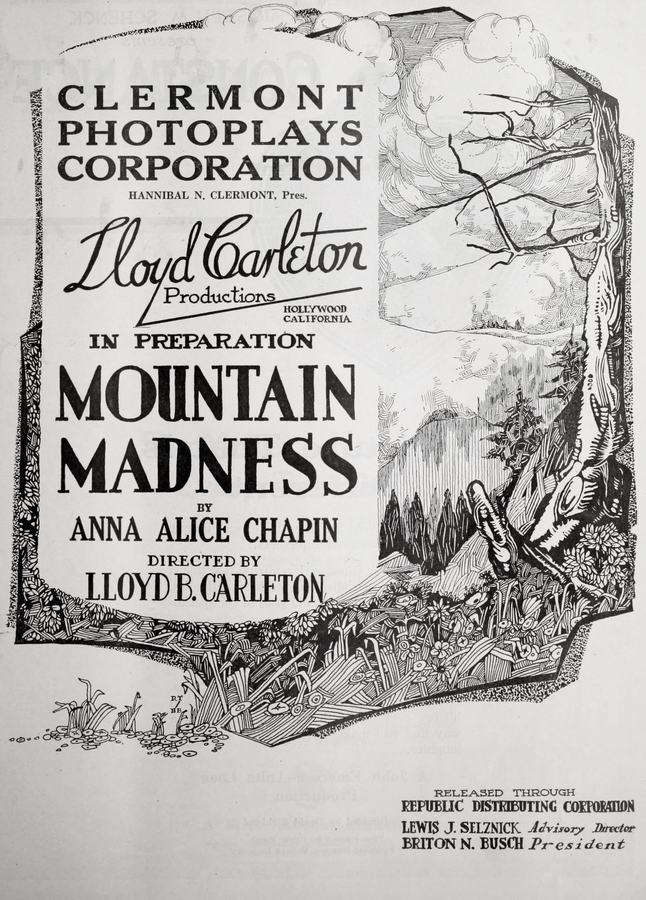
In the monochrome hush of 1920, Mountain Madness arrives like a lantern swung over a chasm, flickering between matrimonial ennui and frontier peril. Anna Alice Chapin’s scenario, laconic on intertitles yet verbose in implication, treats the Virginia highlands as both cathedral and courtroom. Trees arch like vaulted ribs; cliffs serve as witness stands. Every footstep echoes with prior sins, every cough of smoke from the robbed locomotive seems to mutter remember me.
Ora Carew’s Enid begins the film encased in the period’s idea of marital fatigue—eyes ringed not by kohl but by resignation. She rebukes Jack (Jack Lott) not with shrieks but with the exhausted precision of a woman who has already rehearsed this quarrel in silence a hundred times. Their row, though ostensibly about “directions to the waterfall,” detonates deeper tectonics: money, motherhood, the slow erosion of awe. Director Bob Fleming (unseen but felt, like deity or cinematographer) lets the camera linger on Carew’s gloved fingers clenching a rail, the leather creasing like the map of their union. It is a masterclass in microcosmic despair.
Salvation—or perhaps fresh damnation—materializes in the form of Polly Mason, essayed by Edna Pennington with a grin that could sell snake-oil or salvation depending on the light. Polly’s cabin, all mismatched quilts and moonshine etiquette, becomes a liminal parlour where social laws droop like wet paper. Here Enid learns that the mountains nurture not only laurel and rhododendron but also clandestine radio chatter about bullion-laden expresses. The narrative’s pulse quickens, yet the film never relinquishes its first-order concern: the algebra of intimacy.
Martin Hale (Edward Coxen) enters bearing the burden of every taciturn wanderer obliged to prove honour in a world that trades on rumor. Coxen, square-jawed but with a tremor of kindness at the orbital bones, plays him as a man who has already calculated the cost of being misunderstood and accepted the levy. When the sheriff—Alfred Allen in a Stetson that seems to frown independently—brands Martin accessory to the train robbery, the community’s reflexive verdict feels less like plot motor and more like communal blood-sport. The posses, torches inhand, resemble a lynch-pageant from Through Fire to Fortune, yet Fleming withholds cathartic violence, preferring the ache of suspicion.
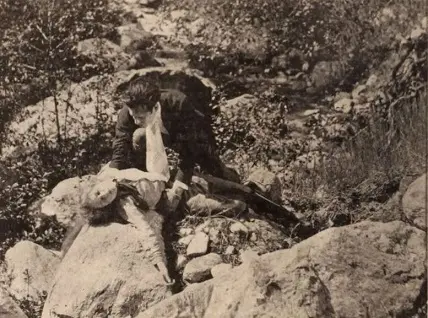
Mid-film, Enid’s disappearance cleaves the storyline like a rock-slide. One moment she pines at the cliff’s lip, the next she is gone, her absence a silhouette shaped exactly like panic. Search parties fan out; lantern halos jitter across night fog. Discovery arrives in the form of Enid’s body, limp yet luminous, cradled by shale as if the mountain itself were returning misplaced property. The staging anticipates the chiaroscuro rescue in Marked Men yet trades spectacle for something more unnerving: the possibility that landscapes metabolize human melodrama, indifferent to credits or closure.
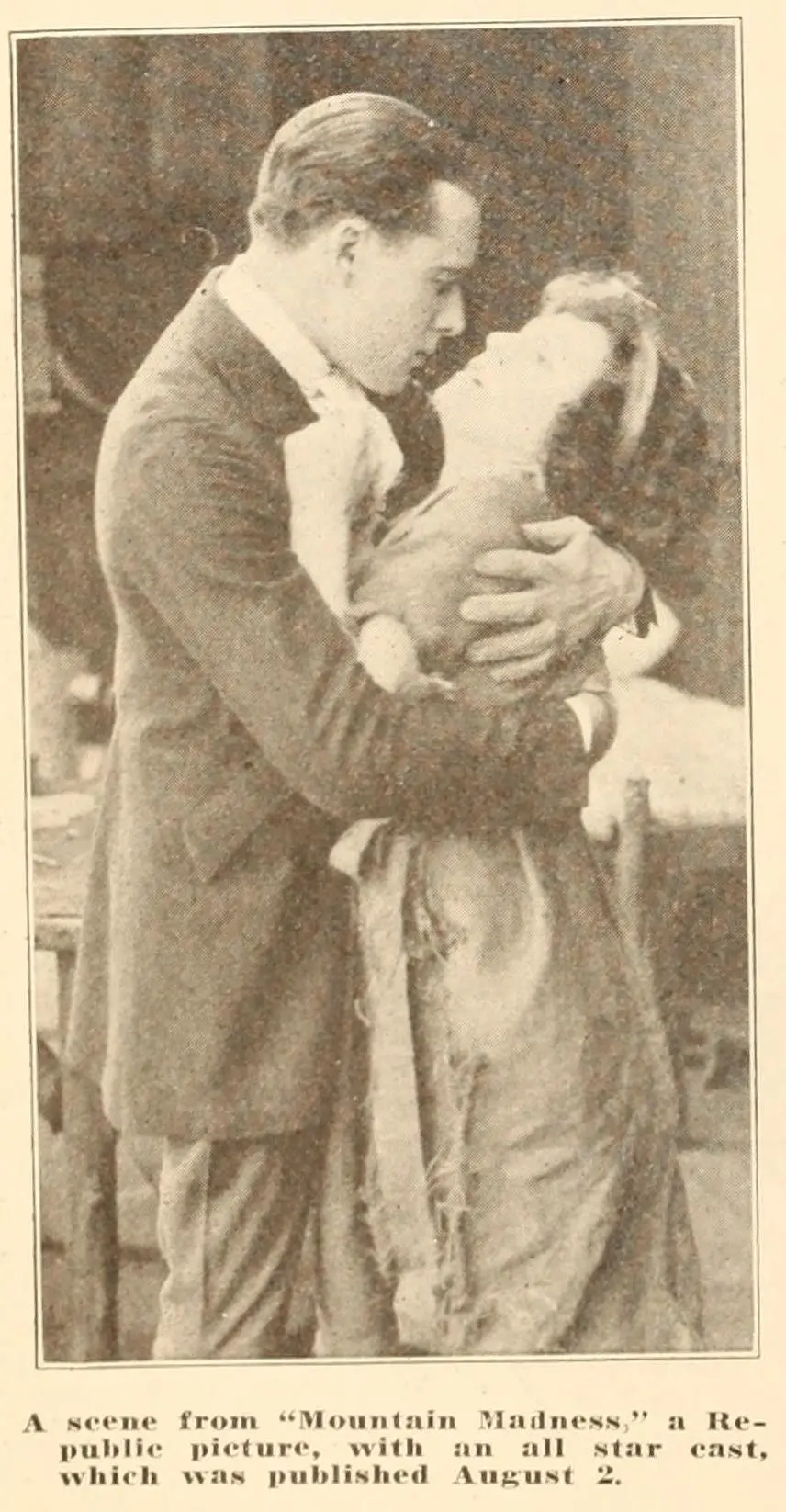
Enter Grace Pike as Enid’s mother—a grande dame swaddled in sable resolve and the perfume of bygone waltzes. Her presence refracts the film into generational layers. Pike’s matriarch recognizes Polly’s father (Harold Miller) across the general-store porch; decades collapse in a glance. We learn, through elliptical flashback montage superimposed over a cracked mirror, that their youthful rupture hinged on a misdelivered letter—an antediluvian analogue to today’s “left on read.” The motif of messages waylaid, of affections misrouted, threads parent and child, past and present. It is silent cinema’s riposte to the algorithmic dating maze: fate as postal error.
Visually, the picture revel in diurnal dichotomies. Daytime exteriors bloom with over-exposed Appalachians; whites flare until pine needles resemble quills of light. Interiors, conversely, drown in Rembrandt pools. Note the sequence where Martin hides inside a root cellar: only his eyes and the sheriff’s star catch stray beams, two opposing moral binaries glinting like dueling galaxies. Such austerity makes the eventual reconciliation—Enid and Jack on a dawn ridge—feel sacramental. As amber seeps across the sky, Mountain Madness grants not just reunion but revelation: love persists not because it is unbroken, but because it agrees to be reassembled.
One could fault the film for a last-act coincidences—long-lost sweethearts sharing the same micro-climate, a mother arriving precisely at narrative nadir—yet these contrivances feel of a piece with the era’s cosmic fatalism. Compare it to the urbane divorce trauma in His Divorced Wife; here geography, not jurisprudence, adjudicates the heart. Or juxtapose its cliff-edge iconography with the desert absolution of The Three Godfathers: both posit that salvation demands terrain rugged enough to scrape pretense raw.
Performances oscillate between the rhetorical semaphore of stage tradition and the incipient naturalism that would soon dominate screens. Carew carries whole paragraphs in the tilt of her cloche; Pennington weaponizes a smile then retracts it like switchblade. Among the men, Coxen underplays heroism, letting his shoulders’ fatigue telegraph backstory more eloquent than any expositional card. Only Alfred Allen’s sheriff verges on mustache-twirling, yet even he receives a fleeting beat—removing badge at dawn, rubbing the imprint on his shirtfront—where authority reveals its cost.
Cinephiles will relish the tactile mise-en-scène: hand-carved balustrades, kerosene-glazed kitchens, a train model shot in forced perspective that, though rudimentary, exudes artisan pride. The robbery itself unfolds via Eisensteinian montage—drive-rods, vault-doors, gloved fists on throttle-levers—compressed into a staccato burst that compensates for budgetary thrift with editorial bravura. One insert of a crushed pocket-watch prefigures the temporal obsessions of later noir; its hands frozen at 2:19, forever looping the moment when trust derails.
Musically, surviving prints carry a cue-sheet calling for “mountain airs rendered by strings and Appalachian dulcimer.” Modern festivals often commission live accompaniment; the effect is alchemical. Dulcimer plucks mirror the sheriff’s spurs; tremolo strings sync with Enid’s eyelid flutter as she regains consciousness on that precipice. Audile synesthesia converts regional instrumentation into emotional subtitle.
In the widening pantheon of reclaimed silents—from the flapper nihilism of The Unchastened Woman to the opium phantasmagoria of The Opium Runners—Mountain Madness stakes territory as both chamber-piece and cliffhanger. It is the missing link between domestic chamber-rattling and open-air mythmaking. Its thesis: relationships are heists of the private heart, where the loot is time and the getaway vehicle is forgiveness.
Contemporary viewers, marinated in talkie psychology, may scoff at the seeming artifice. Resist that reflex. Lean into the quiet, let the flicker rate hypnotize. You will discover a film that speaks in wind-pattern and boot-sole, that understands marriage as a geological event—layers of pressure, epochs of erosion, occasional volcanic renaissance. By the time Enid and Jack clasp hands against a sunrise that looks hand-tinted by providence, the silence swells with a truth many talkies never attain: love is not the opposite of quarrel but its continuation by other means.
Restoration reports indicate four of seven reels survive in 4K scans from a Czech nitrate print; the remaining gaps are bridged by explanatory intertitles and, in some programmes, live narrators. Even fragmentary, the film vibrates with uncanny wholeness—like a broken vase whose shards catch light identically to the original curve.
To watch Mountain Madness is to hike an emotional range where switchbacks of resentment yield suddenly to vistas of grace. Pack provisions of patience; the trailhead is obscure, the mile-markers coded in the semaphore of gesture. Yet the summit justifies every step: a horizon where two humbled silhouettes recognize that madness—mountainous or marital—is merely the echo of unvoiced devotion bouncing back, transformed into something sturdier, something that can be built upon, something, at long last, level.
IMDb 6.8
1924
Community
Log in to comment.