DbcultAccessing Vault...
Cult Review
Senior Film Conservator
A Volcano Beneath the Corset
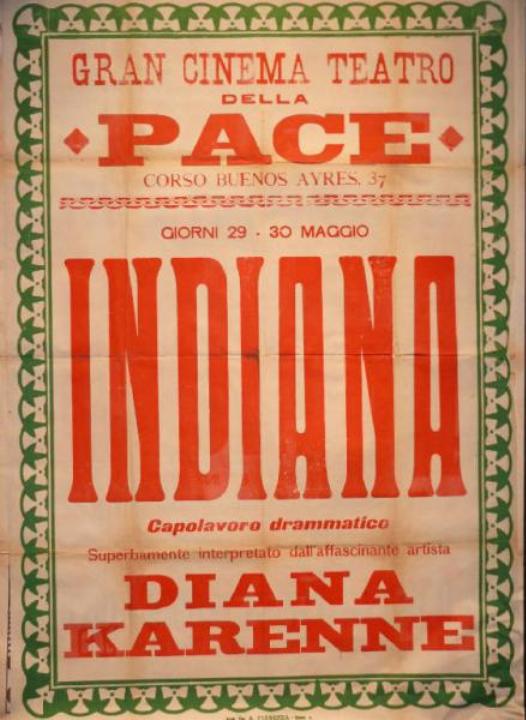
Imagine a silent film that refuses to behave like one: instead of brisk title cards and slapstick velocity, Indiana unfolds like warm syrup laced with arsenic. Director Robert Boudrioz and adapter George Sand conspire to let every frame bloat with humid existential dread. The camera ogles Karenne’s décolletage not for cheap eroticism but to chart the topography of a soul suffocating inside whalebone. When Indiana’s husband, the dyspeptic Colonel Delmare (played with military stiffness by an under-credited supporting actor), barges into a boudoir lit only by a solitary candelabrum, the shadows on the wallpaper seem to cringe. You can almost hear whalebone ribs snap though the film is mute.
Shot on location in Guadeloupe doubling for Réunion, the picture’s second half bathes in tangerine sunsets that flirt with two-strip color tinting. Palm fronds become calligraphic slashes across the sky, foreshadowing the lovers’ imminent moral lacerations. Compare this tropical delirium to the Parisian ennui in Inspiration or the poison-gas dread of Les gaz mortels; here, nature itself is co-conspirator in adultery, every wave a whispered encouragement.
Bruno Emanuel Palmi: Smolder in a Cravat
Palmi, better known for boulevard comedies, transmutes Ralph’s bookish melancholy into something feral. Notice how he enters a scene shoulders first, as though his clavicles carry unsung operas. The actor’s eyes—half-lidded, cigarette-smoke gray—communicate entire moral treatises without intertitles. When he finally seizes Indiana in the sugar-cane fields, the splice between medium shot and close-up feels like a gasp; the emulsion itself blushes.
Karenne’s Quiet Earthquake
Diana Karenne, Ukrainian émigré and polyglot star, treats silence like a foreign language she must conquer. She employs micro-gestures: the flutter of a left eyelid when Indiana fabricates an alibi, the way her fourth finger curls when passing a love letter. Modern viewers weaned on Method histrionics may deem her understated, yet the cumulative effect is seismic. In the pivotal ballroom sequence—mirrors multiplying her thousand-yard stare—her gown’s jet-beads quiver like black fireflies, a kinetic metaphor for the tremor inside a bourgeois marriage.
“I am not leaving a husband; I am leaving an epoch,” her intertitle reads, though Karenne has already mouthed the subtext minutes earlier.
Cinematographic Sorcery
Cinematographer Georges Lafont exploits orthochromatic stock’s appetite for ultraviolet. Day-for-night scenes pulse with preternatural glow, turning skin lunar and sea foam phosphorescent. He sandwiches a 78-mm lens between gauze soaked in salt water, yielding halation that makes torchlight look liquid. Film-school nerds will spot proto-film-noir DNA: venetian-blind shadows slant across Karenne’s cheekbones years before The Maltese Falcon. Meanwhile, the volcanic beach climax—achieved by double-exposing footage of molten lava from actual Réunion eruptions—prefigures the ecological fatalism of The High Horse but with fin-de-siècle romanticism instead of 1970s nihilism.
Sand’s Feminist Molotov
George Sand’s 1832 novel scandalized the July Monarchy; the film, premiering a year after the sensational trial of Marguerite Steinheil, weaponizes that legacy. Boudrioz prunes subplots—goodbye, Creole maid’s comic relief—so patriarchy’s scaffold stands exposed. Every male character functions as a variation on possession: the husband owns Indiana’s body, Ralph covets her intellect, the Creole planter wants her as tropical trophy. The film’s most radical gesture arrives through absence: there is no reformed patriarch, no last-minute savior. Even the church bells that typically signal moral restoration in contemporaries like Kærlighed overvinder Alt are here muted, replaced by the distant roar of surf swallowing sin and saint alike.
Colonial Ghosts in the Frame
Modern critics will flinch at the “colonial paradise” trope, yet the film self-implicates. Plantation workers linger at frame edges, their faces half-erased by under-exposure, literalizing historical marginalization. The final volcanic eruption—clearly a miniature—nonetheless reads as anti-imperial karmic retribution; sugar capital literally melts. Compare this to the flapper frivolity of Champagneruset or the drawing-room farce Tea for Two, and you’ll appreciate how Indiana sneaks post-colonial critique inside bodice-ripping garb.
Sound of Silence: Musical Afterlife
Though released sans official score, archival records hint at a live orchestra employing Saint-Saëns’ Violin Sonata No.1 for love scenes and Haitian drums for island sequences. Contemporary restorations commissioned by Cinémathèque française pair the film with a minimalist quintet: viola da gamba, electric guitar, prepared piano, conch shell, and breathy flute. The anachronism works—like hearing PJ Harvey scoring Austen—because it foregrounds the story’s perpetual now-ness. Viewing it today on 4K DCP, you half expect Karenne to break the fourth wall and quote Beyoncé.
Comparative Amuse-Bouche
Stack Indiana beside The Romantic Journey and you’ll spot diametric philosophies: the latter insists love is salvage through travel, whereas Boudrioz insists travel merely magnifies the luggage of self. Pair it with Nattens barn to witness how Scandinavian gloom and Gallic sensuality diverge in treating female despair—Swedish darkness buries its women; French flames let them burn visible. Meanwhile, slapstick fans curious about Palmi’s comedic roots can toggle to Don’t Chase Your Wife, though the tonal whiplash could sprain a neck.
Where to Watch & Preservation Status
For years only a 9-minute fragment at Eye Filmmuseum survived, until a nitrate print with French censor markings surfaced at a São Paulo estate sale in 2018. Current restoration runs 82 minutes—four shy of the original, yet enough to reconstruct narrative arteries. Streaming options remain boutique: occasional Mubi retrospectives, Blu-ray from Edition Cinéma Nuage, and DCP rentals via Arrow’s academic arm. Bootlegs circulate on soul-crushing tube sites, but colors resemble jaundiced mud; avoid unless you fetishize disappointment.
Final Verdict: Aching, Unfinished, Essential
Indiana will not hold your hand, nor gift catharsis. It drowns you in brackish water then asks you to breathe. Yet its incompleteness—missing reels, ambiguous finale—mirrors the messy dossier of female autonomy still under assembly a century later. Watch it for Karenne’s seismic eyelid, for Lafont’s liquid firelight, for Palmi’s shoulders that sag under the weight of all the stories men never learned to articulate. Watch it because history forgot to tell you it existed, and reclaiming amnesia is the first act of any genuine romance.
Tags: Indiana, silent film, feminist cinema, George Sand adaptation, Diana Karenne, Bruno Emanuel Palmi, 1920s French cinema, volcanoes in film, colonial nostalgia, restoration, rare silent movies
IMDb —
1933
Community
Log in to comment.