Summary
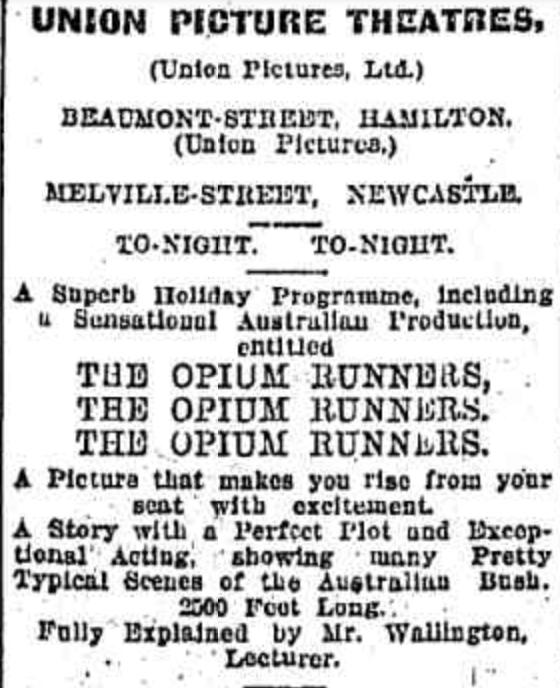
In the soot-choked back-alleys of 1913 Calcutta, where gas-lamps sputter like dying suns, a spectral caravan of contraband dreams snakes through the Ganges fog. The Opium Runners charts the odyssey of Jatin Das, a fallen Oxford scholar turned human mule, who ferries sticky black tar across the Raj’s invisible borders while carrying the ghost of his murdered fiancée in a silver locket. His courier circuit—riverboat, camel train, steam locomotive—becomes a Stations of the Cross painted in chiaroscuro: each opium cake a Eucharist of ruin, each transaction a Stations of the Cross. Shadowing him is Sister Verity, an Irish missionary whose lens-grinder spectacles refract both Scripture and syringe; she keeps a clandestine ledger of every soul lost to the poppy, inked in her own blood when sepia ink runs dry. The film’s spine, however, is the double-dealing Dewan Amirchand, a velvet-gloved courtier who trades futures for fleeting bliss, orchestrating midnight auctions where emaciated maharajas barter rubies for a single night’s stupor. As the kinetoscope reels accelerate, the narrative fractures into opium fugues: a Hindu widow immolates her saree on the pyre of addiction, a British colonel commands troops while hallucinating Bengal tigers, a Chinese coolie recites Confucius backwards as his pupils dilate into black moons. Culminating in a moonlit chase across the Hooghly bridge—its iron ribs rattling like heroin spoons—Jatin sacrifices himself by swallowing the entire haul, turning his abdomen into a translucent lantern of poison while the colonial police photograph his final convulsion for forensic postcards. The last frame freezes on Sister Verity, now opium-widowed, as she cradles Jatin’s locket and hears the Ganges whisper the film’s epitaph: “Every river remembers the weight it carries.”
Review Excerpt
"
If celluloid could mainline, The Opium Runners would leave track marks across your retinas. Shot on unstable, highly-flammable nitrate that itself feels like a narcotic, the 1913 Anglo-Indian co-production has lingered for a century in the phantom zone between myth and archive—screened once in a Calcutta warehouse for a handful of maharajas, then spirited away by customs agents who mistook the reels for actual contraband. Today, only a vinegar-syndrome scorch survives: 43 brittle minutes, smell..."