DbcultAccessing Vault...
6.3/10
Senior Film Conservator
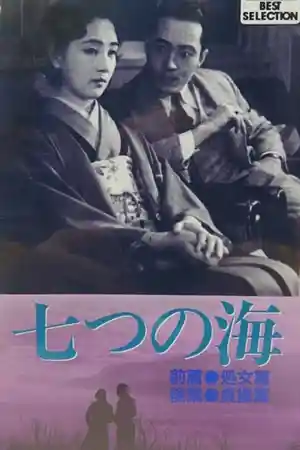
A definitive 6.3/10 rating for a film that redefined the boundaries of cult cinema. Nanatsu no umi. Zenpen: Shojo-hen remains a cornerstone of transgressive art.
So, you’re wondering about Nanatsu no umi. Zenpen: Shojo-hen? It's a real time capsule, this one. If you have a soft spot for classic Japanese cinema, especially those quiet, character-driven pieces from before the war, you’ll probably find something to appreciate here. But honestly, if you’re looking for fast-paced action or modern sensibilities, you’ll likely bounce right off it. This is for the patient viewer, the one who doesn't mind a slow burn. 🐢
The film mostly centers on Kiyoko, played by Hiroko Izumi. She carries a lot of the story on her young shoulders, and you really feel the weight of her situation. It’s not an easy life, trying to figure things out when everyone else seems to have your path already laid out.
One scene that really stuck with me was an early one, just a shot of Kiyoko standing by the window. The way the light comes in, hitting the dust motes in the air, makes everything feel so heavy and quiet. You can almost feel the stillness of her life at that moment, her quiet longing for... something more.
There's this almost unbearable tension in the dinner scenes, especially with Kinuko Wakamizu’s character, her mother perhaps. Every glance, every slightly raised eyebrow, it just speaks volumes. The dialogue is minimal sometimes, but the unspoken stuff is loud.
And speaking of quiet, the movie leans hard into silence. Sometimes it works beautifully, letting you sit with the characters’ thoughts. Other times, like when Shōichi Kofujita's character delivers some news, the pause afterwards just goes on a bit too long. You start to wonder if someone forgot their line. 😅
The film spends a lot of time on Kiyoko’s interactions with her younger brother, maybe. Or a close friend. There’s a scene where they’re by the river, skipping stones. It’s just a small moment, but it’s so full of a simple, fleeting joy that you almost forget the larger pressures building around them.
I found myself really drawn to the way the camera framed people. Often, they're not quite centered, or they're partially obscured by a doorway. It makes you feel like you’re peeking in, like you’re not supposed to be watching, which is a neat trick.
There's a sequence involving a trip to the market, and the bustling crowds. Yet, even in that lively setting, Kiyoko often feels so isolated. It’s like she’s moving through a dream, observing rather than participating fully. The contrast is really quite stark.
Reiji Yanagida, in a smaller role, makes a strong impression. His character has this nervous habit of clearing his throat before speaking. It's such a tiny thing, but it tells you so much about his anxieties without a single line of explicit dialogue.
The pacing, yeah, it's deliberate. Really deliberate. You’re not being rushed anywhere. If you’re used to modern editing, this will feel like a crawl. But if you settle into it, you start to notice these little details that would otherwise fly right by.
There's a moment near the end of this 'Maiden Chapter' where Kiyoko finally speaks her mind, just a little bit, to her grandmother (Sachiko Murase). The grandmother's reaction shot lingers, and you can see a whole mix of emotions playing on her face – surprise, disappointment, maybe even a flicker of understanding. It’s a powerful, understated scene.
The whole 'Seven Seas' part of the title isn't really about grand voyages, at least not yet in this first part. It feels more like a longing, a yearning for freedom or a world beyond her immediate village. It's a promise, perhaps, for what's to come in the later films.
One odd thing: there’s a recurring motif of birds flying past the window. Every time, I noticed it. Not sure what it’s supposed to mean, but it felt important. Maybe freedom? Or just… birds. 🕊️
The score, when it shows up, is pretty sparse. It mostly underscores the melancholy without ever becoming overbearing. It’s just enough to guide your feelings without telling you exactly what to feel.
You can see glimpses of a Japan that was on the cusp of big changes. The traditional clothes, the wooden houses, the way people interact. It feels authentic, a real window into a specific time and place. It makes you think about how much things shifted.
So, is it a masterpiece? Hard to say from just the first part. But it’s certainly something. It's a film that asks for your patience and attention, and if you give it, it offers a deeply human, if often quiet, story. It's not flashy, not trying to impress, just trying to tell its story. And sometimes, that's enough.
IMDb —
1919
Community
Log in to comment.