DbcultAccessing Vault...
Cult Review
Senior Film Conservator
Short answer: Yes, but only if you are prepared to abandon the polished safety of modern CGI for something far more tactile and unsettling. Nina Star is a mandatory watch for anyone who claims to love the history of animation, yet it will likely alienate those who require a fast-paced, traditional narrative. It is a slow-burn experience that rewards the patient viewer with imagery that has been echoed in the works of Jan Švankmajer and Tim Burton for decades.
This film is for the cinephiles, the historians, and the lovers of the avant-garde who want to see the literal birth of an art form. It is NOT for children who are used to the bright, sanitary worlds of Pixar, nor is it for viewers who find the 'uncanny valley' of 1920s puppetry too disturbing to handle. It is a beautiful, dusty relic that demands your full attention.
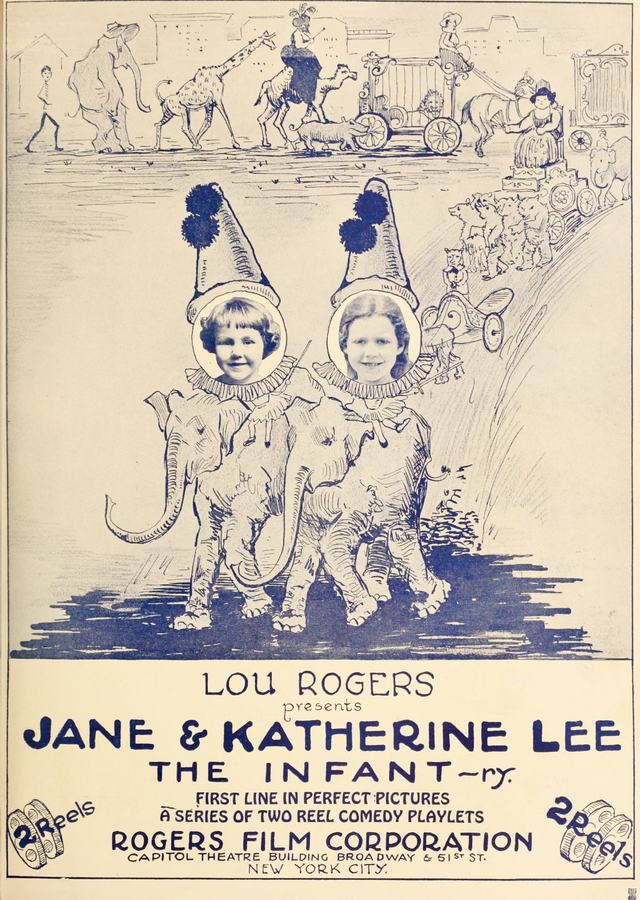
To understand Nina Star, one must understand the environment in which it was born. Wladyslaw (Ladislas) Starewitch didn't just direct these films; he lived them alongside his family. His daughter, Jeanne—performing under the name Nina Star—is the heart of this collection. Unlike the child stars of more mainstream fare like Go Easy, Nina isn't there to be cute. She is a collaborator in a surrealist experiment. She interacts with puppets that are often made of wire, wood, and even preserved insect parts, creating a bridge between our world and the nightmare logic of her father’s mind.
The first segment, The Scarecrow (1921), sets a rustic, almost pagan tone. The movement of the scarecrow is jerky, intentional, and deeply unsettling. There is a specific moment where the scarecrow’s straw seems to vibrate with a life of its own, a technical feat that, while primitive, carries a weight that digital effects simply cannot replicate. It feels like watching a folk tale come to life in a way that is far more grounded than the melodramatic heights of The Scarlet Oath.
Starewitch’s genius lay in his ability to manipulate scale. In Midnight Wedding (1921), the domestic space becomes a battlefield of toys and household objects. The way the shadows fall across the puppets’ faces gives them a brooding, almost Shakespearean quality. It’s a far cry from the lightheartedness of contemporary shorts; this is animation with a soul that feels ancient. It works. But it's flawed. The pacing is reflective of its time—glacial and repetitive—but the payoff is always a visual beat that lingers in the mind long after the frame goes black.
By the time we reach The Voice of the Nightingale (1925), the technical evolution is staggering. The hand-tinting of the film adds a layer of ethereal beauty that transforms the screen into a moving painting. The story is simple—a bird caught in a cage—but the emotional resonance is profound. When Nina interacts with the bird, the blending of live-action and animation is so seamless for 1925 that it puts many later efforts to shame. It lacks the grit of something like Sahara, opting instead for a poetic fragility.
The centerpiece, however, is The Queen of the Butterflies (1927). Here, the Starewitch family reaches the peak of their craft. The sets are expansive, the costumes on the puppets are intricate, and the choreography of the insect ball is nothing short of breathtaking. There is a debatable opinion to be held here: I would argue that the animation in this 1927 short is more expressive than the CGI used in modern blockbusters. Why? Because you can feel the physical resistance of the materials. You can see the thumbprints of the creator on the clay and the fabric. It is a tactile masterpiece that feels alive because it was touched by human hands at every frame.
The aesthetic isn't just old; it's prehistoric in the timeline of imagination. The way the butterflies move—fluttering with a chaotic, non-linear energy—shows a deep observation of nature that few animators bother with today. It is a film that demands you look at the corners of the screen, where small, secondary characters are often performing their own micro-dramas. This level of detail is something we often associate with modern masters, but Starewitch was doing it in a garage in France nearly a century ago.
Cons:
In an era where we are drowning in pixel-perfect imagery, Nina Star reminds us that imperfection is where the magic lives. The slight jitter of a puppet’s wing or the visible grain of the film stock adds a layer of reality that no algorithm can replicate. This film is a testament to the power of the 'handmade.' It shares a certain DNA with the gritty realism of The Misfit Wife or the character-driven focus of Painted People, yet it exists in a genre all its own.
"Starewitch wasn't just a filmmaker; he was a necromancer of household objects, and Nina was his most vital ingredient."
The unconventional observation here is that the live-action portions are actually more haunting than the puppets. Why? Because they capture a childhood that feels trapped in a clockwork world. Nina isn't playing with toys; she is living among them. There is a subtle loneliness to her performance that gives the films a melancholic undertone. It’s a feeling of being the only living thing in a world of ghosts.
Nina Star is a beautiful, difficult, and essential piece of cinematic history. It is a fever dream captured on cellulose. While the technical limitations of the 1920s are present, they only serve to highlight the sheer audacity of what the Starewitch family was trying to achieve. It is a haunting reminder that before there were computers, there were hands, wires, and a relentless drive to make the inanimate breathe. It is a flawed collection, yes, but its peaks are higher than most modern films ever dare to climb. If you have any interest in where our modern myths come from, you must look into the eyes of Nina Star.
IMDb —
1920
Community
Log in to comment.