DbcultAccessing Vault...
Cult Review
Senior Film Conservator
Silence, shot in mercury shimmer, has rarely bled so loudly.
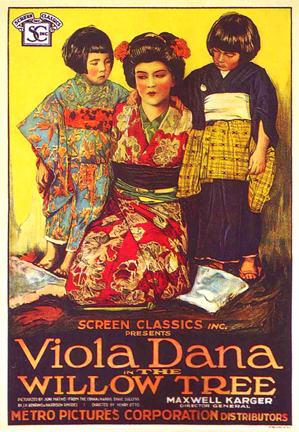
There is a moment—mid-film, mid-war—when the camera abandons Viola Dana’s grief-rigid shoulders and pans to the titular willow itself, bark glistening after monsoon rain. The leaves tremble, silvered by moonlight, and because no title card intrudes, the image becomes pure visual onomatopoeia: every quiver is a sob we cannot hear, a sob the world refuses to hear while Europe cannibalizes its young. In that hush, The Willow Tree transcends its dime-novel premise and announces itself as a poem about imperial peripheries, about lovers separated less by geography than by the competing mythologies of empire.
June Mathis—Metro’s star scribe who would soon midwife Valentino’s rise—anchors the script in the Japanese countryside yet fills it with Occidental dread. Characters speak English on intertitles while bodily inhabiting Nippon; the tension between spoken and embodied language becomes a ghost third lead, an ever-present reminder that cultural translation is a wound before it is a bridge.
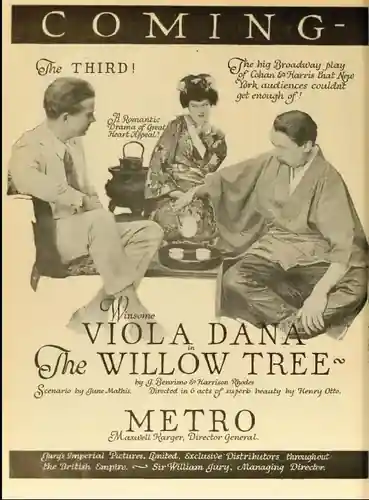
Cinematographer Frank D. Williams (fresh from dabbling in occultist shadows) shoots Sadako’s wait in long, contemplative takes: tatami mats framed like Rothko rectangles, shoji screens doubling as aperture blades narrowing the world to a slit. Compare this to the kaleidoscopic angst in The Scarlet Crystal or the claustrophobic courtrooms of The Mysterious Client; here, space dilates rather than constricts, and emptiness becomes an antagonist more pitiless than any villain.
Color tinting alternates between sea-foam blue for night vigil and bruised amber for memory-flashbacks of Trenton’s courtship. The flicker is imperfect, scratches dancing like fireflies, yet the imperfection itself feels intimate—celluloid scarred the same way lovers scar.
Viola Dana—usually a flapper firecracker—pares her instrument to micro-movement: a fingertip worrying the hem of an obi, pupils dilating when the postman approaches. Silent-film historiography loves its histrionic clichés, but Dana’s minimalism anticipates post-war Japanese naturalism by three decades. Watch her in extreme close-up as she reads, by candle, the lieutenant’s final letter: her chin quivers once—once—and the restraint feels volcanic.
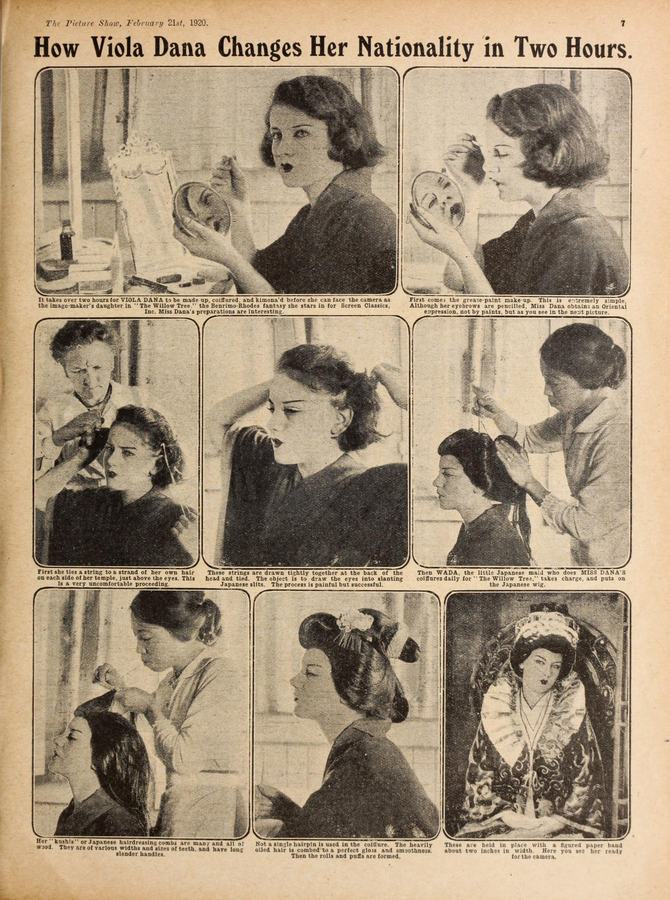
Pell Trenton, saddled with the thankless “departed lover” trope, earns gravitas in his return scene. Rather than burst into frame, he emerges from a mist bank, limping, face a topography of trench-wasted regret. The camera withholds a triumphant reunion; instead, director Frank Tokunaga stages them in split-screen silhouette—two shadows separated by the willow trunk. The embrace never arrives, and that absence detonates louder than Rhett Butler’s slammed door.
Original 1920 screenings boasted a live koto and string quartet; most modern revivals default to generic piano. Seek out the Bologna Archive restoration (2019) featuring Yuiko Kawai’s new score: plucked shamisen arpeggios rub against Elgar-esque cello, sonically mirroring East-West collision. When the war telegram arrives, strings sustain a dissonant cluster that bleeds into a Buddhist funeral gong—a sonic dissolve more arresting than any visual fade.
Sadako’s house—low ceilings, sliding doors—embodies ie patriarchy, yet the willow outside grows unruly, its roots cracking the stone lantern. Mathis weaponizes this arboreal rebellion as feminist metaphor: the longer the girl waits, the more the tree’s branches invade male space, tapping on shuttered windows like uninvited memory. Conversely, Trenton’s remembered England is all fog-smothered docks and brass-button authority; the film suggests empire’s cartographies are drawn to erase female interiority, yet nature reclaims ink with chlorophyll.
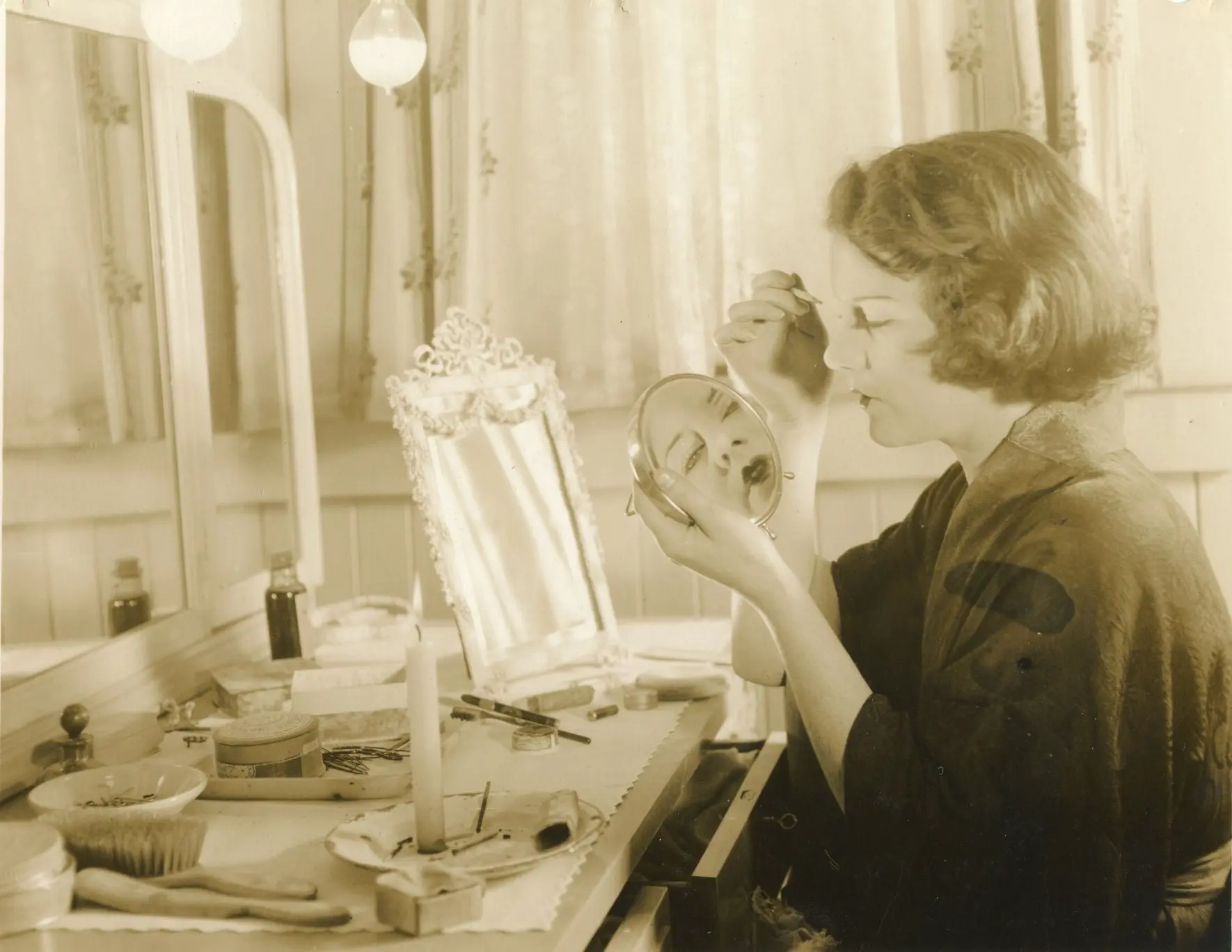
Compare to The Woman Michael Married, where the heroine’s domesticity becomes a jail; here, domesticity leaks into the wild, and the boundary dissolves like rice-paper in rain.
Modern viewers will flinch at Anglo actors in yellowface. Yet Tokunaga—himself a Japanese immigrant hustling within Hollywood’s machinery—complicates the exotic gaze. Note the casting of Tōgō Yamamoto, an actual Buddhist priest, as the monk who counsels detachment. His onscreen chants are authentic nenbutsu, not mimicry. The collision between performative ethnicity and lived identity produces productive dissonance, akin to hearing a shakuhachi riff inside a foxtrot.
Footnote: the 1919 trade journal Moving Picture World boasted that the studio imported “100 genuine kimonos.” Read today, the claim reeks of commodity orientalism; onscreen, though, the textiles breathe—creases catching light, dye patterns shifting with each frame. Costume becomes cinema.
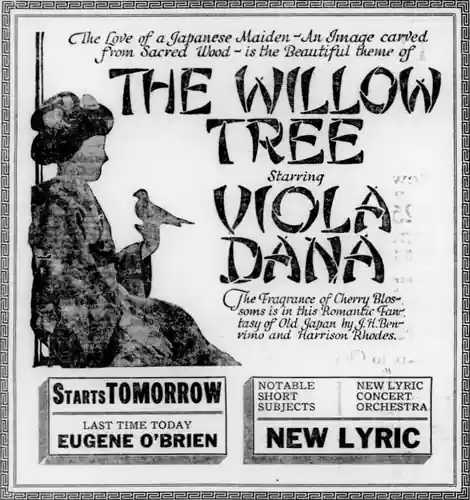
Mathis structures wartime duration through ellipses rather than montage. Spring planting: cherry petals. Cut. Autumn: same shot, tree bare, girl’s coat patched. Cut. Winter: soldiers’ boots in slush off-screen. Cut. Spring again: victory parades, but the willow now leans, wind-battered. Four cuts equal four years; Soviet-style montage this is not—more like flipping a haiku diary whose entries have been gnawed by mice.
Critics who praise Trapped by the Camera for its temporal play should genuflect here; temporal compression via stasis, not acceleration, delivers the emotional wallop.
In Japanese folklore, yanagi trees are liminal, ferrying souls between realms. The film literalizes this: every major emotional beat occurs beneath the willow—courtship, farewell, rumor of death, final renunciation. Yamamoto’s monk intones, “The branches bend so they do not break,” a koan echoed later when Sadako, bowing under grief, refuses to snap. The tree embodies the silk-soft resilience society demands of women, yet its roots upend sidewalks—resilience with teeth.
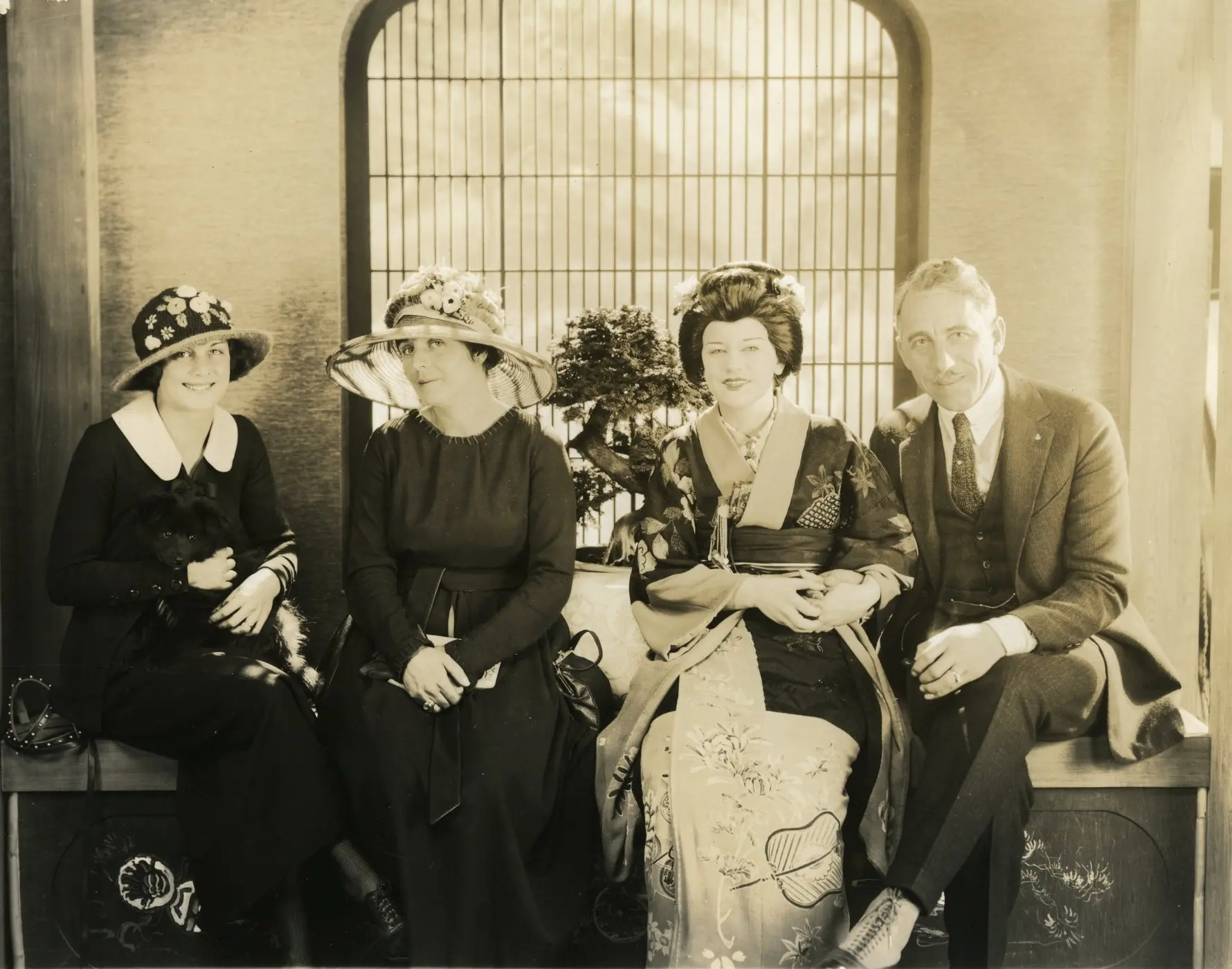
For decades only a 9.5 mm orphan reel survived—gate burns, nitrate rot, English intertitles hacked to fit Belgian censors. Then UCLA found a 35 mm dupe in São Paulo, mislabeled as The House of Tears. Current restorations splice both sources, bridging narrative lacunae with title cards styled in period font. Roughly six minutes remain gone, including (legend says) a proto-dream sequence of Sadako’s astral body drifting above trench warfare like a clairvoyant balloon. Even incomplete, the film haunts.
Because in an age of algorithmic jump-cut frenzy, The Willow Tree dares to fossilize time, to let silence pool until it mirrors your own heartbeat. Because love stories usually devour war as backdrop; here, war nibbles love to marrow, and what remains is the echo of unmailed letters rustling in celluloid breeze. Because Viola Dana’s eyes—two liquid syllables—will whisper your own unreturned emails, voicemails, DMs back to you. And because, when the end card fades to black, the willow still sways outside the window of whatever room you’re sitting in, counting years you can’t feel passing—yet.

IMDb 5.4
1930
Community
Log in to comment.