DbcultAccessing Vault...
6.1/10
Senior Film Conservator
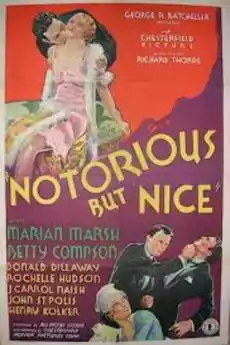
A definitive 6.1/10 rating for a film that redefined the boundaries of cult cinema. Notorious But Nice remains a cornerstone of transgressive art.
Alright, let’s talk about Notorious But Nice. Is it something you absolutely *have* to rush out and see today? Probably not, unless you’re really, really into vintage melodrama. If you love unraveling old-school societal tangled webs and don't mind a film that takes its sweet time, you might just find a strange charm here. But if you’re hoping for snappy dialogue or a modern pace, you’ll likely be checking your watch.
The whole premise feels very classic Hollywood. Jennie Jones, played by Betty Compson, has this shadow hanging over her. She's engaged to the boss's son, and you just know it's not going to be smooth sailing. The father, a proper old grump, immediately decides she's not good enough. You can almost feel the gears turning in his head, plotting how to get rid of her.
There's this one scene, quite early on, where the father, played by Henry Kolker, just *stares* at Jennie across a crowded room. No dialogue, just this long, suspicious look. It goes on maybe a bit too long, but it really nails down his distrust without a single word. His eyebrows do a lot of heavy lifting in this film, honestly. 🤨
Jennie herself is… well, she’s a bit of a puzzle. Compson plays her with this sort of weary resilience. She’s not overly dramatic, even when things are clearly going to pieces around her. It’s a quiet performance, which sometimes works and sometimes just makes you wish she’d, I don’t know, *scream* a little. Just once.
The film *really* leans into the idea that her past is catching up. Whispers, sudden looks, people being cagey. It’s all very atmospheric, but after a while, you start to just want someone to spill the beans already. The movie spends so much energy hinting at things, you almost get tired of waiting for the reveal. They really milk that mystery for all it’s worth.
And then there’s the son. Robert Ellis plays him, and he’s kind of a… doormat? He seems genuinely smitten with Jennie, but he also appears completely helpless against his father’s schemes. You want him to stand up, just once, and he just sort of… mopes. It’s hard to root for him when he’s so passive. You keep waiting for him to get a backbone, and it never quite happens.
The plot then introduces this 'unexpected source' of help. It’s a character you don't really see coming, and for a moment, the film gets a jolt of energy. There’s a scene in a dusty office, late at night, where this person lays out a plan. The way the light hits their face, all conspiratorial, is actually quite good. It’s a small, tense moment that feels different from the rest of the film's general gloom.
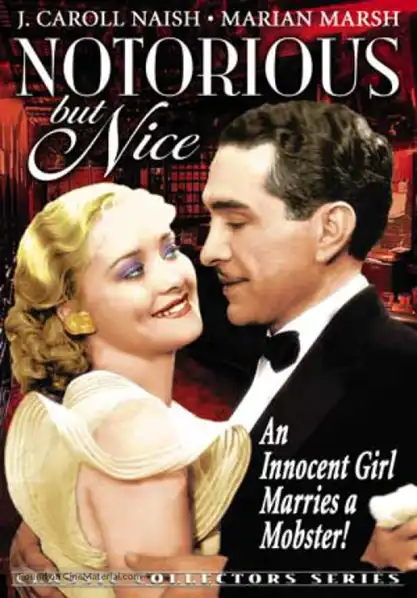
But then, *complications*. Oh, so many complications. The film piles them on. It feels like every time Jennie gets a tiny step forward, three more problems pop up. It’s a bit exhausting, honestly. You just want the poor girl to catch a break. There's a particular sequence involving a legal document that’s just convoluted, going back and forth, and you might lose track of exactly what’s being argued.
One small thing I noticed: the way they used close-ups. Often, they’d linger on a character's hands, clenching or smoothing something. It’s a nice touch, a little visual shorthand for internal stress. Like, in that scene where Jennie is trying to explain herself, the camera just holds on her fidgeting fingers for a beat too long. Very effective.
The dialogue is very much of its era. Formal, a little stilted by today’s standards. But it has a certain old-world charm to it. Sometimes, a line will just hit you, a really sharp turn of phrase that feels surprisingly modern in its venom. Like when one of the society gossips says something about Jennie’s 'unfortunate connections' – delivered with such *ice*.
The pacing is definitely a slow burn. It builds and builds, hinting at revelations without ever quite delivering them quickly. If you’re patient, you might appreciate the slow unwinding. If not, it can feel like trudging through treacle. The final act, when things finally start to *really* move, feels a little rushed after all that build-up. It's like they hit the gas pedal suddenly.
And the ending? It’s… satisfying in an old-fashioned way. Not exactly a shocker, but it ties things up. You get the feeling everyone gets what’s coming to them, good or bad. There’s a final shot of Jennie, a quiet moment, and you just wonder what she’s thinking after all that fuss. Did she really want all this?
For a film that promises 'notorious' elements, it’s actually quite tame by modern standards. The notoriety is more about social scandal and reputation than anything truly scandalous. It’s a glimpse into what passed for high drama decades ago, and in that sense, it’s a valuable watch for film historians or anyone curious about the roots of our modern melodramas. Don't expect fireworks, but there are some interesting embers here.
IMDb 4.5
1932
Community
Log in to comment.