DbcultAccessing Vault...
6.5/10
Senior Film Conservator
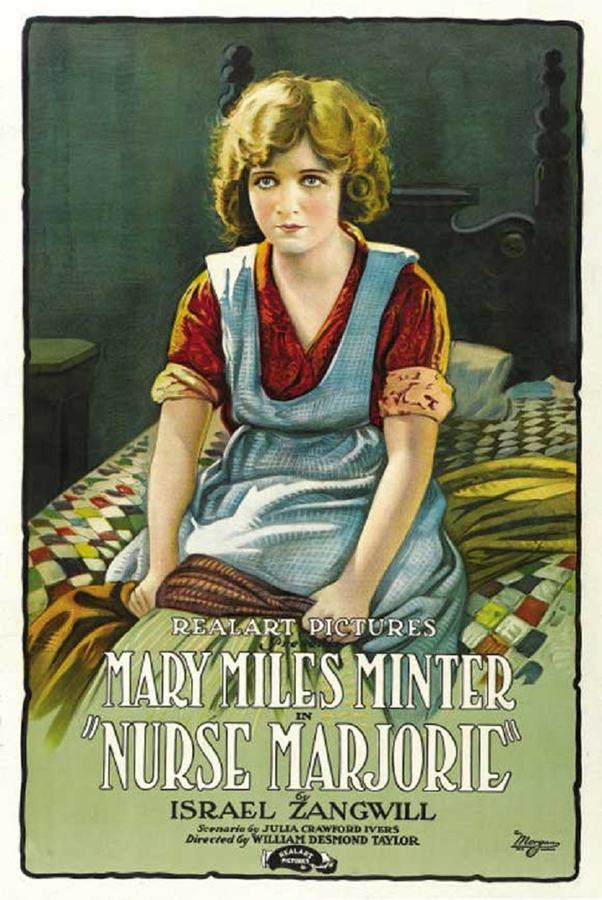
A definitive 6.5/10 rating for a film that redefined the boundaries of cult cinema. Nurse Marjorie remains a cornerstone of transgressive art.
The year 1920 stood as a threshold between the Victorian shadows and the burgeoning roar of the twenties, a period perfectly encapsulated by the cinematic curiosity that is Nurse Marjorie. Directed by Jack Conway and adapted from the play by the venerable Israel Zangwill, the film serves as a fascinating vessel for Mary Miles Minter, an actress whose career—and life—would soon be eclipsed by scandal, but who here shines with an untainted, ethereal luminescence. This production is not merely a piece of silent-era fluff; it is a calculated exploration of the friction between the hereditary elite and the rising proletarian voice, wrapped in the soft gauze of a romantic melodrama.
Mary Miles Minter, often positioned as the primary rival to Mary Pickford, brings a unique vulnerability to the role of Lady Marjorie Donegal. Unlike the more rugged heroines found in contemporary works like The Struggle, Minter’s Marjorie operates within a sphere of soft-focus rebellion. Her decision to enter the nursing profession is treated by her family—played with delightful pomposity by Vera Lewis and George Periolat—as a scandalous descent into the muck of the commonality. The hospital, depicted with a surprisingly gritty realism for a 1920s set, becomes the stage for her transformation. It is here that the film sheds its drawing-room comedy skin and begins to pulse with the heartbeat of social commentary.

The casting of Clyde Fillmore as John Danbury, the labor leader, provides the necessary gravitational pull to ground Minter’s flighty charm. Fillmore possesses a ruggedness that contrasts sharply with the effete aristocrats surrounding Marjorie. Their chemistry is built on a foundation of mutual ideological respect, a rarity in films of this vintage. While many silent romances of the period, such as those seen in The Pearl of Paradise, relied on exoticism or high-seas adventure, Nurse Marjorie finds its tension in the quiet moments of a hospital ward, where a bandage or a shared glance carries the weight of a revolution.
The screenplay, a collaborative effort between Israel Zangwill and Julia Crawford Ivers, retains the sharp wit of its theatrical origins. Zangwill, known for his deep investment in social justice and the Zionist movement, imbues the dialogue—delivered via meticulously crafted intertitles—with a sophistication that elevates the film above standard genre fare. There is a perceptible rhythm to the narrative that mirrors the structured chaos of a hospital, a setting that serves as a democratizing force where the title of 'Lady' holds no weight against the urgency of medical care.
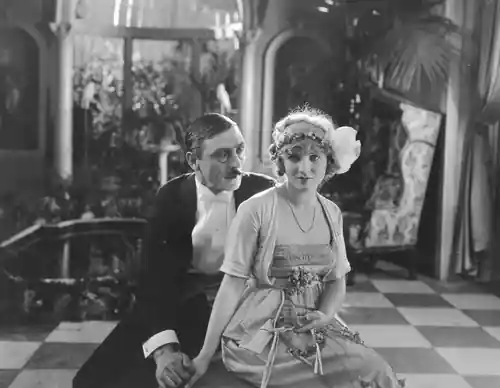
"In the ward, the pulse of the nation beats not in the hearts of the lords in their manors, but in the labored breaths of those who build the manors themselves."
This thematic depth invites comparisons to other contemporary dramas exploring class and morality. For instance, while Josselyn's Wife delves into the domestic claustrophobia of marriage, Nurse Marjorie looks outward, using the individual’s romantic choices as a barometer for societal health. The film’s pacing is deliberate, allowing the audience to feel the suffocating weight of Marjorie’s social obligations before she finally breaks free into the arms of Danbury.
Visually, Nurse Marjorie is a testament to the sophistication of early 1920s cinematography. The use of lighting to distinguish between the cold, cavernous Donegal estate and the warmer, albeit busier, hospital environment is masterful. The camera work, though largely static in keeping with the era's conventions, utilizes close-ups to capture Minter’s expressive features, which were her greatest asset. Her ability to convey complex emotions—guilt, longing, and newfound resolve—without a single spoken word is a masterclass in silent acting, far surpassing the broader histrionics found in Who Was the Other Man?.

The supporting cast, including the young Frankie Lee and the veteran character actor Arthur Hoyt, provides a rich tapestry of human experience. Joe Murphy and Lydia Yeamans Titus offer moments of levity that prevent the film from sinking into somber didacticism. This balance of tone is crucial; it allows the film to deliver its message about the dignity of labor without alienating the audience that came primarily for the star power of Minter. It’s a delicate dance that films like Blackbirds often struggled to maintain.
What makes Nurse Marjorie particularly compelling to the modern viewer is its treatment of the labor movement. John Danbury is not portrayed as a dangerous anarchist, but as a man of principle and intellect. This sympathetic portrayal of a commoner labor leader in a mainstream Hollywood production of 1920 is quite remarkable. It reflects a post-war world that was questioning the old hierarchies, a theme also touched upon in The Invisible Power, though perhaps with less romantic optimism than we see here.

The conflict Marjorie faces—the choice between her family's approval and her own conscience—is a timeless trope, yet here it feels specifically tied to the death of the Edwardian era. Her family represents the 'Seal of Silence' (reminiscent of the themes in The Seal of Silence) that the upper classes attempted to impose on the changing world. Marjorie’s refusal to remain silent or complicit is her greatest act of heroism.
In the broader context of Mary Miles Minter’s filmography, Nurse Marjorie stands as one of her most mature works. While she often played the "ingenue in distress" in films like Molly Go Get 'Em, here she is a woman of agency. She is not waiting to be rescued; rather, she is the one doing the rescuing, both in a literal medical sense and in a metaphorical social sense. The film’s conclusion, while adhering to the expected romantic resolution, leaves the audience with a sense that the world has irrevocably changed.
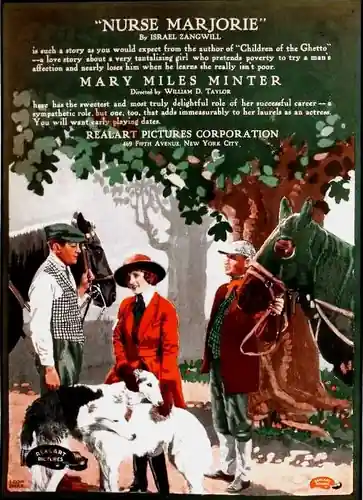
Comparing this to the rugged escapism of The Peace of Roaring River or the moralistic weight of Slave of Sin, Nurse Marjorie occupies a unique middle ground. It is sophisticated yet accessible, political yet personal. It lacks the nihilism often found in late silent-era dramas, opting instead for a hopeful synthesis of disparate social worlds. Even when compared to the whimsical nature of The Beloved Vagabond, Minter’s film feels more grounded in the realities of its time.
Ultimately, Nurse Marjorie is a poignant reminder of the power of silent cinema to address complex human issues through the simple power of the image and the archetype. It is a film that deserves to be rescued from the footnotes of history, not just for its star, but for its courageous look at the boundaries we build between ourselves and the courage required to tear them down. Whether you are a devotee of Mary Miles Minter or a student of social history in film, this work offers a rich, multi-layered experience that resonates long after the final iris-out.
A stellar example of silent-era social drama that balances romantic charm with a surprisingly sharp critique of class dynamics. Mary Miles Minter delivers a career-defining performance that proves she was much more than just a porcelain doll of the screen. A must-watch for those who appreciate the intersection of art and activism in early cinema.

IMDb 5.8
1934
Community
Log in to comment.