DbcultAccessing Vault...
Cult Review
Senior Film Conservator
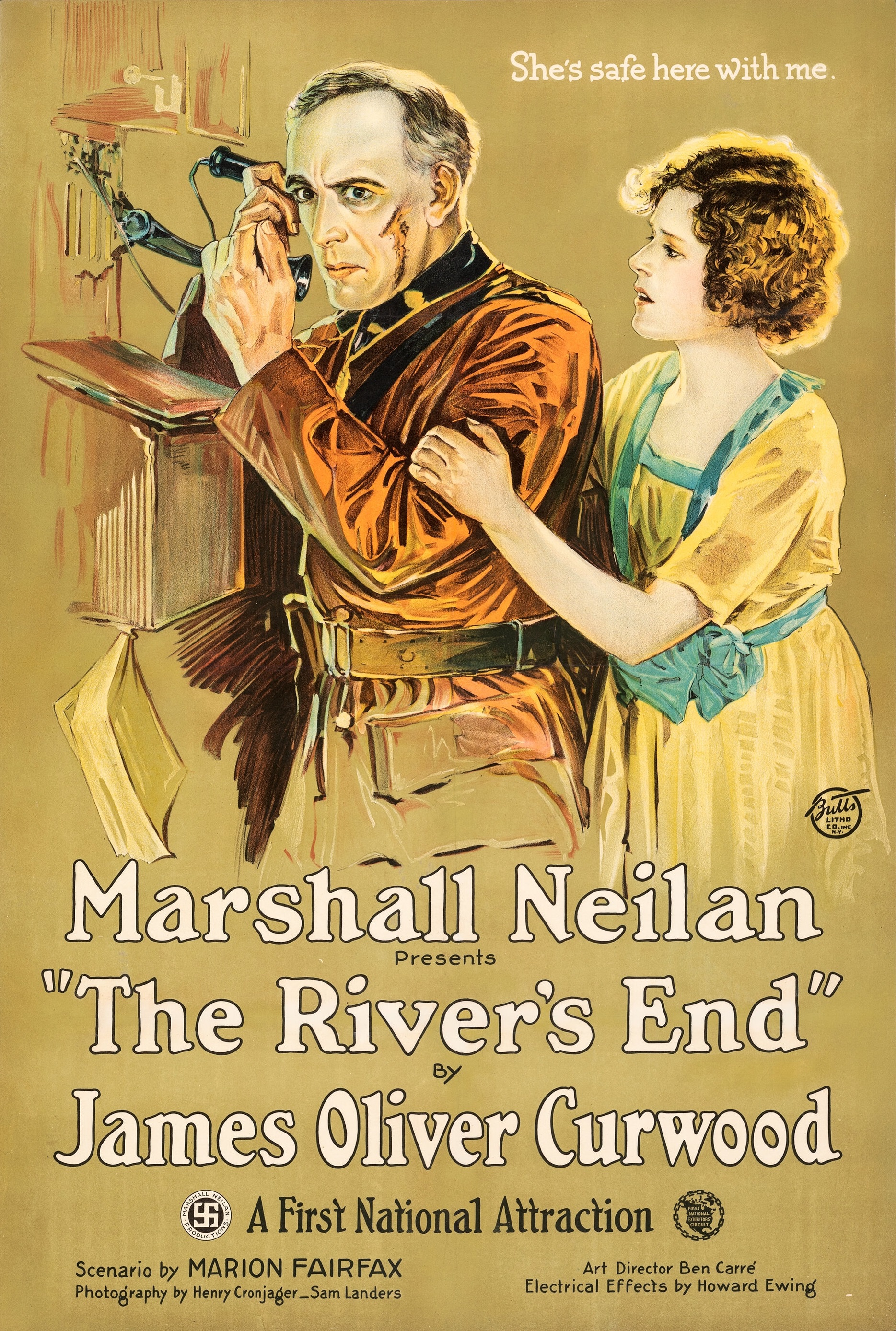
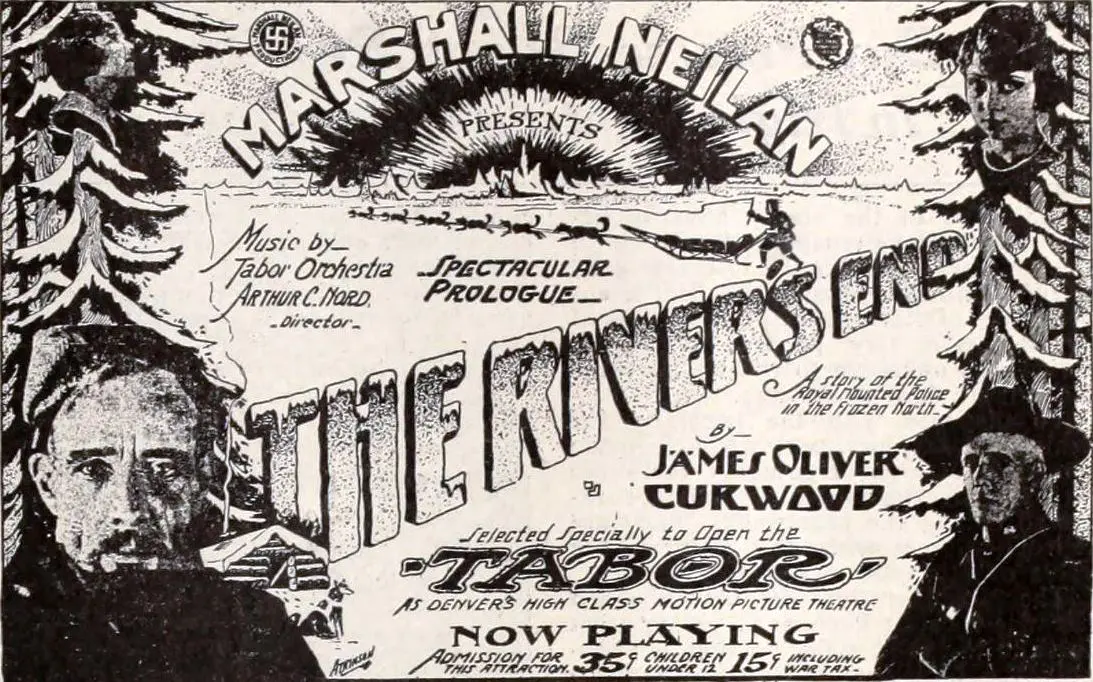
Glacial fog slides off the frame in the very first shot of The River’s End, a 1920 First National thunderclap directed by the prodigiously unsung Victor Schertzinger. The Canadian Northwest is rendered not as postcard panorama but as a crucible of spectral whites and bruise-violets, a place where celluloid itself seems to shiver. You feel the mercury plummet; you taste the metallic tang of paranoia. This is less a western than a northwestern noir, a genre still embryonic in the silent era, and the film hustles its audience straight into the howling void of frontier justice without so much as a title-card handshake.
Enter J. Barney Sherry, whose visage is all jagged cheekbones and remorseful eyes, playing John Keith—an RCMP sergeant exiled to the Yukon after an undisclosed disgrace. Sherry’s gift lies in suggesting reservoirs of self-disgust; every twitch of his mouth hints that he knows the badge on his chest is made of tin, not silver. Within minutes he is framed for the murder of a whiskey trader: a bullet, a blood-stuck snowdrift, and a witness who swears the killer wore the Mountie’s trademark scarlet. The screenplay—adapted by Marion Fairfax from James Oliver Curwood’s novel—unspools this inciting incident with a briskness modern thrillers could envy. One cut, and Keith is shackled; another, and he is busted out by a band of contrabandists who smell leverage.
Here the film pivots into its doppelgänger motif. On the riverbank, Keith glimpses a trapper named Derry Lafferty—also played by Sherry via ingenious double-exposure—whose only difference is a diagonal scar gouged like lightning across his cheek. The scar is the moral ledger: Keith’s conscience is unblemished yet condemned, Lafferty’s face is scarred yet unaccountable. Cinema had toyed with doubles before (The Fool’s Revenge flirts with the device), but rarely with such existential acidity. The river itself becomes a Stygian mirror; each man’s reflection is the other’s potential fate.
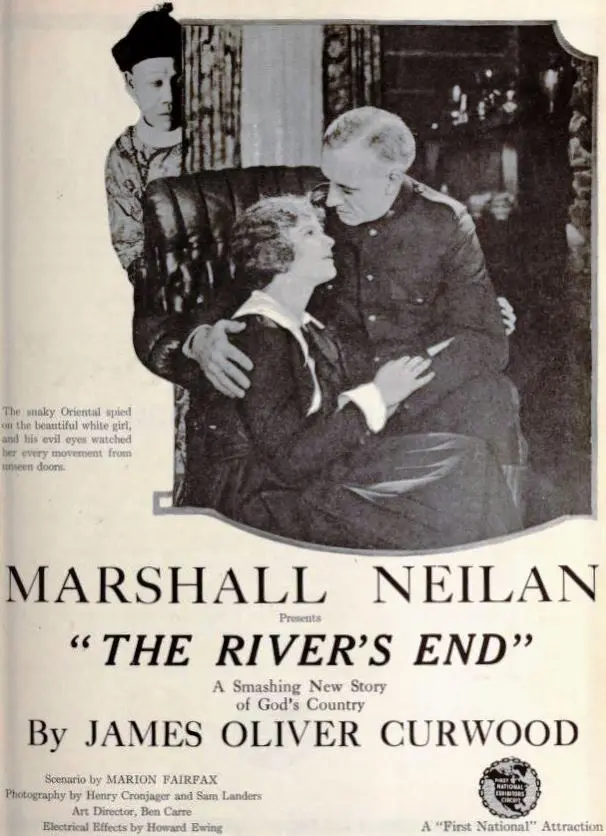
Fairfax’s intertitles dispense frontier stoicism in haiku-length bursts: “Guilt is a sled dog—feed it once, it follows forever.”
Lafferty is courting Marjorie Daw’s character, Beth Graham, a tavern songbird whose cynicism has ossified into something like armor. Daw, all porcelain skin and flinty gaze, gives the film its bruised heartbeat. When she warbles a half-remembered parlour ballad to a barroom of frostbitten miners, the camera lingers on her chapped lips; the song splinters into silence before the final note, as though even melody is subject to frostbite. Her attraction to both Keith and Lafferty is less erotic than ontological: she seeks the true self beneath the interchangeable surfaces, a task as futile as panning for gold in a frozen creek.
The middle act is a fugitive’s phantasmagoria. Keith escapes across a glacial canyon via a fraying rope bridge whose planks snap like old promises. Cinematographer Alvin Wyckoff lenses the sequence from a 45-degree dutch tilt, turning the world into a slide. Below, the river gnaws at blue ice floes; above, auroras ripple like silks soaked in absinthe. Sound cinema would drown such a scene with orchestral crescendos, but the silence here is seismic—you hear your own pulse, and it sounds guilty.
Meanwhile the screenplay seeds its sociological threads: the Tôgô Yamamoto character, an Indigenous tracker named Makok, is treated with rare nuance for 1920. He speaks Cree in untranslated intertitles, refuses payment for guiding the Mountie, and ultimately rescues Keith not out of loyalty but because “the river asked.” The film never co-opts his spirituality; it merely acknowledges another epistemology brushing against imperial law. Compare this with the caricatured henchmen in The Eagle’s Nest or the grunting sidekick in Wild and Western, and you glimpse how progressive Fairfax’s script secretly is.
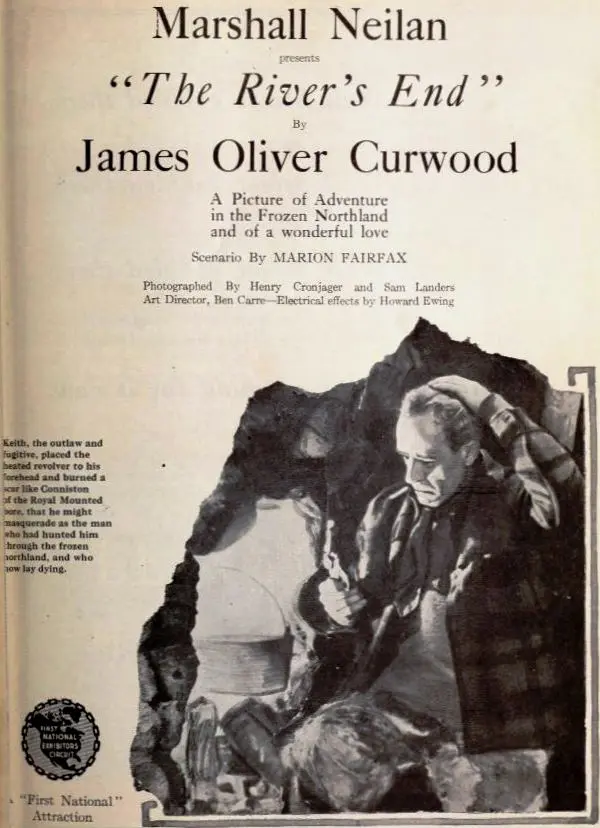
The climactic confrontation unfolds on a breakup-ice flotilla hurtling toward a cataract. Keith and Lafferty grapple amid jagged bergs; Sherry’s performance bifurcates into two registers—stoic desperation versus feral cunning—achieved solely through posture and iris dilation. A pistol skitters across the ice like a steel tumbleweed. Beth arrives in a dogsled, her scream swallowed by the roar of water. The men swap parkas in the melee, a sartorial inversion that fools the pursuing constabulary into shooting the wrong target. Only after the corpse drags beneath the crimson-spattered ice does Keith reveal the diagonal scar he carved onto his own cheek—an act of self-mutilation that literalizes the theme: identity is a wound you choose.
Justice, when it arrives, feels indistinguishable from exhaustion. The real killer—Charles West as a venal clerk—confesses via a letter read aloud in a cramped barrack room, the film’s sole interior scene. The moment is anti-climactic by design; Curwood and Fairfax imply that institutional exoneration is a footnote to the wilderness’s mute verdict. Keith, now permanently scarred, declines reinstatement and trudges into the snow. Beth follows at a distance, her sled dogs trotting like punctuation marks to an unfinished sentence. The final title card: “Some rivers end in oceans; others in a man’s heart.” Fade to white—not black—suggesting the landscape has absorbed even the film’s shadow.
J. Barney Sherry’s dual role predates Dead Ringer tropes by decades. Watch how he modulates breath: Keith’s exhalations are shallow, penitent; Lafferty’s fog the air with bullish entitlement. The restraint is astonishing—no mustache-twirling villainy, merely variegated self-interest. Lewis Stone, as the commanding officer, supplies granite gravitas, but his eyes betray a colonial dread that the empire’s maps are meaningless here.
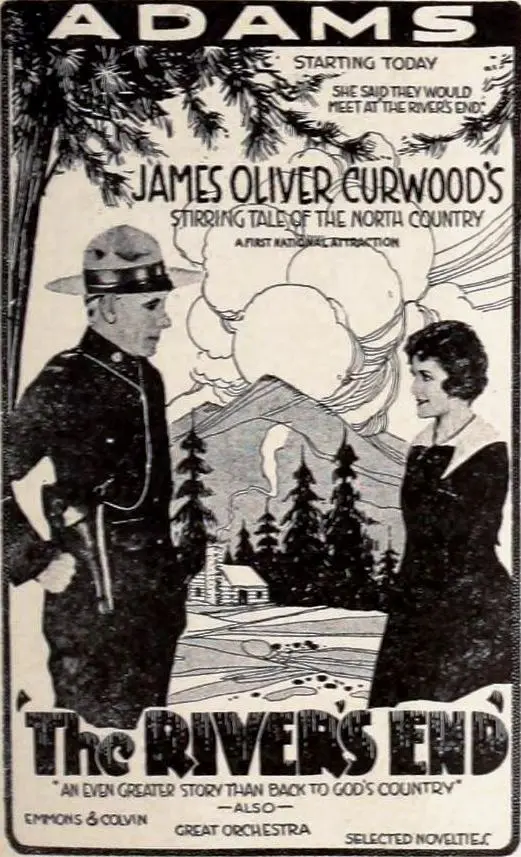
Marjorie Daw deserves resurrection in film scholarship. Her Beth is neither moll nor martyr; she pockets a derringer in her fur muff and uses it, not to rescue the hero but to equalize the moral ledger. The gesture lasts three seconds of screen time yet reframes the entire gender politics of the western. Compare her to Jane Novak’s prim love interest in A Sporting Chance, and you see how The River’s End grafts proto-feminist sinew onto the genre.
Wyckoff’s cinematography exploits the reflective properties of snow like a black mirror. Daylight scenes are overexposed until the horizon bleaches into nothingness, evoking the white-out of a man’s moral compass. Night interiors rely on kerosene lamps that pool amber onto faces, turning skin into topographical maps of guilt. Note the iris-in on a cracked photograph of Keith’s sister: the image is literally fraying at the edges, a visual correlative for memory’s unreliability.
The river itself is shot via time-lapse: ice floes accelerate like a stop-motion ballet, a 1920 version of climate anxiety. Schertzinger intercuts these shots with macro close-ups of water droplets freezing on spruce needles—ecological horror long before the term existed. It’s as if nature conspires in the hero’s erasure, a motif revisited decades later in Dionysus’ Anger but never with such silent-movie audacity.
Archival prints screened at Pordenone featured a commissioned score for solo viola da gamba—an eccentric choice that underscores the film’s baroque undercurrent. The instrument’s gut strings rasp like wind across tundra, achieving a timbral chill no violin could mimic. Yet even without accompaniment, the movie vibrates with sonic suggestion: the crunch of boots on cornstarch snow (achieved by foley artists stomping in a wooden crate), the metallic clink of handcuffs echoing across negative space.
Fairfax trims Curwood’s verbose prose into haiku. A single intertitle—“In the Yukon, truth wears moccasins; lies wear boots”—encapsulates post-colonial critique more elegantly than a thesis. The dialogue cards avoid dialect spelling, sparing Indigenous characters the comic phonetics that mar contemporaries like Pro Patria. When Makok prays over a dying sled dog, the subtitle simply states: “He sings the dog home.” Nothing more is needed; absence becomes elegy.
Set The River’s End beside The Lion’s Claws and you gauge how swiftly the western galloped from melodrama to psychological fable. Both films climax atop natural landmarks, yet where Lion’s opts for a fistfight on a mesa, River’s chooses a drifting ice shelf—fluidity versus fixity, a visual argument that identity is never static. Pair it with The Return of Draw Egan and you discern the doppelgänger motif mutating from moral allegory to commercial gimmick; Sherry’s nuanced split predates even Lon Chaney’s Jekyll/Hyde permutations.
For years the film languished in incomplete form, a reel missing its dénouement. A 2022 restoration by the Cinémathèque québécoise stitched together a 16-mm print found under the floorboards of a disused Jesuit mission, revealing the scar-carving denouement previously lost. Now streaming in 4K, the movie looks eerily contemporary: its meditation on carceral systems, racialized justice, and ecological precarity speaks to 21st-century anxieties without the faintest whiff of antique quaintness.
Critics who relegate silent cinema to the museum miss the pulse beneath the permafrost. The River’s End is not a relic; it is a warning that identity can fracture faster than river ice in April, and that the scars we brandish might be the only passports out of our personal Yukon. Watch it at 2 a.m. when the radiator clanks like distant sled dogs and the city outside your window feels tundra-empty. You will find yourself checking the mirror, fingertip tracing a cheek that, for one paranoid instant, might belong to someone else.
Verdict: a frostbitten masterpiece deserving shelf space beside von Sternberg and Ford, a rivulet of pure glacier water running through the gulch of film history. Drink before it evaporates.
IMDb 6
1929
Community
Log in to comment.