DbcultAccessing Vault...
Cult Review
Senior Film Conservator
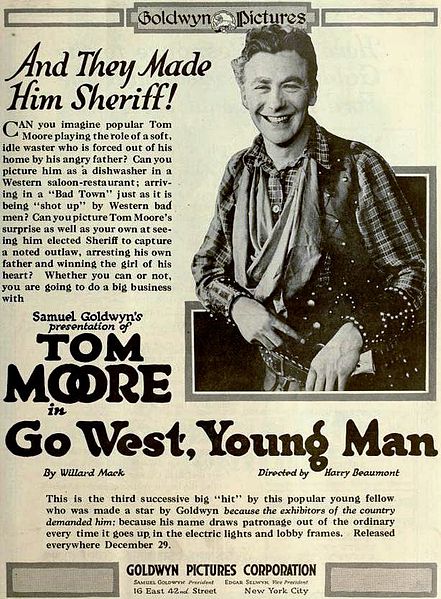
The flickering shadows of the early 20th century cinema often cast grand narratives of transformation, and Go West, Young Man, from 1918, stands as a compelling testament to this era’s fascination with personal reinvention against the vast, untamed canvas of the American West. This Willard Mack-penned silent film, directed by an uncredited hand but brought to vivid life by its committed cast, offers more than just a simple tale of good triumphing over evil; it delves into the very essence of identity, purpose, and the crucible of character forged under duress. It's a journey from perceived idleness to righteous action, a narrative arc that resonates with timeless appeal.
At its heart is Dick Latham, portrayed with an earnest sincerity by Tom Moore. We meet Dick as a wealthy Easterner, a man seemingly adrift, burdened by the weight of his father Amos’s accusations of being an 'idler.' This opening premise is crucial, setting the stage for a protagonist who, despite his privileged background, yearns for validation and a sense of self-worth beyond inherited wealth. His decision to ride the rails West, a deliberate rejection of his gilded cage, immediately positions him as an individual seeking to prove his mettle, not just to his father, but to himself. This theme of personal reckoning, of shedding the trappings of comfort to find true character, is one that echoes through many narratives of the period, from the social commentary often found in films like The Valley of the Moon to the more dramatic explorations of moral awakening in The Conscience of John David. Dick’s journey is not merely geographical; it is profoundly existential.
Upon arriving in Twin Bridges, a mining town bustling with the raw energy and inherent lawlessness of the frontier, Dick is immediately thrust into a power struggle he scarcely anticipates. Hugh Godson, the town’s corrupt political boss, embodied with a suitably villainous air by Jack Richardson, sees Dick not as a potential threat, but as an easily manipulated 'tenderfoot.' In a move of cynical calculation, Godson appoints Dick sheriff, believing him to be a malleable pawn in his dominion over the town's vices. This initial misjudgment by the antagonist is a classic narrative trope, setting up the eventual dramatic reversal and highlighting the underestimation of the protagonist’s latent capabilities. Godson represents the entrenched corruption that often plagued frontier settlements, a stark contrast to the idealism Dick unknowingly embodies.
What unfolds next is where Go West, Young Man truly distinguishes itself. Dick, far from being a pliant figurehead, embraces his new role with an unexpected fervor and moral conviction. His transformation from perceived idler to zealous lawman is swift and decisive. He systematically dismantles Godson's empire of vice, closing down saloons and gambling dens that are the lifeblood of the town’s illicit economy. But his crusade doesn’t stop at mere law enforcement; he extends it to moral reform, even compelling the hardened miners to attend church. This almost puritanical zeal, while perhaps quaint by modern standards, speaks volumes about the era's ideals of civilizing the West, bringing order and moral rectitude to what was often perceived as a lawless wilderness. It's a fascinating depiction of how the frontier could be both a place of lawlessness and a canvas for profound moral reordering.
The central conflict escalates when Godson’s avarice turns to the Crimmins ranch, a property rich in gold deposits, owned by an ailing father and his spirited daughter, Rosa (Ora Carew). This plot to defraud the vulnerable family is a classic villainous maneuver, designed to showcase the depths of Godson's depravity and provide Dick with a clear moral imperative to act. Dick, now fully immersed in his role as a champion of justice, foils Godson’s scheme with commendable shrewdness. His subsequent appointment of Rosa as his deputy is a particularly progressive touch for a film of its time, highlighting her strength and intelligence, and cementing their partnership not just romantically, but professionally. This portrayal of a capable woman in a position of authority, even in a supporting role, stands out, perhaps drawing faint parallels to the more overtly adventurous female characters seen in films like Wild Women or the resilience displayed in A Sister of Six, albeit within a different context.
The climax of Dick’s journey towards self-actualization arrives with a wonderfully ironic twist. When he discovers a group of wealthy Easterners engaged in gambling at the local hotel, he arrests them all without hesitation. The revelation that his own father, Amos (Melbourne MacDowell), is among the detained gamblers provides a moment of genuine dramatic tension and emotional payoff. This scene is pivotal; it demonstrates Dick’s unwavering commitment to his principles, proving that his newfound morality transcends familial ties or social standing. It’s a powerful statement on justice being blind, even to one’s own kin, a theme that resonates with similar narratives of moral conviction against personal loyalty found in films of greater dramatic weight like För fäderneslandet.
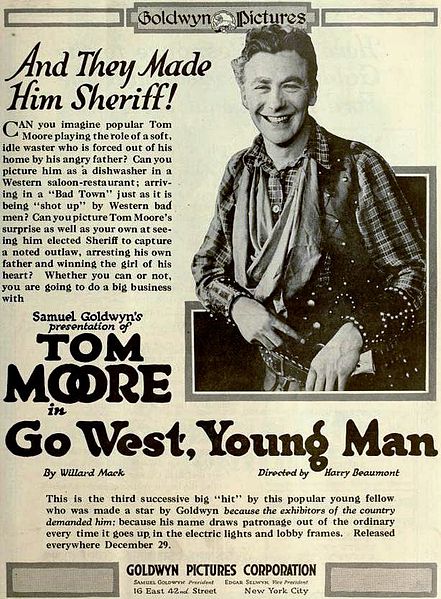
Amos’s reaction to his son’s uncompromising integrity is perhaps the most satisfying development. Far from being angered or humiliated, he is filled with pride. The son he once dismissed as an 'idler' has not only found his purpose but has become a man of principle and action. This paternal approval, earned through genuine transformation rather than inherited status, is a powerful validation of Dick’s journey. Amos’s subsequent purchase of the Crimmins ranch, safeguarding it from Godson’s clutches, serves as both a practical resolution to the land dispute and a symbolic endorsement of Dick’s values. It’s a moment where the old guard acknowledges and supports the new, a generational handover of moral authority.
The blossoming romance between Dick and Rosa, tenderly depicted, feels earned. Their partnership, forged in the fires of shared purpose and a mutual commitment to justice, transcends mere attraction. Amos’s hearty approval of their union provides a warm, satisfying conclusion, tying together the threads of personal growth, familial reconciliation, and romantic fulfillment. It’s a classic Hollywood ending, certainly, but one that feels genuinely earned through the trials and tribulations faced by the characters.
The performances, particularly by Tom Moore as Dick Latham and Ora Carew as Rosa Crimmins, are noteworthy for their era. Moore conveys Dick’s initial diffidence and subsequent resolve with clarity, using the exaggerated gestures and facial expressions characteristic of silent film acting to great effect. Carew’s Rosa is not a damsel in distress but a woman of agency and spirit, a fitting partner for the reformed sheriff. Edward Coxen, James Robert Chandler, and Hector V. Sarno round out the supporting cast, each contributing to the rich tapestry of characters inhabiting Twin Bridges, even if their roles are less central to the film’s moral core. Melbourne MacDowell as Amos Latham delivers a nuanced performance, portraying the shift from paternal disappointment to profound pride with convincing emotional depth.
From a technical standpoint, while details on specific cinematography might be sparse for such an early film, the narrative clarity and pacing are commendable. Willard Mack’s screenplay, despite the constraints of silent storytelling, manages to convey a complex character arc and a compelling plot without relying on verbose intertitles. The film's ability to communicate shifts in power dynamics and character motivations through visual storytelling is a testament to the nascent artistry of the medium. The portrayal of the frontier town, while perhaps idealized in its eventual cleanup, captures a sense of the rugged environment that defined the Western genre. This film, like others of its time such as The Great White Trail, helps to solidify the visual language and thematic tropes that would come to define the Western genre for decades.
Go West, Young Man is more than just a historical curiosity; it's a vibrant example of early cinematic storytelling that tackles universal themes. It explores the enduring appeal of the West as a place of reinvention, where one can escape a predetermined fate and forge a new identity through grit and moral courage. The film’s message of personal responsibility, the fight against corruption, and the redemptive power of purpose remains as relevant today as it was over a century ago. It reminds us that heroism isn't always about grand, sweeping gestures, but often about the quiet, unwavering commitment to doing what is right, even when it means challenging those closest to you or those in power. It's a charming, earnest piece of cinema that deserves its place in the annals of silent film history, offering a compelling snapshot of American ideals and aspirations at the cusp of a new era.
The simplistic yet potent narrative structure, typical of many films from this period, allows the moral message to shine through unimpeded. Unlike the more convoluted plots that would emerge in later decades, Go West, Young Man maintains a directness that is both refreshing and effective. It's a film that doesn't overcomplicate its themes; instead, it presents them with a straightforward clarity that makes its impact immediate and lasting. The journey of Dick Latham is a microcosm of the American dream itself – the idea that one can always move forward, reinvent oneself, and find success and integrity through hard work and a strong moral compass. For anyone interested in the foundational myths of the American West and the evolution of cinematic narrative, this film provides a rich, engaging experience.
IMDb 6
1931
Community
Log in to comment.